Commercial flat roofs in Cape Coral, Fort Myers, and Naples take a different kind of abuse than a pitched shingle roof — standing water, direct UV exposure, and hurricane-season wind uplift all hit a low-slope membrane at once. This guide breaks down what to look for in flat roof repair for commercial buildings in Southwest Florida, which repair approach fits which type of damage, and what to skip entirely.
- Flat roof repair for commercial buildings in Florida depends on membrane type — TPO, EPDM, and modified bitumen each fail differently.
- Ponding water sitting longer than 48 hours after rain is the top predictor of premature membrane failure in 2026.
- Targeted patch repair on an isolated leak: Buy. Full recoat over unaddressed ponding: Skip until drainage is fixed.
- Roof Smart of SW Florida services Cape Coral, Fort Myers, and Naples commercial properties year-round.
Why this matters
A flat roof leak on a commercial building rarely stays small. Water tracks laterally under the membrane before it ever shows up as a ceiling stain, which means the visible damage is usually smaller than the actual problem underneath.
Southwest Florida adds two variables most regions don't deal with: an official Atlantic hurricane season running June 1 through November 30, and near-daily afternoon thunderstorms for half the year. A membrane that's already blistered or under-sloped going into storm season is a liability, not a maintenance item to defer. Flat roof repair in Naples projects handled before June consistently cost less than emergency calls made after a named storm.
Who this is for
This is for property managers, HOA boards, and business owners running commercial buildings — retail strips, office parks, warehouses, medical buildings — with TPO, EPDM, modified bitumen, or built-up flat roof systems in SW Florida. If you're seeing ceiling stains, blistering membrane, ponding that doesn't clear, or a spike in AC runtime tied to roof moisture, this applies to you directly.
What to look for in flat roof repair for commercial buildings
Membrane-specific experience
TPO, EPDM, and modified bitumen fail in different ways and need different repair materials — a crew that patches TPO with the wrong adhesive creates a second leak within a season. Ask any contractor bidding your job which membrane type they repaired most recently and how many commercial flat roofs they've serviced in the last 12 months.
Drainage diagnosis, not just patching
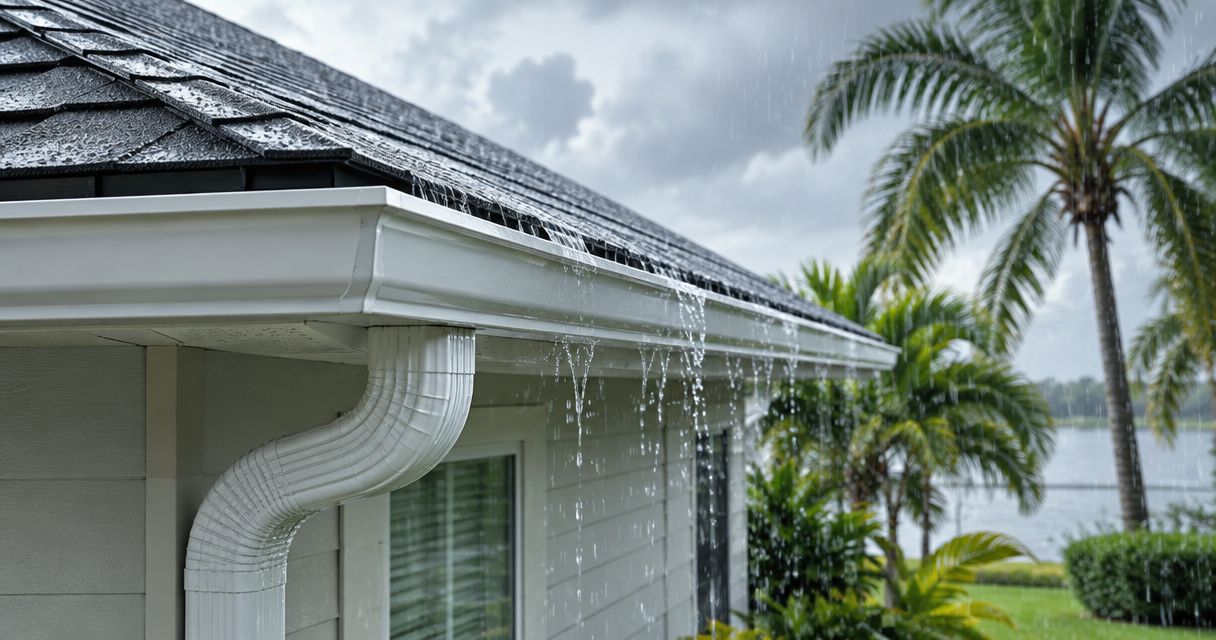
A patch on a leak caused by ponding water fails again within a year if the underlying slope problem isn't fixed. Low-slope commercial roofs are built to a minimum of roughly 1/4 inch of fall per 12 inches — if water still sits more than 48 hours after rain, that's a drainage defect, not a membrane defect, and it needs to be diagnosed as one.
Wind uplift and code compliance
Commercial flat roofs in Southwest Florida fall under Florida Building Code wind-uplift standards for high-velocity hurricane exposure. Repairs that don't re-secure membrane edges and fasteners to code leave the whole roof vulnerable in the next named storm, not just the patched section.
Response time on active leaks
An active commercial leak during business hours means inventory damage, liability exposure, or a shut floor. A contractor who can mobilize within 24-48 hours for an active leak is worth more than one who's marginally cheaper but books three weeks out.
Documentation for insurance
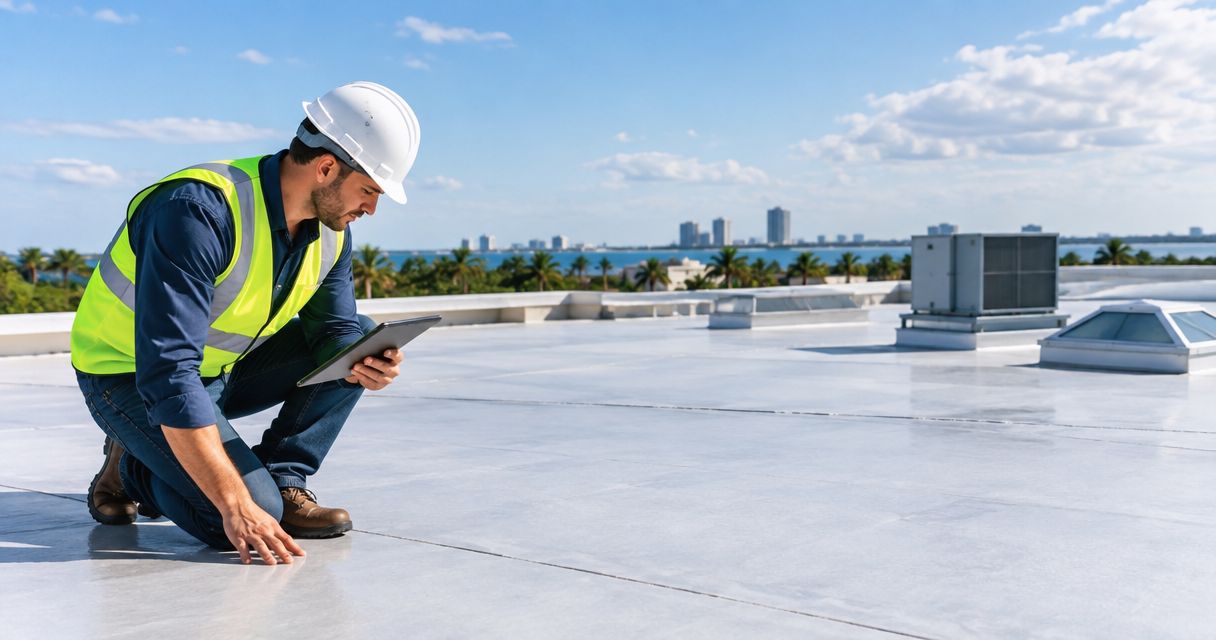
Commercial roof claims get denied over missing documentation more often than over the damage itself. Photos, moisture-scan reports, and a written scope of repair matter as much as the actual patch when a claim gets filed after storm damage.
Warranty terms on the repair itself
A patch without a written warranty is a bet, not a repair. Ask what's covered, for how long, and whether the warranty transfers if the building changes hands.
Which repair approach fits your building
The safe pick — targeted patch repair for an isolated leak. If you've got one confirmed leak source, a moisture scan followed by a localized membrane patch is the standard fix and the fastest to schedule. Spec that matters: patch repairs on TPO and EPDM membranes rated for 20 to 25 years typically hold for the remaining life of the membrane when installed correctly. Verdict: Buy — this is the right first move for a single, confirmed leak.
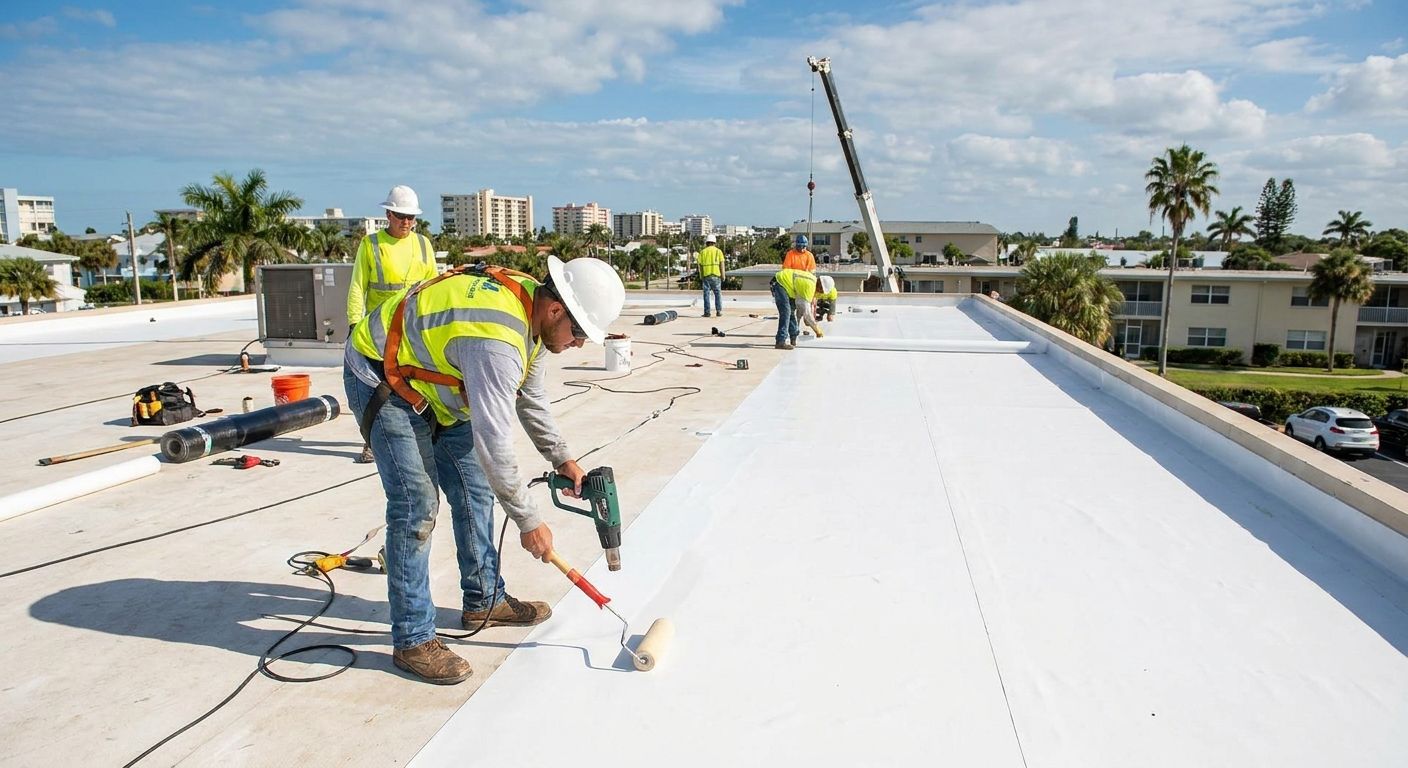
The wildcard — fluid-applied recoat for widespread seam failure. When seams across large sections are failing but the membrane itself is still structurally sound, a fluid-applied coating extends the roof's life without a full tear-off. This only works if ponding water has already been corrected — coating over standing water just delays the same failure. Verdict: Consider, but only after drainage is diagnosed and fixed first.
Full section replacement for storm or hail damage. When wind uplift has torn membrane loose across a section, or hail has punctured multiple areas, patching piecemeal costs more over 18 months than replacing the damaged section once. This is common work for commercial roofing for warehouses and industrial buildings where large flat spans take concentrated wind loading. Verdict: Buy when damage covers more than roughly 25% of a roof section — spot patches at that scale don't hold.
Emergency temporary patch during active leaks. A tarp or emergency seal buys time until a full repair crew can mobilize, but it's not a fix — it's a stopgap that should be replaced within days, not weeks. Businesses in the middle of hurricane season lean on this the most, and commercial roofing services in Fort Myers crews typically follow it within 48-72 hours with the permanent repair. Verdict: Buy as a bridge — Skip as a permanent solution.
What to avoid
- DIY roof coating over an active leak. Store-bought sealants bond poorly to commercial-grade TPO and EPDM and mask the leak location, making the real diagnosis harder once a professional gets involved.
- Ignoring ponding water because "it's always been like that." Standing water past the 48-hour mark isn't cosmetic — it's actively shortening the membrane's remaining life every time it happens.
- Mixing patch materials across membrane types. A modified bitumen patch on a TPO roof, or vice versa, fails at the seam within one wet season because the materials don't bond chemically.
Get a free commercial roof evaluation
No-pressure inspection for flat roof leaks, ponding, or storm damage.
Verdict comparison
| Repair Approach | Best For | Typical Turnaround | Verdict |
|---|---|---|---|
| Targeted patch | One confirmed leak | 1-2 days | Buy |
| Fluid-applied recoat | Widespread seam wear, drainage already fixed | 3-5 days | Consider |
| Full section replacement | Storm/hail damage over 25% of a section | 1-2 weeks | Buy |
| Emergency temporary patch | Active leak, permanent fix pending | Same day | Buy (as bridge only) |
FAQ
What's the best flat roof repair option for a commercial building in Florida?
For a single confirmed leak, a targeted membrane patch is the standard fix and typically holds for the remaining life of the membrane. Widespread seam failure or storm damage needs a broader recoat or section replacement instead.
How much does commercial flat roof repair cost in SW Florida in 2026?
Cost depends on membrane type, damage extent, and whether drainage needs correcting alongside the patch. A written scope of repair from an inspection is the only reliable way to price a specific building.
Is TPO or EPDM better for commercial buildings in Florida?
Both are common on SW Florida commercial roofs and rated for 20 to 25 years when installed correctly. The right choice depends on the existing roof structure and what's already installed, since patch materials need to match the membrane type.
How long does a flat roof patch repair last?
A properly installed patch on TPO or EPDM typically lasts for the remaining service life of the membrane, generally within that 20 to 25 year window, as long as the underlying drainage issue that caused the leak is also fixed.
How do I know if ponding water on my flat roof is a problem?
If water is still standing more than 48 hours after rain stops, it's accelerating membrane breakdown and needs a drainage diagnosis, not just a patch. This is one of the most common causes of repeat leaks on commercial flat roofs.
Should I repair or replace my commercial flat roof?
Repair makes sense for isolated leaks or damage under roughly 25% of a section; replacement is more cost-effective once damage is widespread or the membrane is past its rated lifespan. A side-by-side breakdown of the decision is covered in roof repair vs roof replacement guidance for Florida buildings.
What causes flat roof leaks on commercial buildings in Southwest Florida?
Ponding water, wind-lifted seams from hurricane-season storms, and UV-driven membrane blistering are the three most common causes on SW Florida commercial roofs. Afternoon thunderstorms for half the year compound whatever drainage or seam issue already exists.
How fast can a commercial roof leak get fixed in Fort Myers or Naples?
An active leak during business hours typically warrants a 24-48 hour response for an emergency temporary patch, followed by the permanent repair within days. Waiting past that window usually turns a roof problem into a ceiling, inventory, or floor problem.
One last thing
The single biggest driver of repeat commercial flat roof leaks in Southwest Florida isn't the membrane — it's ponding water nobody diagnosed as a drainage problem. A patch on a leak caused by standing water buys a few months at best; fixing the slope or adding drainage is what actually stops the callback. Going into hurricane season 2026 with that fixed is worth more than any coating product on the market.