Metal roofing for solar panel installations in Florida means pairing a standing seam or exposed-fastener metal roof with the mounting hardware, wind rating, and layout that solar installers need to attach panels without penetrating the roof deck more than necessary. Solar-ready homeowners have a narrower set of needs than a typical reroof: panel compatibility, mount spacing, and long-term access for panel servicing all matter as much as the roof material itself.
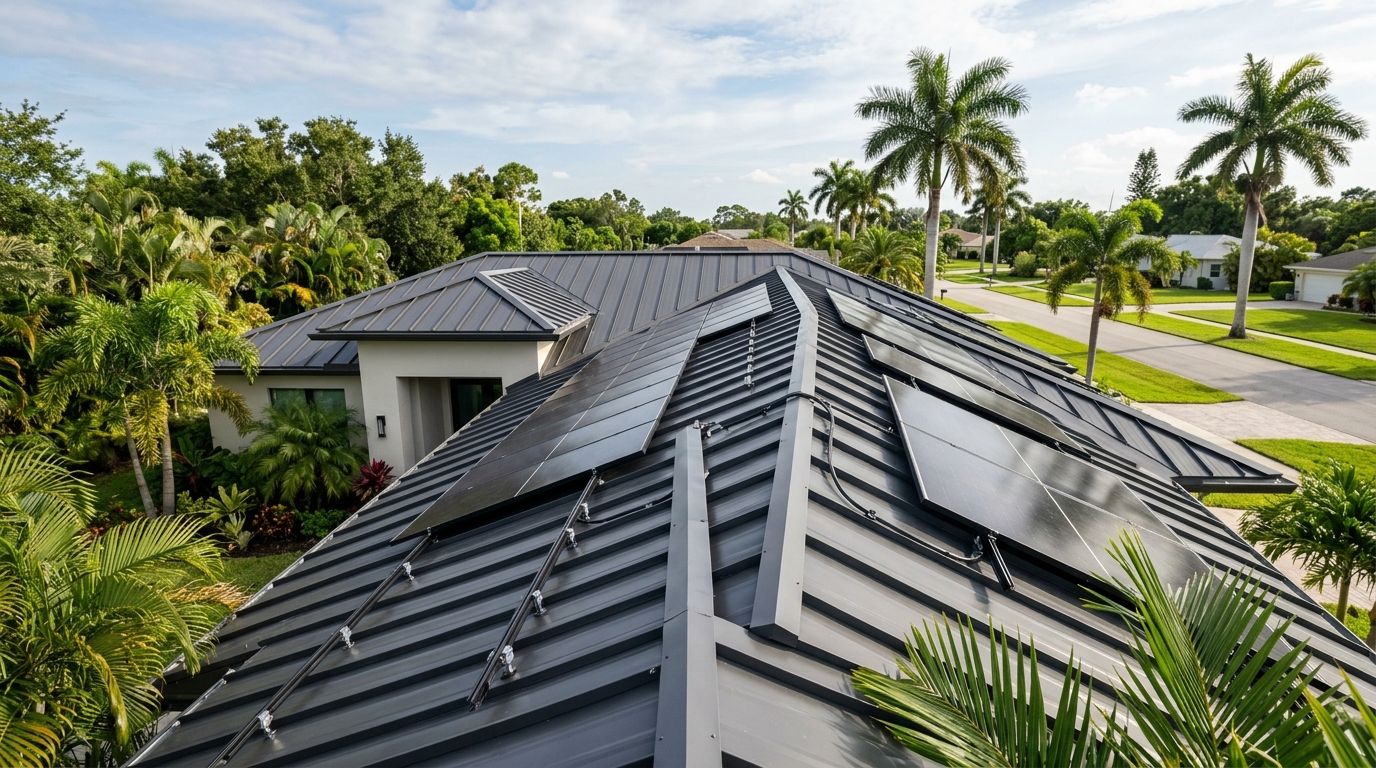
- Standing seam metal roofing is the strongest match for metal roofing for solar panels florida because clamps attach to the seams without piercing the panel.
- Exposed-fastener metal roofs require sealed penetrations for every mounting point, which raises long-term leak risk under solar arrays.
- A 2026 roof replacement timed before solar install avoids removing and reinstalling panels within the panel's service life.
- Wind mitigation inspections can lower insurance premiums on a solar-ready metal roof in Southwest Florida.
- Roof Smart of SW Florida installs metal roofing built for solar mounting across Cape Coral, Fort Myers, and Naples.
Why metal roofing matters for solar panel installations
Solar panels are a 25-30 year commitment on most manufacturer warranties, and asphalt shingles rarely last that long in Southwest Florida's sun and salt air. If the roof underneath needs replacement in year 12 or 15, the panels come off, get stored, and go back up — a cost and disruption most homeowners want to avoid entirely.
Metal roofing changes that math. A standing seam system commonly runs 40-70 years of service life, which outlasts the solar array itself in most residential installs. That's the core reason solar installers across Florida increasingly ask homeowners to consider metal roofing for coastal Southwest Florida homes before the array goes up, not after.
Verdict: standing seam metal roofing is the strongest roof-to-solar match in Florida because it eliminates repeat penetrations and matches the panel's service life.
Evaluate your current roof's solar readiness
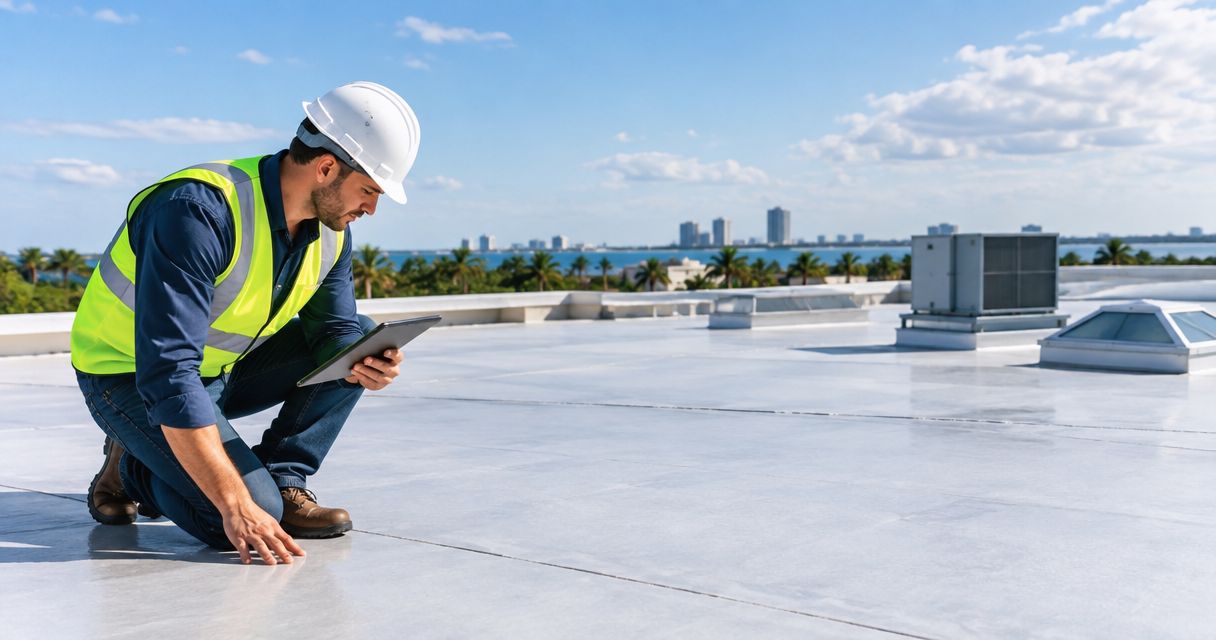
Before anyone mounts a panel, the roof itself needs a straight answer on remaining life and structural condition.
- Check the roof's age against the material's rated lifespan — asphalt shingles typically run 15-20 years in Florida heat, metal runs far longer
- Look for existing leaks, rusted fasteners, or lifted seams before adding load
- Confirm the deck can handle rail-mounted array weight without sagging
- Pull permit history to see what wind rating the roof was built or replaced under
- Get a written inspection report, not a verbal walkthrough
Choose a solar-compatible metal panel profile
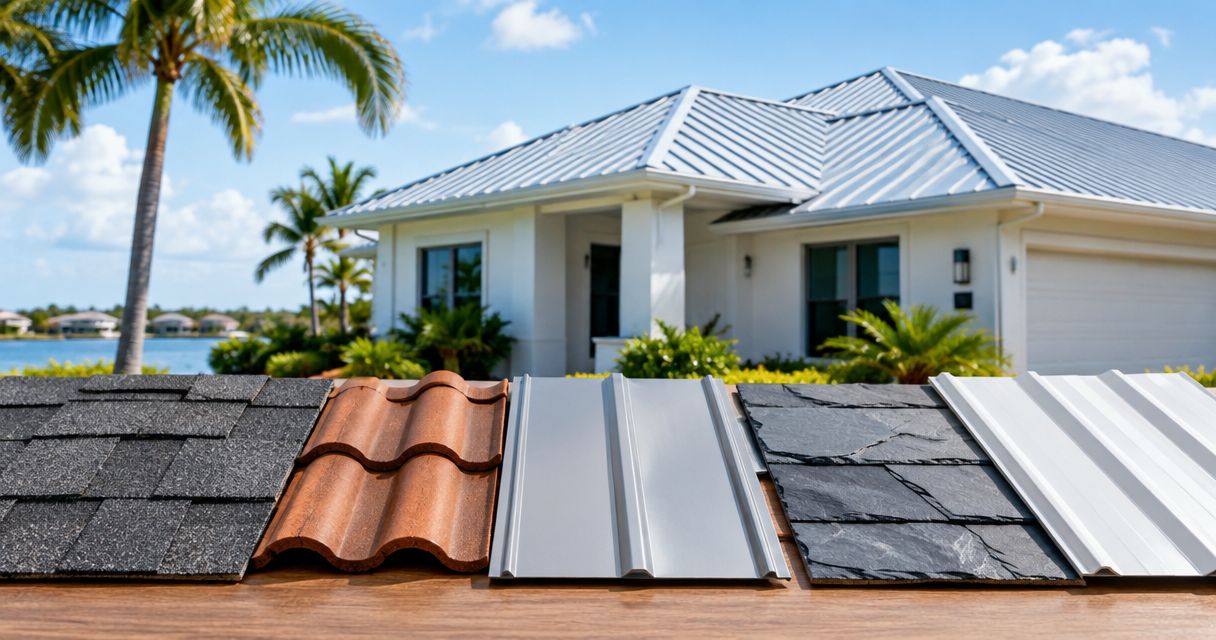
Not every metal roof profile works the same way with solar hardware. Standing seam panels use clamp-on mounts that grip the vertical seam — no new holes in the panel. Exposed-fastener (5V or corrugated) panels need a bracket screwed and sealed at each mounting point.
- Standing seam: clamp-mounted, zero new roof penetrations, best long-term choice
- Exposed-fastener metal: lower material cost upfront, but every mount point is a sealed penetration
- Stone-coated steel: heavier profile, works with specialized brackets but adds weight to calculate
- Aluminum standing seam: lighter than steel, resists coastal salt corrosion better
- 24-gauge steel: thicker, more dent-resistant under foot traffic during panel servicing
For a side-by-side on panel types built for salt-air exposure, best metal roof panels for coastal homes breaks down gauge and coating options in more depth.
Match your mounting system to the panel type
The mounting hardware determines whether the roof stays watertight for the life of the array.
- Clamp-based S-5! or equivalent brackets for standing seam — no drilling required
- Flashed L-foot brackets for exposed-fastener roofs, sealed with roofing-grade sealant
- Rail-less or rail-mounted racking depending on panel orientation and roof pitch
- Verify the mount manufacturer rates the bracket for the specific panel gauge installed
- Confirm the solar installer and roofer coordinate mount spacing before either crew starts work
Confirm wind rating and fastening for hurricane code
Southwest Florida sits inside wind-borne debris regions under the Florida Building Code, and solar arrays add wind load calculations most residential roofs weren't originally designed around.
- Ask for the manufacturer's wind uplift rating on the specific panel and gauge combination
- Confirm fastener spacing meets the code cycle in effect for your county
- Request engineering documentation for the solar rack's wind load, not just the roof's
- Check that ridge, hip, and edge flashing detail matches high-wind installation standards
- Keep copies of all permits — insurers and future buyers will ask
Time the roof replacement around the solar installation
Sequencing the two jobs wrong is the single most expensive mistake homeowners make.
- Replace or repair the roof first, solar mounts go on second — never the reverse
- Schedule the roof crew and solar installer within the same project window to avoid gap exposure
- Budget extra lead time during hurricane season (June-November) when contractor schedules compress
- Ask your roofer whether the metal panel gauge chosen affects mount lead times
- If the current roof still has 10+ years of rated life left, get a second opinion before replacing early
Homeowners in the middle of a broader reroof decision can compare timelines and material tradeoffs in roof replacement in Cape Coral before locking in a solar install date.
Check insurance and grant incentives before you sign a contract
Metal roofing paired with a documented wind mitigation inspection can shift insurance premiums, and Florida runs a state-backed grant program worth checking before any contract is signed.
- Request a wind mitigation inspection after the metal roof install — many insurers require it for the discount to apply
- Ask your agent which roof-to-code features (secondary water barrier, roof-to-wall connections) qualify for savings
- Review wind mitigation inspection for homeowners insurance discounts for what the inspection actually checks
- Confirm whether your household is still eligible under how to apply for the My Safe Florida Home roof grant before funding runs out for the cycle
- Keep all inspection paperwork on file — insurers periodically re-verify discounts
Get a free metal roof evaluation
Find out if your roof is ready for solar mounts before you sign a solar contract.
Hire a roofer experienced with solar-ready metal installs
A roofer who's never coordinated with a solar crew will underprice flashing detail and overlook mount spacing that the solar installer actually needs.
- Ask for references from past jobs that included solar racking, not just standard reroofs
- Confirm they carry manufacturer certification for the specific metal panel line
- Get a written scope that names who's responsible for penetration sealing — roofer or solar crew
- Check that they pull permits for both the roof and the wind mitigation inspection
- Verify they'll coordinate scheduling directly with your solar installer rather than leaving you to relay messages
Comparing roofing options for solar-ready Florida homes
| Option | Best for | Key limitation |
|---|---|---|
| Standing seam metal | Homeowners planning a 20+ year solar commitment | Higher upfront labor complexity than shingles |
| Exposed-fastener metal | Budget-conscious solar installs on outbuildings or garages | Each mount point is a sealed penetration, higher long-term leak risk |
| Asphalt shingle | Homeowners not ready to reroof before solar goes up | Shorter lifespan than most solar warranties, likely reroof mid-array-life |
| Tile roofing | Homeowners prioritizing Mediterranean-style aesthetics over solar mounting ease | Solar racking on tile needs specialized flashing, adds install cost and time |
Homeowners in Fort Myers specifically comparing metal against other reroof paths can check metal roofing in Fort Myers for local install detail.
Common mistakes solar-ready homeowners make
- Installing solar on a roof with under 10 years of rated life left — the panels outlast the roof, forcing an early, expensive removal-and-reinstall cycle.
- Choosing exposed-fastener metal to save money upfront — the sealed-penetration count under a full array multiplies leak points compared to clamp-mounted standing seam.
- Skipping the wind mitigation inspection after the metal roof goes in — homeowners leave insurance savings on the table that the inspection alone unlocks.
- Letting the solar installer and roofer work without coordinating mount spacing — mismatched rail layouts cause rework and voided warranties on either side.
- Assuming any metal roof handles solar racking the same way — panel profile, gauge, and coating all change what mounting hardware is even compatible.
FAQ
Is metal roofing better than shingles for solar panels in Florida?
Yes, for most homeowners planning a 20-year or longer solar commitment, standing seam metal roofing outlasts the solar array and avoids removing panels for a mid-life reroof, which is a real risk with asphalt shingles in Florida's climate.
Do solar panels void a metal roof warranty in Florida?
Improper mounting can void panel warranties, roof warranties, or both, which is why the mount hardware needs manufacturer certification for the specific panel gauge and profile installed on your roof.
Can solar panels be installed on exposed-fastener metal roofs?
Yes, but every mounting bracket requires a sealed penetration through the panel, which raises long-term leak risk compared to standing seam roofs where clamps grip the seam without drilling.
What gauge metal roofing works best under solar panels?
24-gauge steel is more dent- and load-resistant than lighter 26-gauge material, which matters when technicians walk the roof to service panels over the array's lifespan.
Does a metal roof with solar panels qualify for a wind mitigation insurance discount in Florida?
It can, but the discount depends on the inspection results for roof-to-wall connections, secondary water barriers, and overall wind rating, not the presence of solar panels themselves.
Should I replace my roof before or after installing solar panels?
Replace the roof first. Installing solar on a roof that needs replacement within the panel's warranty period forces an expensive removal-and-reinstall cycle later.
How long does a metal roof last under a solar array in Florida?
Standing seam metal roofing commonly runs 40-70 years of service life, which typically outlasts the 25-30 year warranty period on most residential solar panels.
One last thing
Most homeowners shop the solar quote first and the roof second — that order costs money. Get the roof evaluated and, if needed, replaced with a solar-compatible metal system before a solar installer sets foot on the property in 2026; it's the only sequence that avoids paying for mount removal and reinstallation twice.