Metal roofing in Fort Myers means standing-seam panels, metal shingles, or exposed-fastener systems engineered to survive Southwest Florida's wind gusts and salt air while cutting long-term maintenance for local homeowners. Fort Myers sits in a coastal wind zone with humidity and storm exposure that shingle and low-grade metal systems don't handle well over decades, which is why panel choice and fastening method matter more here than in most U.S. markets.
- Standing-seam metal roofing is the strongest pick for Fort Myers homes exposed to coastal wind and salt air in 2026.
- Exposed-fastener panels cost less upfront but loosen faster near the coast and need more maintenance.
- A wind mitigation inspection after a metal roof install can unlock insurance credits Fort Myers homeowners often skip.
- Metal roofing fort myers buyers should confirm Florida Building Code wind ratings before signing a contract.
Why metal roofing matters for Fort Myers homeowners
Fort Myers homes face two problems shingle roofs handle poorly: sustained coastal wind and salt-laden humidity that accelerates corrosion on cheap fasteners and flashing. A metal roofing system built for coastal exposure uses corrosion-resistant panels and concealed fastening to hold up where standard shingles fail early.
Homeowners searching metal roofing fort myers are usually comparing it against asphalt shingle or tile replacement after storm damage, an insurance renewal, or a home sale inspection. That context changes what matters: a Fort Myers buyer needs wind rating documentation and insurance paperwork lined up, not just a panel color.
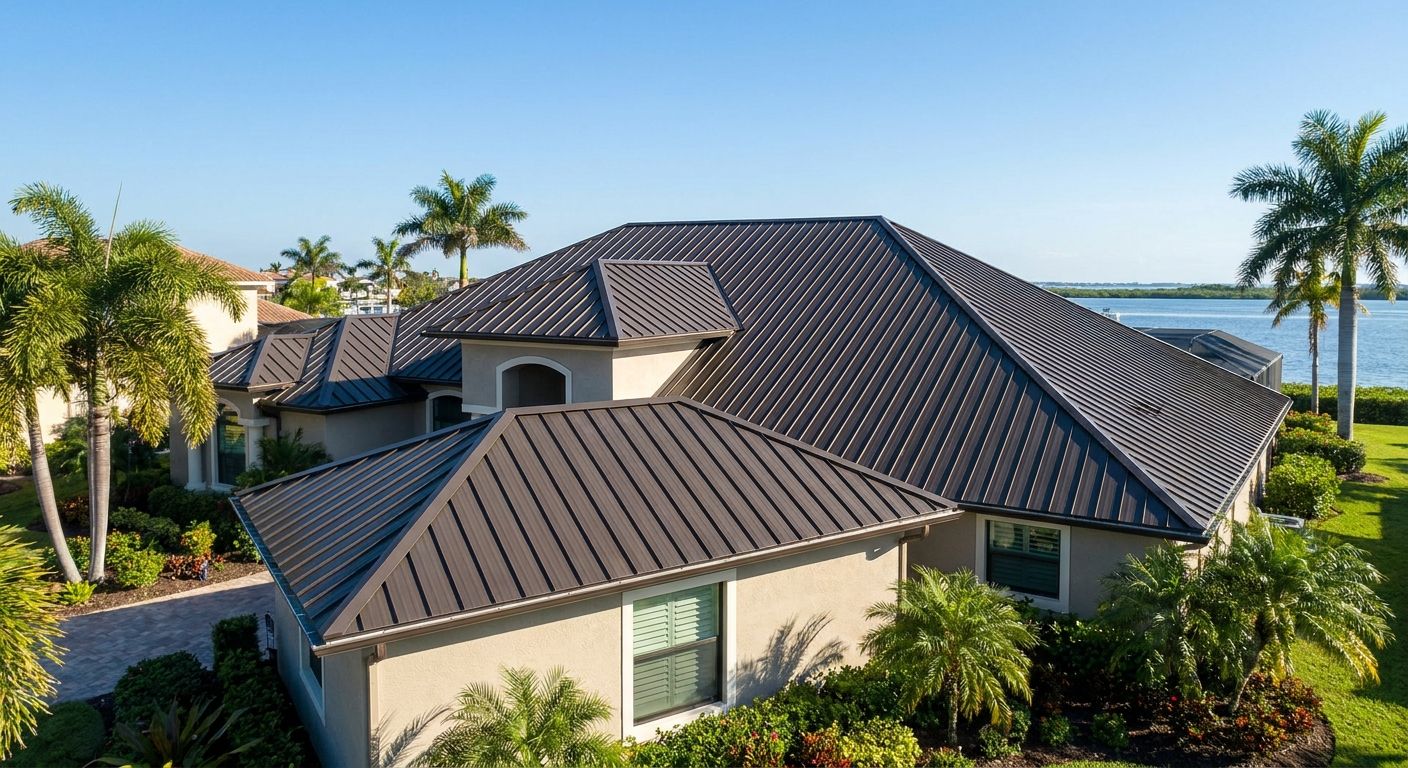
Standing-seam metal roofing is the strongest match for Fort Myers's wind and salt exposure, but only when the panel gauge and fastening system are rated for coastal conditions.
Steps for choosing metal roofing in Fort Myers
Check Lee County wind zone requirements first
Before comparing brands or panel styles, confirm what the Florida Building Code actually requires for your address in Lee County. Coastal parcels near the Caloosahatchee and Gulf-facing neighborhoods typically carry higher wind load requirements than inland Fort Myers.
- Pull your parcel's wind zone classification from the county building department
- Ask any contractor for the wind uplift rating of the specific panel, not just the brand name
- Confirm whether your home falls in a flood zone that affects roof-to-wall connection requirements
- Check if your HOA has material or color restrictions before you commit
Match panel material to salt-air exposure
Aluminum and coated steel behave differently near the coast. Homes within a few miles of the Gulf or the river corridor see faster corrosion on uncoated or thin-gauge steel than homes further inland.
- Aluminum resists salt corrosion better than raw steel but costs more per panel
- Galvalume-coated steel is a common middle-ground choice for non-immediate-coastal Fort Myers lots
- Avoid exposed-fastener panels within a mile of open water; the fastener heads corrode first
- Ask for the panel's coating warranty terms in writing, not verbally
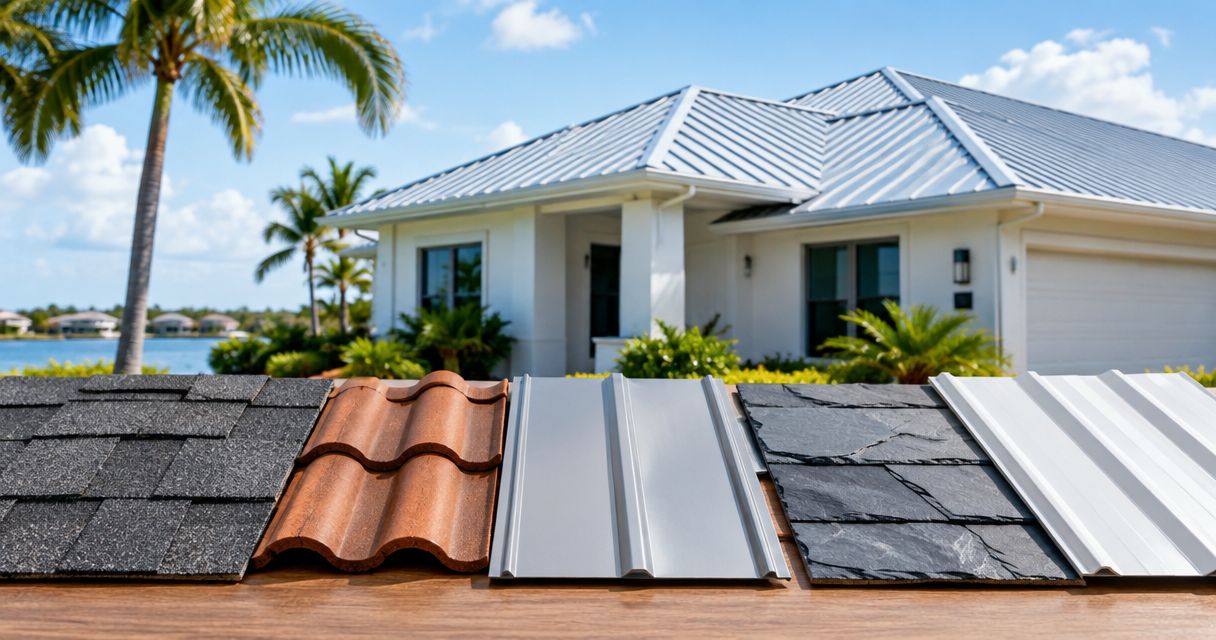
Compare concealed-fastener vs exposed-fastener systems
Standing-seam (concealed-fastener) panels interlock without exposed screws, which removes the most common failure point on coastal metal roofs. Exposed-fastener panels are cheaper to manufacture and install but rely on rubber washers that degrade under Florida sun and heat cycling.
- Standing seam: no exposed penetrations, longer service life near salt air
- Exposed-fastener corrugated: lower material cost, needs washer replacement over time
- Stone-coated steel shingles: mimics tile or shingle look with metal's wind performance
- Ribbed panel systems: common on commercial and outbuilding roofs, less common on primary residences
Time your installation around hurricane season
June through November is Atlantic hurricane season, and scheduling a full tear-off during peak storm months adds risk if a system enters the Gulf mid-project. Homeowners planning ahead of the season position themselves better than those replacing storm-damaged roofs reactively.
- Book installation in late winter or spring when contractor schedules are less backed up
- Review how to prepare a roof for hurricane season if your existing roof needs to survive one more storm cycle first
- Ask your contractor what happens to an in-progress tear-off if a storm watch is issued
- Confirm material lead times before locking a start date
Get a post-install wind mitigation inspection
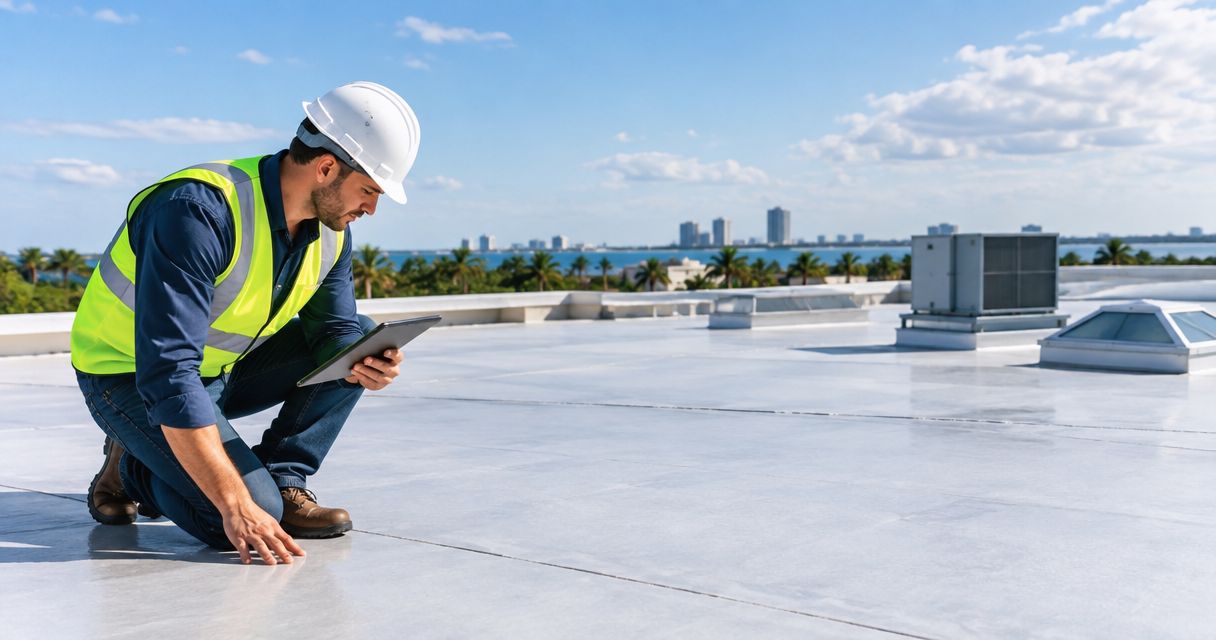
A new metal roof rated for higher wind speeds can qualify Fort Myers homeowners for insurance credits, but only if a licensed inspector documents it after installation. Skipping this step is one of the more common ways homeowners leave money on the table.
- Schedule the inspection after final install, not before
- Bring the manufacturer's wind uplift documentation to the inspection
- Ask your insurance agent which credits apply to secondary water resistance and roof deck attachment
- File the inspection report with your carrier directly, don't assume the contractor does it
Confirm underlayment and flashing compatibility
A metal roof is only as good as what sits underneath it. Incompatible underlayment traps moisture against panels in Florida's humidity, and mismatched flashing metal causes galvanic corrosion where two metals touch.
- Use self-adhered underlayment rated for high heat, not standard felt
- Match flashing metal type to the panel metal to avoid galvanic reaction
- Ventilate the roof deck properly; trapped heat shortens underlayment life
- Ask specifically how ridge and valley details are flashed, not just field panels
Metal panel options for Fort Myers homes
| Option | Best For | Key Limitation |
|---|---|---|
| Standing seam (aluminum or steel) | Coastal Fort Myers homes, long-term wind and corrosion resistance | Higher material cost than exposed-fastener panels |
| Stone-coated steel shingles | Homeowners who want a tile or shingle look with metal wind ratings | Heavier than standard steel panels, needs matching structural check |
| Exposed-fastener corrugated panels | Outbuildings, garages, and inland non-coastal lots | Fastener washers degrade faster near salt air |
Standing-seam metal roofing is the pick for anyone within a few miles of Fort Myers's coastline; exposed-fastener panels are fine for inland outbuildings but a weak choice for a primary coastal residence.
Common mistakes Fort Myers homeowners make with metal roofing
- Choosing exposed-fastener panels for a Gulf-facing home because the material cost looks lower upfront, then facing washer failures years earlier than a standing-seam system would.
- Skipping the post-install wind mitigation inspection, which means paying for a wind-rated roof without collecting the insurance credit it should unlock.
- Mixing flashing metal with the panel metal, triggering galvanic corrosion at valleys and penetrations within a few storm seasons.
- Scheduling a full tear-off in peak hurricane season without a contingency plan if a named storm forms mid-project.
- Assuming any metal roof automatically meets Lee County's wind zone requirement instead of checking the specific panel's tested uplift rating.
Get a free metal roof evaluation
No-pressure estimate for Fort Myers homeowners weighing metal roofing options.
FAQ
What's the best metal roofing option for Fort Myers homes in 2026?
Standing-seam aluminum or coated steel is the best option for most Fort Myers homes in 2026 because it uses concealed fasteners that resist coastal salt corrosion better than exposed-fastener panels. Homes farther inland with less direct salt exposure have more flexibility to use lower-cost panel styles.
Is metal roofing better than tile in Fort Myers?
Metal roofing generally outperforms tile on wind resistance and weight, since metal panels weigh less and interlock against uplift better than individual tiles. Tile still holds an edge on Mediterranean-style curb appeal, which is why some Fort Myers homeowners weigh both before deciding.
How much wind can a metal roof withstand in Southwest Florida?
Wind resistance depends on the specific panel and fastening system, not the material alone, so the uplift rating on the manufacturer's documentation is what determines performance in a Fort Myers wind zone. A properly installed standing-seam system is built to meet Florida Building Code wind requirements for the property's zone.
Does a metal roof lower homeowners insurance in Fort Myers?
A metal roof can qualify for wind mitigation insurance credits, but only after a licensed inspector documents the roof's wind rating and secondary water resistance features post-installation. Skipping that inspection means the roof may qualify for credits the homeowner never claims.
How long does a metal roof last in Fort Myers's climate?
Standing-seam metal roofs are commonly rated for 40 to 70 years of service life, though coastal salt exposure and installation quality affect where a given roof lands in that range. Exposed-fastener systems typically need washer and fastener maintenance well before that window closes.
Can metal roofing be installed over an existing shingle roof?
Some metal panel systems can be installed over an existing shingle deck depending on local code and the condition of the deck underneath, but a full tear-off gives a cleaner install and lets a contractor inspect the deck for hidden damage. A roof inspection before the project settles which approach applies.
What causes corrosion in coastal metal roofs?
Corrosion on coastal metal roofs usually starts at exposed fasteners, mismatched flashing metals, or thin-gauge steel that wasn't coated for salt exposure. Standing-seam systems with concealed fasteners and matched flashing metal avoid most of these failure points.
How long does a metal roof installation take in Fort Myers?
Installation timelines vary with roof size and panel type, and Fort Myers contractors often see longer lead times heading into hurricane season from June through November. Scheduling outside peak season generally shortens the wait for materials and crew availability.
One last thing
The insurance credit is the part Fort Myers homeowners skip most often: a metal roof rated for high wind does nothing for a premium until a licensed wind mitigation inspection documents it after install, and that paperwork has to reach the carrier directly. In 2026, that single missed step is the most common reason a homeowner pays for a wind-rated roof and never sees it reflected on a renewal.