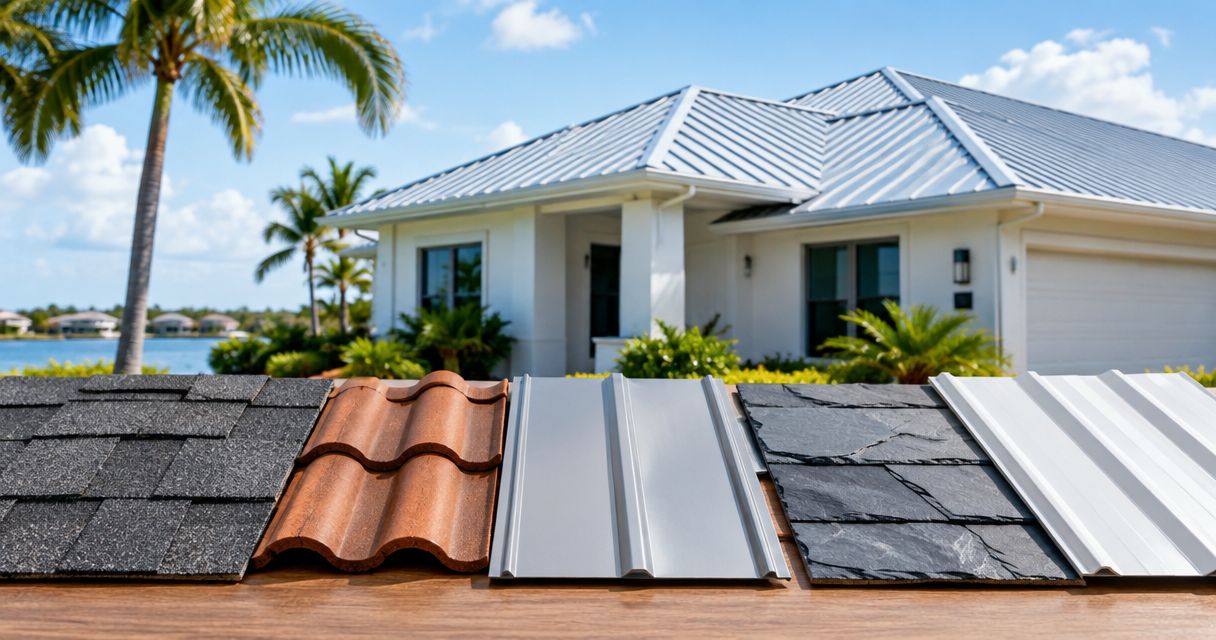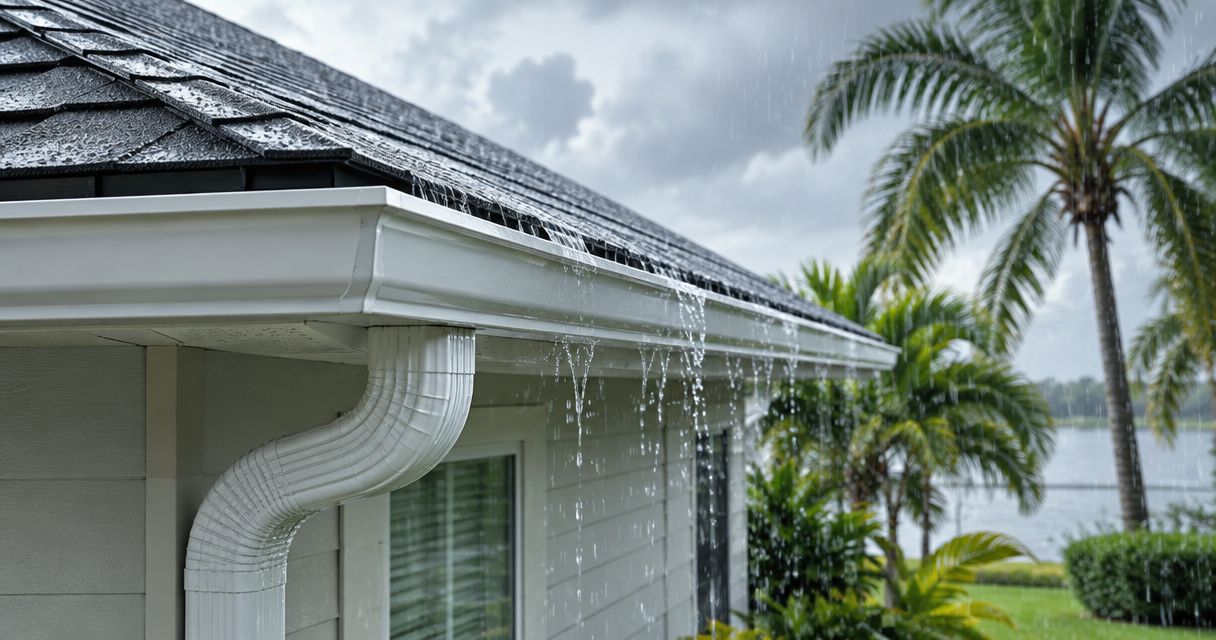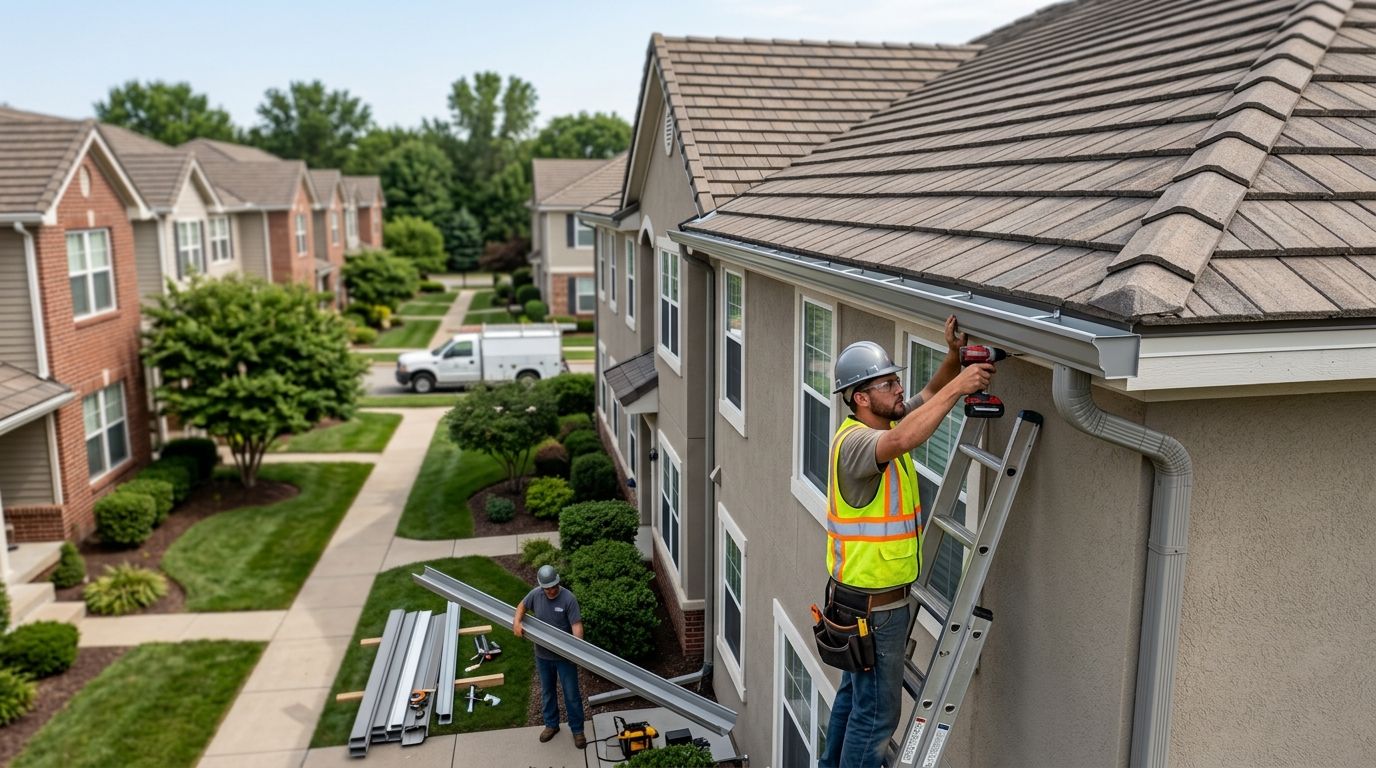
HOA and condo gutter installation covers the seamless gutter systems, downspouts, and drainage tied to common-area roofs — clubhouses, breezeways, carports, mailbox kiosks, and shared building perimeters — installed to move roof runoff away from foundations, walkways, and parking areas the association is legally responsible for maintaining. A single-family homeowner picks a gutter color and signs a contract. An HOA board has to clear a bid through committee, tie the cost to a reserve fund line item, and make sure the drainage plan doesn't conflict with a stormwater easement shared by six other buildings.
- Gutter installation for HOA and condo common areas needs board sign-off, a scoped bid, and drainage that clears shared easements.
- Seamless aluminum gutters cut seam failures across long clubhouse and carport runs common in Cape Coral and Fort Myers associations.
- Roof Smart of SW Florida quotes HOA gutter work by building, not by unit, so boards can phase installs across a reserve budget.
- Skipping a wind-load check on gutter guards can void manufacturer coverage before hurricane season even starts.
Why gutter installation matters for HOA and condo boards
Common-area roofs in Southwest Florida associations shed water onto shared walkways, parking lots, and building foundations that the HOA insures collectively — not the individual unit owner. When a clubhouse or carport roof dumps runoff at one corner instead of a controlled downspout, the association eats the cost of the cracked pavers, the eroded landscaping bed, or the stucco stain that shows up in the next reserve inspection.
Boards also answer to different pressure than a single homeowner: a wet parking spot near a condo entrance is a slip-and-fall claim against the association, not against one resident. That shifts the priority from cosmetics to liability, and it's why gutter installation for HOA and condo properties usually gets bundled with the commercial roofing for HOA and condo communities scope rather than treated as a stand-alone gutter job.
2026 hurricane season runs the same window it always has — June through November — and any gutter system installed on common property needs to survive that window without the board fielding a dozen complaint calls after the first named storm.
How to plan gutter installation for HOA and condo common areas
Get board sign-off before scoping the job
A gutter bid that shows up as a surprise line item at a board meeting gets tabled. Walk in with the numbers already tied to governance.
- Pull the reserve study and confirm gutters are a budgeted capital item, not an unplanned expense
- Get 3 competing bids scoped to the same drawings so the board compares apples to apples
- Check the covenants for any requirement on gutter color or style matching the building facade
- Document the vote in board minutes before signing a contract
- Confirm whether the cost gets split evenly or weighted by building square footage
Map every common-area roof line before bidding
HOA and condo properties rarely have one roof — they have a clubhouse, a row of carports, a pool cage, and sometimes a standalone mailbox kiosk, each with its own drainage problem.
- Clubhouse roof perimeter and any interior valleys
- Carport rows, which often lack gutters entirely on older properties
- Pool cage and lanai runoff points where water pools near decking
- Mailbox kiosk or gatehouse roofline
- Any covered walkway connecting buildings
- Parking garage overhangs on multi-family properties
Choose the gutter system built for the run length
Most single-family gutter guides default to whatever's cheapest at the hardware store. Common areas run longer, straighter lengths, and that changes the calculus.
- Seamless aluminum: fabricated on-site in continuous runs, the standard pick for clubhouse and carport perimeters because it has no horizontal seams to fail
- Sectional vinyl: cheaper per foot but seams open up faster under the downpour volume Southwest Florida gets from June through September
- Half-round copper: used on higher-end clubhouse facades where the association wants a specific architectural look
- Box gutters built into a flat commercial roofline: common on flat clubhouse roofs, but repairs require roof-level access rather than a ladder
A property management team weighing this against a general how-to should read how to install seamless gutters on a Florida home for the baseline install process, then adjust for the longer runs and multiple rooflines a common-area job adds.
Size downspouts to the actual roof square footage, not the building count
A downspout sized for a 1,800 square foot single-family roof does nothing on a 6,000 square foot clubhouse roof — it just backs up during a heavy rain event.
- Calculate total roof square footage per drainage zone, not per building
- Add a downspout for every 30-40 linear feet of gutter on a high-volume roofline
- Route downspouts away from foundations and shared walkways, not just to the nearest exterior wall
- Check that downspout discharge doesn't create a new puddling point on a neighboring unit's patio
Match drainage to existing stormwater easements
Many HOA properties in Cape Coral, Fort Myers, and Naples sit inside a platted stormwater easement that dictates where runoff has to go. Installing gutters that dump water outside that easement can put the association in violation of its own covenants or a county drainage ordinance.
- Pull the plat or site drainage plan before finalizing downspout placement
- Confirm discharge points tie into existing swales or drains, not a neighbor's property line
- Flag any grading issue to the contractor before installation, not after
Add gutter guards only after checking the wind rating
Gutter guards get pitched as a maintenance shortcut, and for an association trying to cut landscaping crew callbacks, that's appealing. The catch: not every guard is rated for the wind loads Southwest Florida sees.
- Request the manufacturer's wind rating documentation before approving guards
- Compare options against best gutter guards for Florida storms before locking in a brand
- Confirm the guard warranty stays valid after a named storm, not just under normal weather
Get an HOA gutter scope and bid
Board-ready pricing for common-area gutter and roofline work.
Comparison: gutter options for HOA and condo common areas
| Option | Best for | Key limitation |
|---|---|---|
| Seamless aluminum | Clubhouse and carport runs, most SW Florida associations | Requires on-site fabrication truck, weather-dependent scheduling |
| Sectional vinyl | Small single-building associations on tight budgets | Seams open faster under heavy rain volume |
| Half-round copper | Higher-end clubhouse facades with architectural standards | Higher install complexity, needs specialized hangers |
| Built-in box gutters | Flat clubhouse or commercial-style roofs | Repairs require roof-level access, harder for a board to inspect |
Verdict: seamless aluminum is the default for most HOA and condo common-area jobs in 2026 — it handles the longer runs typical of carports and clubhouses without the seam failures that show up on sectional systems within a few storm seasons.
Common mistakes HOA and condo boards make with gutter installation
- Treating gutter work as a per-unit expense instead of a common-area capital project, which creates confusion over who pays and delays the vote
- Skipping the reserve study line item, then getting flagged in the next association financial audit for an unbudgeted repair
- Approving a bid without a wind-rating document for gutter guards, which can void coverage the first time a named storm rolls through
- Ignoring drainage easements and routing downspouts onto a neighboring unit's patio, which turns a maintenance project into a dispute
- Scheduling installation mid-hurricane season when contractor availability is tightest and materials take longer to source
Roof Smart of SW Florida scopes HOA and condo gutter work by building and by drainage zone, not by unit count, which is the detail most bids skip and boards regret later.
FAQ
Who pays for gutter installation on HOA common areas?
The association pays for gutter installation on common-area roofs — clubhouses, carports, and shared walkways — out of the reserve fund or a special assessment, not individual unit owners. Some associations split the cost by building square footage rather than evenly across all units.
Do condo carports need gutters in Florida?
Most older carport rows in Southwest Florida were built without gutters, and that's usually why water pools near parking spots. Adding gutters to a carport run reduces standing water and the slip-and-fall liability that comes with it.
What's the best gutter material for HOA common areas?
Seamless aluminum is the standard choice for HOA and condo common areas in 2026 because it handles long clubhouse and carport runs without the seam failures sectional vinyl systems develop under heavy rain.
Does gutter installation require board approval?
Yes — gutter work on common-area roofs is a capital expense that needs board sign-off and, in most associations, a documented vote in the minutes before a contract is signed.
Can gutter guards void a warranty during hurricane season?
Some gutter guards are not rated for Southwest Florida wind loads, and installing an unrated guard can void the manufacturer's coverage during storm season. Always request wind-rating documentation before a board approves the purchase.
How does gutter drainage affect HOA insurance claims?
Poorly routed common-area drainage that damages a foundation, walkway, or landscaping bed becomes an association liability claim rather than an individual homeowner claim, which is why boards budget it as a shared capital cost.
Should gutter installation happen before or after roof replacement?
Gutter installation on common-area buildings should happen after any roof replacement or major repair, since the roofline and drip edge often change and new gutters installed first may need re-hanging.
One last thing
The detail most HOA gutter bids skip: downspout placement has to be checked against the property's stormwater easement, not just against where the nearest exterior wall happens to be — get that wrong on a shared drainage zone and the association can end up in a covenant dispute over a $200 downspout.