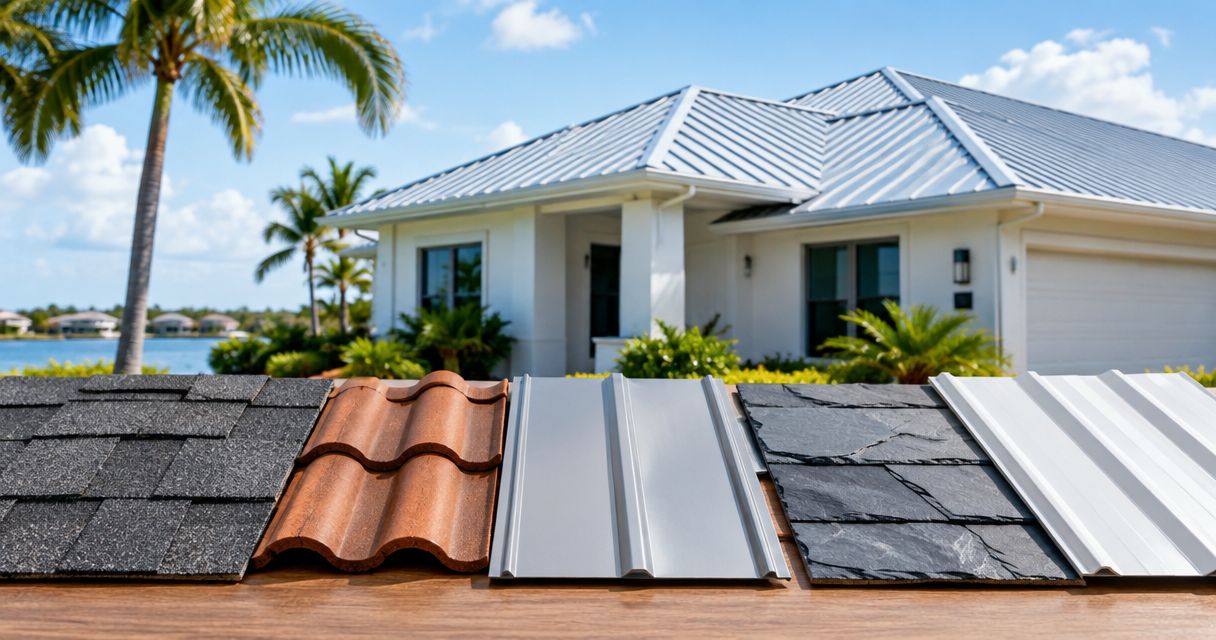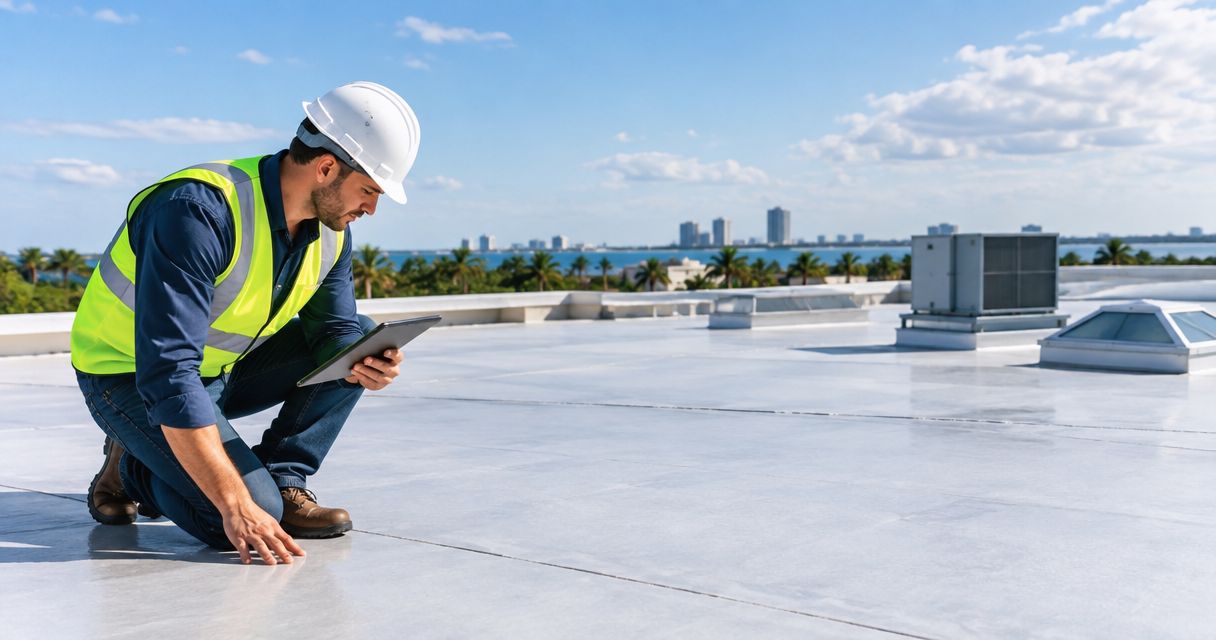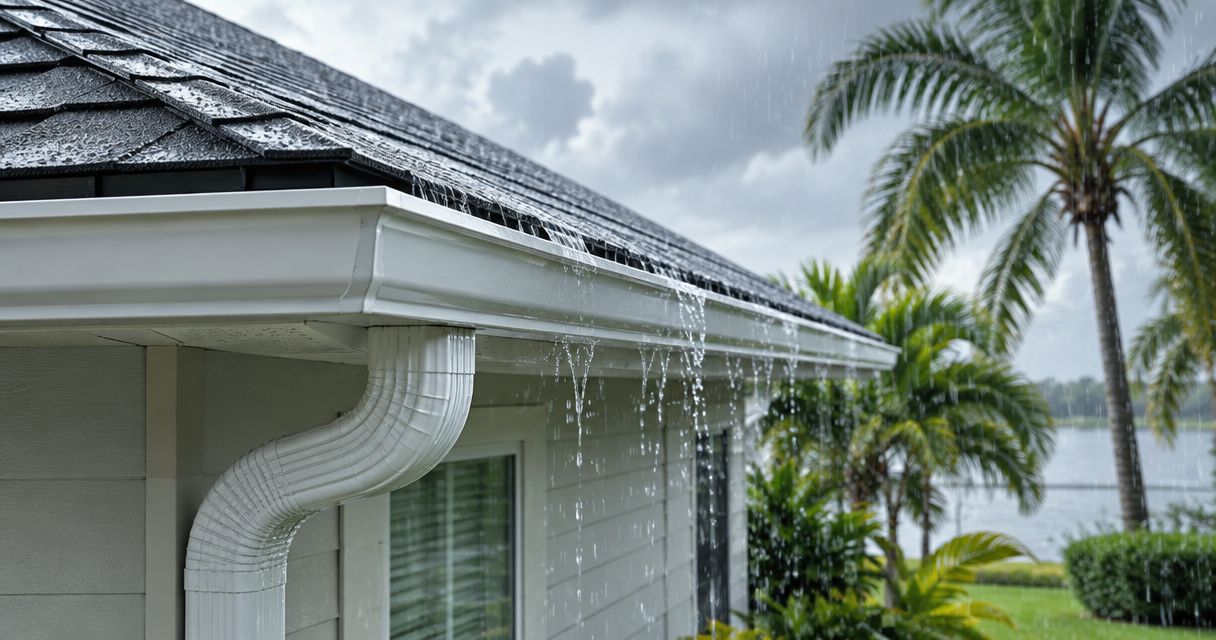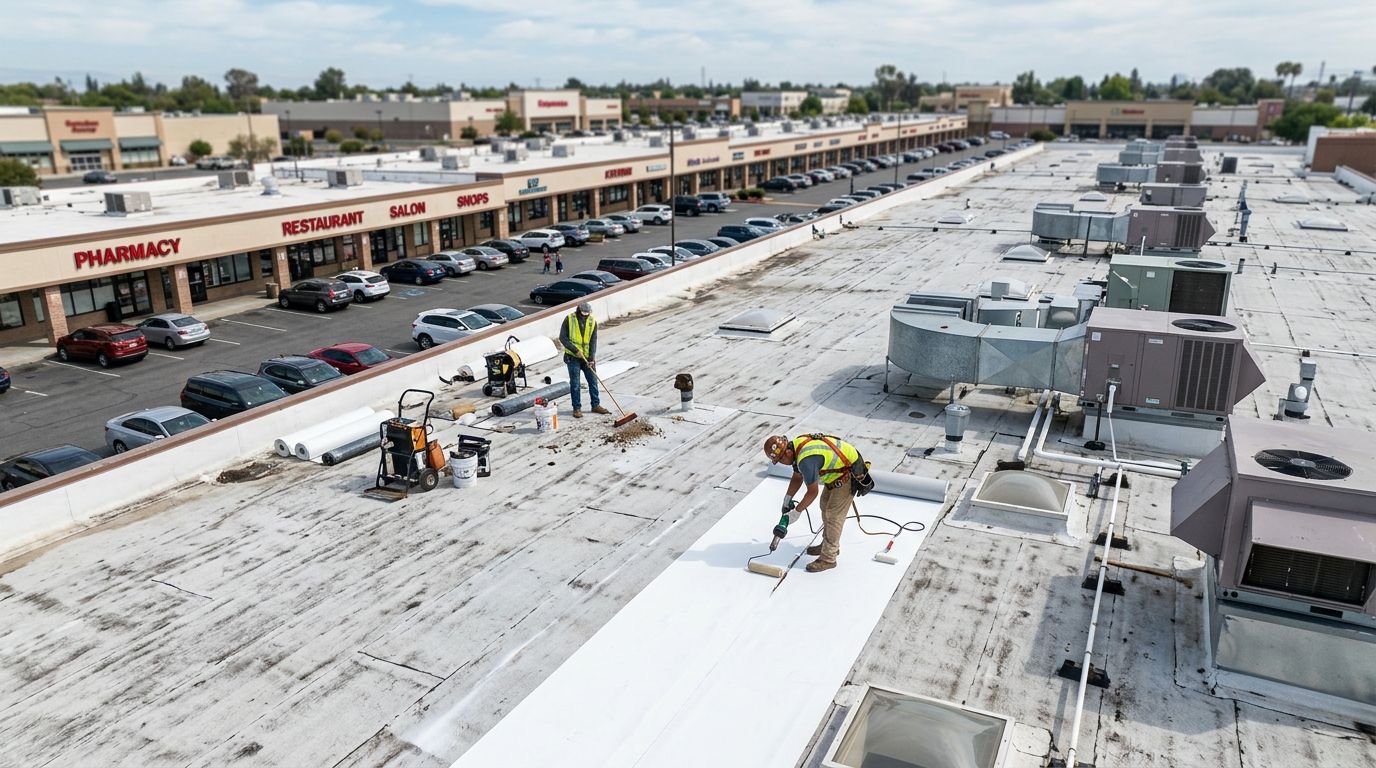
Flat roof repair for strip malls and shopping centers means patching or replacing the membrane, flashing, and drainage system on a low-slope commercial roof without shutting down tenants who are still paying rent. The stakes are different from a single-family home: a leak over one storefront becomes a liability claim from three neighboring businesses, and a botched patch job can shut down a nail salon or a pizza shop for a weekend it can't afford.
- Flat roof repair for strip malls in 2026 centers on ponding water, flashing failures, and multi-tenant coordination, not just membrane age.
- Roof Smart of SW Florida treats strip mall roofs as shared infrastructure — repair plans account for CAM billing and tenant hours, not just the leak.
- Roof coatings extend a flat roof's service life for a fraction of a full tear-off, but only on membranes still structurally sound.
- Ponding water that sits more than 48 hours after rain is the single biggest predictor of premature flat roof failure in Southwest Florida.
Why flat roof repair matters for strip malls
A strip mall roof isn't one roof — it's one membrane covering five, ten, sometimes twenty different tenant spaces, each with its own lease, its own HVAC penetration, and its own opinion about who pays for repairs. When a leak shows up over the dry cleaner, the property manager gets calls from the dry cleaner, the insurance carrier, and the landlord's CAM reconciliation team, often the same afternoon.
Flat and low-slope roofs in Cape Coral, Fort Myers, and Naples take a beating that pitched shingle roofs don't: standing water after every summer downpour, UV breakdown on membranes with no shade, and rooftop HVAC units that get serviced by a dozen different contractors over the years, each one poking new holes in flashing. Flat roof repair for strip malls in 2026 is less about patching a hole and more about managing a system with multiple points of failure and multiple stakeholders.
Ignoring a small leak on a commercial flat roof rarely stays small. Water travels laterally under the membrane before it ever drips through a ceiling tile, so by the time a tenant reports a stain, the damage usually extends several feet from the actual entry point.
Update your inspection schedule
Most strip mall owners only think about the roof when a tenant complains. That's backward — the roof needs eyes on it before the complaint, especially heading into hurricane season.
- Walk the roof twice a year minimum: pre-summer and pre-hurricane season
- Check every rooftop penetration — HVAC curbs, vent stacks, satellite mounts — for cracked pitch pockets
- Photograph ponding areas after a rain event, not on a dry day when they're invisible
- Log flashing condition at parapet walls and roof-to-wall transitions separately from field membrane condition
- Keep a written inspection record for insurance renewal and CAM documentation
Fix ponding water before it becomes a leak
Standing water that doesn't drain within 48 hours accelerates membrane breakdown, adds dead load the structure wasn't designed for, and turns into an algae and debris trap. On a flat roof this large, ponding is rarely one bad spot — it's usually a drainage slope problem across a whole section.
- Identify low spots with a rain-event walk or a simple hose test
- Clear roof drains and scuppers of debris before assuming there's a structural issue
- Consider tapered insulation crickets to redirect water toward existing drains
- Rule out a clogged or undersized drain before recommending a full re-slope
Repair flashing and seams around rooftop equipment
Most commercial flat roof leaks don't start in the open field of the membrane — they start at a seam, a curb, or a flashing detail where two materials meet. Every HVAC unit, satellite dish, and conduit run is a potential entry point.
- Reseal pitch pockets and curb flashing annually, not just when a leak appears
- Inspect parapet wall caps for cracked mortar or lifted metal coping
- Check seam tape and welds on TPO and modified bitumen roofs for UV cracking
- Coordinate with any HVAC contractor working on the roof so new penetrations get properly flashed, not just caulked
Coordinate repairs around tenant operating hours
A strip mall isn't a vacant building — restaurants, salons, and retail stores need to stay open during repair work, and roofing crews need safe, dry conditions to work in. Poor scheduling turns a two-day repair into a week of tenant complaints.
- Schedule loud or disruptive work (tear-off, equipment moves) before opening hours when possible
- Notify tenants in writing at least a week ahead, especially for anything involving roof access through their unit
- Stage materials away from customer parking and walkways
- Have a rain contingency plan so an exposed section isn't left open overnight
Decide between spot repair, coating, and full replacement
Not every leak needs a new roof, and not every roof coating is a substitute for one. This is where a lot of property managers either overspend on a premature tear-off or underspend on a coating that was never going to hold.
- Spot repair fits isolated flashing or seam failures on a membrane with 5+ years of remaining life
- A roof coating extends service life on membranes that are UV-damaged but not structurally compromised — see roof coatings for commercial flat roofs in Florida for how that decision gets made
- Full replacement is the right call when multiple sections show recurring leaks, widespread ponding, or membrane brittleness during inspection
- Get a straight answer on repair-versus-replace before signing a contract — the guide on roof repair vs. roof replacement in Florida breaks down the cost logic
Document everything for insurance and CAM billing
Strip mall roof repairs often get billed back to tenants through CAM (common area maintenance) charges, and insurance carriers want proof of maintenance before they'll pay a storm claim without a fight.
- Keep dated photos of every repair, not just the final invoice
- Separate routine maintenance costs from storm-damage repair costs in the paper trail
- Request itemized invoices that break out labor, materials, and specific roof sections
- Retain warranty documentation for any coating or membrane work performed
Get a strip mall roof assessment
A straight answer on repair, coating, or replacement before you spend a dollar.
Comparison: flat roof repair and replacement options for strip malls
| Option | Best for | Key limitation |
|---|---|---|
| Spot flashing/seam repair | Isolated leaks on a membrane under 10 years old | Doesn't address widespread ponding or UV-brittle membrane |
| Roof coating (elastomeric/silicone) | UV-damaged membrane still structurally sound | Won't fix an active leak source or reslope drainage |
| Modified bitumen re-cover | Aging BUR roofs needing a fresh wear layer | Adds weight; requires structural check first |
| TPO full replacement | Roofs with recurring leaks or widespread ponding | Highest upfront disruption to tenant operations |
| Tapered insulation re-slope | Chronic ponding across a large flat section | Addresses drainage only, not membrane condition |
Roof Smart of SW Florida's take: coatings and spot repair buy time on a sound membrane; once ponding is chronic across multiple sections, replacement is the cheaper option over a five-year horizon, not the more expensive one.
Common mistakes strip malls make on flat roof repair
- Waiting for a tenant complaint instead of inspecting proactively. By the time water shows up on a ceiling tile, it's usually traveled several feet from the actual leak.
- Patching the same spot repeatedly instead of finding the root cause. A seam that keeps opening is a sign of movement or drainage stress, not a defective patch.
- Letting HVAC contractors work on the roof without flashing sign-off. New penetrations added during equipment swaps are a leading cause of new leaks on otherwise sound roofs.
- Skipping the pre-hurricane season walk. Loose flashing and clogged drains that survive a light rain fail completely under a tropical storm's rainfall rate.
- Treating CAM tenants as an afterthought during scheduling. Unannounced roof work during business hours generates more tenant complaints than the leak itself did.
FAQ
How much does flat roof repair for strip malls cost in 2026?
Cost depends on whether the job is a spot flashing repair, a coating application, or a full membrane replacement — get a written scope from an inspection before assuming a number. Multi-tenant roofs also add cost for coordinating access and business-hour scheduling.
Can a strip mall stay open during flat roof repair?
Yes — most spot repairs and coating work happen without disrupting tenants when scheduled around business hours. Full tear-off and replacement require more coordination but can still be phased section by section.
How often should a strip mall roof be inspected?
Twice a year at minimum: once before summer storm season and once before hurricane season. Roofs with known ponding or aging flashing warrant a third check after any major storm.
Is a roof coating better than a full roof replacement for a shopping center?
A coating is better when the membrane is UV-damaged but structurally sound, since it extends service life without a full tear-off. It's not a substitute for replacement once ponding or leaks are widespread across multiple roof sections.
Who pays for flat roof repair on a multi-tenant commercial building?
That depends on the lease structure — many strip malls bill roof maintenance through CAM charges to tenants, while storm damage often routes through the landlord's insurance policy. Documentation of repair history matters for both.
What causes ponding water on a strip mall roof?
Ponding usually comes from insufficient drainage slope, clogged roof drains or scuppers, or structural settling over time. Water sitting more than 48 hours after rain accelerates membrane breakdown and should be addressed before it becomes a leak.
Does flashing failure or membrane failure cause more strip mall roof leaks?
Flashing and seam failures around rooftop penetrations cause the majority of commercial flat roof leaks, not open-field membrane failure. HVAC curbs, parapet walls, and vent stacks are the highest-risk points.
How long does a flat commercial roof last in Southwest Florida?
Service life varies by material and maintenance history, with coated and well-drained roofs lasting longer than roofs with chronic ponding. Regular inspection and prompt flashing repair extend life more than the membrane material choice alone.
One last thing
The roofs that fail early on strip malls almost never fail because the membrane wore out on schedule — they fail because a flashing detail around one HVAC unit got recaulked instead of properly reflashed, three years in a row, by three different contractors who never saw the roof before or after. Ask any contractor bidding a repair whether they're fixing the flashing detail or just covering it again, and you'll know within thirty seconds whether they've actually walked the roof or just looked at photos.