Restaurants and retail storefronts run on foot traffic and fixed hours, so a leaking roof isn't a maintenance item — it's a closed sign. Commercial roofing for restaurants and retail storefronts has to account for kitchen exhaust, HVAC loads, customer safety, and a business that can't sit dark for a week while a crew figures out the right system.
- Commercial roofing for restaurants needs a flat or low-slope system rated for kitchen exhaust, grease traps, and rooftop HVAC units.
- TPO and modified bitumen hold up better than aging built-up roofing on Southwest Florida storefronts after summer storms.
- Roof Smart of SW Florida schedules restaurant and retail roof work around open hours to limit lost revenue.
- Skipping a maintenance plan is the most common mistake — ponding water voids most commercial roof warranties.
- Wind mitigation documentation matters as much for a strip mall roof as it does for a house in 2026.
Why commercial roofing for restaurants and retail storefronts is different
A house roof has one owner, one insurance policy, and no walk-in cooler compressor bolted to the deck. A restaurant or retail roof has a landlord, a tenant lease, rooftop equipment that punches penetrations everywhere, and customers underneath who can't be asked to wait out a repair.
Flat and low-slope systems dominate this segment because storefronts and restaurant buildings are usually built with parapet walls and rooftop mechanical space, not the pitched trusses you see on residential work. That changes everything about how water moves off the roof, how a leak gets found, and how fast a small problem turns into a health-code issue over a walk-in freezer or a point-of-sale system.
Businesses across Cape Coral, Fort Myers, and Naples deal with the same storm exposure as homeowners, plus the added pressure of a lease clock and a landlord who wants the roof fixed without a shutdown. Roof Smart of SW Florida's commercial roofing services in Naples work around that reality, scheduling around business hours instead of around convenience for the crew.
Step 1: Inspect the roof before it becomes a health-code problem
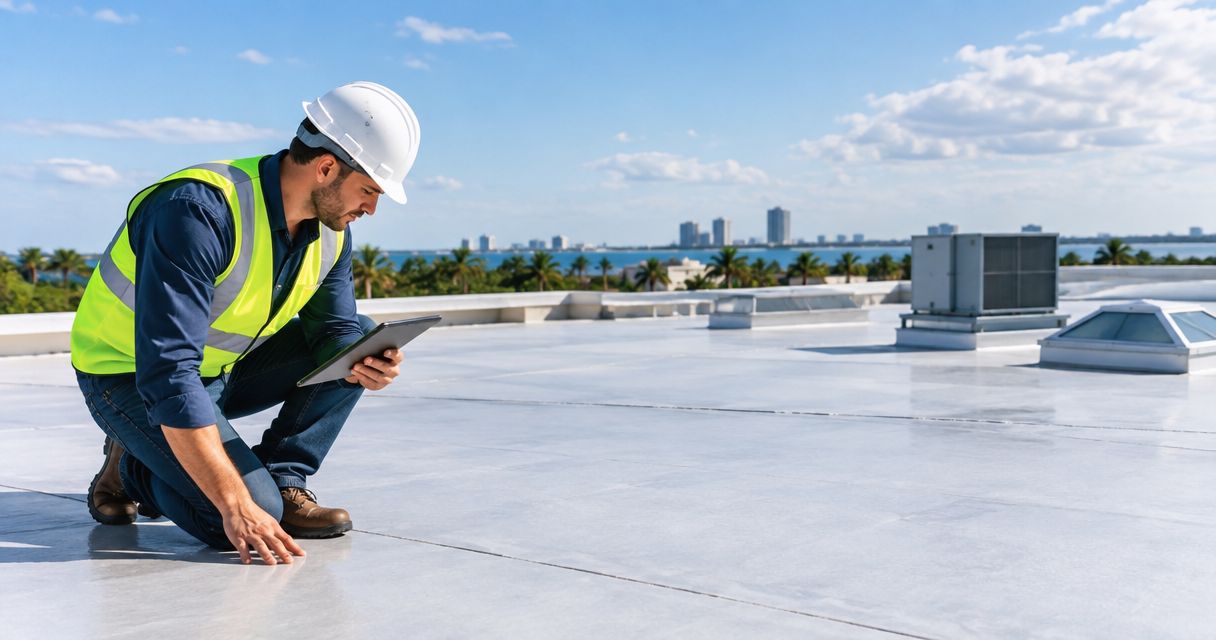
Most restaurant roof failures start small — a cracked pitch pan around a vent stack, a seam that's been ponding water for two summers. By the time it shows up as a ceiling stain over the dining room, the deck underneath may already be soft.
- Check every rooftop penetration: exhaust fans, AC condensers, plumbing vents, satellite mounts
- Look for ponding water that sits more than 48 hours after rain
- Inspect flashing at parapet walls and any rooftop equipment curbs
- Check grease exhaust duct connections for corrosion or gaps
- Photograph and date-stamp any soft spots on the membrane
- Note any repairs patched with roof cement instead of proper flashing
Step 2: Match the roofing system to kitchen and equipment loads
A retail storefront with light rooftop equipment has different needs than a restaurant running a full kitchen exhaust system and a walk-in condenser on the roof. Grease, heat, and foot traffic from technicians all shorten the life of the wrong membrane.
- TPO single-ply for restaurants with heavy rooftop HVAC and exhaust traffic
- Modified bitumen where extra puncture resistance is needed near equipment pads
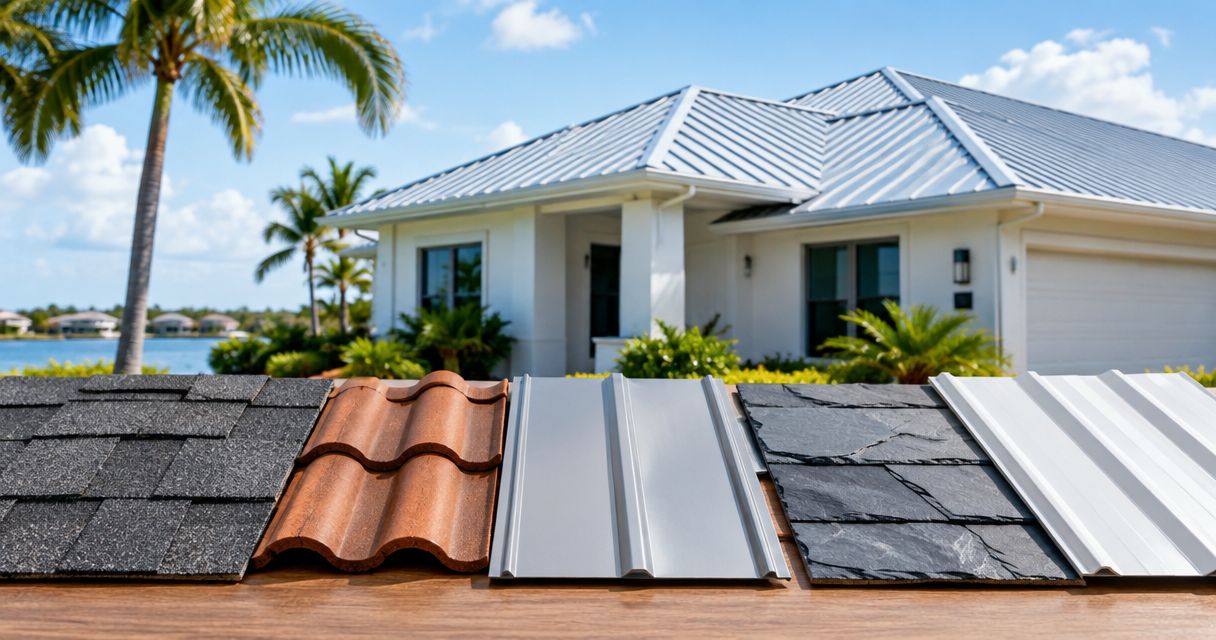
- Metal roofing on street-facing storefront facades for a longer service life
- Roof coatings over an existing flat roof that's structurally sound but aging
- Reinforced flashing kits anywhere grease exhaust ducts penetrate the deck
This is where a system upgrade, not just a patch, makes financial sense. Roof Smart of SW Florida walks owners through the best roofing options for flat commercial roofs before recommending anything, because the cheapest fix isn't always the one that survives a Florida kitchen's heat cycle.
Step 3: Plan installation or replacement around business hours
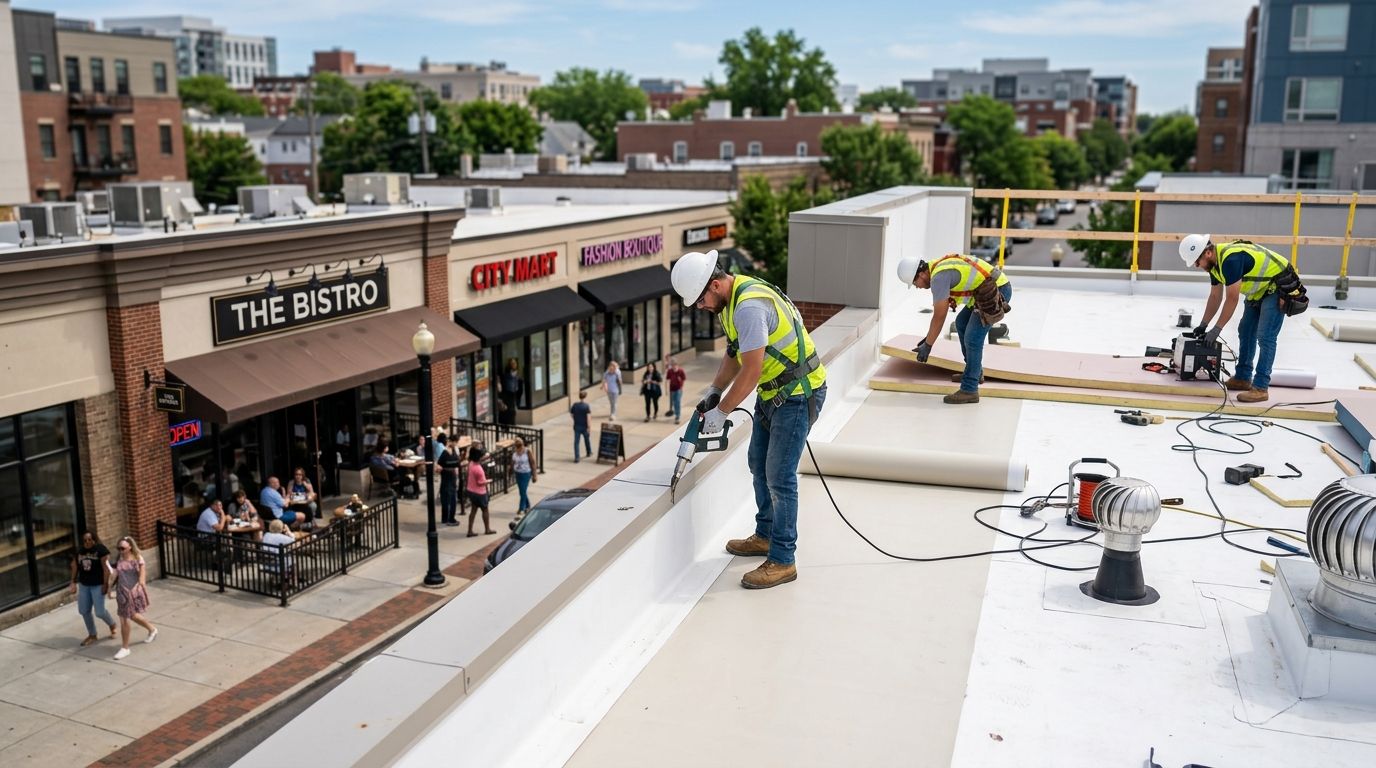
A restaurant can't close for a week during roof replacement, and a retail storefront can't block its entrance during peak shopping hours. Sequencing matters as much as the materials.
- Schedule tear-off and dry-in phases for early morning or overnight windows
- Stage materials off the main customer entrance and parking approach
- Coordinate with kitchen exhaust shutdowns instead of full building closures
- Confirm noise and dust control plans with adjacent tenants in a shopping center
- Set a firm completion date tied to lease or health inspection deadlines
Step 4: Budget for wind mitigation and code compliance
Florida Building Code treats commercial roofs differently than residential ones, and insurers pay close attention to how a roof was fastened and flashed. A restaurant roof that fails an inspection over a missing permit costs more in delay than the repair itself.
- Confirm the permit covers the full scope, not just a partial re-roof
- Verify fastening patterns meet current wind-uplift requirements for the building's exposure category
- Keep documentation on file for insurance renewal and any 4-point inspection request
- Ask whether the roof qualifies for a wind mitigation credit on the commercial policy
Step 5: Set up a maintenance plan instead of waiting for leaks
A reactive approach — call someone when it leaks — costs more over five years than a scheduled inspection plan. Flat roofs especially need someone checking drains and seams twice a year, not once a decade.
- Semi-annual inspections timed before and after hurricane season
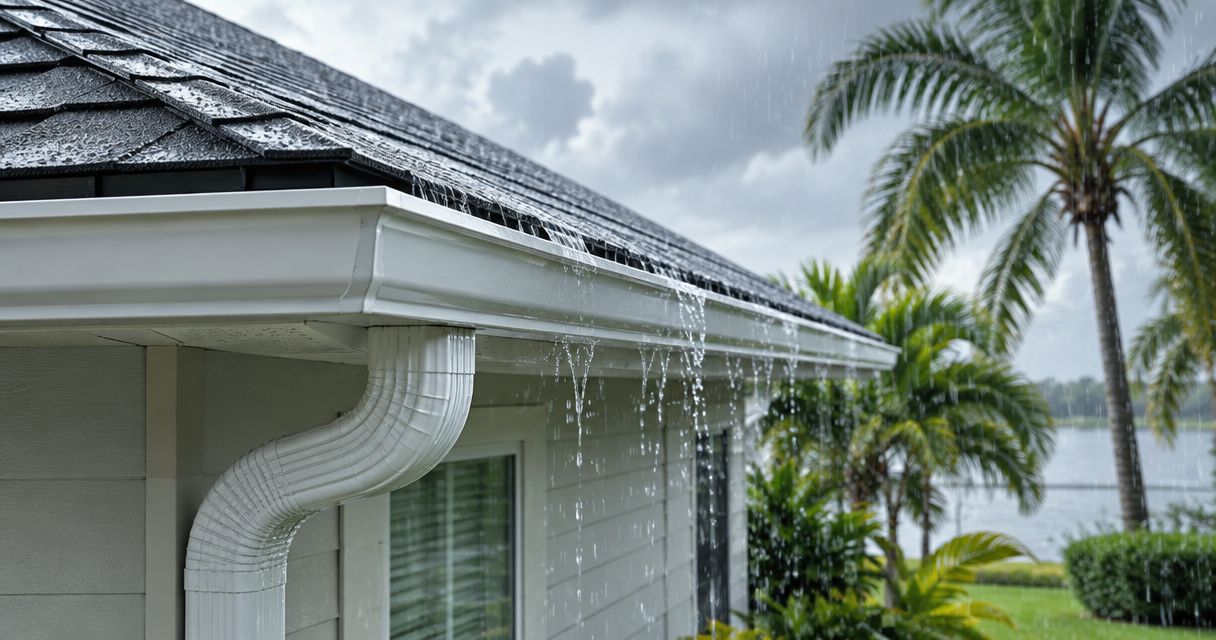
- Drain and scupper cleaning to stop ponding before it starts
- Seam and flashing checks at every rooftop equipment penetration
- Documented photo records for lease renewals and insurance audits
- A response plan already in place before storm season arrives
Roof Smart of SW Florida's roof maintenance plans for commercial property managers exist for exactly this: catching the small stuff before it becomes a closed-for-repairs sign.
Step 6: Get the paperwork right for insurance and lease requirements
Many commercial leases put roof maintenance responsibility on the tenant while the landlord owns the structure. That split causes more delayed repairs than any material failure. Sort out who signs off on what before a leak forces the question.
- Confirm which party's insurance covers roof damage in the lease
- Get written estimates the landlord can approve without delay
- Keep a maintenance log the tenant can hand off at lease renewal
- Ask for warranty documentation transferable to a new tenant or owner
Comparing roofing systems for restaurants and retail storefronts
| Option | Best for | Key limitation |
|---|---|---|
| TPO single-ply | Restaurants with heavy rooftop HVAC and grease exhaust | Seams need professional welding, not a DIY patch |
| Modified bitumen | Storefronts needing puncture resistance near equipment | Heavier install, longer labor time than single-ply |
| Metal standing seam | Street-facing storefront facades and mixed-use fronts | Higher upfront labor cost than a flat coating |
| Roof coating/restoration | An aging flat roof that's structurally sound | Only extends life — doesn't fix a failing deck |
| Built-up roofing (BUR) | Legacy buildings already fitted with BUR | Older systems, harder to patch without full tear-off |
Verdict: TPO single-ply is the safest default for most restaurant kitchens in 2026, and a roof coating is the right call only when the existing deck is confirmed sound.
Common mistakes restaurants and retail storefronts make
- Ignoring ponding water because the roof "isn't leaking yet" — most commercial warranties exclude damage caused by standing water, and by the time it leaks the membrane underneath is compromised.
- Patching grease exhaust penetrations with roof cement instead of proper flashing, which fails again within a season in Florida heat.
- Skipping the pre-storm inspection because the restaurant is busy in season, then facing an emergency tarp job mid-hurricane.
- Letting the lease dispute over who pays delay the repair while the leak keeps spreading into the dining room ceiling.
- Choosing the cheapest coating over a failing deck instead of confirming structural soundness first, which just delays a full replacement at higher cost.
Get a free commercial roof estimate
Honest evaluation, scheduled around your business hours.
FAQ
What's the best roof for a restaurant in Southwest Florida?
TPO single-ply is the most common choice for restaurants in 2026 because it handles rooftop HVAC and grease exhaust traffic better than older built-up systems. Modified bitumen is a solid alternative where extra puncture resistance is needed near equipment pads.
Is a roof coating cheaper than a full replacement for a storefront?
A coating extends the life of a flat roof that's structurally sound, but it does not fix a failing deck or damaged insulation underneath. A roof inspection has to confirm the deck is sound before a coating makes sense.
How long does a restaurant roof replacement take?
Timing depends on roof size and system, but sequencing tear-off and dry-in around business hours is what keeps a restaurant open during the work. Ask for a phased schedule before signing a contract.
Who pays for roof repairs in a commercial lease, landlord or tenant?
It depends on the lease terms, and many disputes over commercial roof repairs come down to unclear language about who's responsible. Get this in writing before a leak forces the question.
Does a storefront roof need wind mitigation inspection like a house?
Commercial roofs in Florida are subject to the same wind-uplift code requirements as residential ones, and insurers look at fastening and flashing during renewal. A wind mitigation inspection can affect the commercial policy the same way it does for homeowners.
What causes most restaurant roof leaks?
Failed flashing around grease exhaust penetrations and ponding water at low spots cause most restaurant roof leaks in Southwest Florida. Both are catchable during a routine inspection before they reach the dining room ceiling.
How often should a commercial flat roof be inspected?
Twice a year is standard for flat commercial roofs — once before hurricane season and once after. Restaurants with heavy rooftop equipment traffic may need more frequent checks around exhaust and HVAC penetrations.
Can a leaking roof affect a restaurant's health inspection?
Yes. Water intrusion near food prep or storage areas can trigger a failed health inspection, which makes fast, documented repair response part of running the business, not just a maintenance line item.
One last thing
Most restaurant roof failures Roof Smart of SW Florida sees in 2026 didn't start as leaks — they started as ponding water nobody measured for two summers straight. A five-minute check after every heavy rain, looking for standing water that hasn't drained in 48 hours, catches the problem years before it reaches the dining room ceiling.