Naples sits in one of the toughest wind zones in Southwest Florida, and that changes what "the best metal roofing" actually means here versus inland Florida or the Panhandle. This guide breaks down what matters for Naples homes and small commercial buildings, which panel types earn a buy, and which ones look good in a showroom but fail on a barrier-island lot.
- Standing seam steel and aluminum both earn a Buy for metal roofing Naples homeowners near the Gulf in 2026.
- Exposed-fastener corrugated panels are a Skip within a mile of saltwater — gaskets degrade faster than the metal itself.
- Florida Building Code wind-speed requirements along the Collier County coast run up to 150 mph, and product approval matters more than brand name.
- A wind mitigation inspection after a metal roof install can lower your windstorm insurance premium.
Why this matters
Metal roofing in Naples isn't a style choice the way it is in Ohio or Colorado. You're buying into salt air, direct Gulf humidity, and wind-speed design requirements that most asphalt shingle systems can't touch. A roof rated for 110 mph somewhere else won't clear inspection or insurance underwriting here.
Get the system wrong and you're looking at premature fastener corrosion, voided manufacturer warranties, or a wind mitigation report that doesn't earn you the insurance credit you were counting on. Get it right and a properly installed metal roof outlasts two or three asphalt reroofs on the same house. Roof Smart of SW Florida handles this exact call for homeowners across Naples, Fort Myers, and Cape Coral every week — the criteria below reflect what actually holds up on the coast, not a generic buying guide written for a different climate.
Who this is for
This guide is for two groups: Naples homeowners replacing an aging tile or shingle roof who want 40-plus years out of the next one, and small commercial property owners weighing metal against a flat membrane system. If you're within a mile or two of the Gulf, salt exposure should drive your material choice more than price per square foot. If you're farther inland toward Golden Gate Estates, you have a bit more flexibility on coating grade, but the wind-speed requirement doesn't change — it's set by county wind maps, not distance from water.
What to look for in metal roofing for Naples homes
Wind rating tied to Florida Building Code
Collier County sits in a design wind-speed zone that runs up to roughly 150 mph along the coastline under the Florida Building Code. Any metal system you install needs a current Florida product approval or Miami-Dade Notice of Acceptance rated to match your specific address, not a generic "hurricane-rated" label on the box. Ask for the approval number before you sign anything — a licensed contractor pulls it in minutes.
Corrosion resistance for salt air exposure
Steel and aluminum both work, but they age differently near saltwater. Aluminum doesn't rust, which makes it the stronger long-term pick within a mile or two of the Gulf; coated steel needs a marine-grade finish (Kynar 500 or equivalent) to hold up the same way. Skip anything with a basic galvanized coating and no marine-rated topcoat if you can see or smell the water from your yard.
Panel type and fastening system
Standing seam panels use concealed clips with no exposed screw heads, which means no gasket to fail and no fastener backing out under wind uplift. Exposed-fastener corrugated panels are cheaper up front but every screw is a future leak point once the neoprene washer hardens in the sun — usually inside 10 to 15 years in this climate.
Underlayment and deck prep
A metal panel is only as good as what's under it. Self-adhering, high-temp underlayment is standard practice for Florida metal roofs now, and any contractor skipping it to save a step is cutting a corner that shows up as deck rot, not immediately, but eventually.
Lifespan versus upfront cost
Standing seam systems commonly run 40 to 60 years for steel and 50 to 70 years for aluminum, against roughly 15 to 20 years for a typical asphalt shingle roof in this climate. The cost per square foot is higher on day one; the cost per year of service is usually lower.
Wind mitigation credit eligibility
A metal roof installed to current code, with the right fastening and secondary water barrier, typically qualifies for stronger wind mitigation credits than an older shingle roof. That's worth a real inspection, not a guess — a wind mitigation inspection in Naples documents the specifics your insurer needs to apply the discount.
Top picks for Naples conditions
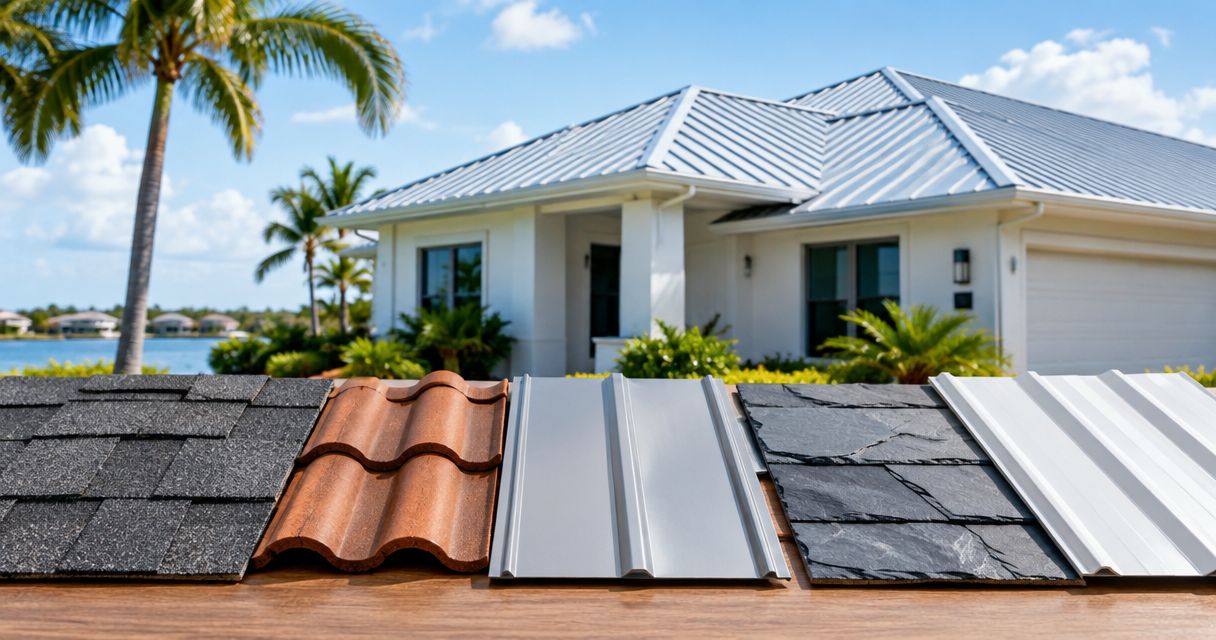
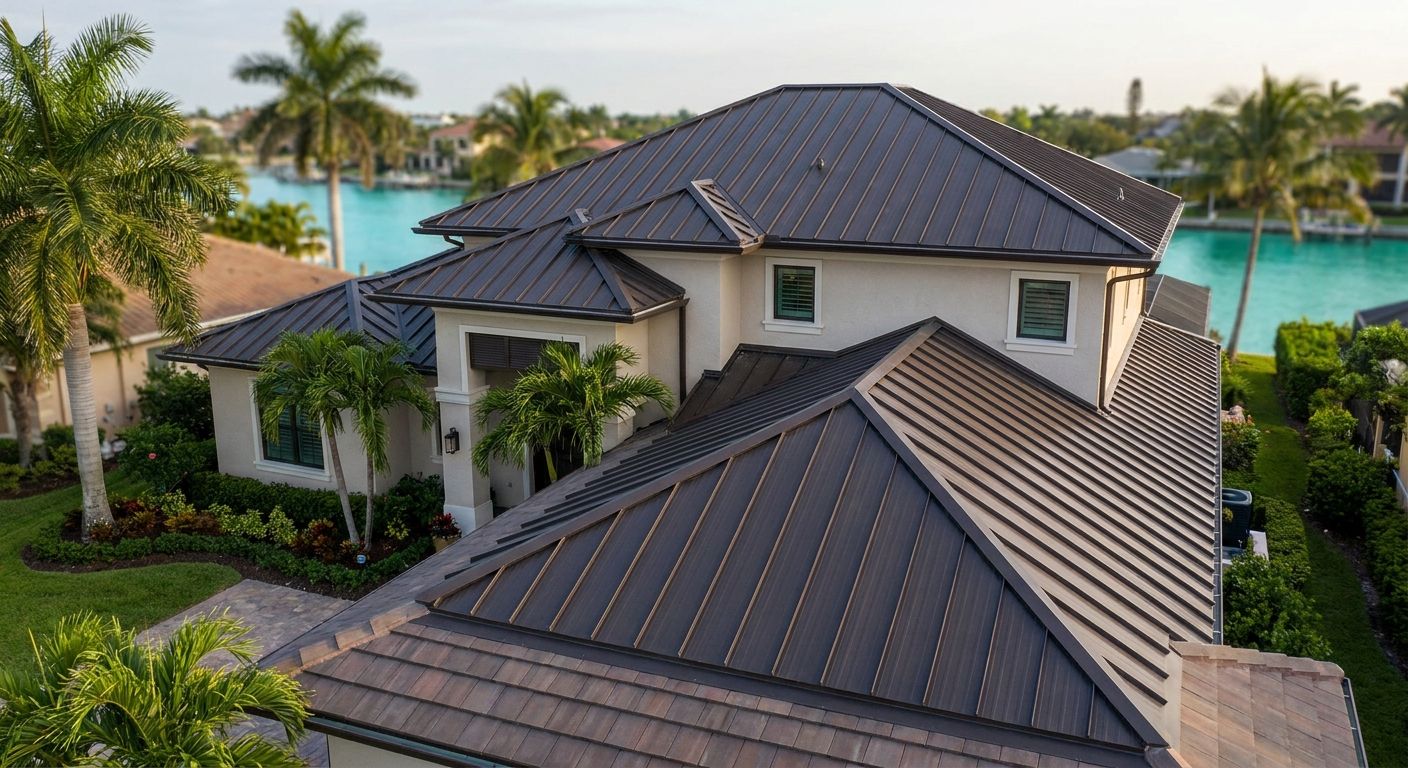
Standing seam steel — the safe pick. 24-gauge steel with a Kynar finish and concealed fasteners is the standard workhorse choice for Naples homes, rated to meet Florida Building Code wind speeds up to 150 mph with the right product approval. Verdict: Buy.
Standing seam aluminum — the coastal specialist. Costs more than steel but doesn't rust, which matters if you're within a mile of the Gulf or on a canal lot with constant salt spray. Verdict: Buy for waterfront and near-coastal properties.
Stone-coated steel tile — the aesthetic compromise. Built to mimic the look of a barrel tile roof while carrying metal's wind performance, useful in HOA communities that require a tile profile. Wind ratings typically run 120 to 150 mph depending on the product line. Verdict: Consider if your HOA restricts flat metal panels.
Metal shingles — the transitional option. A middle ground for homeowners moving off asphalt who aren't ready for a full standing seam look, generally rated around 120 mph. Verdict: Consider for inland properties, weaker choice directly on the water.
Exposed-fastener corrugated panels — the budget trap. Lowest material cost per square foot, but the exposed screw gaskets are the first thing to fail in Gulf humidity, often inside 10 to 15 years. Verdict: Skip for any home within two miles of saltwater.
For commercial buildings, the calculus shifts slightly — larger roof decks, different drainage needs, and often a different wind exposure category depending on building height. A commercial roofing services page for Naples covers what changes for multi-tenant and retail properties specifically.
Get a metal roofing estimate in Naples
Free, no-pressure evaluation of your current roof and options.
What to avoid
- Uncoated galvanized steel panels. They look fine on the pallet and start showing rust streaks at fastener points within a few Naples wet seasons.
- "Hurricane-rated" claims with no product approval number. If a contractor can't produce a Florida product approval or Miami-Dade NOA matching your wind zone, that's a red flag, not a technicality.
- Skipping the underlayment upgrade to save money. It's a small line item on the estimate and the single biggest factor in whether your deck survives the next 30 years without hidden water damage.
Verdict comparison
| System | Typical Wind Rating | Corrosion Resistance | Lifespan | Verdict |
|---|---|---|---|---|
| Standing seam steel | Up to 150 mph (FBC) | Good with Kynar coating | 40-60 years | Buy |
| Standing seam aluminum | Up to 150 mph (FBC) | Excellent | 50-70 years | Buy |
| Stone-coated steel tile | 120-150 mph | Good | 30-50 years | Consider |
| Metal shingles | ~120 mph | Good | 30-50 years | Consider |
| Exposed-fastener corrugated | 110-140 mph | Fair, gasket-limited | 20-30 years | Skip near coast |
FAQ
What's the best metal roofing for Naples FL homes?
Standing seam steel or aluminum with concealed fasteners is the best metal roofing for Naples homes in 2026, since both meet Florida Building Code wind speeds up to 150 mph along the coast. Aluminum is the stronger pick for waterfront lots because it doesn't rust.
Is metal roofing better than tile in Naples?
Metal roofing generally outlasts tile in wind performance and long-term maintenance, with standing seam systems rated to higher wind speeds than most clay tile installations. Tile still wins on certain HOA aesthetic requirements, which is why stone-coated steel tile exists as a middle option.
How much does metal roofing cost in Naples FL?
Costs vary by panel type, roof size, and structural condition, so get a site-specific estimate rather than relying on a national average. Standing seam systems cost more upfront than asphalt shingles but typically need replacement far less often.
Does metal roofing meet Florida wind mitigation requirements?
A metal roof installed with the correct product approval, fastening pattern, and secondary water barrier can meet Florida Building Code wind requirements for Collier County. A wind mitigation inspection documents the specific features your insurer needs to see for a premium credit.
How long does a metal roof last in Southwest Florida?
Standing seam steel typically lasts 40 to 60 years in Southwest Florida, and aluminum can reach 50 to 70 years with proper coating. Both outlast a typical 15 to 20 year asphalt shingle roof in this climate by a wide margin.
Can metal roofing lower insurance premiums in Naples?
Yes, a metal roof that qualifies for wind mitigation credits can reduce windstorm insurance premiums, but the discount depends on documented features, not just the material. An inspection report is what your insurer actually requires to apply the credit.
Is standing seam better than metal shingles?
Standing seam generally outperforms metal shingles on wind uplift resistance and leak points, since it uses concealed fasteners instead of exposed screws. Metal shingles remain a reasonable choice for inland properties or homeowners wanting a more traditional shingle profile.
Does metal roofing hold up to Gulf coast salt air?
Aluminum and marine-coated steel both hold up well to Gulf coast salt air, while uncoated galvanized steel corrodes faster near the water. The closer your property sits to saltwater, the more that coating grade decision matters.
One last thing
The detail most Naples homeowners miss: the wind rating on the panel means nothing if the fastening pattern and underlayment don't match it on the permit application. A roof can carry a 150 mph product approval and still get flagged during a wind mitigation inspection if the installer didn't document the actual assembly used. Ask for that paperwork before the crew leaves, not after your insurer asks for it.