Cape Coral commercial buildings take a beating from salt air, summer heat, and hurricane-season wind loads — and picking the wrong roofing system for a strip mall, warehouse, or office building costs more in repairs than it ever saved on installation.
- TPO membrane wins for flat commercial roofs in Cape Coral on cost and heat reflectivity — buy for most retail and office buildings.
- Standing seam metal is the storm-tested pick for pitched commercial structures, rated for 150 mph-plus wind uplift.
- Built-up roofing (BUR) is aging technology — consider it only for phased retrofits, skip it for new construction.
- Commercial roofing cape coral projects should always confirm Florida Building Code wind compliance before signing a contract.
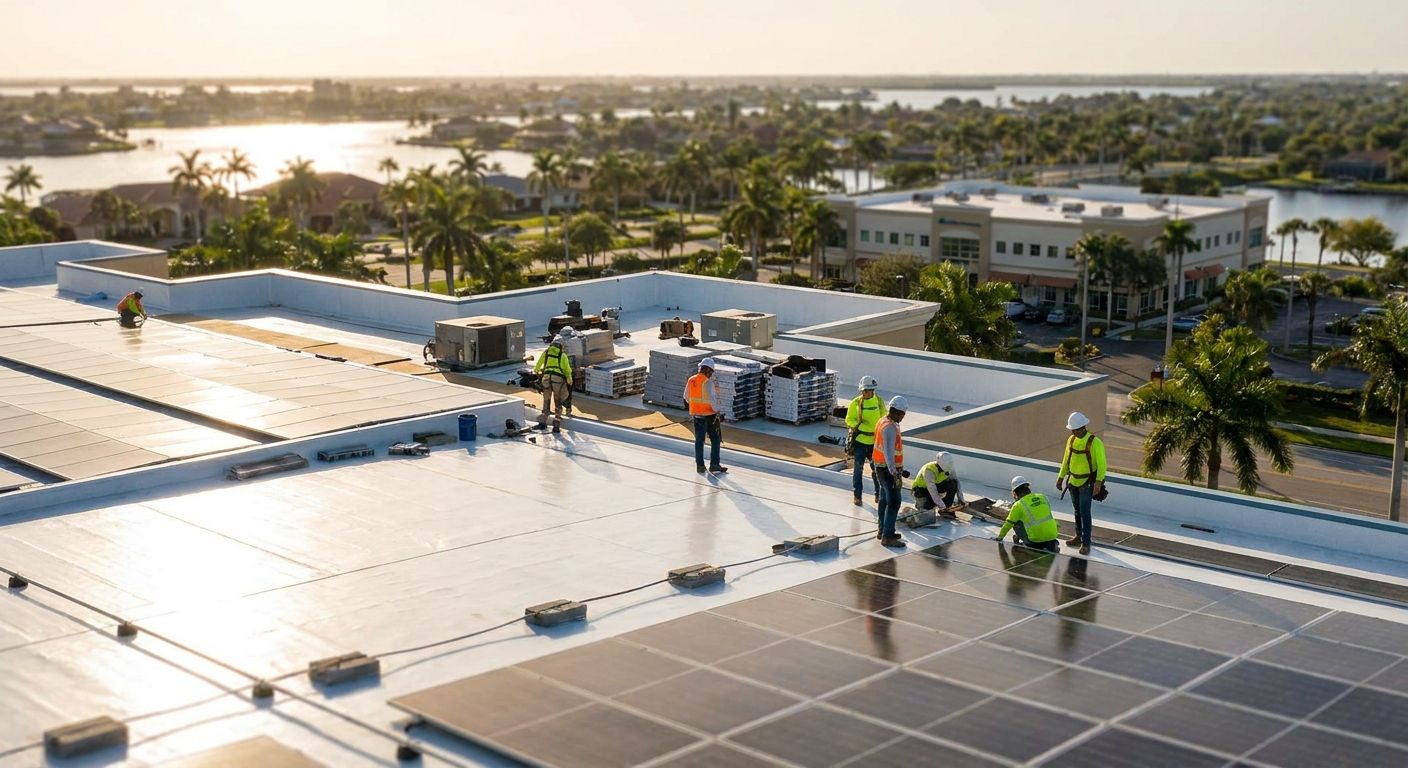
- Roof Smart of SW Florida handles installation, repair, and replacement for commercial properties across Cape Coral, Fort Myers, and Naples.
Why this matters
A commercial roof failure doesn't just mean a leak — it means inventory damage, business interruption, and tenants asking questions. Southwest Florida sits inside a wind zone where the Florida Building Code requires roofing systems rated for 150 mph-plus gusts, and Cape Coral's coastal exposure makes that rating non-negotiable, not a nice-to-have.
Commercial roofs also run bigger and flatter than residential ones, which changes the entire materials conversation. What works on a house shingle roof doesn't translate to a 20,000-square-foot warehouse with a low-slope membrane system. Get the system wrong in 2026 and you're re-roofing again well before the warranty period ends.
Who this is for
This guide is for property managers, business owners, and facility directors in Cape Coral deciding on commercial roofing services for a new build, an aging flat roof past its service life, or storm damage that needs documentation for insurance. It applies to retail centers, medical offices, warehouses, and multi-tenant buildings — not single-family homes.
What to look for in commercial roofing for Cape Coral
Wind rating and Florida Building Code compliance
Any commercial roofing cape coral contract should specify the wind uplift rating in writing, not just "hurricane-rated" as a marketing phrase. Lee County inspectors check this at permit and final inspection, and a roof installed below code gets flagged during the next storm claim, not before.
Licensing, insurance, and permit history
Florida requires a state-licensed roofing contractor for commercial work, and Cape Coral pulls permits through Lee County. Ask how many commercial permits the contractor has closed in the last 12 months — a contractor with zero recent commercial permits is learning on your building.
Material suited to low-slope roofs
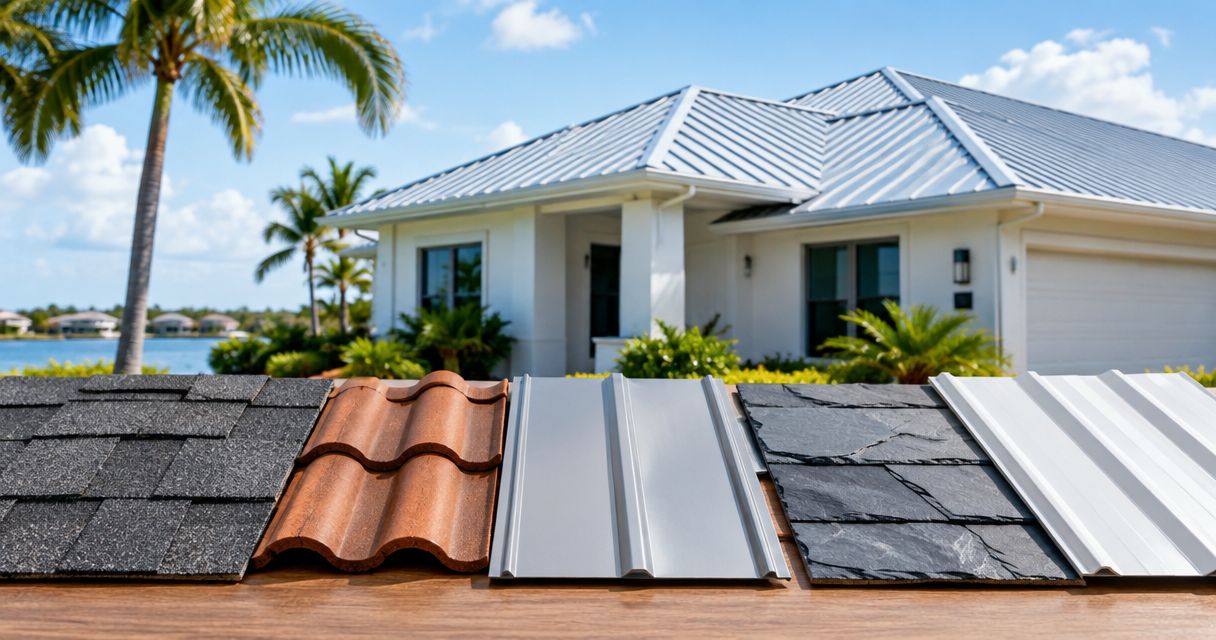
Most commercial buildings in Cape Coral are flat or low-slope, which rules out asphalt shingles entirely. The real choice is between TPO, modified bitumen, built-up roofing, or metal — each with different lifespans and upfront costs.
Warranty structure
A manufacturer's material warranty and a contractor's workmanship warranty are two different documents. A 20-year membrane warranty means nothing if the installer's workmanship coverage runs out after two years and the seams start lifting in year three.
Storm response and emergency service
After a named storm, commercial roofs need tarping and documentation within 24-48 hours to avoid secondary water damage and insurance disputes. Ask directly whether the contractor offers emergency response or only scheduled work.
Reflectivity and energy load
A white or light-colored TPO membrane can reduce rooftop surface temperature significantly compared to dark built-up roofing, which matters for cooling costs on a building running HVAC year-round in Southwest Florida heat.
Top roofing systems for Cape Coral commercial buildings
TPO membrane — the budget-smart pick. Installed in 60-to-80-mil thickness with heat-welded seams, TPO reflects sunlight and keeps rooftop HVAC units running cooler. It's the standard choice for flat retail and office roofs across Southwest Florida in 2026. Buy for most single-story commercial flat roofs.
Standing seam metal — the storm-tested pick. Panels run in 24-gauge steel with concealed fasteners, rated to resist wind uplift above 150 mph when installed to Florida Building Code specs. It costs more upfront but often outlasts membrane systems by decades. Buy for pitched commercial structures or buildings where long-term ownership justifies the premium.
Modified bitumen — the legacy pick. Torch-down or self-adhered sheets layered for redundancy, common on older Cape Coral commercial buildings built before TPO became standard. It's a reasonable patch-and-extend option but not the first choice for new installation. Consider for phased retrofits on buildings with existing bitumen systems.
Built-up roofing (BUR) — the old reliable, aging out. Multiple plies of felt and asphalt built up over decades of use in commercial construction. It's heavy, labor-intensive to install, and increasingly replaced by single-ply membranes. Skip for new construction in 2026 unless matching an existing system for a partial repair.
Tile roofing — the storefront aesthetic pick. Occasionally specified for mixed-use buildings where street-facing appearance matters, but tile adds significant structural load that most commercial flat-roof buildings aren't engineered for. Consider only when a structural engineer confirms the building can carry the weight.
What to avoid
- Contractors quoting sight-unseen over the phone. Commercial roofs need a physical inspection before any real number gets attached to the job — a phone quote on a 15,000-square-foot flat roof is a guess, not an estimate.
- Residential-grade shingles pitched as a commercial fix. Shingles aren't rated for the low-slope drainage most commercial buildings need, and installing them on the wrong pitch traps water instead of shedding it.
- Skipping a wind mitigation inspection. Commercial policies increasingly ask for the same wind mitigation documentation homeowners provide, and a missing inspection can mean a higher premium or a denied claim after storm damage.
Get a commercial roof inspection
Free, no-pressure evaluation for Cape Coral commercial properties.
Verdict comparison
| System | Wind rating | Lifespan | Upfront cost | Verdict |
|---|---|---|---|---|
| TPO membrane | Meets 150 mph+ when properly installed | 20-25 years | Low-moderate | Buy |
| Standing seam metal | Exceeds 150 mph | 40-50 years | High | Buy |
| Modified bitumen | Meets code with reinforcement | 15-20 years | Moderate | Consider |
| Built-up roofing (BUR) | Meets code, heavier system | 15-20 years | Moderate | Skip for new builds |
| Tile | Requires structural verification | 30-50 years | High | Consider case-by-case |
Before committing to a full replacement, it's worth confirming whether the existing structure needs a full tear-off or just a targeted repair — the cost and timeline differences are significant, and roof repair vs roof replacement in Florida breaks down how to make that call.
FAQ
What is the best commercial roofing material for Cape Coral, Florida?
TPO membrane is the most common choice for flat commercial roofs in Cape Coral because it resists heat and holds up to code wind requirements. Standing seam metal is the stronger long-term option for pitched commercial buildings, though it costs more upfront.
How much does commercial roof replacement cost in Cape Coral?
Cost depends on square footage, roof pitch, and material, so an accurate number requires an on-site inspection rather than a phone estimate. A free evaluation gives you a real figure tied to your building's actual condition.
Do commercial roofs need to meet Florida Building Code wind requirements?
Yes, commercial roofs in Lee County must meet Florida Building Code wind uplift standards, which in Cape Coral typically means a rating of 150 mph or higher. Permits and final inspections check this before the job closes.
How long does a commercial roof replacement take in Cape Coral?
Timelines vary by roof size and system, with most single-story flat roof replacements completed within one to two weeks barring weather delays. Larger multi-tenant buildings or metal installations can take longer.
Is metal roofing better than TPO for commercial buildings in Southwest Florida?
Metal roofing generally outlasts TPO by 15 to 25 years and handles wind uplift better, but it costs significantly more to install. TPO remains the practical choice for most flat commercial roofs on cost alone.
Does commercial roofing qualify for wind mitigation discounts?
Many commercial insurance carriers offer premium credits for wind mitigation features similar to residential policies, though terms vary by carrier. An inspection documenting the roof's wind-resistant features is the first step toward that credit.
How often should a commercial roof be inspected in Florida?
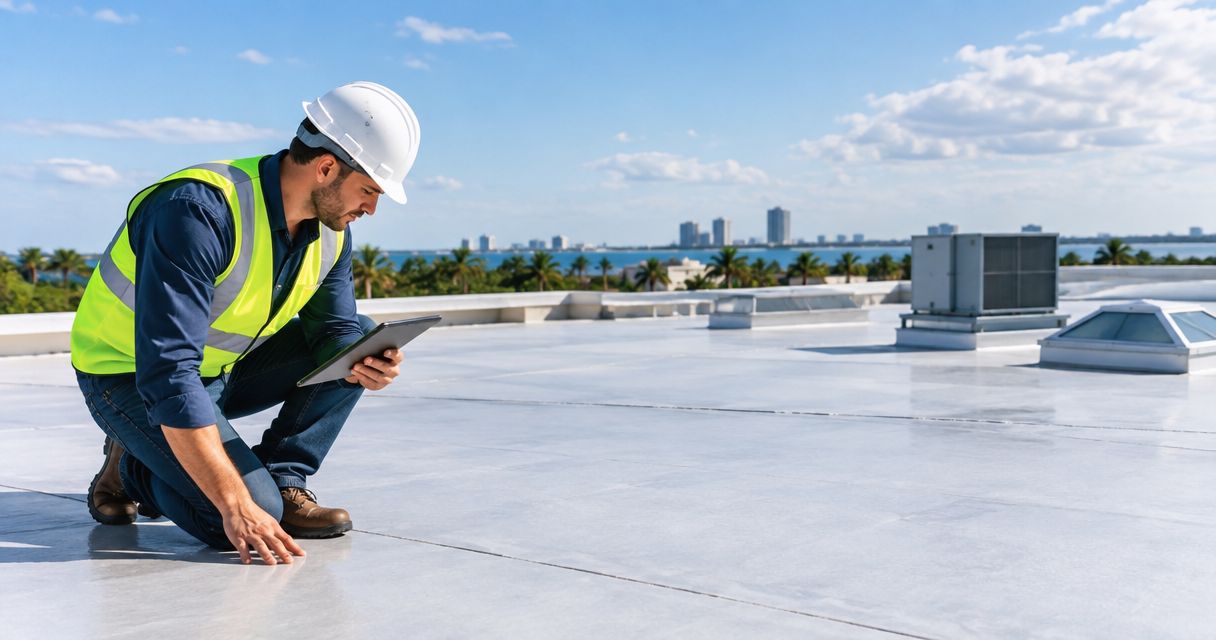
Commercial roofs in Southwest Florida should be inspected at least twice a year, plus after any named storm. Membrane seams and flashing points are the most common failure spots caught early by regular inspection.
What's the difference between roof repair and roof replacement for a commercial building?
Repair addresses isolated damage like a lifted seam or a punctured membrane, while replacement removes the entire roofing system down to the deck. The right call depends on the roof's age, extent of damage, and how much of its warranty life remains.
One last thing
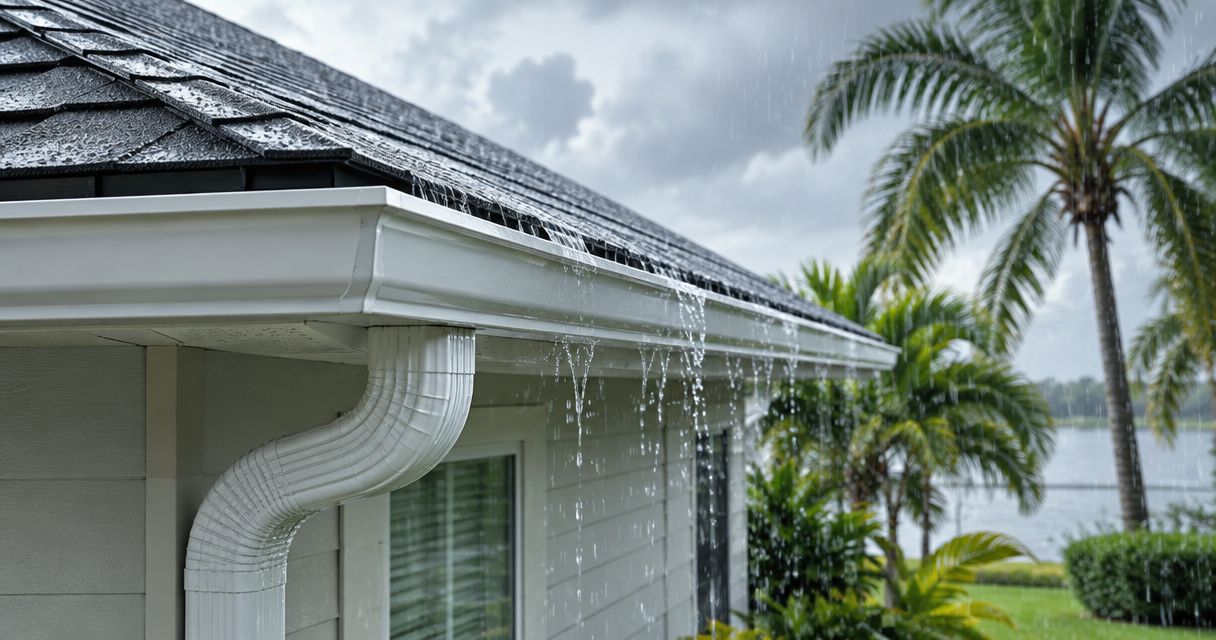
The single biggest mistake on Cape Coral commercial roofs isn't the material choice — it's deferred maintenance on flashing and drain points, which fail years before the membrane itself does and cause most of the interior water damage claims filed after a storm.