Flat roof repair in Cape Coral means diagnosing ponding water, UV-cracked membranes, and storm damage on TPO, EPDM, modified bitumen, or built-up roofs before a small blister turns into a ceiling stain. This guide breaks down what actually needs fixing, what to skip, and which repair approach fits your property heading into the 2026 hurricane season.
- Localized patch repair wins for isolated leaks under 10 sq ft on TPO or EPDM membranes.
- Recoating extends membrane life 5-10 years but does nothing for roofs already past 20 years old.
- Full replacement beats repeated patching once damage covers more than 25% of the roof surface.
- Flat roof repair in Cape Coral has to start with a drainage check, not the membrane.
- Ponding water that doesn't drain within 48 hours signals a structural issue, not a patch job.
Why flat roof repair works differently in Cape Coral
Cape Coral sits on flat, low-elevation lots where standing water has nowhere fast to go, and that's before factoring in a hurricane season that officially runs June 1 through November 30 every year. Flat and low-slope roofs — common on Florida rooms, additions, pool cage structures, and most commercial buildings across Lee County — fail in specific ways: membrane blistering from constant UV exposure, seam separation from thermal cycling between 95-degree afternoons and cool nights, and ponding water that sits for days after a routine summer storm.
A shingle repair playbook doesn't transfer to a flat roof. Flat roof repair in Cape Coral has to account for humidity that keeps seams wet longer than inland climates, salt air along canal-front properties, and wind uplift ratings tied to the Florida Building Code. Get the diagnosis wrong and you end up re-patching the same spot every rainy season instead of fixing what's actually failing. Teams like Roof Smart of SW Florida inspect drainage and membrane condition before quoting anything, which is the difference between a repair that holds and one that comes back in six months.
Who this guide is for
This is for Cape Coral homeowners with a flat-roofed addition, Florida room, or garage extension showing blisters, cracks, or a fresh ceiling stain after the last storm. It's also for commercial property owners and property managers running strip malls, warehouses, or multi-tenant buildings with TPO or built-up roofing due for a mid-life inspection in 2026. If your roof is pitched and shingled, none of the membrane-specific advice below applies — that's a different repair conversation entirely.
What to look for in flat roof repair for Cape Coral properties
Membrane match, not generic patching
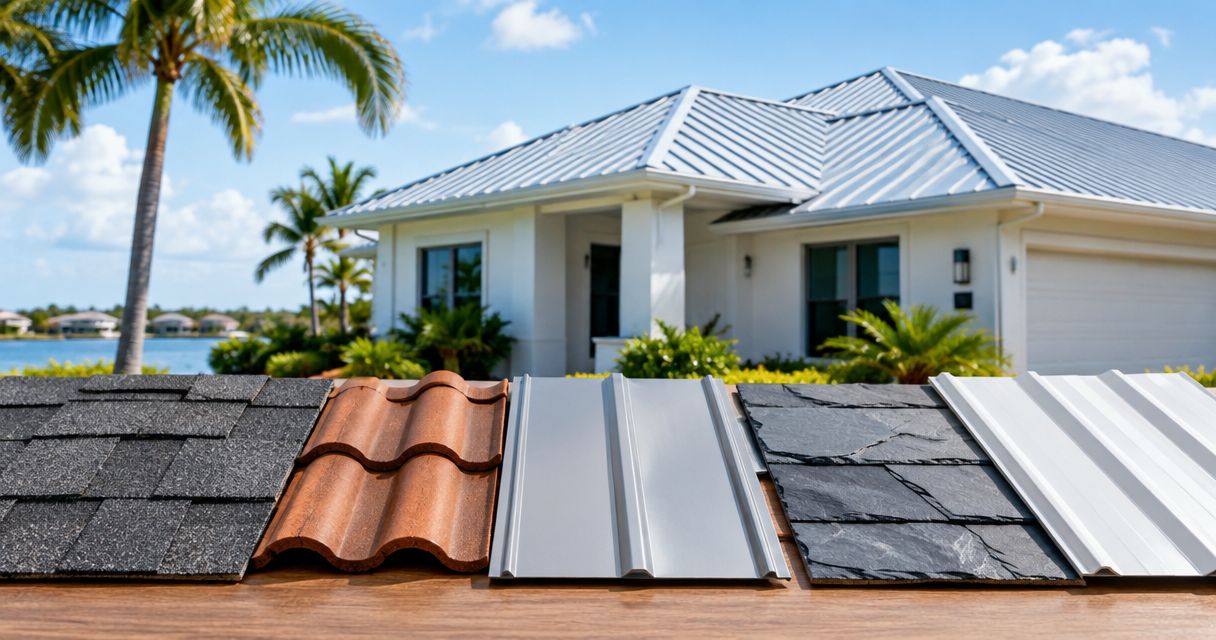
Flat roofs run on TPO, EPDM, modified bitumen, or built-up (BUR) systems, and each needs a compatible patch material — a TPO patch bonded to an EPDM roof typically fails within a season because the chemistries don't adhere. Confirm what membrane is on your roof before anyone quotes a repair. Guessing at this step is how call-backs happen twice in one summer.
Drainage diagnosis before any patch goes down
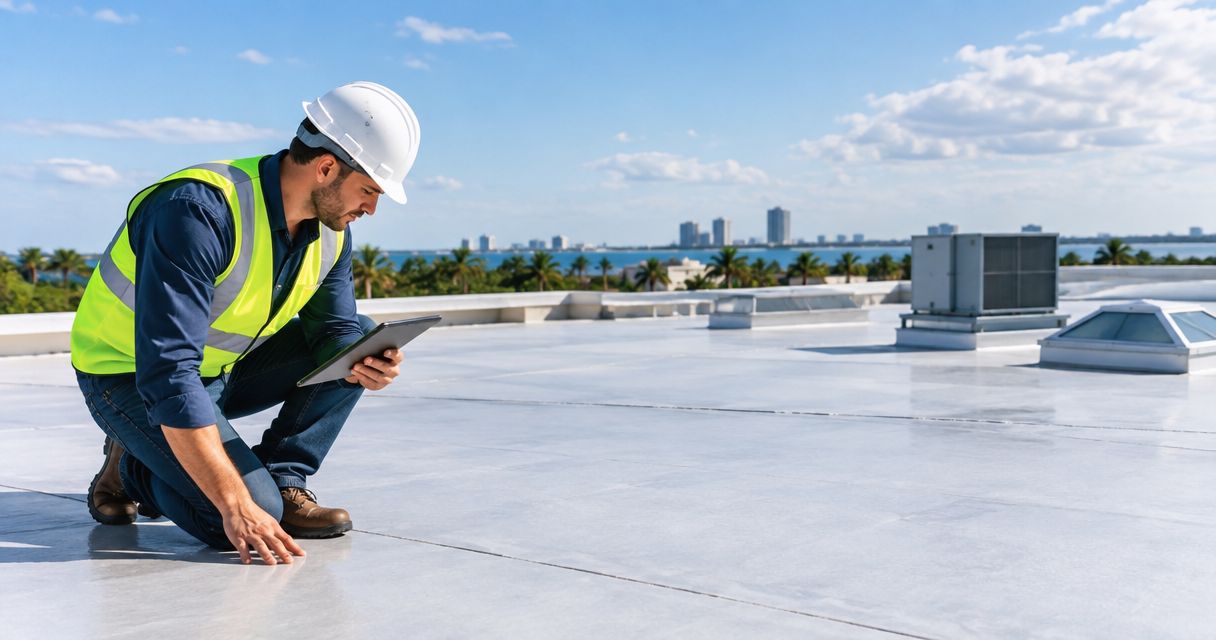
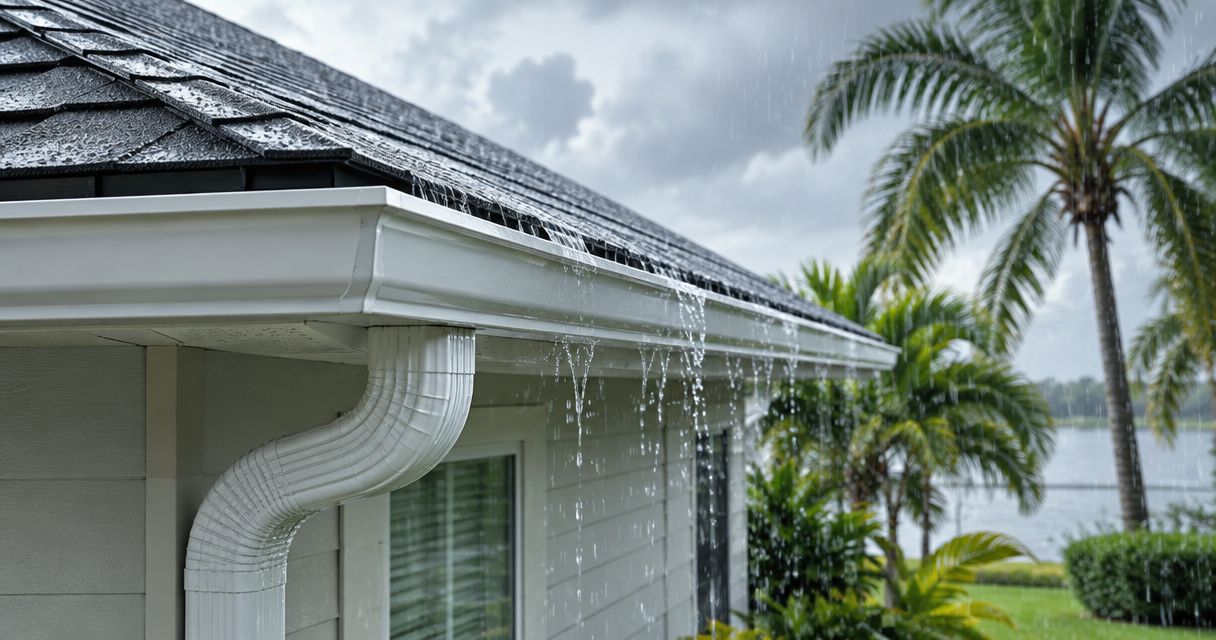
Ponding water that doesn't clear within 48 hours — the standard drainage benchmark — usually means the deck has settled or a drain is clogged, not that the membrane itself is bad. Patching over a drainage problem buys a few dry months at best. A proper flat roof repair starts by tracing where water actually goes after rain, not just where it's currently showing through.
Wind uplift and Florida Building Code compliance
Cape Coral falls inside a high-velocity hurricane zone under the Florida Building Code, and any flat roof repair beyond a minor patch — especially section replacement — needs to meet current wind uplift ratings. Skipping this on paperwork can complicate an insurance claim the next time a named storm rolls through Southwest Florida.
Warranty tied to the material, not just labor
A contractor's labor warranty means little if the membrane manufacturer won't honor materials because of how the patch was installed. Ask for both in writing: a materials warranty from the manufacturer and a separate workmanship warranty from whoever does the flat roof repair.
Licensing and insurance you can actually verify
Florida requires a state-issued roofing license, and Lee County pulls permits for most flat roof repair work beyond minor patching. Verify any license number directly with the Florida DBPR before signing anything — crews like Roof Smart of SW Florida carry both licensing and insurance, but not every door-knocker does, especially in the weeks after a storm.
Response time during hurricane season
Between June 1 and November 30, tarps and emergency patches need to happen within days, not weeks. A delayed response turns a contained leak into interior drywall and insulation damage that costs far more to fix than the roof itself. Ask any contractor for an actual response window during peak season, not "soon."
The right flat roof repair approach for your situation
The safe pick: localized patch repair
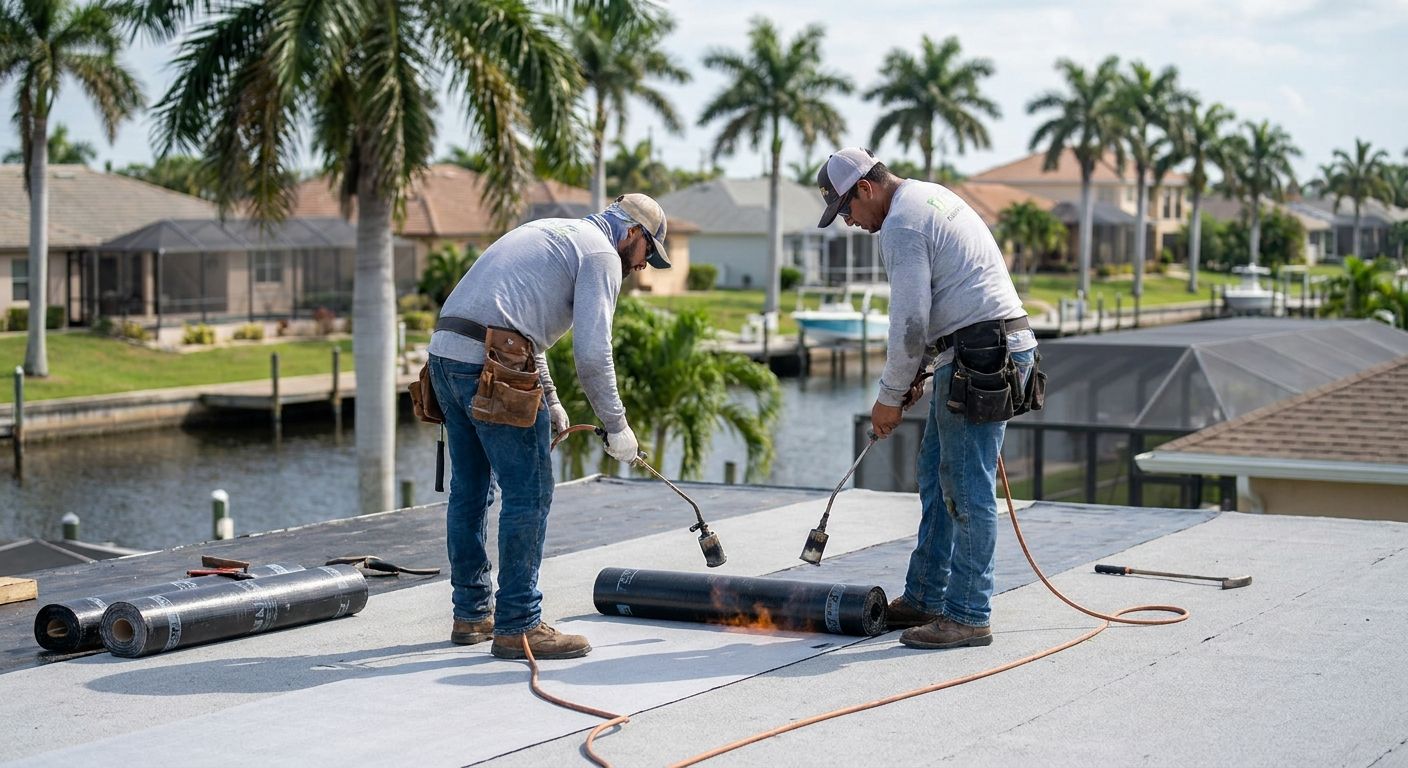
Verdict: Buy if the damage is a blister, puncture, or seam separation under roughly 10 square feet on an otherwise sound membrane. Patch repairs on TPO or EPDM typically hold for several years when the surrounding membrane still has useful life left, and this is the right call for a single storm-damaged spot on a Florida room roof rather than a full section redo.
The preventive pick: silicone recoat
Verdict: Consider if the membrane is intact but chalky, faded, or showing UV wear without active leaks. A silicone or elastomeric recoat can add 5 to 10 years to a membrane's service life at a fraction of full replacement cost, but it does nothing for a roof with structural or drainage problems sitting underneath the surface.
The middle ground: section replacement
Verdict: Consider when damage covers more than 25% of the roof surface or the same spot fails a second time after an earlier patch. Replacing a section of TPO or modified bitumen resets that portion of the roof without touching areas that are still performing fine.
The reset pick: full flat roof replacement
Verdict: Buy once the roof is past its expected service window — 20-plus years for TPO, 15-plus for modified bitumen — or storm damage hits multiple sections at once. The roof repair vs roof replacement decision usually comes down to frequency: if you're paying for patches more than once a year, replacement wins over a five-year horizon.
The commercial pick: scheduled flat roof repair program
Verdict: Consider for strip malls, warehouses, and multi-tenant buildings where downtime costs more than the roof itself. Commercial roofing services in Cape Coral typically bundle inspection, drainage clearing, and membrane patching into one scheduled visit instead of reactive emergency calls every time a tenant reports a stain.
What to avoid in flat roof repair
- Big-box sealant in a tube. It bridges hairline cracks for a month or two but isn't rated for ponding water or continuous UV exposure the way a proper membrane patch is.
- Storm-chasing crews with out-of-state plates. After any named storm, Cape Coral sees a wave of door-knockers offering fast "insurance-covered" repairs — verify the license with Florida DBPR before any deposit changes hands.
- Patching the same spot twice without checking drainage. If a repair fails again in the same location within a year, the problem is water flow, not the patch material.
Flat roof repair comparison
| Approach | Best for | Typical trigger | Verdict |
|---|---|---|---|
| Localized patch | Isolated blister or puncture | Damage under ~10 sq ft | Buy |
| Silicone recoat | Intact membrane, UV wear | No active leaks, chalky surface | Consider |
| Section replacement | Recurring damage in one zone | Repeat patch failure, 25%+ area | Consider |
| Full replacement | Roof near end of service life | 20+ years old or multi-section damage | Buy |
| Commercial repair program | Multi-tenant or commercial buildings | Downtime-sensitive properties | Consider |
Get your flat roof inspected
Free, no-pressure evaluation of ponding water, membrane wear, and storm damage.
FAQ
What's the best flat roof repair option for a small leak in Cape Coral?
A localized patch on the affected membrane section is the best option for isolated leaks under roughly 10 square feet. It holds for several years when the surrounding TPO or EPDM membrane is still sound, and it costs far less than replacing the whole section.
How much does flat roof repair cost in Cape Coral?
Cost depends on membrane type, damage size, and whether drainage work is needed alongside the patch, so pricing varies property to property. Get a free on-site estimate to see what your specific roof needs before comparing quotes.
Is flat roof repair or full replacement better for a 20-year-old roof?
Full replacement is usually the better call once a TPO roof passes the 20-year mark, since the membrane is near the end of its expected service life. Repeated patching on an aging roof often costs more over a few years than one replacement.
How long does a TPO flat roof last in Southwest Florida?
TPO membranes typically last 20 to 30 years, though Florida's UV exposure and heat cycling tend to push actual lifespans toward the lower end of that range. Regular inspections and recoating can help a roof reach the higher end.
Does flat roof repair affect wind mitigation credits in Florida?
Repairs that bring a roof up to current Florida Building Code wind uplift standards can support wind mitigation credits on your insurance policy. A wind mitigation inspection after any major repair confirms what qualifies.
Can ponding water be fixed without replacing the whole roof?
Yes, if the cause is a clogged drain or minor low spot, clearing drainage or adding a tapered insulation cricket can resolve it without full replacement. If the deck itself has settled, section replacement is usually required.
How fast can flat roof repair happen during hurricane season?
Emergency tarps and temporary patches should happen within days during the June through November storm season, not weeks. Ask any contractor for a specific response window before you need one.
Is silicone recoating as durable as full membrane replacement?
No, silicone recoating extends an existing membrane's life by 5 to 10 years but doesn't replace a failing or structurally compromised roof. It works as a preventive measure on a membrane that's still intact but weathered.
One last thing
Most flat roof leaks in Cape Coral don't start at the spot where they show up — they start at a drain, scupper, or parapet wall several feet away, and water travels sideways under the membrane before it stains a ceiling. Book any flat roof repair inspection before June 1, 2026, when hurricane season opens, and have drainage checked even if the roof looks fine from the ground. Roof Smart of SW Florida treats that drainage check as a standard part of every flat roof repair visit, not an upsell.