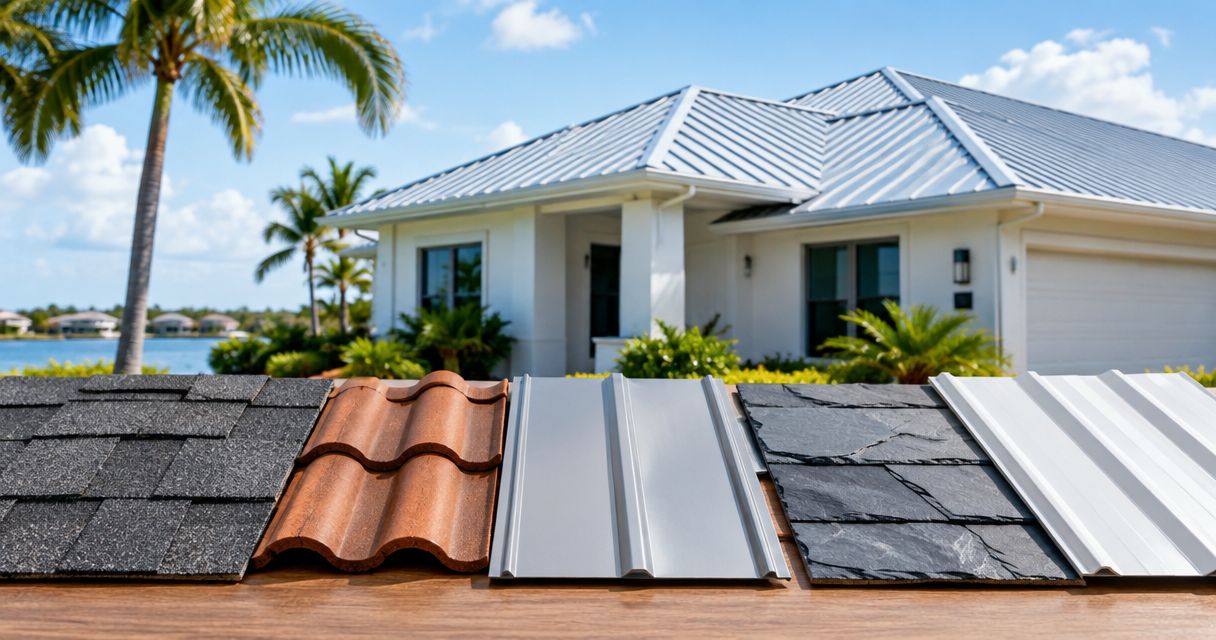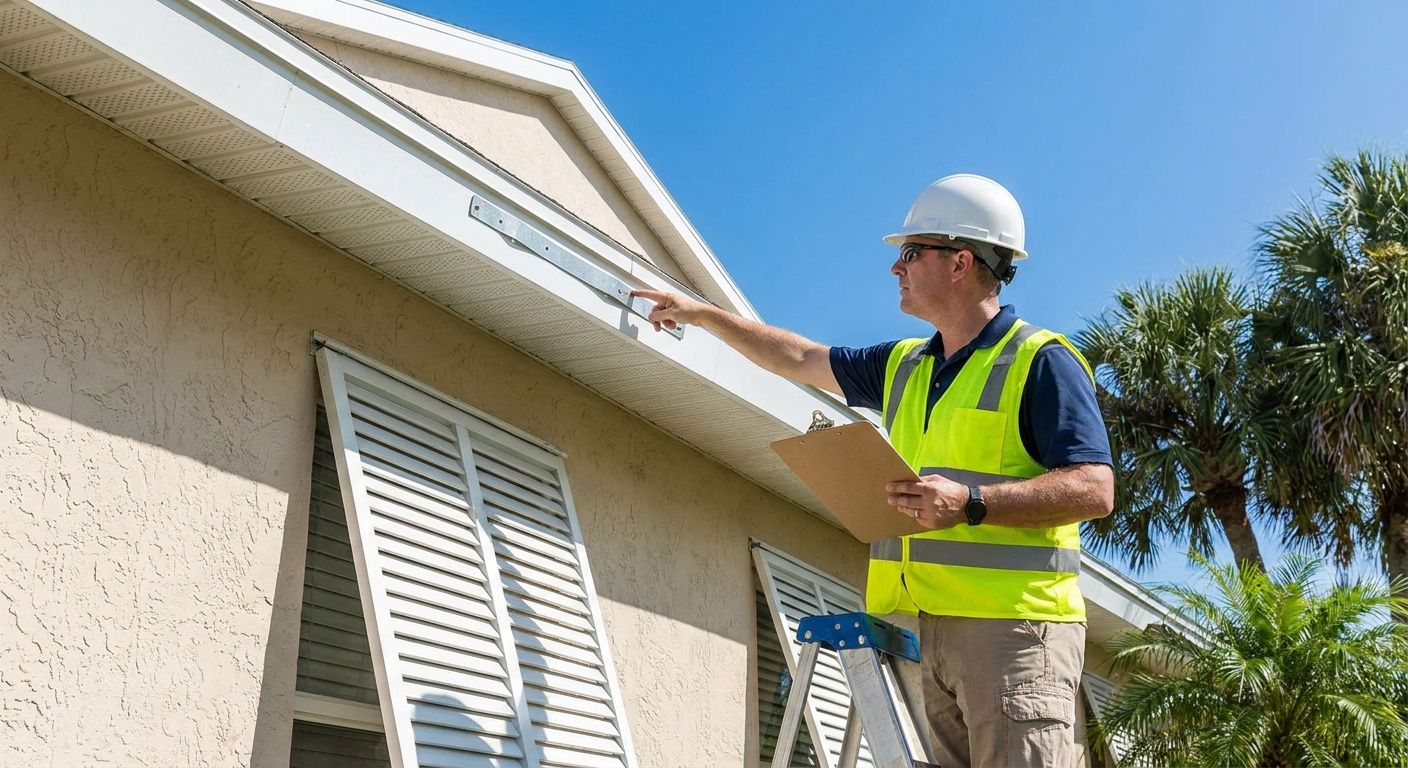
A wind mitigation inspection in Fort Myers checks the specific roof features that Florida insurers use to calculate your windstorm premium, and skipping one or letting it lapse can cost a Lee County homeowner hundreds of dollars a year in credits they never claimed.
- A wind mitigation inspection in Fort Myers documents roof-to-wall connections, deck attachment, and openings for insurance credits.
- Hire an independent, state-qualified inspector — not your insurance agent's referral. That's the buy.
- Toe-nailed roof-to-wall connections earn zero credit; clips or single wraps can shift 15-20% of your premium.
- The OIR-B1-1802 form is valid for 5 years in Florida — reinspect before it expires or before a policy renewal.
- A roof replaced under permit after the 2002 code update usually qualifies for automatic covering credits.
Why this matters
Florida requires a standardized form, OIR-B1-1802, to document seven roof and structure features insurers score for windstorm discounts. Get every line right and combined credits can cut a wind-only premium by 20-45%, depending on your construction. Get one line wrong — a mislabeled roof-to-wall connection, a missing permit date — and the carrier scores that feature at the lowest tier, full stop.
Homeowners across Cape Coral, Fort Myers, and Naples are feeling this more in 2026 than in prior years, as carriers tighten underwriting after repeated hurricane seasons. Roof Smart of SW Florida inspects roofs for wind mitigation credits as part of its regular repair and replacement work, which matters because the same crew that sees your deck attachment and flashing can flag credit opportunities before the inspection form even gets filed.
Who this is for
This guide is for Fort Myers-area homeowners renewing a wind or homeowners policy in the next 60-90 days, anyone buying or selling a home in Lee County, and owners of roofs installed before the 2002 Florida Building Code update who have never had a formal wind mitigation inspection. If your last inspection is more than 5 years old, treat this as due for renewal — the form expires and carriers will not honor a stale one.
What to look for in a wind mitigation inspection for Fort Myers homes
Inspector credentials
Only a licensed contractor, building code inspector, engineer, architect, or a state-approved home inspector can sign OIR-B1-1802. An inspection from someone outside that list gets rejected outright by most carriers, which means the money you spent on it is wasted.
Roof covering age and permit documentation
Insurers want a permit date, not a guess. A roof covering installed under permit after March 2002, when Florida adopted the current code baseline, usually qualifies for the top covering credit tier. Without that paperwork, the inspector has to score it at the lowest tier even if the shingles look brand new.
Roof-to-wall connection type
This is the single line that moves the most money on the form. Toe-nailed connections score zero credit, clips score a mid-tier credit, and single or double wraps score the highest tier. An inspector has to get into the attic to see this — a drive-by inspection cannot verify it.
Roof deck attachment
Carriers check the nail or staple pattern holding the plywood deck to the trusses. Code since 2002 calls for 8d ring-shank nails at 6 inches on the edges; staples or wider spacing drop the score a full tier and reduce your credit accordingly.
Opening protection level
This covers windows, doors, garage doors, and skylights. Full impact-rated protection on every opening earns the largest single credit on the form, but it's also the most expensive feature to retrofit, so most homeowners treat it as a longer-term project rather than an immediate fix.
Secondary water resistance (SWR)
A self-adhering underlayment or sealed roof deck under the shingles or tile earns a smaller, add-on credit. It's cheap to include during a re-roof and easy to skip if nobody asks for it, so confirm it's on the work order before a replacement starts.
The credits worth chasing
Roof-to-wall connections — the biggest lever. Clips or wraps instead of toe-nails can shift 15-20% of your total wind premium on their own. If your roof was framed before 1994, assume toe-nails until proven otherwise. Verdict: Buy — prioritize this before anything else on the list.
Roof deck attachment — the invisible upgrade. Nobody sees this from the curb, but it's checked in the attic during every wind mitigation inspection. 8d nails at 6-inch spacing is the standard that unlocks the higher credit tier; wider spacing or staples caps you at a lower one. Verdict: Consider — worth confirming at your next re-roof even if you're not replacing early.
Roof covering and permit date — the paperwork one. If your roof was replaced under permit after the 2002 code baseline, you likely already qualify for the top covering tier and just need the documentation pulled. Learn how roof age and repair history affect whether a repair or a full tear-off makes more sense before your next renewal. Verdict: Buy — confirm the permit exists before you pay for anything else.
Opening protection — the expensive one. Impact windows and code-rated shutters on every opening add another 10-20% credit, but full coverage on a mid-size home runs into real money. Verdict: Consider — a multi-year project, not a pre-renewal fix.
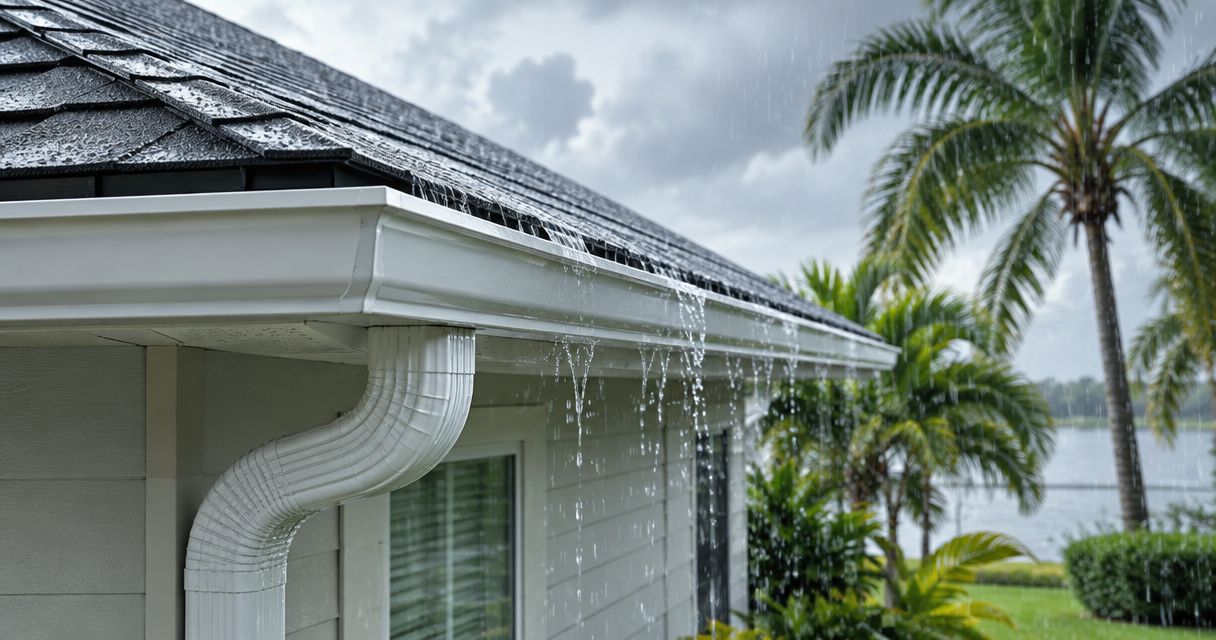
Secondary water resistance — the small add-on. A sealed deck or self-adhering underlayment adds a modest credit and costs little extra during a re-roof, but it does nothing for drainage on its own — pair it with proper seamless gutter installation so water actually clears the roofline during a storm. Verdict: Consider — include it any time the deck is already open.
What to avoid
- Letting your insurance agent's referred inspector handle it. Some agents push in-house inspectors who have an incentive to score conservatively so the carrier pays less in credits. An independent inspector has no reason to shade the numbers either way.
- Assuming a new roof automatically qualifies. A roof replaced without a pulled permit, or one done before the current code cycle, does not get the automatic covering credit — the inspector has to score what's documented, not what's installed.
- Filing a DIY or phone-photo version of the form. Carriers in 2026 are rejecting more self-submitted forms than in prior years because they lack a qualified signature. If it's not signed by someone on the approved list, expect a denial letter, not a discount.
Book a wind mitigation inspection
Get an honest, no-pressure evaluation before your next policy renewal.
Verdict comparison
| Credit factor | What's checked | Typical premium impact | Verdict |
|---|---|---|---|
| Roof-to-wall connection | Clips, wraps, or toe-nails in the attic | 15-20% of premium | Buy |
| Roof deck attachment | Nail type and spacing pattern | 5-10% of premium | Consider |
| Roof covering + permit | Install date, code compliance | Up to top tier if permitted post-2002 | Buy |
| Opening protection | Windows, doors, garage, skylights | 10-20% of premium | Consider |
| Secondary water resistance | Sealed deck or self-adhering underlayment | Small add-on credit | Consider |
FAQ
What is a wind mitigation inspection in Fort Myers?
It's a physical inspection of your roof's connections, deck attachment, and openings, recorded on Florida form OIR-B1-1802, that insurers use to set windstorm insurance credits. A qualified inspector has to sign it for carriers to accept it.
How much does a wind mitigation inspection cost in 2026?
Costs vary by inspector and property size, so get a direct quote rather than relying on a flat number. Many homeowners recover the cost within the first year through the premium credits it unlocks.
How long is a wind mitigation inspection form valid?
The OIR-B1-1802 form is valid for 5 years in Florida unless the roof or openings change sooner. If your roof gets a full replacement, the old form no longer reflects current conditions and needs to be redone.
Does a new roof automatically qualify for wind mitigation credits?
No. The inspector needs a pulled permit and install date to score the roof covering at the top credit tier. A new-looking roof without documentation gets scored at the lowest tier regardless of its actual age.
Can I do a wind mitigation inspection myself?
No. Only a licensed contractor, building code inspector, engineer, architect, or approved home inspector can sign the form. Carriers are rejecting more self-submitted forms in 2026 for missing a qualified signature.
How much can a wind mitigation inspection save on insurance?
Combined credits can reduce a wind-only premium by 20-45% depending on your roof's connections, deck attachment, and opening protection. The roof-to-wall connection line typically moves the most money on its own.
Who can perform a wind mitigation inspection in Florida?
State-licensed contractors, building code inspectors, engineers, architects, and certain approved home inspectors can perform and sign the inspection. An inspector outside that list gets the form rejected by most carriers.
Is a wind mitigation inspection the same as a four-point inspection?
No. A four-point inspection reviews roof, electrical, plumbing, and HVAC condition for insurability, while a wind mitigation inspection scores specific storm-resistance features for premium credits. Many homeowners in Fort Myers need both before a policy renewal.
One last thing
The line homeowners lose the most money on isn't opening protection — it's the roof-to-wall connection, because it's invisible from the ground and most owners have no idea whether their attic has clips, wraps, or bare toe-nails until an inspector gets up there in 2026 and checks. If you've never had that line verified, that's the one to schedule first, before you spend a dollar on shutters or impact glass.