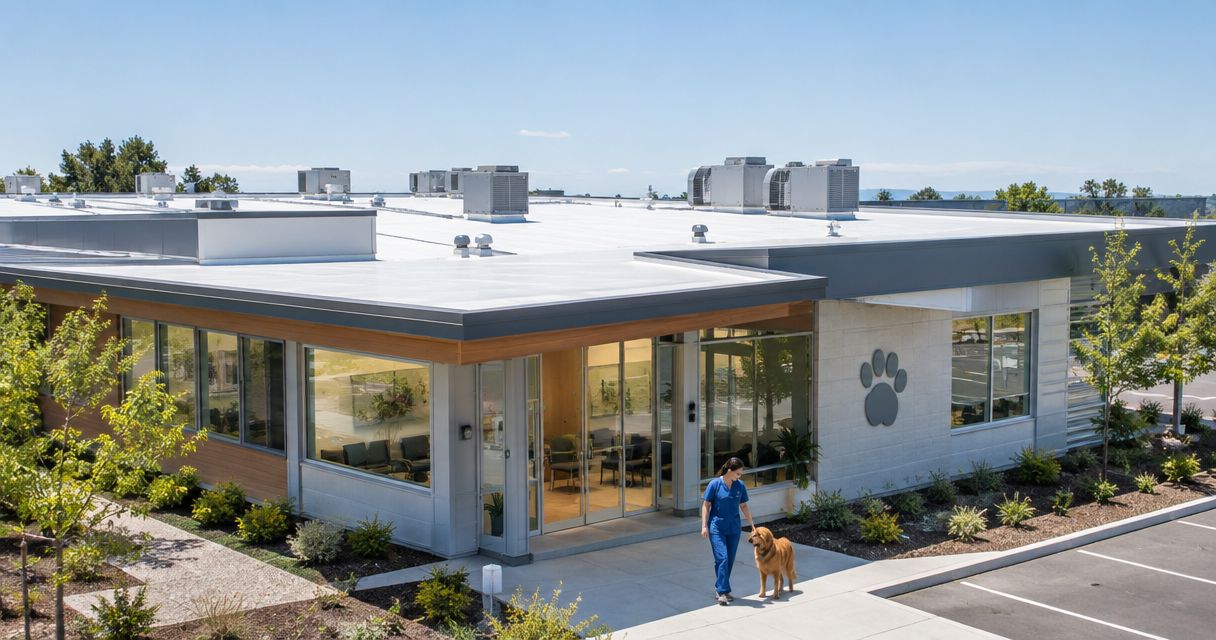
Commercial roofing for veterinary clinics means matching the roof to a building that runs surgeries, boarding, and imaging equipment under one deck — not a standard office reroof. Animal hospitals deal with rooftop HVAC penetrations for odor control, 24-hour occupancy that limits shutdown windows, and moisture-sensitive equipment rooms that can't tolerate a slow leak. Commercial roofing for medical and dental offices shares some of this logic, but a veterinary building adds kennel ventilation, higher humidity from washdown areas, and boarding schedules that make full closures expensive.
- Commercial roofing for veterinary clinics needs sealed HVAC penetrations, wind-rated materials, and a phased install plan for 2026 projects in SW Florida.
- Flat and metal roofs both work for animal hospitals; the deciding factor is how many rooftop vents your kennel ventilation system needs.
- Phased replacement lets a clinic keep boarding and surgery running instead of closing for a full tear-off.
- Wind mitigation inspections can qualify a veterinary building for insurance discounts under current Florida code standards.
Why commercial roofing matters for veterinary clinics
A veterinary hospital's roof does more work than most commercial buildings its size. It carries rooftop exhaust for kennel odor control, condensate lines for imaging and lab equipment, and often a boarding wing that can't sit empty during a reroof. A leak over a surgical suite isn't a cosmetic problem — it's a shutdown.
Southwest Florida adds humidity, salt air, and hurricane wind loads on top of that. A roof spec that works for a retail storefront or an office park doesn't automatically hold up over a clinic that runs exhaust fans and generators around the clock. The building's use dictates the roofing system more than the square footage does.
Inspect your roof for veterinary-specific risk points
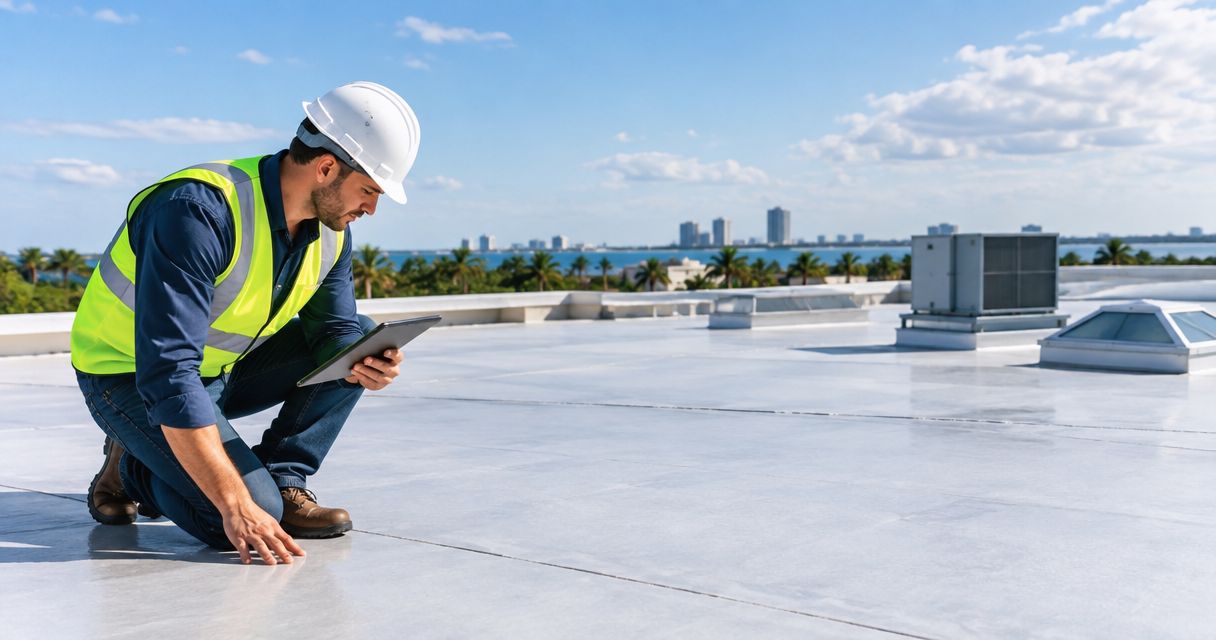
Start with the areas a general commercial inspection often skips. Kennel exhaust vents, condensate drains near imaging rooms, and rooftop units serving surgical suites all create penetrations that fail before the field of the roof does.
- Check flashing around every HVAC curb and exhaust stack for kennel ventilation
- Look for ponding water near rooftop condensate lines from imaging or lab equipment
- Inspect roof-mounted generator platforms for loose anchors and worn boots
- Confirm boarding-wing skylights or vents haven't degraded from washdown humidity
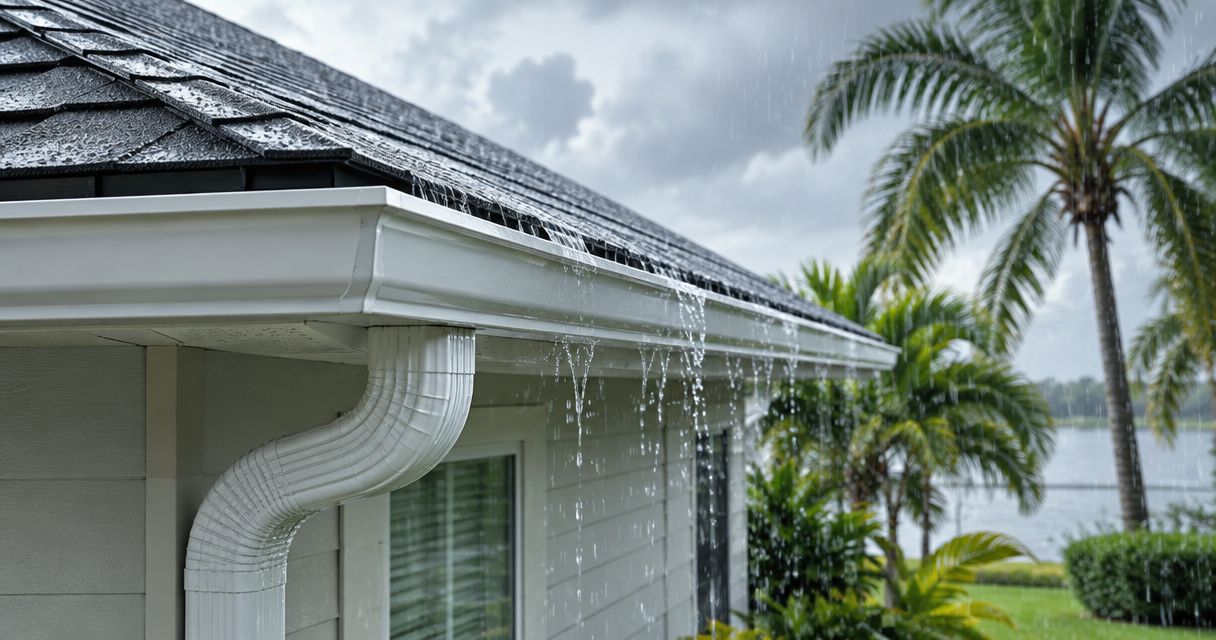
- Check gutters and scuppers for debris that backs water up against exterior walls
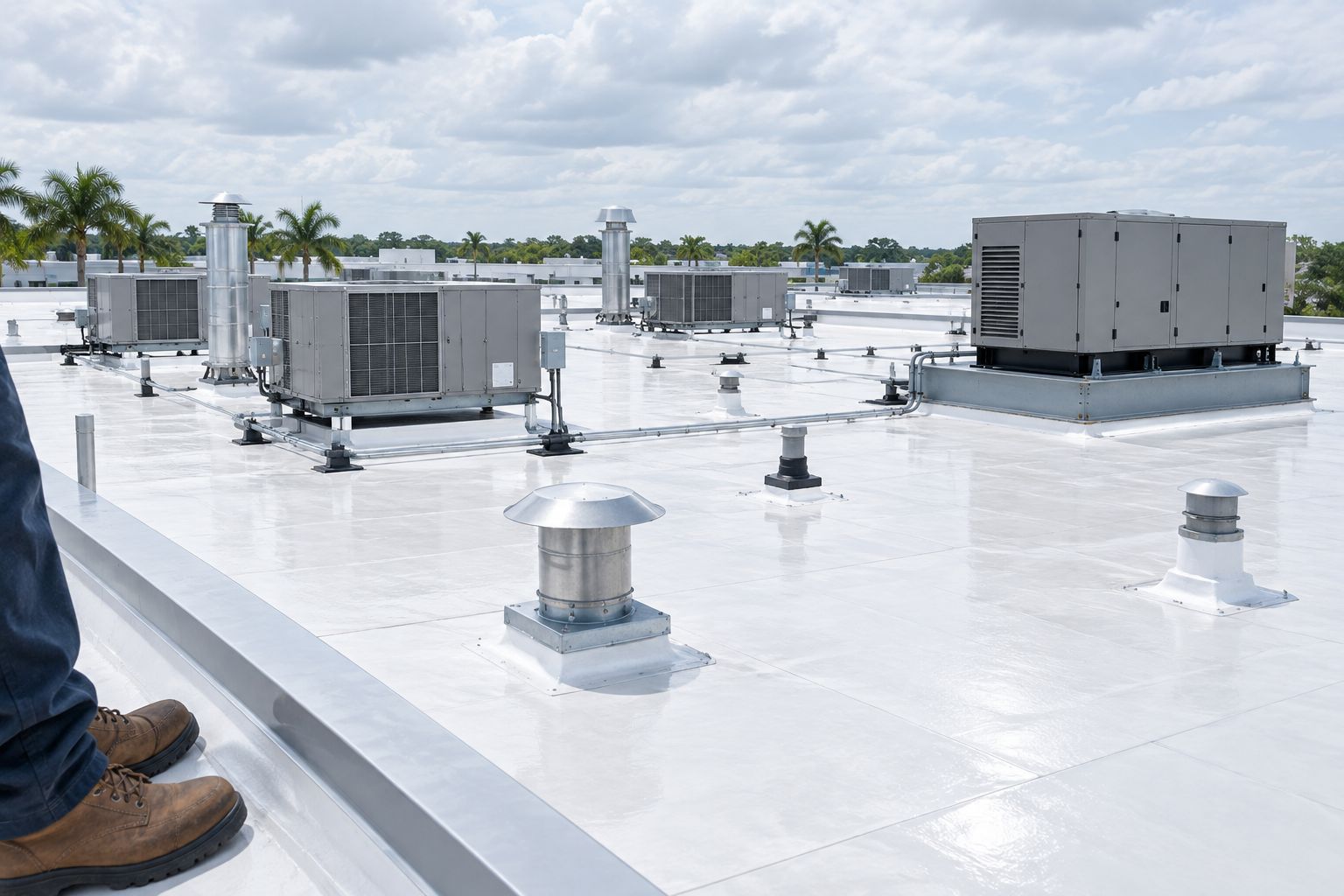
Choose a roofing system that matches your clinic's operating hours
A 24-hour animal hospital with overnight boarding can't treat a roof replacement the same way a 9-to-5 retail tenant can. The system you choose should match how much rooftop equipment you run and how long you can tolerate open work.
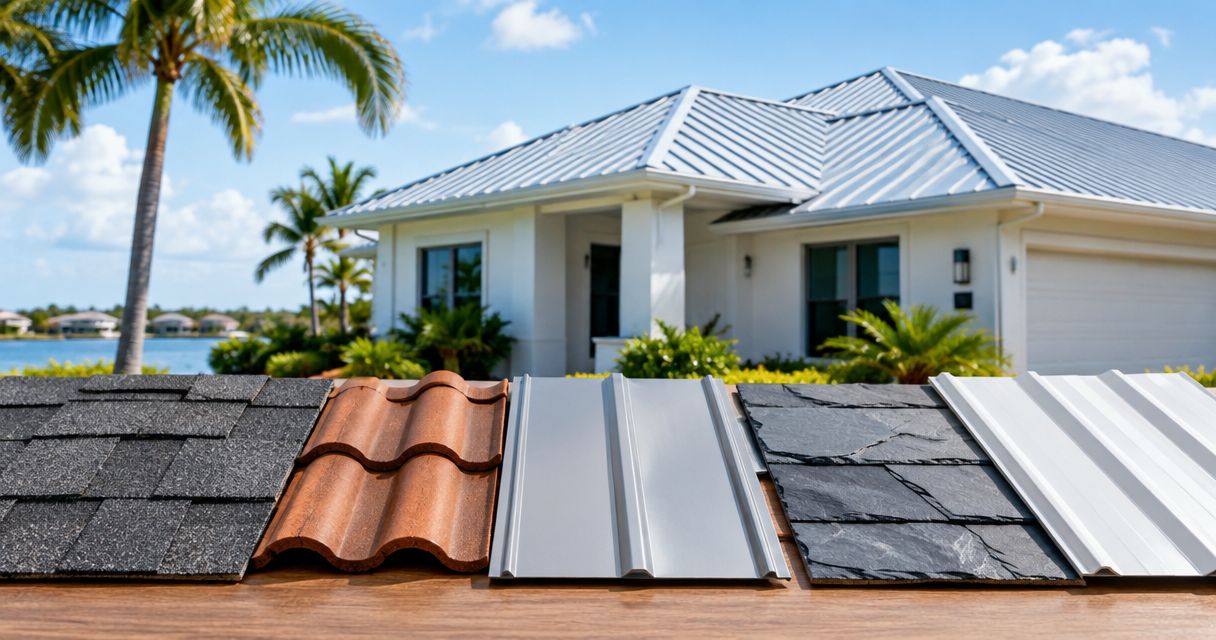
- Low-slope membrane (TPO or modified bitumen) handles multiple rooftop penetrations cleanly and installs in sections
- Standing seam metal sheds water fast in Florida's rainy season and holds up under high wind ratings
- Asphalt shingle works on pitched sections but isn't built for heavy rooftop equipment loads
- Tile roofing suits architectural fronts on larger veterinary campuses but adds weight considerations near HVAC platforms
Compare the main options for a veterinary building
| Option | Best for | Key limitation |
|---|---|---|
| Low-slope TPO/modified bitumen | Clinics with heavy rooftop HVAC and exhaust penetrations | Requires regular coating maintenance to hold its seal |
| Standing seam metal | Clinics prioritizing wind resistance and long service life | Higher upfront labor for cutting around existing penetrations |
| Asphalt shingle | Pitched sections over lobbies or front-facing entries | Not rated for heavy rooftop equipment loads |
| Tile roofing | Architectural front sections on larger campuses | Adds structural weight near HVAC platforms |
Roof Smart of SW Florida installs and repairs all four systems on commercial buildings across Cape Coral, Fort Myers, and Naples, and can walk through which one fits your building's rooftop equipment layout.
Protect surgical suites and imaging rooms from leaks
A slow leak over a surgical suite or an imaging room does more damage than the water itself — it can force a room offline while equipment dries out or gets checked for water intrusion. Flat roof sections over these rooms need tighter moisture control than the rest of the building.
- Apply a reflective roof coating over flat sections above sensitive rooms to extend membrane life
- Add tapered insulation to eliminate ponding water near surgical-suite roof decks
- Seal every conduit and drain penetration serving imaging or lab equipment separately from the general roof seal
- Schedule coating touch-ups on a set interval instead of waiting for a visible leak
Roof coatings for commercial flat roofs extend membrane life on exactly these kinds of high-consequence flat sections without a full tear-off.
Build hurricane and wind resilience into the roof plan
A veterinary hospital that loses power or roof integrity mid-storm has animals on-site that can't be evacuated on short notice. Wind resistance isn't optional for a building running overnight boarding through hurricane season.
- Confirm the roofing system's wind rating matches your county's building code requirements
- Check that rooftop equipment anchors meet current wind-load standards, not the standards from the last install
- Verify flashing and edge metal are rated for uplift, since edges fail before the field of the roof does
- Get a wind mitigation inspection scheduled before hurricane season, not after a storm warning
A wind mitigation inspection for commercial property owners documents your roof's wind-resistant features, which can factor into commercial insurance pricing in 2026.
Schedule maintenance without disrupting patient care
A reroof or major repair project at a veterinary clinic has to work around surgery schedules and boarding occupancy, not the other way around. Phasing the work by section keeps most of the building operational.
- Break the roof into sections and schedule work over boarding areas during lower-occupancy weeks
- Run surgical suites and imaging rooms on a separate work schedule from the rest of the roof
- Set a fixed inspection cadence instead of reacting to leaks as they appear
- Keep a written maintenance log for each rooftop unit and coated section for warranty and insurance purposes
A structured roof maintenance plan for commercial property managers is the faster path once the manual inspection routine above is in place — it schedules the checks so nobody has to remember to do them.
Get a roof plan built for your clinic
Free, no-pressure evaluation for veterinary and animal hospital buildings across SW Florida.
Prepare for emergency storm response without closing the clinic
A damaged roof after a storm can't wait for a standard repair queue when animals are boarding on-site. A clinic needs a tarping and repair plan lined up before the storm, not during it.
- Identify which roof sections cover boarding and surgical areas so those get priority tarping
- Keep a contractor contact on file who can respond to commercial buildings, not just residential calls
- Photograph the roof's condition before hurricane season for faster insurance documentation after a storm
- Confirm your generator and rooftop equipment are secured before a storm watch is issued
Emergency roof tarping for commercial and industrial buildings covers exactly this scenario — a fast, temporary seal that buys time until permanent repairs happen.
Common mistakes veterinary clinics make with roofing
- Patching around HVAC penetrations without resealing the whole curb — a partial fix on kennel exhaust vents fails again within a season
- Scheduling a full tear-off instead of phasing the work — closing boarding and surgery at once costs more in lost operations than a phased schedule does in project time
- Skipping the wind mitigation inspection — many clinics never document wind-resistant features, missing a straightforward step toward lower insurance costs
- Ignoring coating maintenance on flat sections over sensitive rooms — a coating touch-up costs far less than water damage to imaging equipment
- Treating the roof like a retail building's roof — a veterinary building's exhaust, condensate, and boarding-area penetrations need a different maintenance cadence than a standard commercial box
“A leak over a surgical suite isn't a cosmetic problem, it's a shutdown.”
FAQ
What's the best roofing material for a veterinary clinic in Southwest Florida?
Low-slope TPO or modified bitumen handles the multiple HVAC and exhaust penetrations most veterinary buildings need, while standing seam metal suits clinics prioritizing long-term wind resistance. The right choice depends on how much rooftop equipment your kennel ventilation and imaging systems require.
Can a veterinary hospital stay open during a roof replacement?
Yes, phasing the work by roof section keeps boarding and surgical areas operational while other sections are replaced. A full tear-off across the entire roof at once is rarely necessary for a clinic that can't fully close.
How often should a flat roof over a veterinary clinic be inspected?
Flat commercial roofs generally need inspection at least twice a year, with additional checks after any named storm. Sections over surgical suites or imaging rooms warrant closer, more frequent attention given the cost of water damage to equipment.
Is metal roofing good for a veterinary clinic in Florida?
Standing seam metal roofing holds up well under Florida's wind and rain loads and suits clinics that want a longer service interval between major roof work. It requires more upfront labor to cut around existing rooftop penetrations, which matters on a building already running HVAC and exhaust equipment.
Do veterinary clinics need wind mitigation inspections?
A wind mitigation inspection documents a building's wind-resistant roofing features, which can factor into commercial insurance pricing. It matters more for a clinic running overnight boarding, since the building can't be quickly evacuated ahead of a storm.
What roofing problems are unique to animal hospitals?
Kennel exhaust vents, condensate lines from imaging equipment, and washdown-area humidity create more roof penetrations and moisture exposure than a typical retail or office building sees. Each of those penetrations is a separate point that needs its own seal and inspection.
How much does commercial roofing cost for a veterinary clinic?
Cost depends on the roofing system, the building's square footage, and how many rooftop penetrations need to be re-flashed. A walk-through evaluation of the specific roof is the only reliable way to scope the project.
Should a veterinary clinic use roof coatings instead of full replacement?
A reflective coating extends the life of a flat membrane that's still structurally sound, which works well over sections without ponding or deck damage. It's not a substitute for replacement once the membrane itself has failed.
One last thing
The roof section over a boarding wing usually fails before the section over the lobby does, simply because it carries more exhaust and moisture cycling year-round. If your clinic hasn't had those specific sections checked separately from the rest of the building in 2026, that's the gap most general commercial roof inspections miss.