Medical and dental office roofing is commercial roof work built around one rule that overrides everything else: the building cannot close. A leak over a waiting room, a re-roof that shuts down an exam suite for a week, or a rooftop HVAC penetration that fails during a Southwest Florida downpour all carry a cost that goes beyond the roof itself — cancelled appointments, damaged equipment, and liability exposure a retail strip mall never has to think about.
- Commercial roofing for medical offices in Cape Coral, Fort Myers and Naples centers on flat and low-slope systems that must stay watertight through hurricane season.
- Roof Smart of SW Florida rates silicone coatings as the fastest way to extend an aging flat roof 10-15 years without a full tear-off.
- Scheduled inspections tied to slow appointment weeks beat emergency callouts for occupied medical buildings.
- Wind mitigation upgrades can lower insurance costs on buildings holding expensive imaging and dental equipment.
- Standing seam metal and TPO membrane both outperform aging built-up roofs on Southwest Florida medical buildings.
Why commercial roofing matters for medical and dental offices
A dental practice or medical clinic runs rooftop HVAC units, sometimes imaging equipment exhaust, and a flat or low-slope roof deck that's harder to inspect than a pitched residential roof. Water intrusion near an exam room isn't a cosmetic problem — it's a compliance and liability problem, and patients notice a stained ceiling tile the same day staff do.
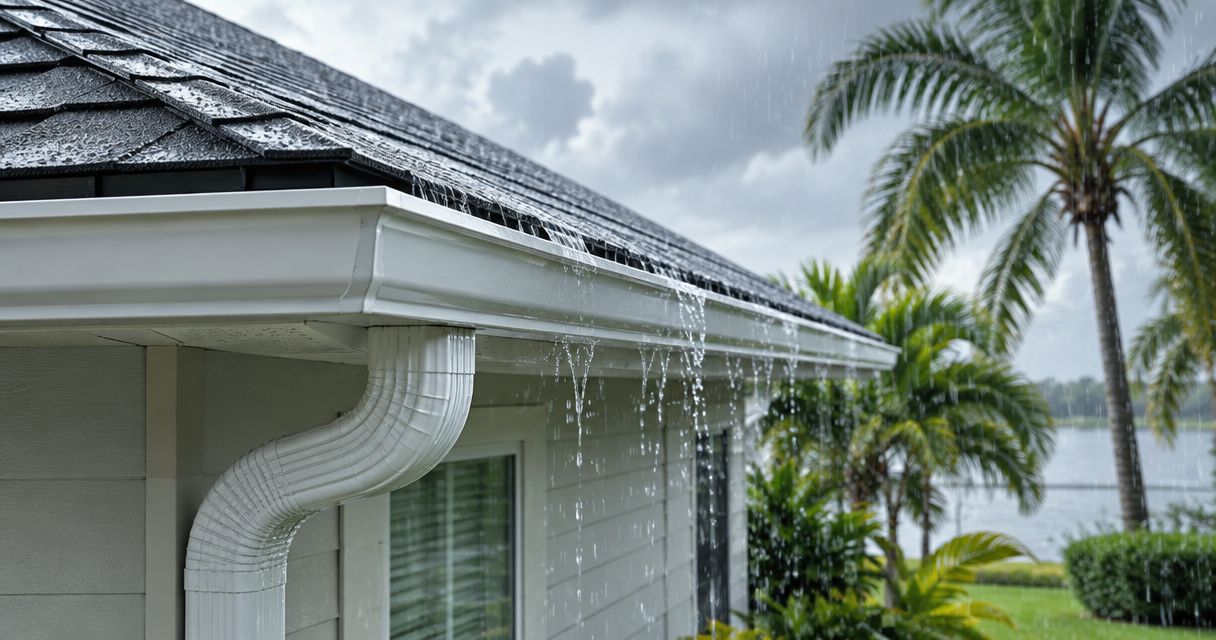
Southwest Florida's rainy season and hurricane months put these buildings under repeated stress. A flat commercial roof option that held up fine for a decade can fail fast once seams age past their coating cycle, and a medical office doesn't get the option of tarping a section and staying open with a bucket in the hallway the way a warehouse might.
Commercial roofing for medical offices also means dealing with multiple stakeholders — practice owners, property managers, and sometimes a hospital system's facilities department — each with a different tolerance for downtime. That's the constraint every step below is built around, and in 2026 it's the single biggest driver of how these jobs get scoped.
Schedule roof inspections around patient care hours
An inspection that requires shutting down a treatment room mid-day costs a practice real revenue. Plan around it instead of working through it.
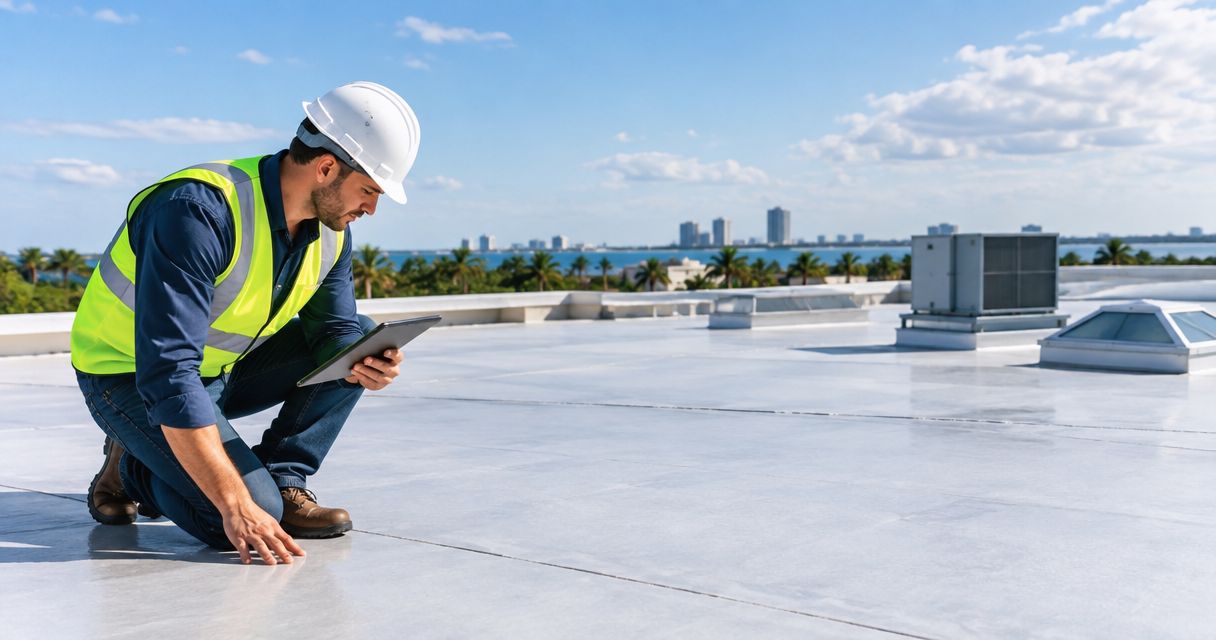
- Book inspections for early morning before the first patient block or during scheduled closures
- Ask for a written report with photos of every rooftop penetration, not a verbal summary
- Request a separate check of flashing around rooftop HVAC curbs and vent stacks
- Flag any ponding water areas — anything holding water more than 48 hours after rain needs attention
- Confirm the inspector checks skylights and any rooftop solar or communications equipment mounts
Map every rooftop penetration before any roof work begins
Medical and dental buildings collect more rooftop equipment over the years than most commercial properties — extra HVAC units for imaging suites, exhaust for sterilization equipment, sometimes backup generators. Each one is a potential leak point.
- Get an as-built rooftop equipment map from the property manager or building owner
- Note which penetrations were added after the original roof installation
- Check flashing age separately from membrane age — flashing fails first in most cases
- Confirm any rooftop equipment additions were properly sealed and not just caulked over
- A roof coatings for commercial flat roofs project resets the seal around every one of these penetrations in a single pass, which is faster than patching each one separately over time
Choose a roofing system rated for continuous occupancy
Not every commercial roofing system fits a building that can't go dark for a week. Weigh install time against downtime tolerance before picking a material.
- Silicone or elastomeric coatings apply over an existing flat roof with no tear-off and minimal noise
- TPO membrane replacement usually runs in sections, so parts of the building stay dry and operational
- Modified bitumen re-roofs generate more odor and noise during application — plan for after-hours work if patients are on site
- Standing seam metal fits additions, canopies, or pitched sections better than full flat retrofits
- Ask any contractor bidding the job for a phased work plan, not just a total timeline
Build a moisture monitoring routine for flat roofs
Flat roofs on medical buildings hide leaks longer than pitched roofs because water travels along the deck before it shows up on a ceiling tile. Catching it early is cheaper than replacing damaged interior finishes.
- Walk the roof quarterly and after every named storm, checking membrane seams and drain areas
- Keep interior ceiling tiles near exam rooms and equipment areas on a visual watch list
- Log any HVAC condensate line drips separately from roof leaks — they get confused often
- Clear roof drains and scuppers before rainy season starts each year
- Track ponding water locations across seasons; recurring ponding signals a structural slope issue, not a maintenance one
Plan re-roofing or major repair work in phases
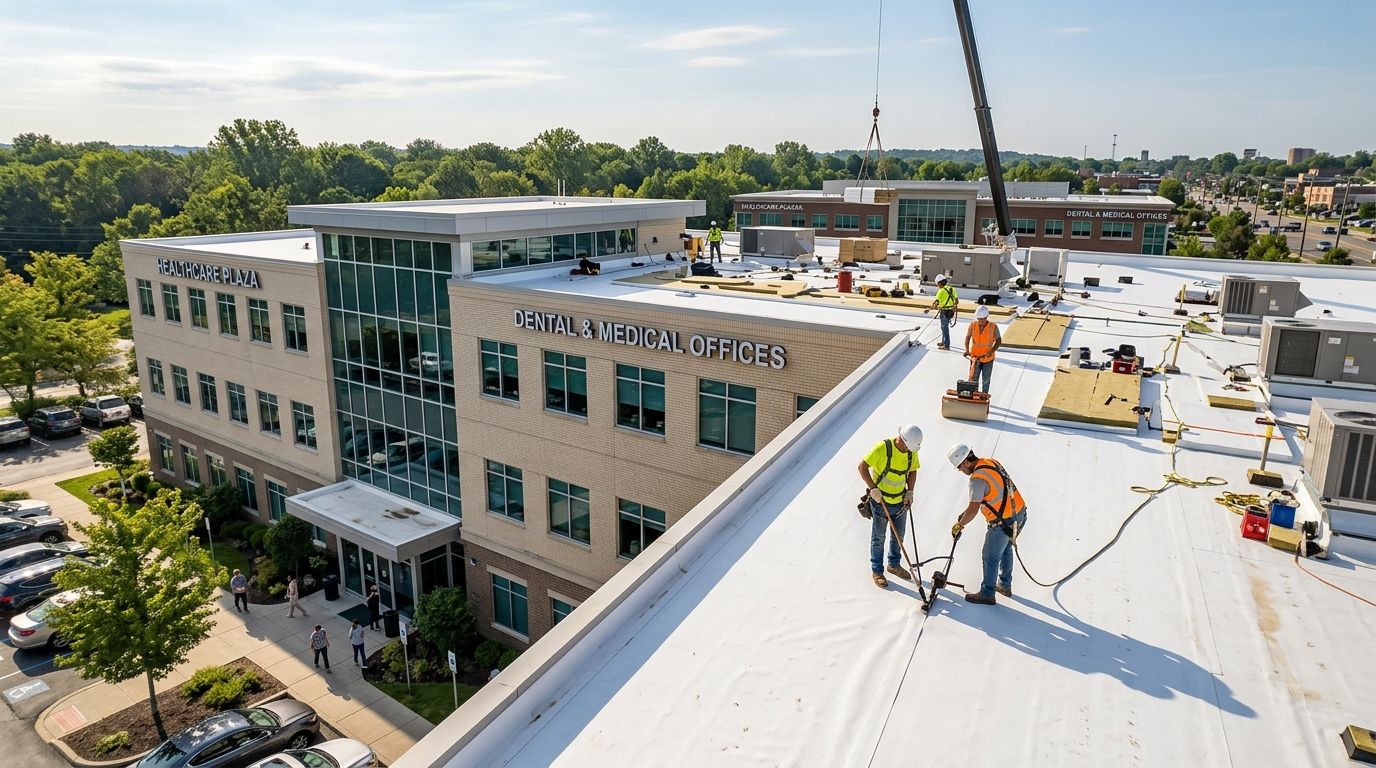
A full tear-off on an occupied medical building works best broken into sections tied to the practice's slower weeks or a temporary relocation of the busiest treatment rooms.
- Sequence work so at least one HVAC zone stays fully operational at all times
- Schedule the loudest phases — tear-off and deck repair — outside patient hours where possible
- Set a hard weather contingency plan since Southwest Florida rain delays are common outside the dry winter months
- Confirm the roofing contractor carries commercial general liability coverage sized for an occupied medical building
- A roof maintenance plan for commercial property managers built ahead of a re-roof keeps the phasing on schedule instead of reactive
Get a wind mitigation inspection for insurance and code
Medical office buildings carry expensive equipment and higher liability limits, which makes wind mitigation credits worth more in absolute dollars than on a comparable retail space.
- Confirm roof-to-wall connections meet current Florida Building Code standards
- Document roof deck attachment method — this drives a meaningful share of the insurance credit
- Check secondary water barrier presence, which matters more on flat and low-slope commercial roofs
- Renew the inspection on the schedule your carrier requires
- Ask whether recent roof work already qualifies the building for an updated credit in 2026
Set a standing maintenance contract instead of calling only after a leak
Reactive roof calls always happen at the worst time — mid-storm, mid-appointment, or both.
- Lock in a fixed inspection cadence, at minimum spring and after hurricane season
- Require photo documentation on every visit for insurance and lease purposes
- Ask the contractor to flag small issues (cracked pitch pans, loose flashing) before they become leaks
- Build emergency response time into the contract terms, not just the scope
“Silicone and elastomeric coatings are the fastest way for an occupied medical office to buy 10 to 15 years of flat roof protection without a full tear-off.”
Comparison: roofing systems for medical and dental office buildings
| Option | Best for | Key limitation |
|---|---|---|
| TPO single-ply membrane | Large flat roofs needing reflective, seam-welded protection | Requires trained installers; seams need periodic inspection |
| Modified bitumen | Older medical buildings with multi-layer built-up roofs | Absorbs more heat unless capped with a reflective coating |
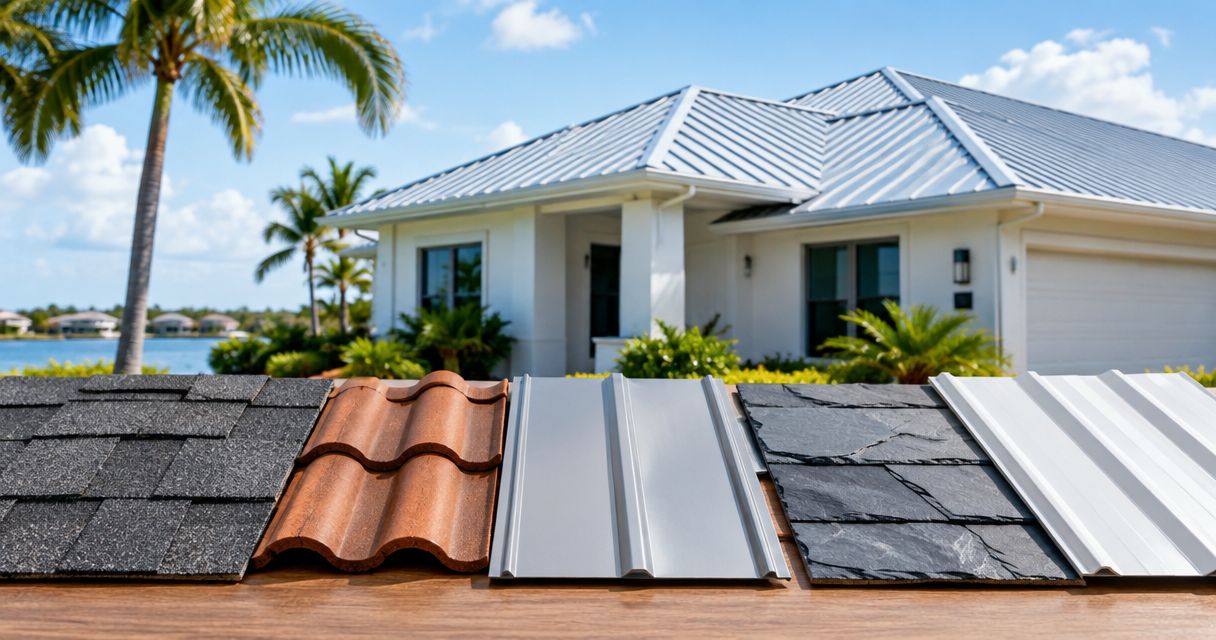
| Silicone/elastomeric coating | Extending an aging flat roof without shutting the practice down | Only viable on a roof deck that's still structurally sound |
| Standing seam metal | Pitched sections, canopies, and building additions | Not a fit for retrofitting a full flat roof deck |
Get a free roof evaluation
No-pressure inspection for medical and dental office buildings across SW Florida.
Common mistakes medical and dental offices make with roofing
- Scheduling major roof work without a phasing plan — a full tear-off during business hours shuts down more of the building than necessary
- Ignoring rooftop equipment additions — new HVAC or imaging exhaust units get bolted on without resealing the surrounding membrane
- Skipping wind mitigation renewal — insurance credits lapse quietly and costs climb without anyone noticing until renewal
- Waiting for a visible leak before calling a roofer — flat roof water travels along the deck first, so the ceiling stain shows up well after the leak started
- Hiring a residential roofer for a commercial flat roof — flat and low-slope systems need different expertise than shingle work, and mismatched experience shows up in callback repairs
FAQ
What's the best roofing system for a medical office flat roof?
Silicone and elastomeric coatings are the fastest option for an occupied medical office because they apply over the existing roof without a tear-off. TPO membrane is the stronger long-term choice when the building can tolerate a phased replacement.
How often should a medical office get a roof inspection?
At minimum twice a year, once before hurricane season and once after, plus a check after any named storm. Buildings with rooftop HVAC or imaging equipment benefit from quarterly walk-throughs.
Can a medical practice stay open during a roof replacement?
Yes, when the work is phased by section and scheduled around patient hours. A full tear-off in one continuous pass is harder to run without closing part of the building.
Does wind mitigation matter for commercial medical buildings?
Wind mitigation inspections document roof-to-wall connections and deck attachment method, both of which factor into commercial insurance underwriting. Buildings holding expensive equipment often see the largest dollar benefit from updated credits.
What causes most roof leaks in medical office buildings?
Flashing failure around rooftop HVAC penetrations and aging membrane seams cause most leaks on flat commercial roofs. Ponding water that sits longer than 48 hours after rain is usually the early warning sign.
Is a flat roof or metal roof better for a dental office?
Most dental and medical office buildings use flat or low-slope roofs by design. Metal roofing fits pitched sections, canopies, or additions rather than a full retrofit of an existing flat deck.
How long does a commercial roof coating last?
A silicone or elastomeric coating over a sound flat roof deck typically extends the roof's service life 10 to 15 years before another coating or replacement is needed.
One last thing
The detail most medical office managers miss: rooftop equipment additions almost never get their surrounding membrane resealed properly at install, because the HVAC or equipment contractor isn't a roofer. Every added imaging exhaust unit or extra condenser is a leak risk hiding in plain sight until an inspection catches it — which is exactly why the equipment map matters more in 2026 than most practices assume.