Cape Coral homes carry more tile roofs per capita than almost anywhere else in Lee County, and there's a reason beyond looks — clay and concrete tile hold up to salt air and UV exposure better than most shingle products. The catch is that tile roofing cape coral homeowners install only performs if the wind rating, deck load, and attachment method match what Southwest Florida's storms actually throw at it.
- Concrete S-tile with mechanical fastening is the safe pick for most Cape Coral tile roofing jobs in 2026 — buy it.
- Clay barrel tile weighs less but costs more, a curb-appeal upgrade rather than a storm-budget play.
- Skip synthetic tile lookalikes without a Florida product approval or Miami-Dade NOA number.
- A wind mitigation inspection after tile installation can change your insurance premium — schedule one before hurricane season.
Why this matters
Cape Coral sits inside a wind zone where the Florida Building Code treats tile roofing differently than shingle roofing on attachment method and uplift resistance. Homes here also deal with salt air corroding fasteners and near-daily summer storms testing underlayment from June through November. Get tile roofing wrong in Cape Coral and you're redoing it inside a decade instead of getting the 50-year run clay and concrete tile are built for.
Roof Smart of SW Florida evaluates wind rating, deck capacity, and attachment method together, not tile color first — that order matters more in 2026 than it did a decade ago as insurance carriers scrutinize roof condition harder before writing new policies.
Who this is for
This guide is for Cape Coral homeowners weighing a tile re-roof after storm damage or age, new-construction buyers deciding between tile and shingle, and commercial property owners in the same wind zone comparing tile against low-slope systems. If your existing roof is over 15 years old and your insurer is asking questions about a wind mitigation form, you're the target reader.
What to look for in tile roofing for Cape Coral
Wind uplift rating and attachment method
Tile roofing isn't rated as a single product — the rating comes from the tile plus the attachment system together (nail-on, mortar-set, or foam-adhesive set). Lee County's coastal wind zone calls for systems rated to Florida Building Code wind design speeds of 150 mph or higher, and the attachment method drives whether a given tile actually meets that number on your roof.
Tile weight versus roof deck capacity
Concrete tile runs 900 to 1,100 pounds per square, clay tile a bit less. Not every roof deck built for shingle was framed to carry that load, so a structural check before committing to tile roofing avoids a mid-project surprise on an older Cape Coral home.
Wind mitigation credit eligibility
Florida's wind mitigation inspection form documents roof shape, deck attachment, and roof-to-wall connections, and the tile attachment method has to be listed by name — not just "tile" — to capture the full available credit. Get this inspection scheduled after installation, not years later.
Material: clay versus concrete versus synthetic
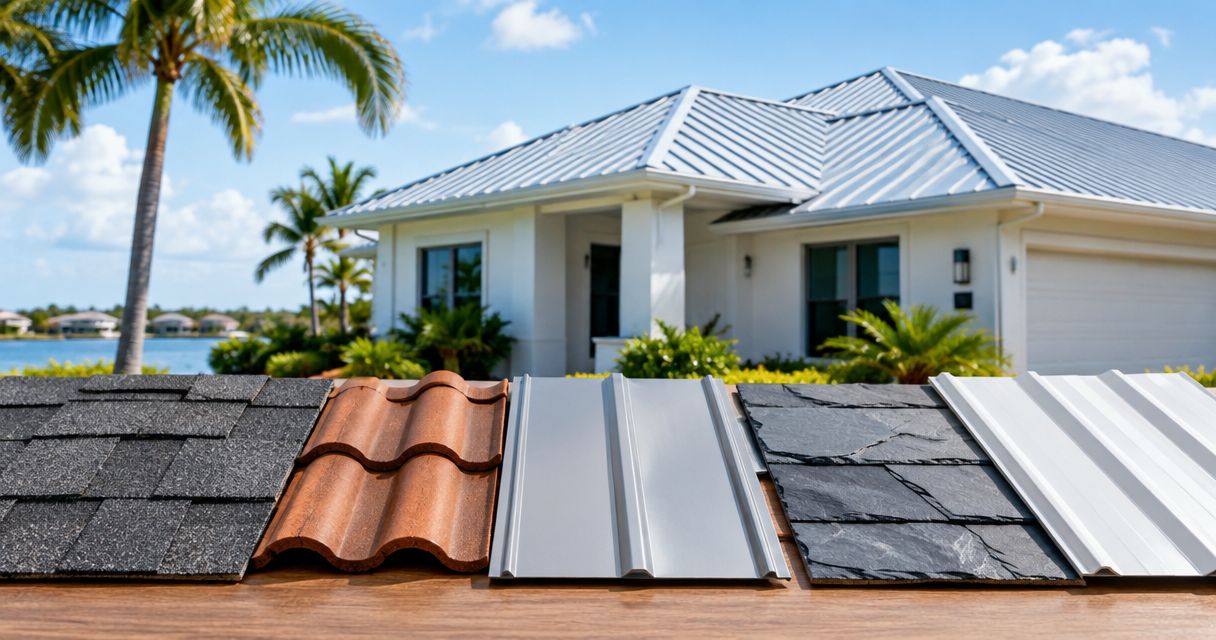
Clay tile holds color longer and costs more; concrete tile is heavier and more affordable per square; synthetic tile-look products are lighter but only worth considering with a documented Florida product approval or Miami-Dade Notice of Acceptance number.
Underlayment and flashing detail
Tile lasts 50 years, but the underlayment underneath it usually doesn't last that long on its own — a self-adhered or two-ply underlayment system is the actual water barrier doing the daily work in Southwest Florida's rain patterns.
Local installer experience with code and HOA rules
Cape Coral has HOA tile-color restrictions in several communities, and permitting inspectors here check attachment method closely. An installer who's pulled permits in Lee County recently moves faster than one learning local code on your project.
Top tile roofing options for Cape Coral homes
Concrete S-tile, mechanically fastened — the safe pick. Weighs 900 to 1,000 pounds per square and meets Florida Building Code wind design requirements with proper nail-on attachment. This is the default recommendation for most Cape Coral re-roofs in 2026. Verdict: Buy.
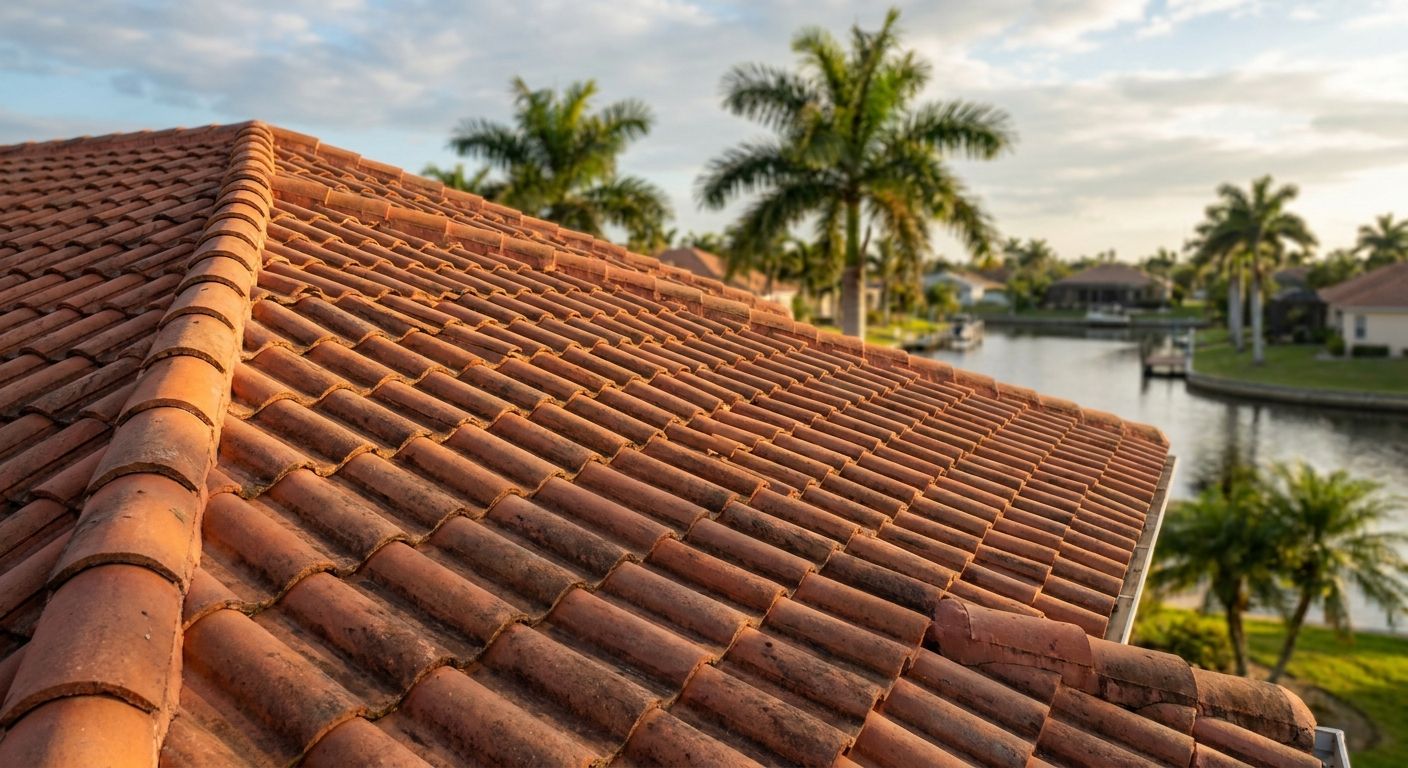
Clay barrel tile — the curb-appeal pick. Runs lighter than concrete, typically 850 to 950 pounds per square, and holds its color through decades of Florida sun better than painted concrete tile. Costs more upfront, so it fits budgets prioritizing resale look over lowest cost per square. Verdict: Consider.
Low-profile flat concrete tile — the modern retrofit. A lighter concrete profile that suits contemporary Cape Coral builds and works well on decks that can't carry a full high-profile S-tile load. Verdict: Consider.
Foam-adhesive set tile system — the wind-mitigation play. Adhesive-set systems distribute uplift resistance across the whole tile field instead of relying only on point fasteners, which matters on exposed coastal lots. Pair the installation with a wind mitigation inspection in Cape Coral once the roof is complete to get the attachment method documented for your insurer. Verdict: Buy for coastal exposure.
Full tear-off and re-deck before new tile — the non-negotiable step. Tile roofing installed over an aging deck or old underlayment fails early no matter how good the tile is. If you're unsure whether your roof needs a patch or a full tear-off, the breakdown in roof repair versus roof replacement for Florida homes walks through the decision points. Verdict: Buy — skip this step and the tile warranty doesn't matter.
What to avoid
- Synthetic tile-look panels with no Florida product approval number. They look identical to clay or concrete in photos but carry a fraction of the wind uplift documentation insurers want to see in 2026.
- New tile over old, undocumented underlayment. Reusing underlayment to save on a tile job is the single most common reason a 50-year tile roof leaks inside year eight.
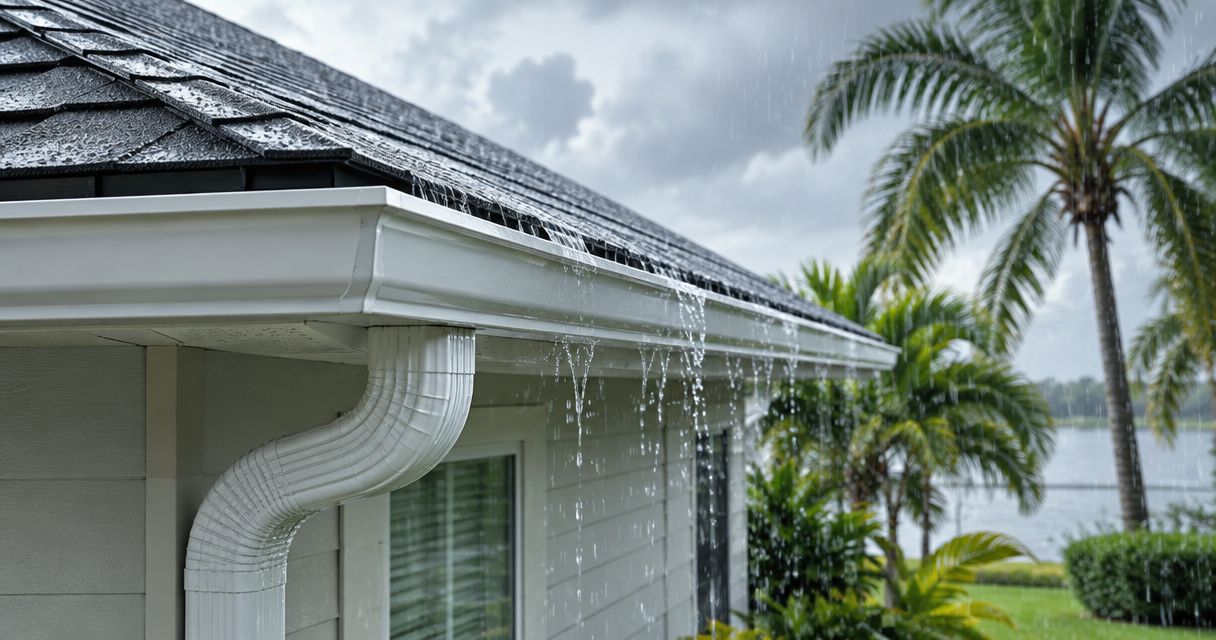
- Skipping gutter integration during the tile install. Tile roof edges shed water differently than shingle, and gutters hung without accounting for that overhang gap fail fast — the process is covered in installing seamless gutters on a Florida home.
Tile roofing comparison for Cape Coral
| Tile Type | Weight per Square | Wind Rating Fit | Best For | Verdict |
|---|---|---|---|---|
| Concrete S-tile (nail-on) | 900-1,000 lbs | Meets 150+ mph with proper attachment | Most Cape Coral re-roofs | Buy |
| Clay barrel tile | 850-950 lbs | Meets 150+ mph with proper attachment | Curb appeal, resale focus | Consider |
| Low-profile flat concrete | 800-900 lbs | Meets 150+ mph with proper attachment | Lighter decks, modern builds | Consider |
| Foam-adhesive set system | Varies by tile | Distributes uplift across field | High coastal exposure lots | Buy |
| Synthetic tile-look (no NOA) | Lighter, varies | Unverified without approval number | Not recommended | Skip |
FAQ
What is the best tile roofing material for Cape Coral homes in 2026?
Concrete S-tile with mechanical fastening is the best all-around choice for most Cape Coral homes in 2026, meeting Florida Building Code wind design requirements at a lower cost than clay. Clay barrel tile is the better pick when curb appeal outweighs budget.
Is clay tile or concrete tile better for Southwest Florida?
Concrete tile is heavier and generally more budget-friendly, while clay tile is lighter and holds its color longer under Florida sun. Both meet the same wind uplift standards when attached correctly, so the choice comes down to weight tolerance and budget.
How much does tile roofing weigh compared to shingles?
Concrete tile weighs 900 to 1,100 pounds per square, far more than asphalt shingle, which runs roughly 200 to 300 pounds per square. A structural check on the roof deck is worth doing before committing to a tile switch on an older home.
Does tile roofing qualify for wind mitigation discounts in Florida?
Tile roofing can qualify for wind mitigation credits when the attachment method is documented on the inspection form, not just listed as generic tile. Scheduling a wind mitigation inspection after installation captures the credit your insurer applies to your premium.
How long does a tile roof last in Cape Coral's climate?
Clay and concrete tile roofing typically carries a 50-year lifespan, longer than most shingle products in Florida's salt air and UV exposure. The underlayment beneath the tile usually needs replacement before the tile itself does.
Can I install tile roofing over an existing shingle roof?
No — tile roofing requires a deck built to carry its weight and fresh underlayment, so installing over old shingle without a tear-off is not a supported approach. A full tear-off and re-deck comes first on nearly every Cape Coral tile conversion.
What wind rating does tile roofing need in Lee County?
Lee County's coastal wind zone calls for roofing systems rated to Florida Building Code wind design speeds of 150 mph or higher. The tile and its attachment method together determine whether a specific installation meets that threshold.
Is tile roofing more expensive than metal roofing in Cape Coral?
Tile roofing generally costs more upfront than metal roofing due to material weight and structural requirements, though both can meet the same wind rating standards. Pricing varies by tile type, roof size, and deck condition, so a site estimate gives the real number.
One last thing
The wind mitigation form has a specific line for tile attachment method, and installers who leave it generic instead of naming the actual system cost homeowners the biggest credit available on the form. If your Cape Coral tile roof was installed more than a year ago and you've never had a wind mitigation inspection done since, that's the first call to make before the next renewal — not the last.