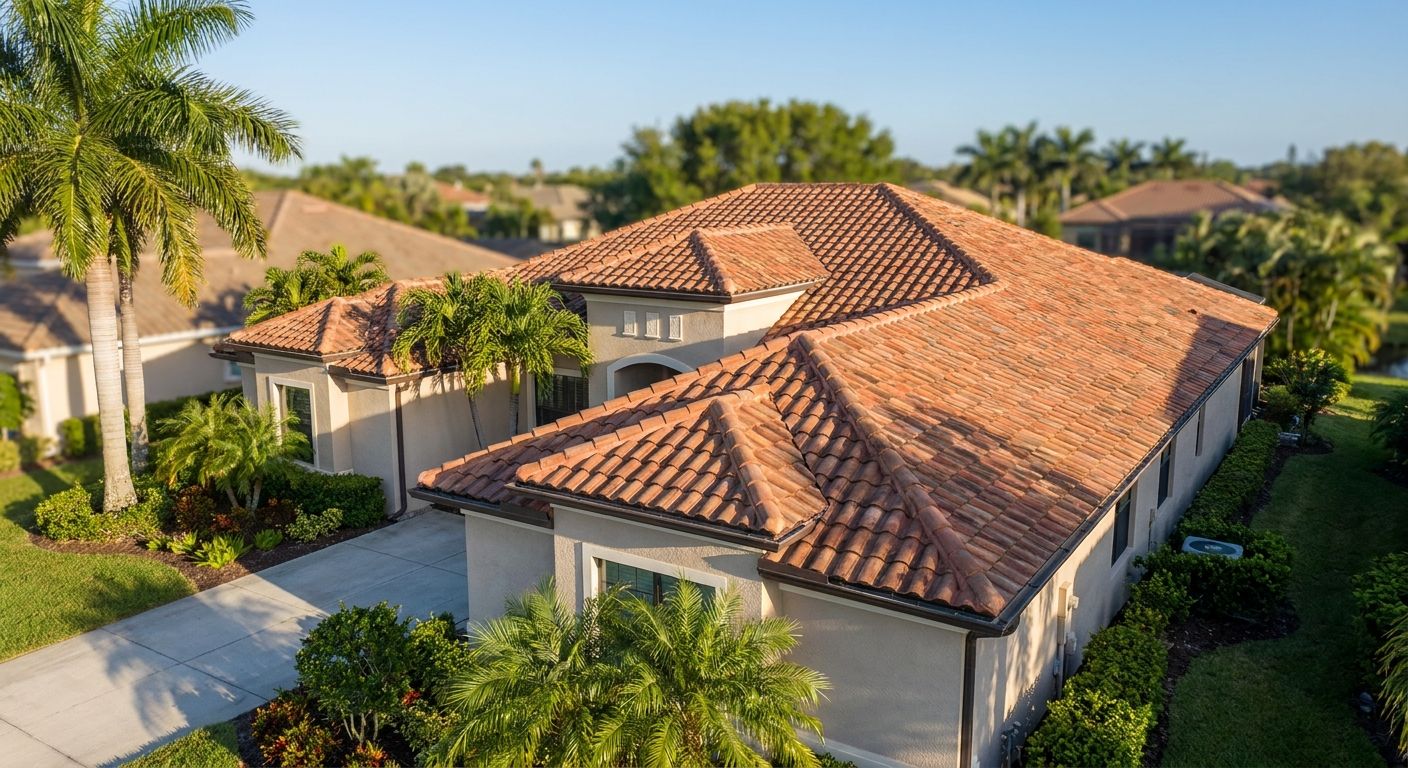
Bonita Springs tile roofing is a clay or concrete tile system installed on homes between Naples and Fort Myers, built to handle Gulf Coast humidity, salt air, and wind loads that wear out weaker materials within a decade. Homeowners here pick tile roofing for the same reason their Mediterranean-style neighbors do: it outlasts asphalt shingles in the Florida sun and matches the Spanish and Mediterranean architecture common across Lee County subdivisions.
- Tile roofing in Bonita Springs typically lasts 40-50 years on concrete or clay when the underlayment underneath is replaced on schedule.
- Roof Smart Florida handles tile roof inspections, repairs, and full replacements across Bonita Springs — best for homeowners who want one licensed contractor start to finish.
- A wind mitigation inspection completed after a tile roof replacement can lower your homeowners insurance premium ahead of 2026 renewal.
- Most Bonita Springs HOAs require matching tile profile and color on any replacement, so check your covenant before you order material.
Why tile roofing matters for Bonita Springs homeowners
Bonita Springs sits in the same coastal wind zone as Naples and Fort Myers, and most subdivisions here went up with barrel or flat-profile tile to match a Mediterranean or Spanish Colonial look. That's a covenant issue as much as a roofing one — HOAs routinely require matching tile profile and color on any replacement, which narrows your material choice before you call a contractor.
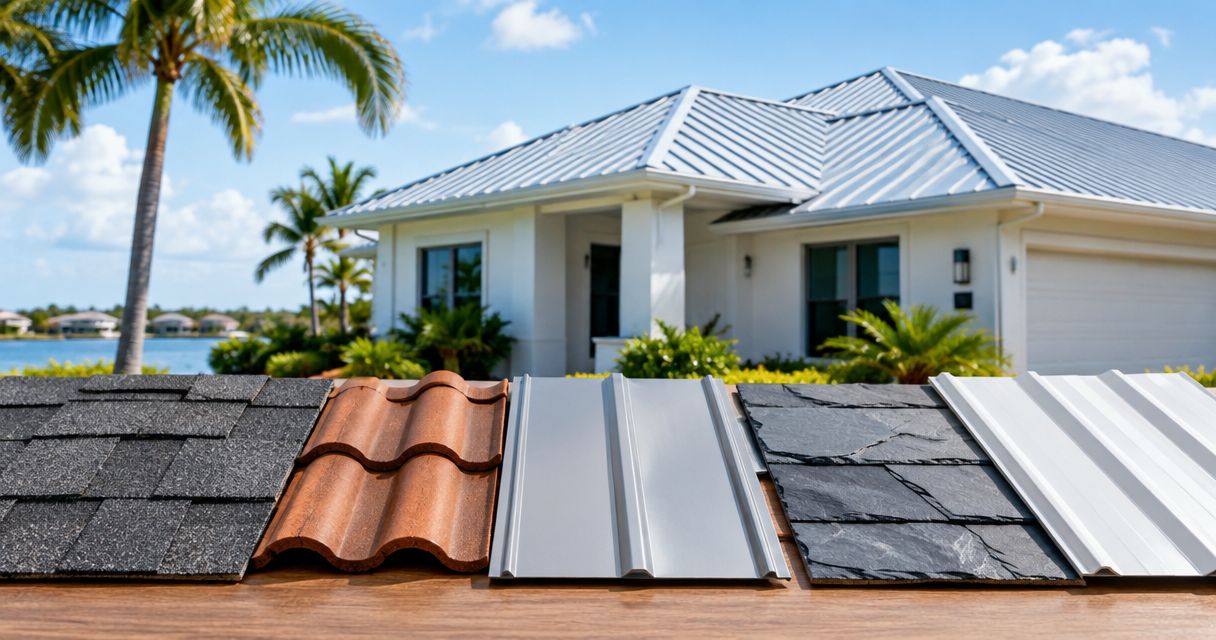
For a rundown of tile roofing options for Southwest Florida homes, compare weight, wind rating, and color availability before you order material or file a covenant request.
Tile roofing also changes your insurance math. A properly installed and inspected tile roof can qualify for a wind mitigation credit, and Lee County insurers have gotten stricter about verifying roof age and condition before renewing a policy in 2026. If your tile roof dates to a home built in the 1990s or earlier, carriers increasingly ask for proof of condition before renewing without a rate increase.
Inspect your tile roof for cracked or slipped tiles first
Start with a visual check before anyone climbs a ladder.
- Walk the property line and scan the roof plane with binoculars for cracked, slipped, or missing tiles
- Check the attic for water stains, daylight through the decking, or a musty smell after rain
- Look at valleys and hips first — that's where tile roofs leak before anywhere else
- Photograph any damage right after a storm, before filing an insurance claim
- Note the roof's age: concrete and clay tile commonly lasts 40 to 50 years, but the underlayment beneath it often fails around year 20-25
Check your HOA's tile profile and color rules before you order material
Bonita Springs covenants control this more tightly than most homeowners expect.
- Pull your HOA covenant or call the management company before ordering replacement tile
- Match the existing barrel, flat, or S-profile — mixed profiles get flagged in most communities
- Get color approval in writing, not just a verbal okay from a board member
- Ask whether your community allows lightweight synthetic tile as a substitute for clay
- Budget extra lead time; HOA approval can add weeks to a replacement timeline
Compare tile materials before you commit to a replacement
Concrete tile costs less per square than clay and holds up just as well in Southwest Florida heat, but it's heavier, and some older trusses need reinforcement before installation. Clay tile matches historic Mediterranean-style homes more precisely and holds color longer, but it cracks more easily during repair foot traffic. Lightweight synthetic tile weighs a fraction of concrete or clay and suits homes with weight restrictions, though color and profile options run thinner.
Roof Smart Florida walks Bonita Springs homeowners through this comparison as part of a free estimate, matching tile weight to the existing truss rating before recommending a material. For homes where Mediterranean-style architecture drives the covenant requirements, that step isn't optional.
- Ask for the roof's current dead load rating before ordering concrete tile
- Request clay tile samples matched to your existing roof, not a generic catalog color
- Confirm synthetic tile is HOA-approved before ordering, not after delivery
Budget for repair vs. full tile roof replacement
- Get a tile-by-tile damage count, not just a general "you need a new roof" estimate
- Ask whether the underlayment has failed even if the tiles look intact — cracked tiles are cosmetic, failed underlayment is structural
- Compare the cost of a full replacement against three to five years of recurring repair calls
- Check whether your roof still carries a manufacturer or installer warranty before paying for patch repairs
- Get the repair-vs-replacement threshold in writing from your contractor, not a verbal estimate
Schedule a wind mitigation inspection after replacement
- Book the inspection within 30 days of finishing the roof, ahead of your insurance renewal date
- Ask the inspector to document the tile attachment method — that's one of the biggest factors in the wind mitigation credit
- Get the completed wind mitigation form directly from the inspector, not a summary
- Send the form to your insurance agent directly, not just your carrier's general contact line
- Recheck your premium at the next renewal — credits don't apply retroactively
Get a licensed estimate before hurricane season
- Confirm the contractor is licensed for roofing work in Lee County, not just general contracting
- Ask for photos of the crew's last three tile roof installs in Bonita Springs or Naples
- Get the wind mitigation credit and manufacturer warranty details in writing before signing
- Compare at least two estimates that break out material, labor, and underlayment separately
Tile roofing options for Bonita Springs homes
| Option | Best for | Key limitation |
|---|---|---|
| Concrete tile | Most Bonita Springs replacements, budget-conscious homeowners | Heavier roof, may need truss reinforcement |
| Clay tile | Mediterranean or Spanish Colonial architecture, HOA-matched replacements | Cracks more easily, costlier repairs |
| Lightweight synthetic tile | Older homes with weight restrictions | Narrower color and profile selection |
| Metal roofing (alternative) | Homeowners prioritizing wind rating over tile appearance | Different look, may violate HOA tile covenant |
Get a free tile roof estimate
Roof Smart Florida evaluates Bonita Springs tile roofs at no cost, no pressure.
Common mistakes Bonita Springs homeowners make with tile roofs
- Waiting until a leak reaches the ceiling before calling for an inspection — underlayment failure often shows up years before visible tile damage
- Hiring an out-of-town crew unfamiliar with Bonita Springs HOA tile-matching rules, then redoing the job after a covenant violation notice
- Treating a cracked tile as purely cosmetic instead of checking the underlayment beneath it
- Skipping the wind mitigation inspection after a full tile roof replacement in 2026 and missing the insurance credit
- Comparing replacement quotes without confirming which ones include removal and disposal of the old tile
FAQ
What's the best tile roofing material for a Bonita Springs home?
Concrete tile works for most Bonita Springs homes because it costs less than clay and holds up just as well in the heat. Clay tile is the better match for a home built specifically in a Mediterranean or Spanish Colonial style where color and profile precision matter to the HOA.
Is tile roofing better than shingle roofing in Southwest Florida?
Tile roofing generally outlasts asphalt shingle roofing in Southwest Florida's heat and UV exposure, with concrete and clay commonly reaching 40 to 50 years versus a shorter shingle lifespan. Shingle costs less upfront and suits homes without an HOA architectural requirement for tile.
How much does a wind mitigation inspection save on homeowners insurance?
Savings depend on your carrier, roof age, and attachment method, so there's no fixed number to quote. Getting the inspection done and the form filed with your agent right after a tile roof replacement is the only way to find out your actual credit.
How long does a tile roof last in Florida?
Concrete and clay tile roofs commonly last 40 to 50 years in Florida when the underlayment beneath them is replaced on schedule. The tile itself often outlasts two or three underlayment cycles.
Does my Bonita Springs HOA control what tile I can install?
Most Bonita Springs HOAs require matching the existing tile profile and color on any replacement. Pull your covenant or call the management company before ordering material.
How do I know if my tile roof needs repair or full replacement?
Get a tile-by-tile damage count and an underlayment check, not just a general estimate. If the underlayment has failed, repairing individual tiles won't stop leaks even if the tiles themselves look intact.
Is metal roofing a better option than tile for coastal wind exposure?
Metal roofing can carry a higher wind rating than tile in some coastal installations, but it changes the look of the home and may violate an HOA's tile covenant. Tile remains the standard choice for Mediterranean-style Bonita Springs communities.
How much does tile roof replacement cost in Bonita Springs?
Cost depends on tile material, roof size, underlayment choice, and whether truss reinforcement is needed, so a fixed figure isn't reliable without seeing the roof. A free estimate breaks out material, labor, and underlayment costs separately.
One last thing
Most tile roof failures in Bonita Springs start at the underlayment, not the tile — an intact-looking tile roof can still leak for years once the felt underneath it fails after roughly two decades of Florida heat. Ask any contractor for the underlayment brand and installation date before comparing tile colors; that number tells you more about your real timeline than the tile itself.