Punta Gorda homeowners choosing seamless gutter installation in 2026 get a one-piece aluminum gutter run formed on-site to match the roofline exactly, eliminating the horizontal seams that fail first on sectional gutters during Southwest Florida's summer downpours.
- Seamless gutter installation in Punta Gorda uses one continuous aluminum run with zero horizontal seams to leak.
- 6-inch K-style gutters handle Southwest Florida rain volume better than the standard 5-inch residential size.
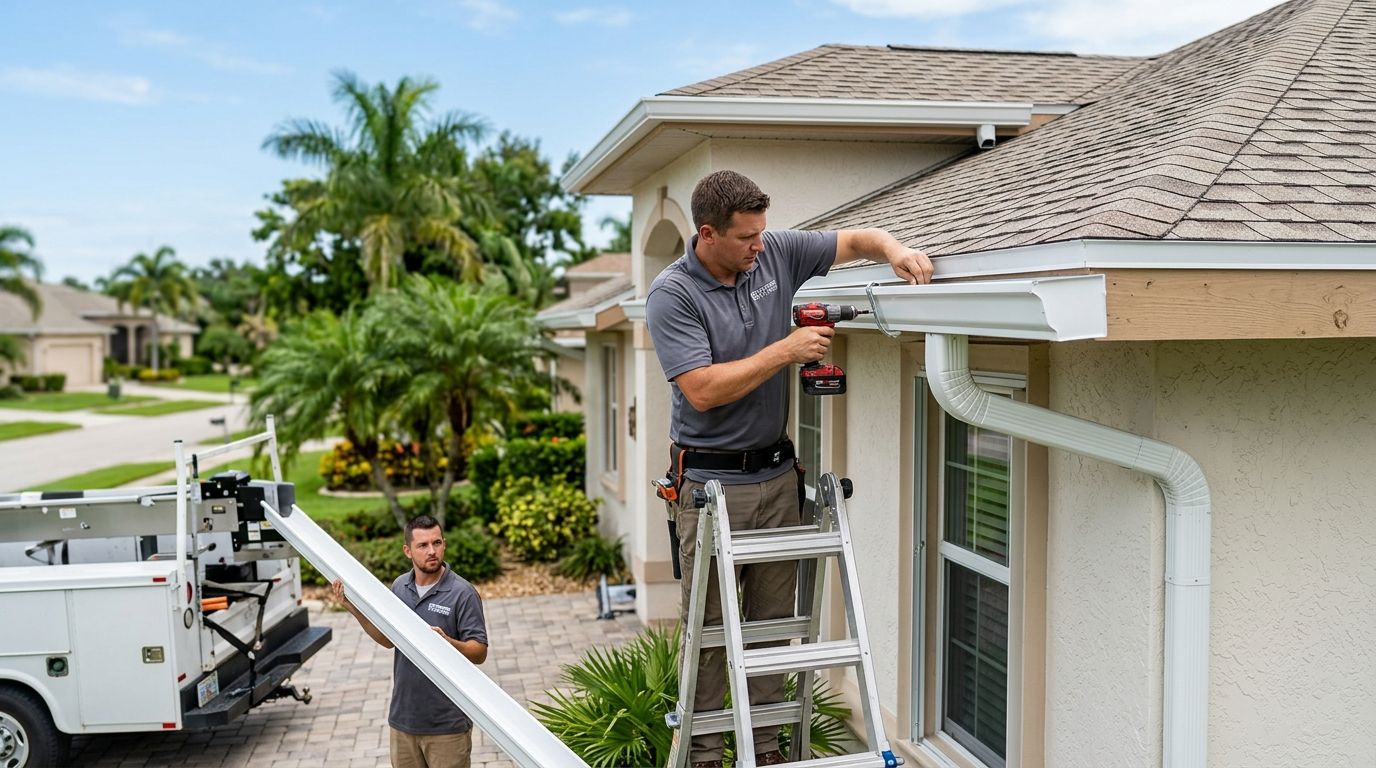
- Roof Smart of SW Florida forms gutters on-site in a single visit, matched to your exact roofline.
- Book installation before June 1 in 2026 — hurricane season demand backs up every local installer's schedule.
Why seamless gutter installation matters for Punta Gorda homeowners
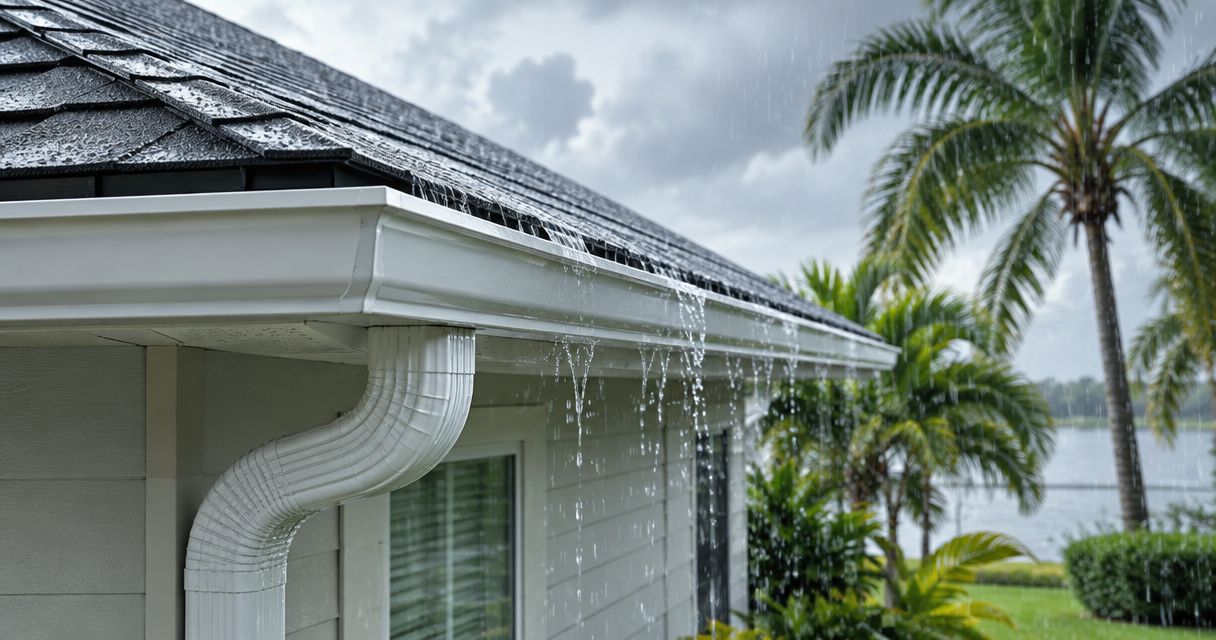
Punta Gorda sits on Charlotte Harbor, and the wet season delivers short, heavy thunderstorm cells rather than steady all-day rain. That intensity is exactly what sectional gutters handle poorly — every seam is a spot where water can force its way out under pressure instead of moving down the trough.
A seamless run, by contrast, is extruded from coil stock right at your house, so there's no seam between corners and no repeated caulking every couple of years. For a full walkthrough of the process, installing seamless gutters on a Florida home covers what a same-day install actually looks like from measurement to final fastening.
Older homes in the area often still run 5-inch sectional gutters installed decades ago, sized for a smaller roof footprint or a drier climate assumption. A 6-inch seamless run is the standard upgrade Roof Smart of SW Florida installs on most single- and two-story homes in Punta Gorda today, since it moves noticeably more water per linear foot without changing the visual line of the roof edge.
How to plan seamless gutter installation for your Punta Gorda home
Inspect your current gutters and roofline for damage
Start with a free walkaround rather than a quote request — you'll spot most of what needs fixing without a ladder.
- Walk the perimeter right after a heavy rain and mark spots where water sheets over the edge instead of dropping into the trough
- Check fascia boards for soft, dark wood, a sign water has been running behind the gutter for months
- Look at hanger spacing; anything wider than 36 inches on an older sectional system is a common failure point
- Photograph cracked caulk at seams and end caps — that's the single most common leak source on sectional gutters
- Note any low spot where standing water sits more than an hour after rain stops
Measure your roofline and drainage points
Measuring wrong is the most common reason a DIY gutter job leaks within a year.
- Measure total linear footage of roofline that sheds water, not just the front elevation
- Count roof planes and valleys — each valley concentrates more water and needs its own downspout
- Mark where water currently exits the property (driveway, flower bed, a neighbor's yard) to plan new discharge points
- If you're not confident measuring pitch and drop for correct flow, a licensed installer can run a no-pressure site measurement instead of guessing off ladder photos
Choose your gutter material and profile
- Aluminum .032-inch stock is the standard for Florida seamless runs — it won't rust and holds paint better than galvanized steel
- K-style profile carries more water per linear foot than half-round, which matters during a fast-moving thunderstorm cell
- 6-inch gutters are the size to request on any roof over about 1,500 square feet — 5-inch is fine for a garage or shed, not a main house run
- Copper never needs repainting but costs more and few Punta Gorda installers stock it for standard residential jobs
- Match downspout size (2x3-inch vs 3x4-inch) to gutter capacity, not just gutter width
Time the install around hurricane season
- Southwest Florida's hurricane season runs June 1 through November 30 — booking in late winter or spring avoids the fall backlog every licensed installer sees
- If a new roof is already scheduled, gutters usually go on after the roof but before storm season closes the install window
- Charlotte County can require a permit for gutter work tied to fascia replacement — confirm before signing a contract
- Pairing gutter work with a wind mitigation inspection in Punta Gorda can catch fascia or roof-edge issues before they turn into install delays
Add downspouts and drainage extensions
- Plan on one downspout for roughly every 35 to 40 feet of gutter run to keep flow from backing up during a downpour
- Extend downspout discharge at least 4 to 6 feet from the foundation — closer than that just feeds the water intrusion problem gutters are supposed to solve
- Splash blocks work on flat lots; homes with drainage swales often need buried extensions instead
- Keep discharge points clear of septic drain fields, a common lot layout issue around Punta Gorda
Add gutter guards for storm debris
- Mesh guards block pine needles and oak leaves but need occasional brushing off after a named storm drops heavy debris
- Reverse-curve guards shed debris on their own, cost more, and can struggle with fine grit off a tile roof
- Foam insert guards are the cheapest option but degrade faster under Florida's UV exposure and typically need replacing within a few years
- Without guards, expect to clean seamless gutters two to four times a year under mature oak or pine canopy — see best gutter guards for Florida storms for how the three types compare on debris load
Maintain your seamless gutters after installation
- Clean before hurricane season and again after leaf drop in late fall, even with guards installed
- Walk the roofline after any named storm and check hangers for pull-out — repeated wind gusts loosen fasteners over multiple seasons
- Reseal end caps if a drip line starts staining the fascia below a seam
- Rinse granule buildup out of the trough on homes with asphalt shingle roofs; fine granules collect at the low point and slow flow
Compare your gutter installation options in Punta Gorda
| Option | Best for | Key limitation | Verdict |
|---|---|---|---|
| DIY sectional gutters | A shed, garage, or tight budget | Seams leak within a few seasons under heavy rain | Skip for the main house |
| Big-box sectional install | Renters or short-term owners | Same seam failure risk, crews rarely measure pitch first | Hold |
| Local seamless gutter contractor (Roof Smart of SW Florida) | Punta Gorda homeowners wanting a one-piece, storm-ready system | Scheduling gets tight closer to June 1 | Buy |
| National franchise seamless install | Homeowners wanting a recognizable brand name | Often subcontracts local labor, less accountability for regional drainage needs | Wait |
Roof Smart of SW Florida's seamless gutter installation is the strongest option for Punta Gorda homeowners who want one continuous run matched to their exact roofline instead of a patched-together sectional system.
Common mistakes Punta Gorda homeowners make with gutters
- Installing 5-inch gutters on a two-story home with more roof area than that size can handle during a Charlotte Harbor storm cell
- Skipping the permit check for fascia-tied gutter work when Charlotte County requires paperwork tied to roof or fascia trades
- Draining downspouts straight onto a shared drainage swale, moving the water problem onto a neighbor's lot
- Assuming gutter guards eliminate cleaning entirely instead of just reducing how often it's needed
- Waiting until June to book installation, right when 2026 hurricane season demand backs up every local contractor's schedule
Get your gutters measured for free
No-pressure on-site estimate for Punta Gorda homeowners.
FAQ
What's the best gutter size for a Punta Gorda home?
6-inch K-style aluminum is the best fit for most single- and two-story Punta Gorda homes given regional rain volume. 5-inch gutters are still fine for a garage or small shed roof.
Is seamless gutter installation better than sectional gutters in Florida?
Yes, for leak resistance, since a seamless run has no horizontal seams for water to force its way out under pressure. Sectional gutters rely on caulked joints that break down faster in heavy, storm-driven rain.
How much rain does Punta Gorda get each year?
Southwest Florida averages roughly 50 inches of rain a year, concentrated heavily in the June-through-September wet season. That volume is why oversized 6-inch gutters make sense on most local roofs.
Do seamless gutters need gutter guards in Florida?
Guards aren't required, but they cut cleaning frequency significantly under oak or pine canopy. Without guards, expect to clean seamless gutters two to four times a year in a mature yard.
How long does seamless gutter installation take?
Most single-family homes are done in a single day since the gutter is formed on-site from coil stock rather than assembled from pre-cut sections. Larger or multi-story homes with several roof planes can take longer.
Can gutters affect a wind mitigation inspection or insurance discount?
Gutters themselves aren't part of the wind mitigation form, but the fascia condition checked during a gutter job can reveal issues worth fixing before an inspection. Soft or damaged fascia can affect how a roof-to-wall connection scores.
What's the difference between K-style and half-round gutters?
K-style carries more water per linear foot and is the standard profile for Florida's rain volume. Half-round is more of an aesthetic choice, common on historic-style homes, and generally carries less water for the same width.
When is the best time of year to install gutters in Southwest Florida?
Late winter through spring is the best window, before the June 1 start of hurricane season books up local installers. Waiting until summer often means a longer wait for scheduling.
One last thing
The gutter itself is rarely what fails first on a Punta Gorda home — it's the fascia board behind it. If the fascia is soft or rotted, a brand-new seamless run in 2026 still pulls loose the first time a tropical storm gust hits it. Get the fascia checked before you get gutters quoted, not after.