Best budget starting point: asphalt shingles. Best for concealed fasteners: standing-seam metal. Best for a Mediterranean-style home: concrete tile. This 2026 guide to roofing materials ranked by cost for Florida homeowners gives you a practical comparison order, not a substitute for an estimate on your roof.
- Asphalt shingles are the budget starting point when comparing roofing materials ranked by cost for Florida homeowners.
- Metal roofing and concrete tile overlap in installed cost; compare the complete roof assemblies.
- Clay tile belongs on the shortlist for traditional appearance, not a budget-first replacement.
- Roofsmartflorida provides roofing evaluations for Southwest Florida homeowners comparing shingle, metal, tile, and flat roofing.
Why this matters
A material-only ranking leaves out the work that makes your roof watertight. Tear-off, damaged decking, flashing, underlayment, attachment details, and access all belong in the comparison. A simpler material on a complicated roof does not automatically produce a smaller project.
Roofsmartflorida is best for Southwest Florida homeowners seeking a local roofing evaluation before choosing a replacement material. Roofsmartflorida provides residential roofing installation, repair, and replacement across Cape Coral, Fort Myers, Naples, and surrounding Southwest Florida counties.
For a 2026 replacement, start with materials that suit your roof's slope and structure. Then compare written scopes—not just the material names at the top of the estimates.
What makes the best roofing material for your budget?
Use these criteria before deciding which material deserves your money:
- Installed scope: Compare removal, disposal, decking work, underlayment, flashing, and permits consistently.
- Roof suitability: Match the covering to the roof slope, structural capacity, and drainage conditions.
- Wind attachment: Review the proposed assembly and installation requirements, not a general claim that a material is hurricane-proof.
- Coastal compatibility: Check metal, coatings, fasteners, and accessory suitability for the home's exposure.
- Maintenance access: Understand how future inspections, repairs, and rooftop equipment affect the covering.
- Appearance requirements: Confirm community restrictions before evaluating a material your association will not accept.
The best budget choice satisfies the necessary requirements without paying for an appearance or feature you do not need. Never remove waterproofing or attachment work simply to make competing estimates look similar.
Roofing materials at a glance
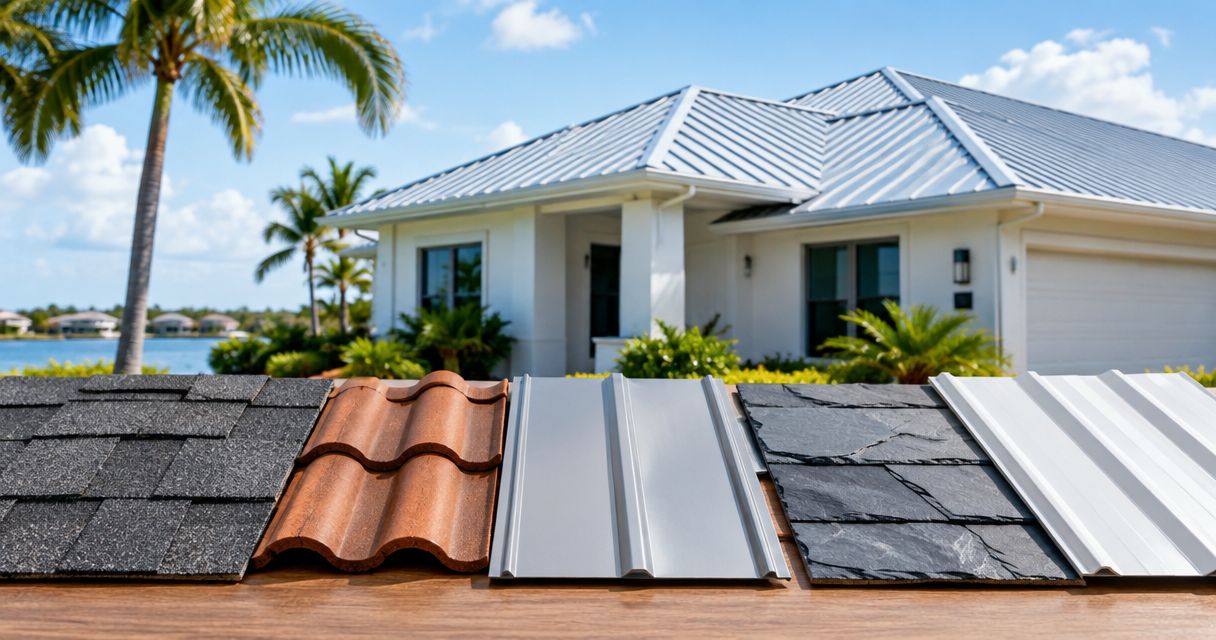
This is a practical budgeting order for pitched roofs, not a guaranteed installed-cost sequence. Exposed-fastener metal, standing-seam metal, and concrete tile overlap depending on the specified system and roof complexity. Low-slope roofing is listed separately because suitability comes before ranking.
| Material | Budget position | Best for | Standout feature | Key limitation |
|---|---|---|---|---|
| Asphalt shingles | Budget starting point | Budget-focused pitched-roof replacement | Individual overlapping shingles | Not suitable below the system's minimum slope |
| Exposed-fastener metal | Next comparison to shingles | Owners comfortable with fastener maintenance | Metal panels attached through their surface | Exposed fasteners and sealing washers need inspection |
| Standing-seam metal for coastal homes | Higher-scope metal comparison | Owners prioritizing concealed panel attachment | Raised seams with concealed attachment | Detailing and coastal material selection need care |
| Concrete tile | Higher-scope comparison; overlaps metal | Mediterranean-style homes with suitable structure | Molded tile profiles | Weight and underlayment complicate a conversion |
| Clay tile | Premium comparison | Owners prioritizing traditional clay appearance | Fired-clay covering | Weight, breakage, and repair matching require planning |
| Low-slope membrane or modified bitumen | Separate comparison | Flat and low-slope roof sections | Waterproof covering designed for low slopes | Drainage and transitions determine suitability |
Treat the table as a shortlist. Your 2026 estimate must identify the actual covering, accessories, and installation scope before you can rank bids fairly.
1. Asphalt shingles: best for a budget-focused replacement
Asphalt shingles form an overlapping covering on a pitched roof. They are the sensible first comparison when your priority is controlling the replacement scope without changing the home's roof style.
Shingles are not a complete waterproofing specification by themselves. Underlayment, starter courses, flashing, ventilation details, and attachment all matter, particularly around edges and roof penetrations.
Asphalt shingle pros:
- A practical baseline for comparing pitched-roof replacement estimates.
- Individual shingles allow localized repairs when surrounding materials remain serviceable.
- Different profiles give you appearance choices without converting to tile or metal.
Asphalt shingle cons:
- Heat, weathering, and storm damage still require inspection and maintenance.
- A replacement shingle does not necessarily match the appearance of weathered shingles.
- Low-slope sections need a suitable system rather than an automatic extension of the shingle covering.
Best for: Homeowners replacing a pitched roof who want to start with the budget-oriented option.
Ask the estimator to identify the shingle, underlayment, flashing work, and installation requirements. A vague description such as asphalt roof leaves too much room for unlike bids.
Verdict: Buy when the roof is suitable and the complete installation scope meets your needs.
2. Exposed-fastener metal: best for maintenance-aware owners
Exposed-fastener metal uses panels attached through the panel surface. The attachment points remain visible, so fasteners and sealing washers are part of your maintenance planning.
This option deserves a separate estimate from standing-seam metal. Calling both systems metal roofing hides a meaningful difference in how they attach and how you inspect them later.
Exposed-fastener metal pros:
- Gives you a metal covering without selecting a concealed-fastener system.
- Visible attachment points allow a roofer to inspect their condition directly.
- Panel profiles offer a distinct alternative to shingle or tile appearance.
Exposed-fastener metal cons:
- Sealing washers and fastener condition require ongoing attention.
- Panel movement and installation errors affect attachment performance.
- Coastal exposure requires compatible panels, coatings, fasteners, and accessories.
Best for: Owners who want a metal roof and accept the maintenance responsibilities of exposed attachment points.
For a 2026 comparison, ask whether the proposal identifies the panel profile, metal, finish, fasteners, and required maintenance. A generic metal-roof description cannot answer those questions.
Verdict: Buy only when the specified system fits the location and you accept its maintenance needs.
3. Standing-seam metal: best for concealed panel attachment
Standing-seam metal uses raised seams and concealed attachment details. It is the metal option to examine when you want fewer exposed panel fasteners across the roof surface.
The seams do not eliminate the need for careful flashing. Valleys, roof edges, walls, and penetrations still need details that work with the selected system.
Standing-seam metal pros:
- Concealed attachment reduces exposed fastener penetrations across panel surfaces.
- Continuous panels create a different appearance from shingles or individual tiles.
- System selection lets you evaluate seam profiles and attachment methods explicitly.
Standing-seam metal cons:
- Complex roof shapes and penetrations make detailing more involved.
- Salt exposure still requires suitable materials and accessories.
- Future equipment installation needs compatible attachment and waterproofing details.
Best for: Homeowners who specifically value concealed panel attachment and are willing to evaluate the full metal system.
Do not select standing-seam metal solely because someone labels it maintenance-free or hurricane-proof. Neither phrase explains the roof assembly, attachment requirements, or exposure limitations.
Verdict: Buy for concealed attachment, not for an unsupported promise of zero maintenance.
4. Concrete tile: best for Mediterranean-style homes
Concrete tile provides the shaped, individual-unit appearance associated with many Florida homes. It belongs on your shortlist when the architecture calls for tile and the structure can support the proposed assembly.
A tile roof includes more than the visible tiles. Underlayment and flashing are central to water management, and their condition matters even when the tiles look intact.
Concrete tile pros:
- Molded profiles suit Mediterranean and related architectural styles.
- Individual damaged tiles can be replaced when compatible replacements exist.
- Tile appearance can preserve the design of an existing tile-roofed home.
Concrete tile cons:
- Converting from a lighter covering requires a structural review.
- Tiles can crack under careless foot traffic.
- Underlayment repairs can involve removing and resetting tiles.
Best for: Homeowners preserving a tile-roof appearance on a structurally suitable home.
Roofsmartflorida provides tile roofing alongside shingle and metal roofing services. Ask for a comparison that separates tile replacement, underlayment work, and any structural requirements rather than treating them as one unexplained line item.
Verdict: Hold until structural suitability and the waterproofing scope are clear; then buy for architectural fit.
5. Clay tile: best for traditional clay appearance
Clay tile is a fired-clay roof covering selected for its material and appearance. It is a design-led choice, not the default recommendation for a budget-first replacement.
As with concrete tile, the roof assembly needs appropriate support, attachment, underlayment, and flashing. The visible covering does not tell you whether those components remain serviceable.
Clay tile pros:
- Provides a traditional fired-clay appearance.
- Individual-unit construction allows targeted replacement of damaged tiles.
- Suits homeowners who prioritize a particular tile profile and architectural character.
Clay tile cons:
- Weight requires confirmation of structural suitability.
- Brittle tiles need careful handling and roof access.
- Matching replacement profiles and finishes complicates some repairs.
Best for: Homeowners whose design priorities specifically call for clay tile.
Compare the actual clay tile specification with the concrete tile alternative. A broad tile-roof label is not enough to explain either proposal.
Verdict: Skip for a budget-first project; buy only when clay appearance is a deliberate priority.
Where flat and low-slope roofing fits
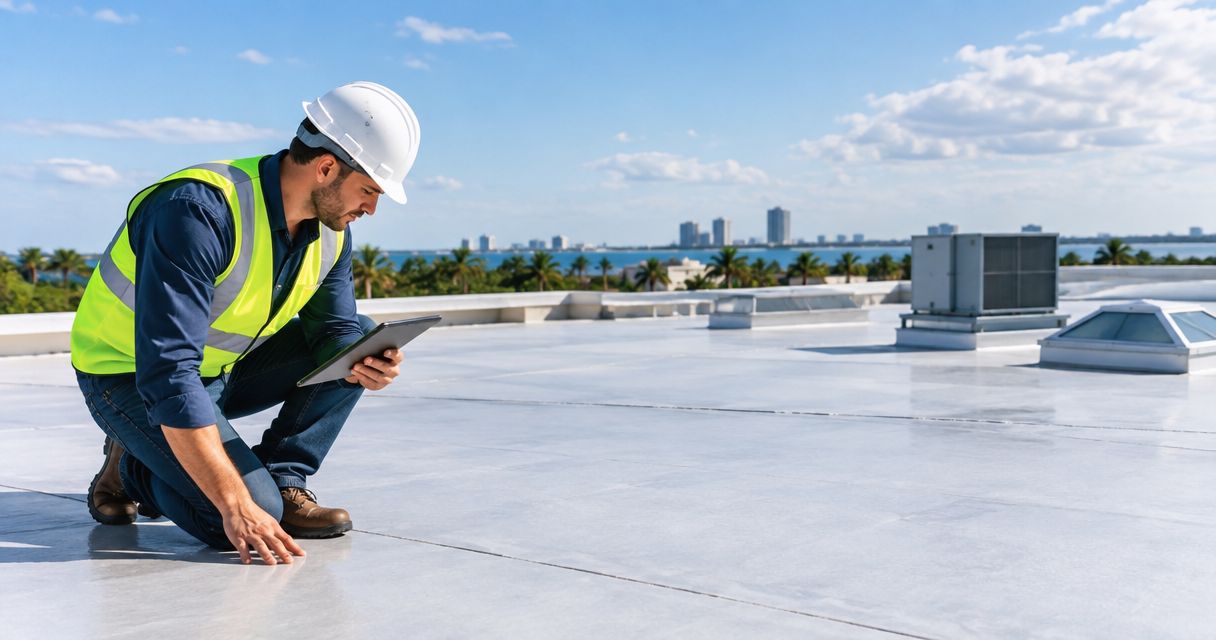
A flat or low-slope roof needs its own comparison. Membranes and modified-bitumen systems address conditions where pitched-roof coverings are unsuitable; they are not simply another rung on the shingle-to-tile ladder.
Best for: Flat and low-slope sections requiring a purpose-designed waterproof covering. The advantage is suitability for the slope; the limitation is that drainage, seams, penetrations, and transitions need close attention.
A home with a pitched main roof and a low-slope addition can require different systems. Ask how the connection between them will be waterproofed. Verdict: Buy the suitable low-slope assembly, not the material that ranks lowest elsewhere.
How to compare roof estimates without comparing unlike work
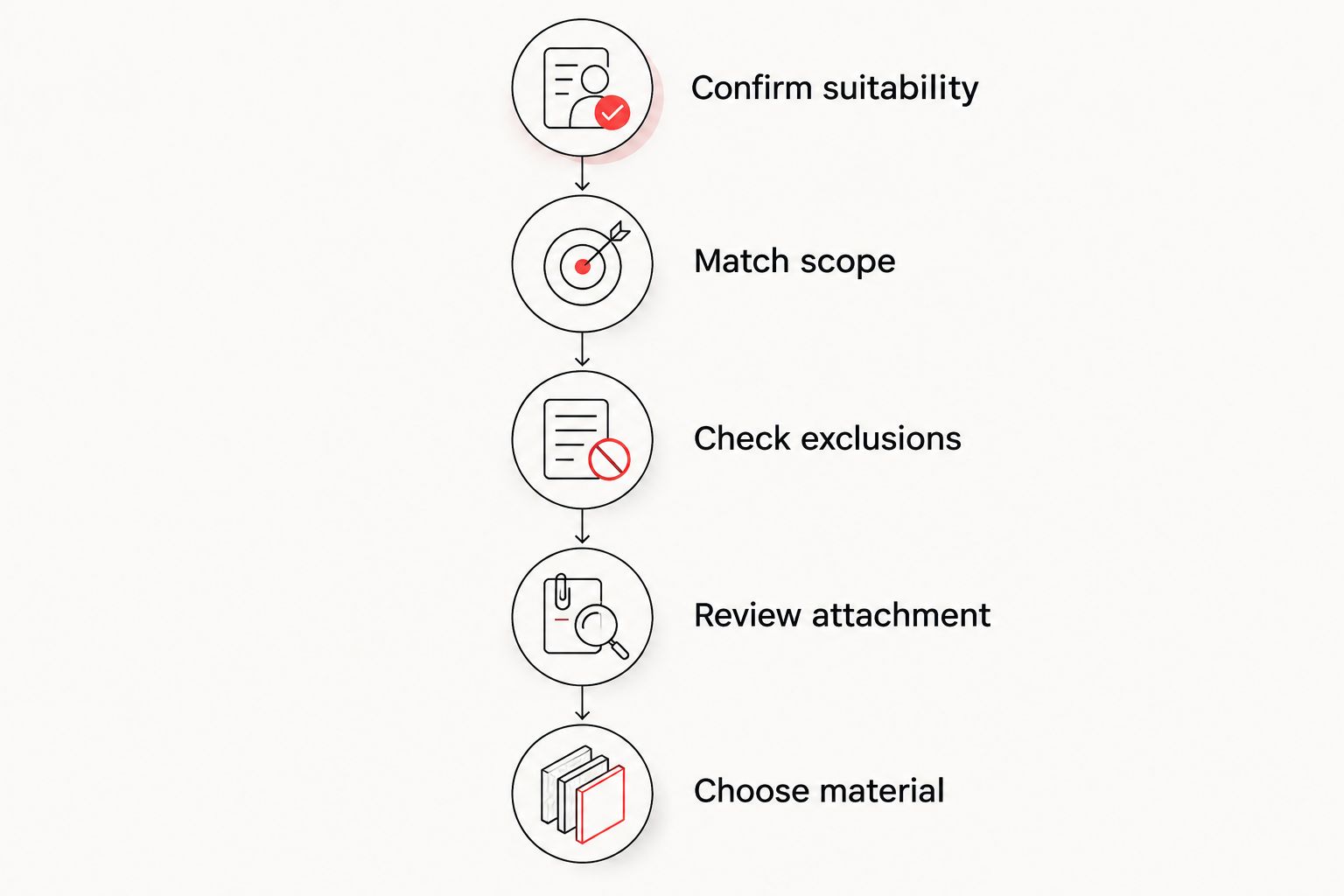
Use this sequence before committing to a 2026 replacement:
- Confirm suitability. Have the roof slope, structural requirements, and existing condition evaluated.
- Match scope. Check removal, disposal, underlayment, flashing, ventilation, and permits across proposals.
- Check exclusions. Identify how concealed decking damage and additional work will be handled.
- Review attachment. Ask for the proposed covering and assembly details appropriate to your property.
- Choose material. Decide after the proposals describe comparable work.
Roof area also needs a common measurement. One roofing square equals 100 square feet. An illustrative roof measuring 20 squares therefore has 2,000 square feet of roof area; that is not necessarily the same as the home's floor area.
Shingles also have slope limits. A 2:12 slope rises 2 inches for every 12 inches of horizontal run. Asphalt shingles generally require at least that slope, with installation and underlayment requirements determined by the applicable code and product instructions.
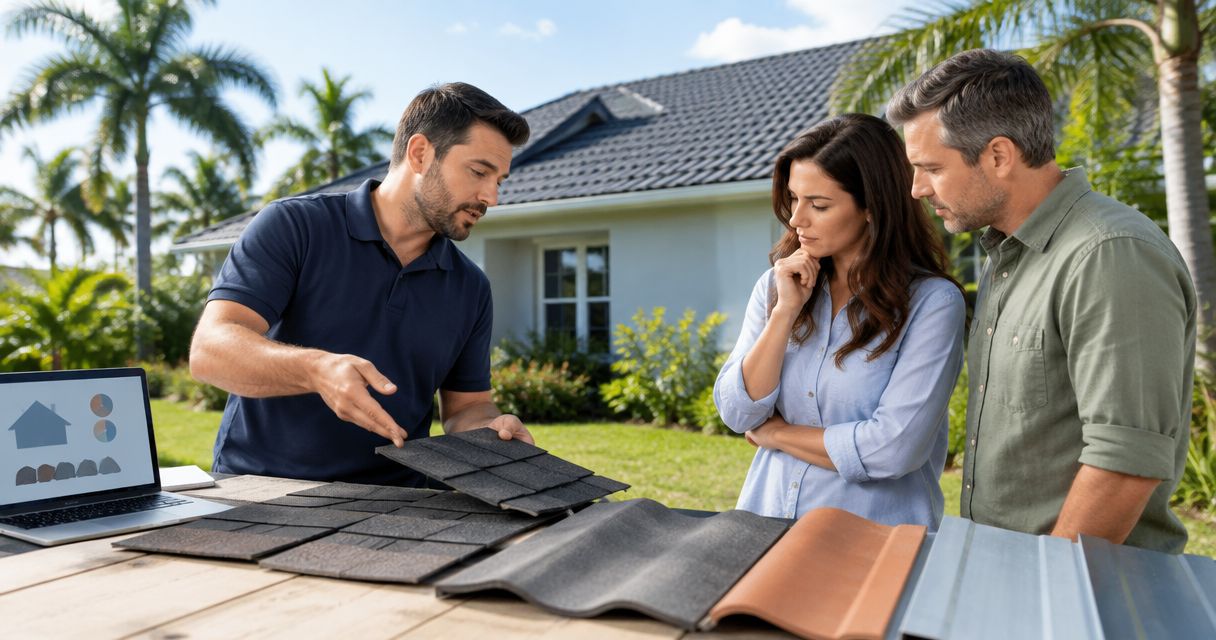
Ask Roofsmartflorida to evaluate the roof before you decide whether to keep the existing material or change systems. That conversation should address condition and suitability before appearance.
Get an honest roof evaluation
Discuss your roof's condition and compare suitable replacement materials.
How this ranking works
The ranking starts with asphalt shingles as the budget baseline, separates the metal attachment systems, and then considers concrete and clay tile. Suitability, maintenance, appearance, and complete installation scope determine the recommendations—not an invented statewide average.
Metal and concrete tile are overlapping comparison categories. Obtain roof-specific estimates before declaring either the less expensive choice.
Which roofing material should you choose?
Start with asphalt shingles if controlling the replacement budget is your main goal and your pitched roof is suitable. Compare standing-seam metal when concealed attachment matters, and concrete tile when preserving the home's architecture matters more than choosing the budget baseline.
Choose clay tile for a specific design requirement. Treat flat sections separately. For your 2026 decision, the best material is the suitable assembly you understand—not the bid with the least detail.
FAQ
What's the best roofing material for a budget-focused Florida homeowner?
Asphalt shingles are the practical budget starting point for a suitable pitched roof. Compare complete replacement scopes, including underlayment, flashing, removal, and decking provisions.
Is metal roofing always more expensive than tile?
Metal roofing is not always more expensive than tile. Panel type, tile type, roof complexity, structural work, and installation scope determine the order in roof-specific estimates.
Is standing-seam metal better than exposed-fastener metal?
Standing-seam metal is the better fit when concealed panel attachment is your priority. Exposed-fastener metal has visible attachment points and sealing washers that require inspection and maintenance.
Can I replace a shingle roof with concrete tile?
A shingle-to-concrete-tile conversion requires confirmation that the structure supports the proposed roof assembly. Have structural suitability and installation requirements evaluated before selecting tile.
Does a tile roof still need underlayment?
A tile roof needs an appropriate underlayment and flashing system. Intact-looking tiles do not establish that the waterproofing beneath them remains serviceable.
What should I compare in roofing estimates in 2026?
Compare the proposed covering, removal, underlayment, flashing, attachment details, permits, and handling of concealed damage. Consistent scope makes material comparisons meaningful.
Does Roofsmartflorida install more than one roofing material?
Roofsmartflorida provides shingle, metal, flat, and tile roofing services. Its residential services include installation, repair, and replacement across Southwest Florida.
One last thing
A sound-looking roof covering does not prove that the layers beneath it are sound. Before changing materials, ask what the evaluation shows about decking, underlayment, flashing, and drainage. That answer can change the project more than the material ranking does.