Metal roofing in Bonita Springs means installing a standing-seam or metal shingle system engineered for Gulf-front salt exposure and Lee County's wind-borne debris code, not the general-purpose panel sold to inland buyers thirty minutes up I-75. Homes near Estero Bay, the canals off Imperial River, or any barrier-adjacent lot need a panel spec, fastener pattern, and coating that a standard steel roof somewhere in Ohio never has to survive.
- Metal roofing bonita springs buyers need coastal-rated panels, not the standard steel sold inland — check the coating spec first.
- Standing seam wins for canal-front and barrier-adjacent Bonita Springs homes; exposed-fastener panels corrode faster in salt air.
- A wind mitigation inspection before install can lower your insurance premium and confirm the roof meets code.
- Roof Smart of SW Florida installs metal roofing across Bonita Springs and the surrounding Gulf coast in 2026.
Why metal roofing matters for Bonita Springs homeowners
Bonita Springs sits in the wind-borne debris region under the Florida Building Code, which means panel selection isn't a style choice — it's a compliance decision. A roof rated for an inland subdivision in Central Florida is not automatically rated for a lot three miles from the Gulf.
Salt-laden air corrodes fasteners and cut edges faster here than it does in Fort Myers proper, which is why coastal-specific metal roofing for coastal Southwest Florida homes specifies different coatings and fastener alloys than a metal roof installed twenty miles inland. The panel that performs in Bonita Springs is not the same panel that performs in Lehigh Acres, even though both sit in the same county.
HOA and canal-front communities in Bonita Springs also run tighter architectural review than unincorporated Lee County, which changes the timeline before a permit even gets pulled.
How to plan a metal roof in Bonita Springs
1. Confirm your wind-borne debris zone requirements
Check the exact code requirements for your parcel before you talk panel color or profile — this is a free step and it determines everything after it.
- Pull your property's wind speed design category from the local building department
- Ask whether your address falls in the wind-borne debris zone (most of Bonita Springs does)
- Confirm whether your existing roof deck meets current fastening code or needs re-decking
- Check HOA architectural guidelines if you're in a gated or canal-front community
- Note your permit jurisdiction — city of Bonita Springs vs. unincorporated Lee County
2. Pick a panel profile rated for salt air
Not every metal panel marketed as "hurricane-rated" is rated for direct coastal exposure — the coating and fastener alloy matter as much as the gauge.
- Look for a Miami-Dade Notice of Acceptance (NOA) or Florida Product Approval number on any panel you're considering
- Ask what alloy the fasteners are made from — stainless or coated steel outlasts standard zinc-plated screws near salt water
- Compare 24-gauge and 26-gauge steel options; thicker gauge resists denting from wind-driven debris
- Review the best metal roof panels for coastal homes before locking in a profile
- Ask about the paint finish warranty separately from the panel warranty — they're rarely the same document
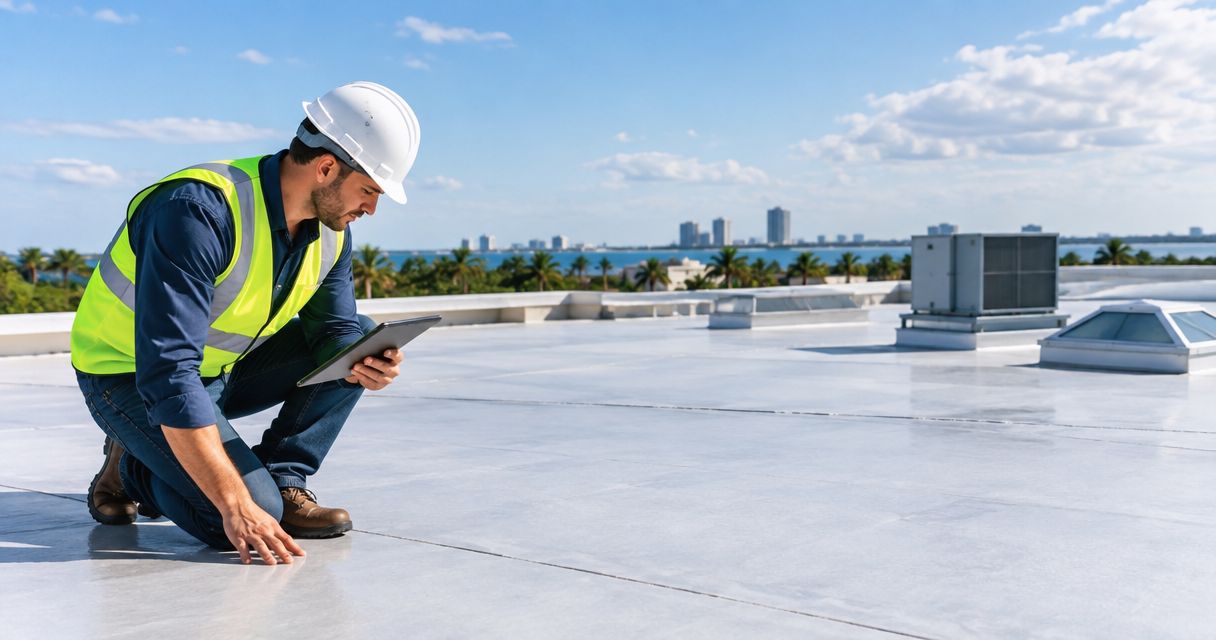
3. Get a wind mitigation inspection before you sign a contract
A wind mitigation inspection in Bonita Springs documents your roof's actual wind resistance features for your insurer, and doing it before install gives you a baseline to compare against after.
- Schedule the inspection independently, not only through the installer quoting the job
- Ask the inspector to document roof-to-wall connections, not just the roof covering
- Request the report in writing for your insurance carrier
- Re-inspect after installation to update your policy discount
- Keep both reports on file for future claims or resale
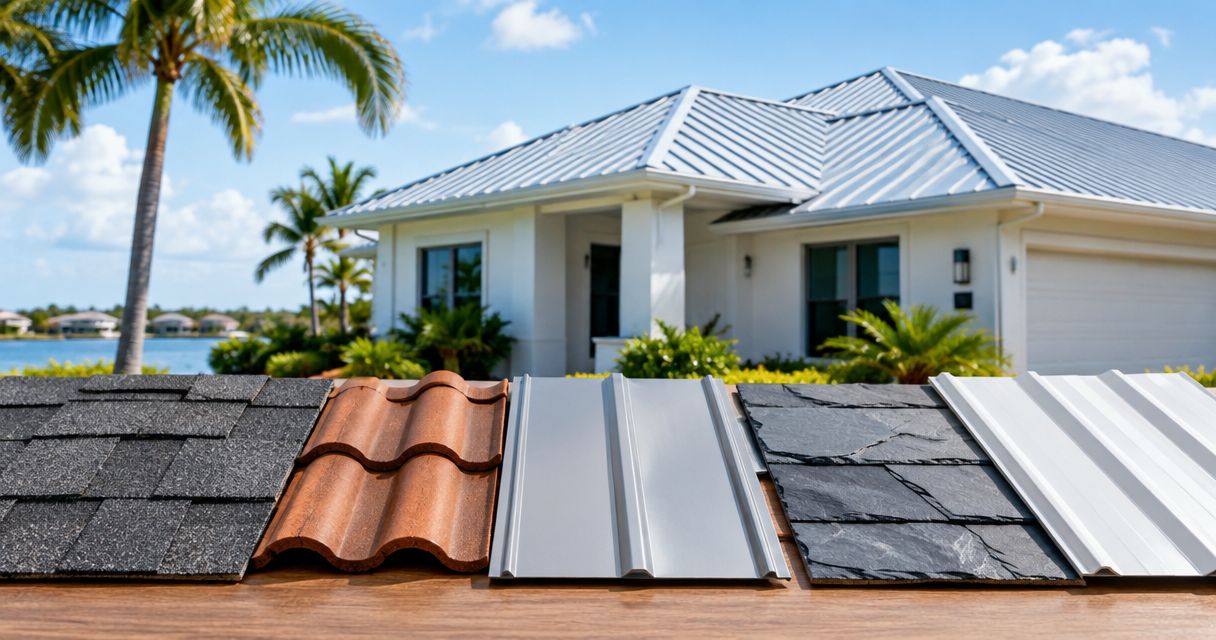
4. Compare metal against tile and shingle for your home
Metal isn't automatically the right call for every Bonita Springs house — Mediterranean-style and older tile-roofed homes sometimes make more sense staying with tile.
- Weigh roof pitch: steep, complex rooflines cost more in metal labor than in shingle
- Factor in resale expectations for your specific neighborhood
- Ask about noise dampening if you're converting from tile or shingle to metal
- Compare against current tile options if your HOA has architectural restrictions favoring a Mediterranean look
5. Budget for underlayment, fasteners, and flashing, not just panels
The panel price is the number homeowners fixate on; the underlayment, flashing, and fastener spec is what determines whether the roof survives its first real storm.
- Ask specifically what underlayment class is quoted — self-adhering membranes perform differently than standard felt in Florida humidity
- Confirm flashing detail at every penetration: vents, skylights, chimneys
- Ask how ridge and valley closures are sealed against wind-driven rain
- Get the fastener spacing in writing, not just verbally quoted
6. Time the tear-off outside peak hurricane season
Scheduling a full tear-off between June 1 and November 30 without a dry-in plan leaves your house exposed during the exact window storms are most likely.
- Target a spring or early-winter install window when possible
- Ask what the crew's rain contingency and dry-in protocol is
- Confirm how many days the roof will be open to weather during tear-off
- Build in buffer time for permit inspections before the next named storm
7. Line up a licensed local installer
This is where a manual, DIY-adjacent research process runs out of runway — panel specification, code compliance, and warranty paperwork on a coastal metal roof need a licensed crew that pulls permits in Lee County regularly.
- Confirm active Florida roofing license and local permit history
- Ask for a written scope that names panel gauge, coating, and fastener spec, not just "metal roof"
- Verify the installer carries workers' comp and liability coverage
- Get the wind mitigation paperwork included in the contract, not billed as an add-on
Get a free roof evaluation
No-pressure estimate for metal roofing anywhere in Bonita Springs.
Metal panel options for Bonita Springs homes
| Panel Type | Best For | Key Limitation | Typical Lifespan |
|---|---|---|---|
| Standing seam (concealed fastener) | Canal-front and barrier-adjacent homes, HOA communities | Highest labor cost, needs a specialty crew | 40-70 years |
| Metal shingle / tile-look panel | Homeowners in Mediterranean-style neighborhoods wanting metal's durability | Overlap seams cost more to inspect post-storm | 30-50 years |
| Corrugated / R-panel | Detached garages, sheds, low-slope outbuildings | Exposed fasteners loosen faster in salt air | 20-40 years |
| Exposed-fastener 5V-crimp | Budget-conscious secondary structures | Needs periodic re-torquing of fasteners | 20-30 years |
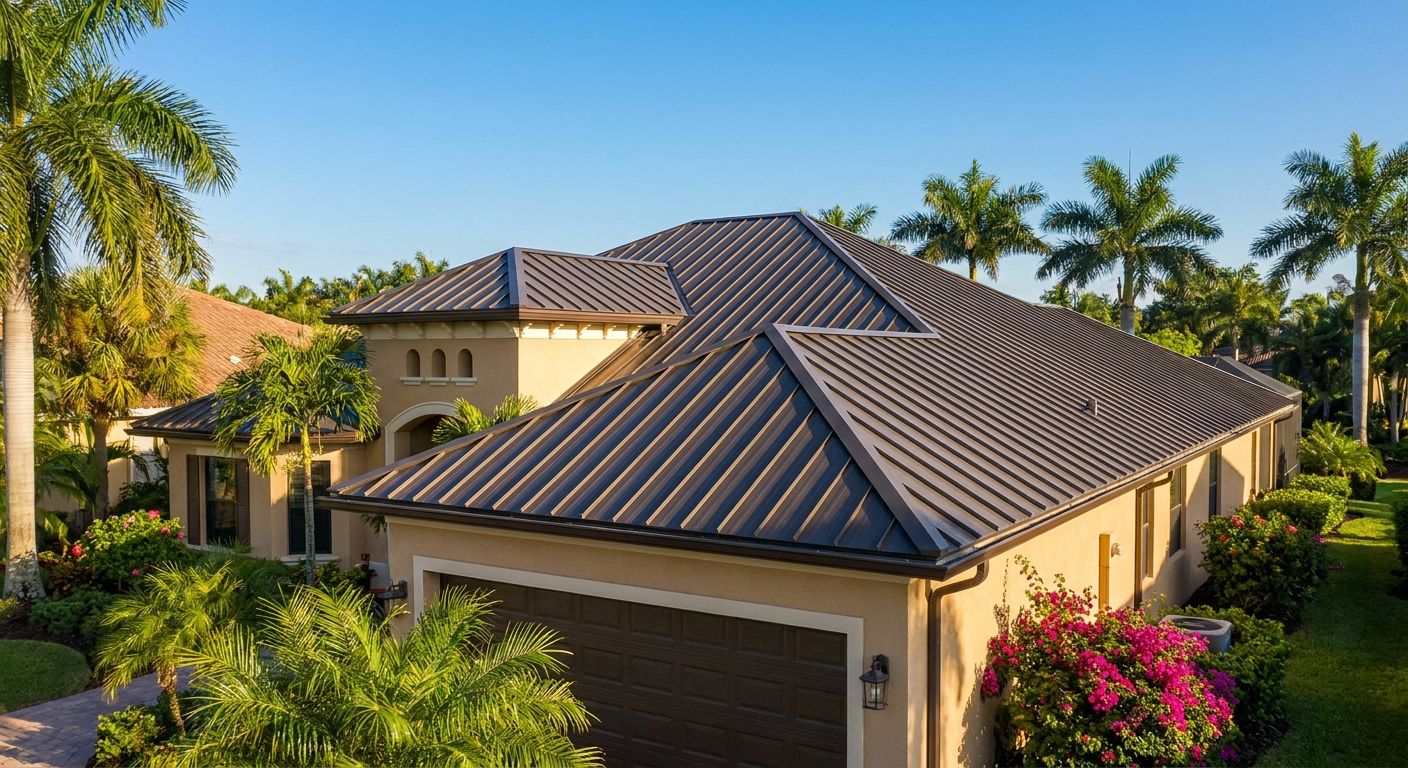
Standing seam is the right call for most primary residences in Bonita Springs; exposed-fastener panels belong on sheds and garages, not the main house.
Common mistakes Bonita Springs homeowners make with metal roofing
- Assuming any metal roof qualifies for a wind mitigation discount. Only tested, code-compliant systems with a valid product approval number actually move the needle on premiums.
- Skipping the wind-borne debris zone check. Installing an exposed-fastener panel on a home the code effectively requires a rated standing-seam or NOA-approved system for creates a compliance problem at resale, not just a performance one.
- Scheduling tear-off in the middle of hurricane season with no dry-in plan, leaving the house exposed during the exact window storms are most likely to hit Southwest Florida.
- Choosing the cheapest panel gauge available and finding out during the first tropical storm that thinner steel dents and fasteners back out under wind load.
- Ignoring HOA architectural review in gated or canal-front Bonita Springs communities before ordering panels, then re-ordering after the board rejects the color or profile.
FAQ
What does metal roofing cost in Bonita Springs?
Cost depends on panel type, roof pitch, and whether re-decking is needed, so get a written estimate for your specific home rather than relying on a general figure. Standing seam runs higher than exposed-fastener panels because of labor and material spec.
Is metal roofing better than tile for Bonita Springs homes?
Metal typically outlasts tile in wind resistance and requires less maintenance, but tile still fits Mediterranean-style architecture better in HOA communities that restrict roofing appearance. The right choice depends on your neighborhood's architectural guidelines and your roof's pitch.
Does a metal roof lower my insurance premium in Bonita Springs?
A wind mitigation inspection documenting your roof's compliant features can lower your premium, but the metal roof itself doesn't automatically trigger a discount. You need the inspection report on file with your carrier.
How long does a standing seam metal roof last in Southwest Florida?
Standing seam systems typically last 40 to 70 years when properly installed with coastal-rated coatings and fasteners. Exposed-fastener panels last considerably less, generally 20 to 30 years, because the fasteners are more exposed to salt air.
Can I install metal roofing over an existing shingle roof in Bonita Springs?
Florida code generally requires evaluating the existing deck condition before overlaying, and most coastal jurisdictions push toward a full tear-off for wind-borne debris zone compliance. A licensed local installer can confirm what your specific permit jurisdiction requires.
What's the best time of year to install a metal roof in Bonita Springs?
Spring or early winter, outside the June 1 to November 30 hurricane season, minimizes the risk of an open roof deck during a storm. Scheduling during peak season without a dry-in plan is one of the most common mistakes homeowners make.
Do metal roofs make more noise during rain in Bonita Springs?
Properly installed metal roofing with solid decking and underlayment dampens rain noise similarly to shingle or tile, contrary to the common assumption. Noise complaints usually trace back to missing or inadequate underlayment, not the panel material itself.
One last thing
A standing-seam roof rated for 40 to 70 years can outlast two or three full asphalt shingle replacements on the same Bonita Springs house over its service life, based on the lifespan ranges above. That math changes the way most homeowners should be comparing upfront cost against how many roofing projects they'll manage over a 30-year ownership window.