A roof inspection checklist for rental property in 2026 needs five fixed zones checked every visit: exterior roof surface, flashing and penetrations, gutters and drainage, attic and interior ceilings, and paperwork for insurance. Skip the attic and you miss the slow leak that turns into a $15,000 ceiling replacement instead of a $400 flashing repair. The checklist only works if it runs on a schedule, not on memory.
- A complete roof inspection checklist for rental property covers exterior, flashing, gutters, attic, and interior ceilings on a twice-yearly schedule.
- Florida insurers require a four-point inspection once a rental roof passes a certain age, and skipping it can cancel coverage.
- Roof Smart of SW Florida inspects rental roofs after named storms, not just on a calendar schedule.
- The attic is the most-skipped item on landlord checklists and the most expensive to ignore.
Why this matters
A rental property roof takes damage a homeowner would notice immediately and a tenant either won't report or won't know to report. Tenants don't check the attic. They don't walk the roofline after a storm. They call when water is already dripping onto a ceiling fan, and by then the deck underneath has been wet for weeks.
A written checklist forces the same five zones to get checked on the same schedule regardless of who's living in the unit. If you manage more than one rental in Cape Coral, Fort Myers, or Naples, a roof inspection service in Fort Myers can run that checklist for you twice a year and hand you a dated report your insurer will actually accept.
How to build a roof inspection checklist for rental property
Build the checklist in this order so nothing gets skipped when you're standing on a ladder with fifteen minutes before your next stop:
- Set the schedule first. Two inspections a year, one before June 1 and one after November 30, catches storm damage on both ends of hurricane season.
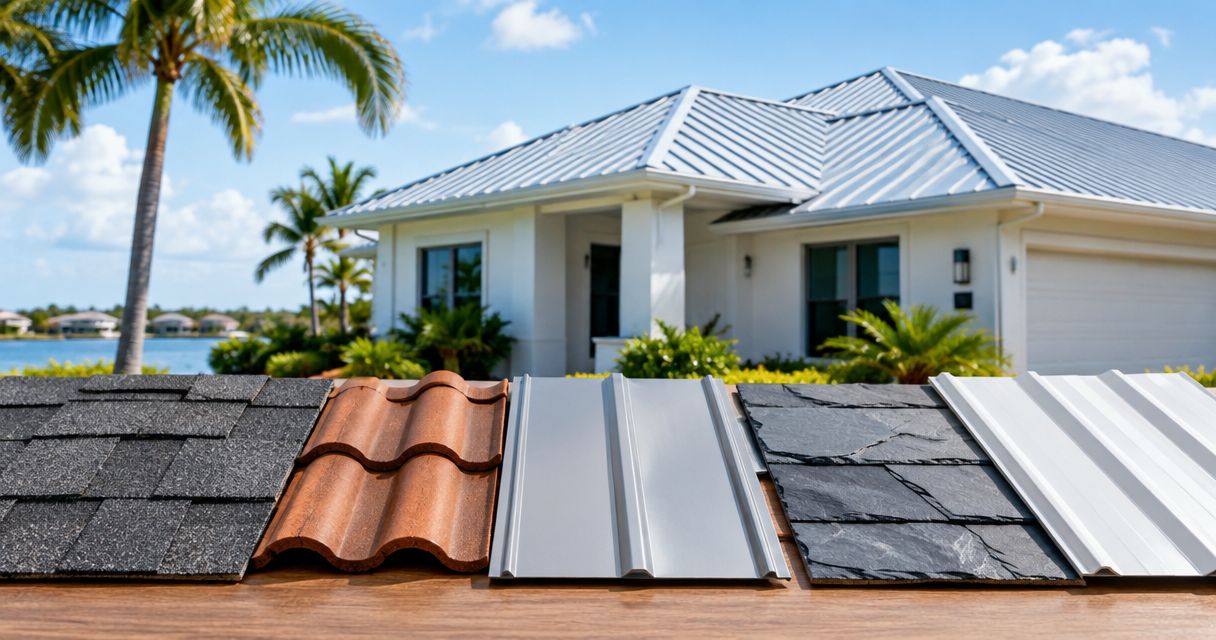
- List the roof type and age for each property. A 2001 shingle roof and a 2022 metal roof don't get inspected the same way or the same frequency.
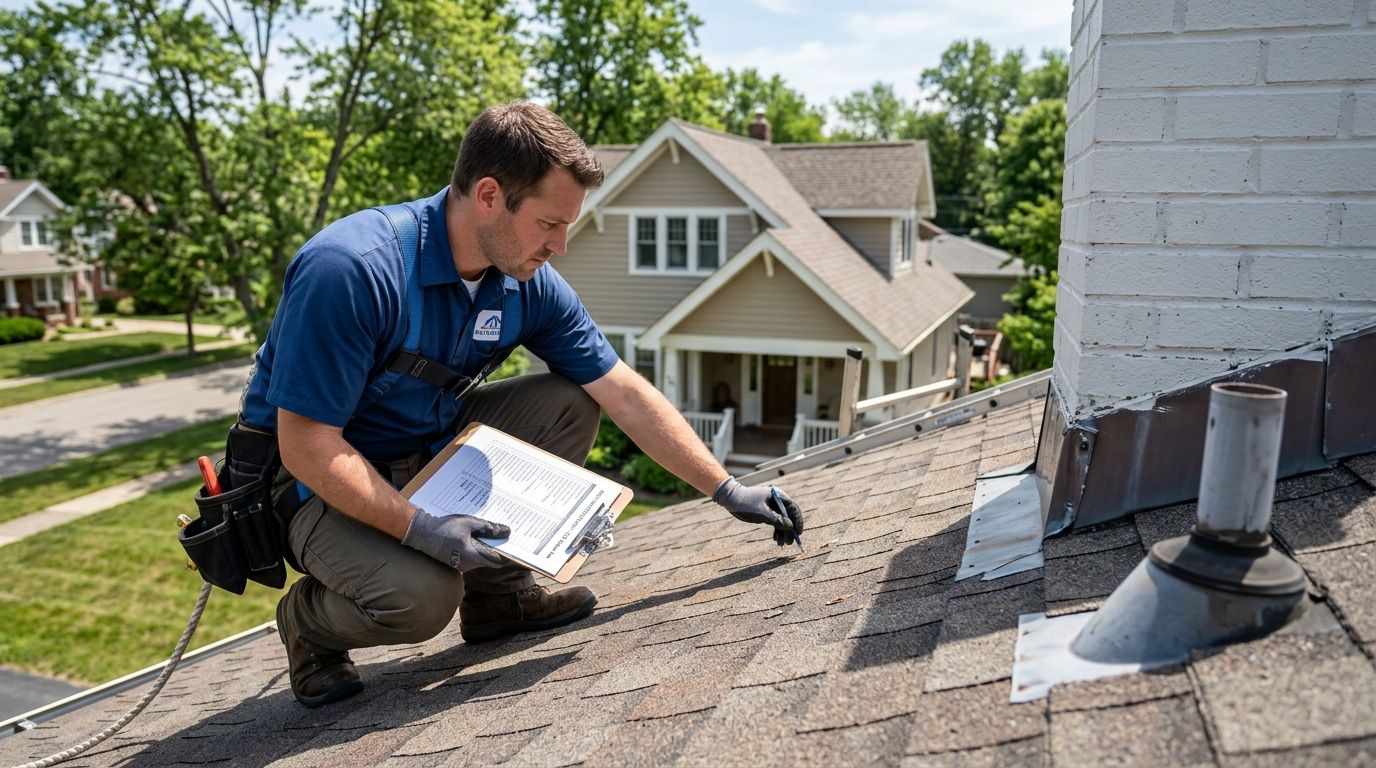
- Walk the exterior surface for missing, cracked, or lifted material.
- Check every flashing point — chimneys, vent stacks, skylights, wall-to-roof transitions.
- Inspect gutters and downspouts for separation, sagging, and debris blocking flow.
- Go into the attic with a flashlight and check for daylight, water stains, and soft or discolored decking.
- Walk every interior ceiling in the unit for stains, sagging drywall, or bubbling paint.
- Photograph and date everything, good and bad — insurers and future buyers both ask for this.
- File the report with your insurance folder, not just an email you'll never find again.
What to inspect on the roof exterior
The exterior pass is the fastest part and the one most landlords rush. Slow down here:
- Missing, curled, or cracked shingles or tiles
- Granule loss showing as bald patches or granules pooling in the gutter
- Rust streaks or fastener pops on metal panels
- Ponding water on any flat or low-slope section
- Debris, branches, or moss buildup holding moisture against the surface
Any one of these on its own isn't an emergency. Two or more together usually mean the roof needs a closer look than a walkthrough can give it.
What to inspect inside: attic, ceilings, and interior signs
The attic tells you what the exterior hides. Water finds the weakest seam and travels along a rafter before it ever shows up as a ceiling stain, so by the time a tenant reports a spot on the drywall, the leak has usually been active for months.
Check for:
- Water stains or dark streaking on the underside of the decking
- Daylight visible through the roof deck
- Damp or compressed insulation
- Musty odor, a reliable early sign of trapped moisture
- Soft, spongy, or discolored ceiling drywall in the unit below
“If the attic doesn't make the checklist, the checklist doesn't work.”
Gutters, flashing, and drainage items landlords miss
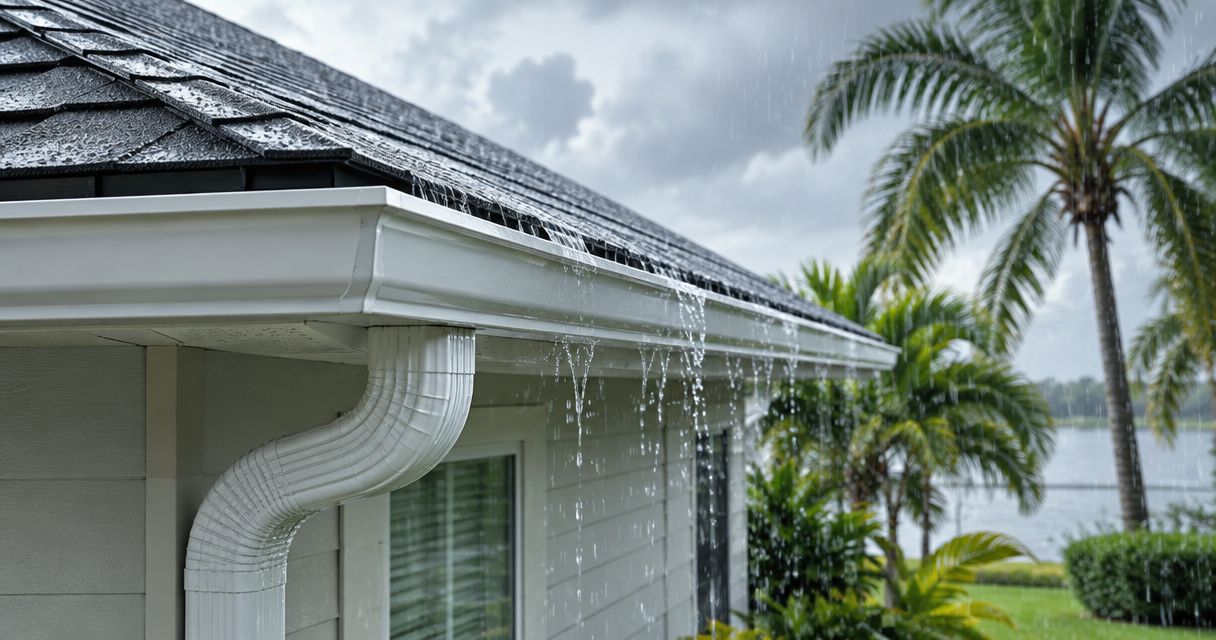
Gutters get ignored because they're not technically part of the roof, but a clogged gutter backs water up under the shingle line and rots the fascia behind it. Check for:
- Gutters pulling away from the fascia board
- Standing water in the gutter after a dry day, which is a slope problem rather than a debris problem
- Downspouts discharging against the foundation instead of away from it
- Flashing lifted or caulked over instead of properly re-flashed
A gutter guard system cuts down on this maintenance item significantly if you're managing more than one property and can't get someone up there every quarter.
Insurance and documentation items every Florida landlord needs
This is the section most landlord checklists leave out entirely, and it's the one that costs money when it's missing. Florida insurers commonly require a four-point inspection — roof, electrical, plumbing, and HVAC — once a rental property's roof passes a certain age, and a failed or missing report can mean non-renewal of the policy.
Separately, a wind mitigation inspection documents hurricane-resistant features like roof-to-wall connections and secondary water barriers, and it's the report that unlocks premium discounts on a rental property's windstorm coverage. Neither of these is optional paperwork. Both directly affect whether your rental stays insurable and what you pay for it.
Add two documentation items to your checklist:
- A current 4-point roof inspection report on file, renewed per your carrier's schedule
- A wind mitigation inspection report, kept updated after any roof work
Checklist by rental property type
The five core zones stay the same across property types, but the emphasis shifts.
Single-family rental — full attic access usually exists, so prioritize the attic walk-through and interior ceiling check every visit. Best for landlords who self-manage one or two units.
Small multifamily (duplex to fourplex) — multiple roof planes and shared gutters mean flashing at valleys and tie-ins needs its own line item. Best for owners who inspect quarterly rather than twice a year.
HOA or condo rental unit — the roof itself is usually the association's responsibility, so the tenant-facing checklist shifts to interior water stains and reporting chains instead of exterior surface checks. Best for owners renting inside a managed community.
Mobile or manufactured home rental — roof-over systems and lower-pitch roofs need more frequent gutter and seam checks, especially after wind events. Best for landlords in older manufactured-home parks across Southwest Florida.
Why inspection frequency varies
Not every rental needs the same cadence. Adjust frequency based on:
- Roof age — a roof past 15-20 years needs closer, more frequent checks than a roof under five years old
- Roof material — flat and low-slope roofs pond water and need more frequent drainage checks than pitched shingle or tile
- Storm exposure — coastal and canal-front properties take more wind-driven rain and salt exposure
- Tree canopy — overhanging branches mean more debris in gutters and more granule loss
- Tenant turnover — a new tenant means a fresh walkthrough is worth doing regardless of the calendar schedule
- Insurance renewal dates — time the four-point and wind mitigation inspections to land before your policy renews, not after
Get a rental roof inspection scheduled
A dated, documented inspection report for insurance and tenant records.
How often should a rental property roof be inspected in Florida?
A rental property roof should be inspected twice a year in Florida — once before hurricane season starts June 1 and once after it ends November 30. Add a third check any time a named storm passes near the property in 2026, even if there's no visible damage from the ground.
Do landlords need a wind mitigation inspection on a rental property?
A wind mitigation inspection isn't legally required, but it's the report that unlocks windstorm premium discounts on a rental property's insurance policy. Without it, you're paying full premium for hurricane-resistant features the insurer doesn't know exist.
What happens if a rental roof fails a 4-point inspection?
A failed four-point inspection typically means the insurer requires repairs before renewing the policy, or drops roof coverage entirely at renewal. Landlords who catch roof age and condition issues early through a regular checklist usually schedule repairs on their own timeline instead of the insurer's.
FAQ
What should be on a roof inspection checklist for rental property?
A rental roof inspection checklist should cover exterior surface condition, flashing and penetrations, gutters and drainage, attic and decking, and interior ceiling checks. Documentation for insurance, including four-point and wind mitigation reports, belongs on the checklist too.
How often should landlords inspect a rental roof in Florida?
Twice a year is the standard recommendation: once before hurricane season starts June 1 and once after it ends November 30, 2026. Add an extra check after any named storm passes near the property.
Is a four-point inspection required for rental properties?
Most Florida insurers require a four-point inspection once a rental roof passes a certain age, and skipping it can lead to a policy non-renewal. The inspection covers roof, electrical, plumbing, and HVAC condition.
What is the most commonly missed item on a rental roof checklist?
The attic is the most commonly skipped item because it takes more time and is not visible from a ground-level walkthrough. Attic water stains and soft decking usually show up months before a ceiling leak does.
Should tenants be responsible for reporting roof issues?
Tenants should be given a simple reporting path for visible leaks or stains, but landlords should not rely on tenant reports as the primary inspection method. A scheduled checklist catches problems tenants never notice.
Do gutters need to be part of a roof inspection checklist?
Yes, clogged or separated gutters back water up under the roofline and rot the fascia board behind them. Gutter checks belong in every rental roof inspection, not as a separate maintenance task.
How does roof material affect inspection frequency for rentals?
Flat and low-slope roofs pond water and need more frequent drainage checks than pitched shingle or tile roofs. Metal roofs need fastener and seam checks after high-wind events specifically.
One last thing
The checklist item landlords skip most isn't on the roof at all — it's the folder. A dated, photographed inspection report is worth more at insurance renewal than a roof that's technically fine but undocumented, because an insurer that can't see proof of maintenance treats the roof as a bigger risk regardless of its actual condition. Build the paperwork habit into the checklist in 2026, not after the first denied claim.