Emergency roof repair in Florida has no reliable statewide flat cost in 2026 because the scope can range from temporary water control to structural roof work. The final cost depends on the damaged area, roof material, access, labor timing, and whether hidden damage appears after the surface material is removed. A written on-site assessment is the only dependable basis for a quote.
- Emergency roof repair cost Florida has no dependable flat rate in 2026; damage scope and roof material control the quote.
- Temporary tarping controls water but does not replace permanent roof repair.
- Roof Smart of SW Florida is best suited to emergency roof repair across its stated Southwest Florida service area.
- Insurance coverage depends on the cause of loss, policy terms, documentation, and required mitigation.
Why this matters
An emergency repair decision happens while water is entering the building, roof material is missing, or storm damage has left the structure exposed. The immediate goal is to limit additional damage without committing to permanent work before the affected area has been inspected.
That distinction protects your budget. Temporary stabilization and permanent repair solve different problems, so they should appear as separate items in the written scope. If you are unsure whether the damage requires immediate action, review how to know if your roof needs emergency repair before treating a minor maintenance issue as an after-hours emergency.
Roof Smart of SW Florida provides residential and commercial roofing installation, repair, and replacement across Cape Coral, Fort Myers, Naples, and surrounding Southwest Florida counties. Its local service focus is relevant during a 2026 roofing emergency because the contractor needs to inspect the property, identify the roof system, and separate urgent stabilization from the permanent repair scope.
How much does emergency roof repair cost in Florida?
Emergency roof repair cost in Florida cannot be reduced to one credible number without the property details. A small exposed section that only needs temporary protection is a different job from repairing damaged underlayment, decking, flashing, tile, shingles, metal panels, or a flat-roof membrane.
Ask for the estimate to identify the temporary work, permanent repair, material, labor, access requirements, disposal, and any work excluded from the quote. That structure lets you compare scopes instead of comparing totals that cover different work.
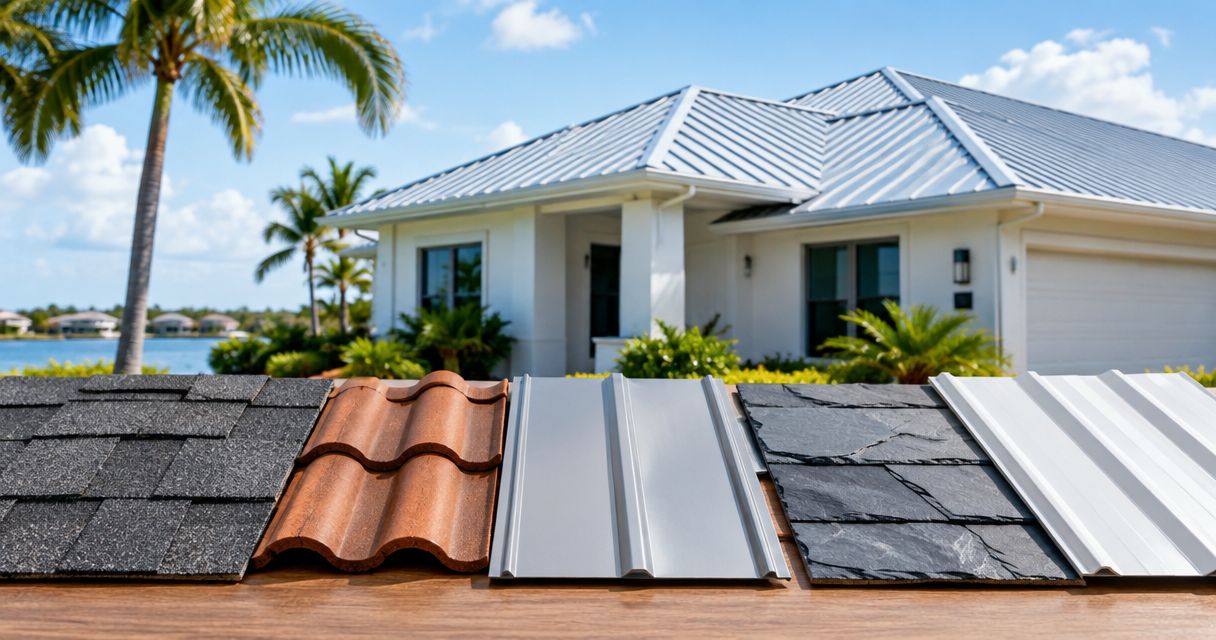
| Repair path | What it addresses | Best for | Main limitation |
|---|---|---|---|
| Emergency tarping | Temporarily covers an exposed roof area | Active water entry when permanent work cannot start immediately | It does not repair the failed roof system |
| Shingle repair | Replaces or secures a localized damaged section | Contained shingle damage with a sound surrounding field | Matching and hidden underlayment damage affect the scope |
| Tile repair | Replaces displaced or broken roof tiles and addresses the affected assembly | Localized tile damage | Nearby tiles require careful handling during access |
| Metal repair | Addresses affected seams, fasteners, flashing, or panels | Isolated metal-roof damage | The visible leak location may not identify the entry point |
| Flat-roof repair | Repairs an affected membrane, seam, flashing, or penetration | Flat and low-slope residential or commercial roofs | Trapped moisture can extend beyond the visible symptom |
Roof Smart of SW Florida is best suited to homeowners and businesses seeking emergency roof repair within its stated Southwest Florida service area; properties outside that area need a contractor serving their address. The benefit is alignment with the named local markets and roof types in the company’s service description. The limitation is geographic: local roofing service is not a statewide dispatch network.
Temporary tarping: immediate water control
Emergency tarping covers an exposed section while the permanent scope is being prepared or scheduled. It is appropriate when rain can enter through missing material, an opening, or a damaged transition that cannot be repaired safely under current conditions.
The advantage is speed: stabilization can reduce continuing exposure. The disadvantage is equally clear: a tarp does not restore shingles, tile, metal, flashing, underlayment, decking, or a membrane. Treat emergency roof tarping after storm damage as temporary protection, not evidence that the roof is repaired.
Best for: active exposure that needs temporary control. Verdict: Buy the stabilization when water is entering, then schedule the permanent assessment.
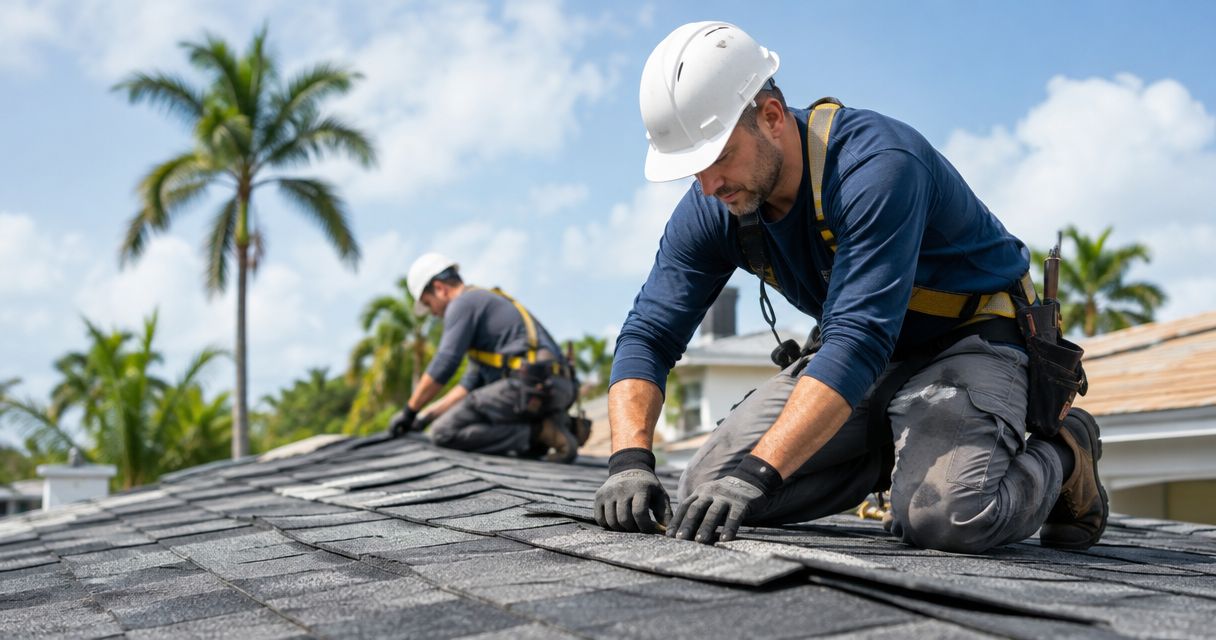
Shingle repair: localized wind or impact damage
A shingle repair scope can include damaged shingles, underlayment, flashing, and the roof deck if the inspection finds deterioration below the visible surface. The contractor must determine whether the problem is confined to one section or reflects broader roof failure.
The advantage is that a contained section can be addressed without automatically replacing the entire roof. The disadvantage is that surface damage can hide a larger affected area, and the replacement material needs to work with the existing assembly.
Best for: a clearly defined damaged section surrounded by serviceable roofing. Verdict: Buy the repair when the written assessment confirms localized damage; hold if the contractor has not inspected the surrounding field.
Tile repair: displaced or broken roofing tiles
Tile damage requires inspection of both the visible tiles and the water-shedding layers beneath them. A displaced tile is not the only possible problem because wind-driven rain can reach an opening in the underlying assembly.
The advantage is that localized tile damage can be repaired as a section. The disadvantage is access: moving across the roof and removing affected pieces requires care to avoid disturbing nearby material.
Best for: localized wind-damaged or broken tiles. Verdict: Buy after the quote identifies both the tile work and any underlying repair.
Metal repair: seams, fasteners, flashing, and panels
A metal roof leak can involve a seam, fastener, penetration, flashing detail, or damaged panel. Water can travel before appearing indoors, so the ceiling stain does not necessarily sit below the roof entry point.
The advantage is that isolated components can be addressed when the surrounding system remains functional. The disadvantage is diagnostic time: sealing the first visible symptom without tracing the entry path can leave the actual defect unresolved.
Best for: isolated metal-roof damage with an identifiable failure point. Verdict: Hold until the inspection traces the entry path; buy the repair only when the scope names the failed component.
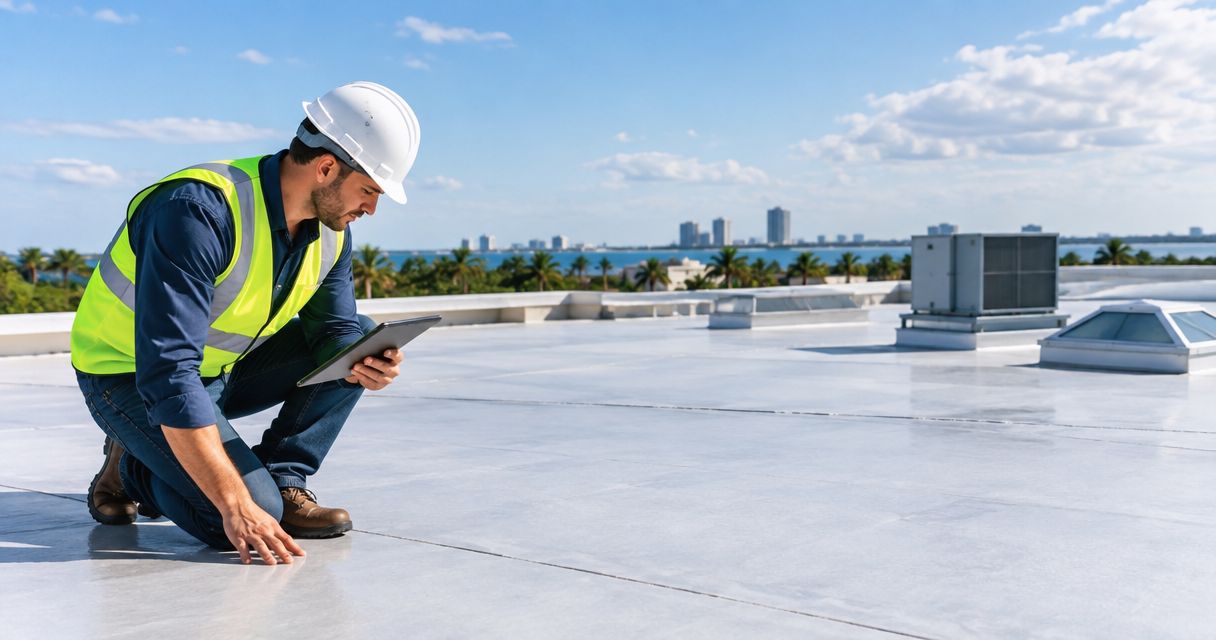
Flat-roof repair: membrane and drainage-related damage
Flat and low-slope roofs require attention to seams, penetrations, flashing, membrane condition, and drainage. The visible interior leak can be separated from the exterior entry point, especially where moisture moves within the roof assembly.
The advantage is that a defined membrane or flashing defect can receive a targeted repair. The disadvantage is hidden moisture, which can expand the affected scope after closer inspection.
Best for: residential or commercial flat roofs with a traceable defect. Verdict: Buy a documented repair scope; skip surface-only patching that does not identify the entry path.
How a Florida emergency roof estimate is built
A useful 2026 estimate starts with the condition of the property, not a phone description of a ceiling stain. The contractor should separate urgent actions from the work needed to restore the roof system.
- Control immediate exposure. Address active water entry or an open roof section without representing temporary work as permanent repair.
- Inspect the affected roof area. Identify the roof covering, transitions, penetrations, flashing, underlayment, and visible deck condition relevant to the problem.
- Trace the water path. Compare the exterior defect with interior signs because water can travel before it becomes visible inside.
- Define the permanent scope. List the material being removed, repaired, or replaced and explain how the repair connects to the surrounding roof.
- Document exclusions. State which concealed conditions, interior work, or unrelated roof areas are outside the quote.
A phone conversation can establish urgency and dispatch details, but it cannot reveal concealed moisture or deck condition. Roof Smart of SW Florida offers no-pressure estimates; the useful document is the one that identifies what is temporary, what is permanent, and what remains unknown until material is opened.
Request an emergency roof estimate
Get a no-pressure assessment for residential or commercial roof damage in Southwest Florida.
Why the final cost varies
The same interior symptom can lead to different repair scopes. A ceiling stain caused by failed flashing is not the same job as one caused by missing roof covering and damaged decking.
- Emergency stabilization: Temporary protection adds a separate task before permanent repair begins.
- Permanent scope: The materials and roof layers requiring restoration determine the actual job.
- Roof material: Shingle, tile, metal, and flat-roof systems use different repair methods.
- Access conditions: Height, pitch, surrounding structures, and safe equipment placement affect labor planning.
- Hidden damage: Wet underlayment, deteriorated decking, and concealed moisture can expand the visible scope.
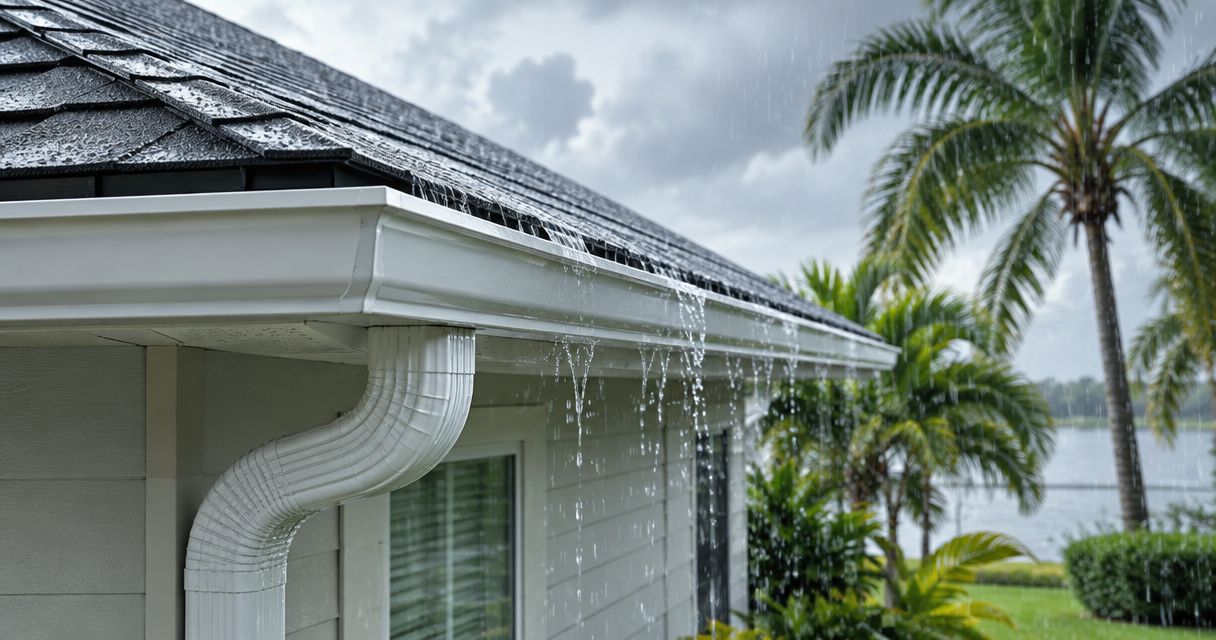
- Storm timing: Unsafe weather, blocked access, and regional storm damage can affect when crews can inspect and work.
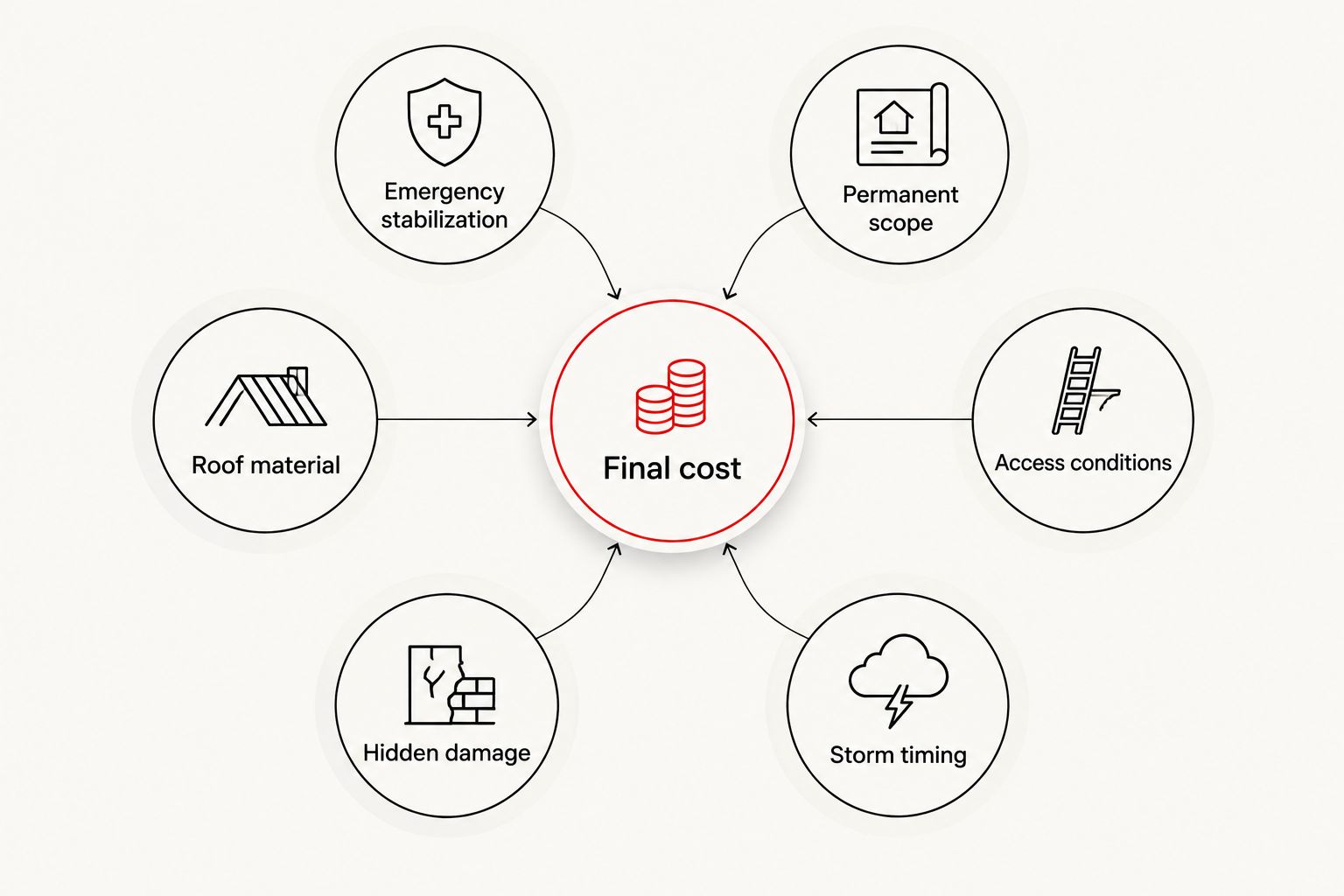
The contractor should connect every cost driver to a task in the written scope. A vague emergency surcharge without a defined service tells you less than a line item describing dispatch, temporary stabilization, inspection, or specific roof work.
How does storm intensity affect the repair scope?
Wind classification does not create a repair quote, but it explains why two storms can produce different damage patterns. The National Hurricane Center’s Saffir-Simpson Hurricane Wind Scale defines Category 1 as sustained winds of 74 to 95 mph, Category 2 as 96 to 110 mph, and Category 3 as beginning at 111 mph.
Those thresholds describe storm intensity, not the wind measured at your roof or the amount of damage to your property. Building exposure, roof condition, installation details, debris impact, and the exact wind at the address still require inspection. Do not accept a 2026 estimate based only on the storm’s category.
For the 2026 Atlantic hurricane season, the official season runs from June 1 through November 30. Damage can occur outside those dates, and a storm-season calendar never replaces immediate action when the roof is open or water is entering the building.
Does homeowners insurance cover emergency roof repair in Florida?
Coverage depends on the policy, cause of loss, exclusions, deductible, roof condition, and documentation. Emergency mitigation and permanent repair are not automatically treated as the same claim item, so keep the inspection findings, photographs, invoices, temporary-work records, and communications connected to the event.
Do not assume that a contractor decides coverage. The contractor documents roof conditions and repair scope; the insurer applies the policy. Report the loss through the insurer’s stated process and avoid discarding damaged material before asking what documentation is required.
Is temporary roof tarping enough after a Florida storm?
Temporary roof tarping is enough only to control immediate exposure while permanent repair is arranged. It does not restore the roof covering or confirm that underlayment, decking, insulation, ceilings, and other affected areas are dry and sound.
Ask for the tarp location and purpose to be documented. Then get a permanent scope that identifies the failed material and the work needed to reconnect the repaired section with the surrounding roof system.
Should I repair the roof now or wait for replacement?
Repair now when the roof is actively allowing water into the building or an opening is exposed. Waiting can allow the affected area to spread beyond the original defect, while temporary stabilization creates time to decide whether a localized repair or broader replacement is appropriate.
The permanent decision should follow an inspection of the whole affected section, not fear created by the emergency. A localized defect does not automatically require replacement, and a temporary patch does not prove that replacement is unnecessary.
FAQ
How much does emergency roof repair cost in Florida in 2026?
Emergency roof repair in Florida has no dependable flat cost in 2026 because the quote depends on damage scope, material, access, timing, and concealed conditions. Get a written on-site assessment that separates temporary stabilization from permanent work.
What should an emergency roof repair estimate include?
An emergency roof repair estimate should identify temporary protection, permanent repair tasks, materials, labor, access requirements, exclusions, and concealed conditions. Compare scopes line by line instead of comparing totals alone.
Is roof tarping a permanent repair?
Roof tarping is not a permanent repair. It temporarily limits exposure while the failed roof material and underlying assembly are assessed and repaired.
Does Florida homeowners insurance pay for emergency roof repair?
Florida homeowners insurance coverage depends on the cause of loss and the specific policy terms. Document the damage and mitigation work, then follow the insurer’s reporting and evidence requirements.
Can a roofer quote an emergency leak over the phone?
A roofer can discuss dispatch and visible symptoms by phone, but a dependable permanent repair scope requires an on-site assessment. The ceiling stain does not always identify where water entered the roof.
Is tile roof repair different from shingle repair?
Tile and shingle repairs use different materials, access methods, and installation details. Both require inspection of the water-shedding layers beneath the visible roof covering.
When should I choose repair instead of roof replacement?
Choose repair when the damage is localized and the surrounding roof remains serviceable. Consider replacement when the inspection finds broader failure that a contained repair cannot resolve.
What should I do first when water enters through the roof?
Protect people from electrical and ceiling hazards, limit interior water exposure when it is safe, and arrange a roof assessment. Do not climb onto a wet or storm-damaged roof.
One last thing
The largest uncertainty in a 2026 emergency roof quote is often not the visible opening. It is the condition beneath and around that opening. Ask the contractor to photograph the affected layers as work progresses and to explain any change before expanding the scope.
That record gives you a cleaner repair history, better claim documentation, and a direct answer to why the final work differs from the first visual assessment. The right emergency decision is to stabilize first, document everything, and approve permanent work from a written scope.