Flat roof repair in Sarasota fixes ponding water, split membranes, and flashing leaks on the low-slope roofs common to ranch additions, lanais, and commercial buildings across the city. Sarasota's flat roofs face a shorter repair window than pitched shingle roofs because standing water and constant UV exposure break down membranes faster in this climate, and a small leak here turns into a ceiling stain within a season, not years.
- Flat roof repair in Sarasota costs less than full replacement when membrane damage covers under 25% of the roof.
- Roof Smart of SW Florida repairs TPO, modified bitumen, and built-up flat roofs; best for ponding water and flashing leaks.
- Ponding water sitting for more than 48 hours signals a drainage failure, not just a spot leak.
- Hurricane season runs June 1 through November 30 in 2026 — flat roofs need inspection before it starts, not after.
Why flat roof repair matters for Sarasota homeowners and businesses
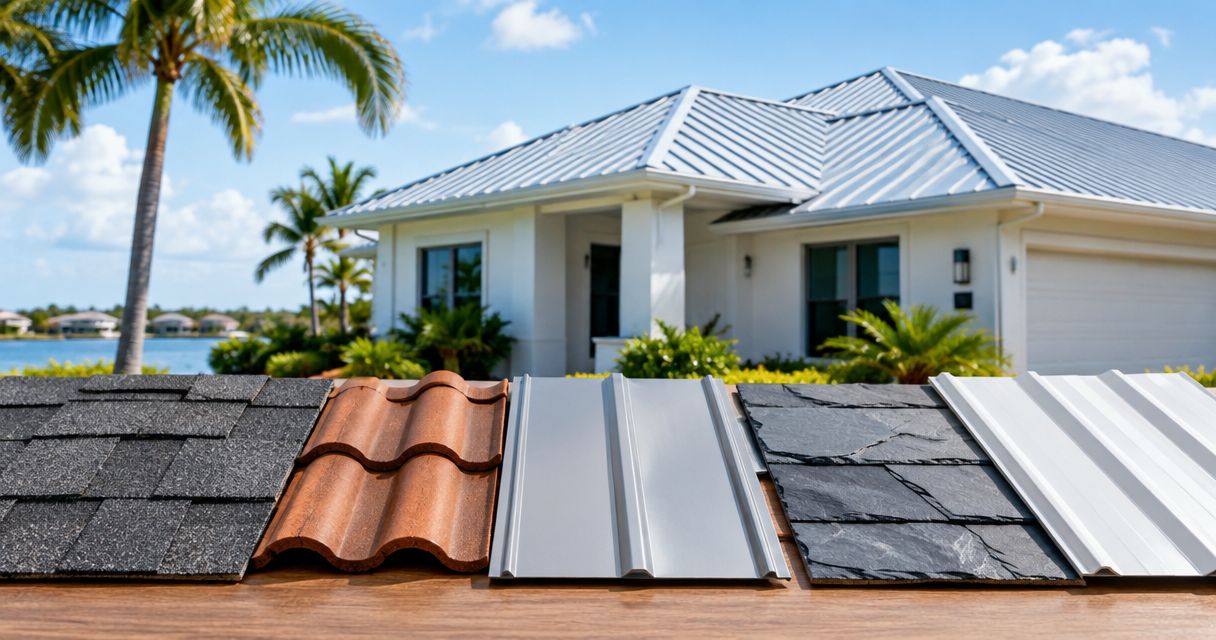
Sarasota's building stock leans heavily on additions, carports, lanais, and mid-century ranch homes with flat or near-flat sections tied into a pitched main roof. Commercial strip centers and condo buildings along Tamiami Trail and downtown carry full flat roof systems, usually TPO, modified bitumen, or built-up roofing (BUR).
A flat roof sheds water by slope and drainage points instead of gravity alone, and the standard minimum slope for positive drainage is a quarter inch per foot. When that slope settles or a drain clogs, water sits. Standing water that lasts more than 48 hours starts breaking down membrane seams and accelerates blistering under Sarasota's summer heat.
That's a different failure pattern than a shingle roof, where wind-lifted tabs and cracked flashing dominate. If your flat roof is already leaking, emergency roof repair in Sarasota covers what to do in the first 24 hours before permanent repair starts.
Inspect your roof for ponding water
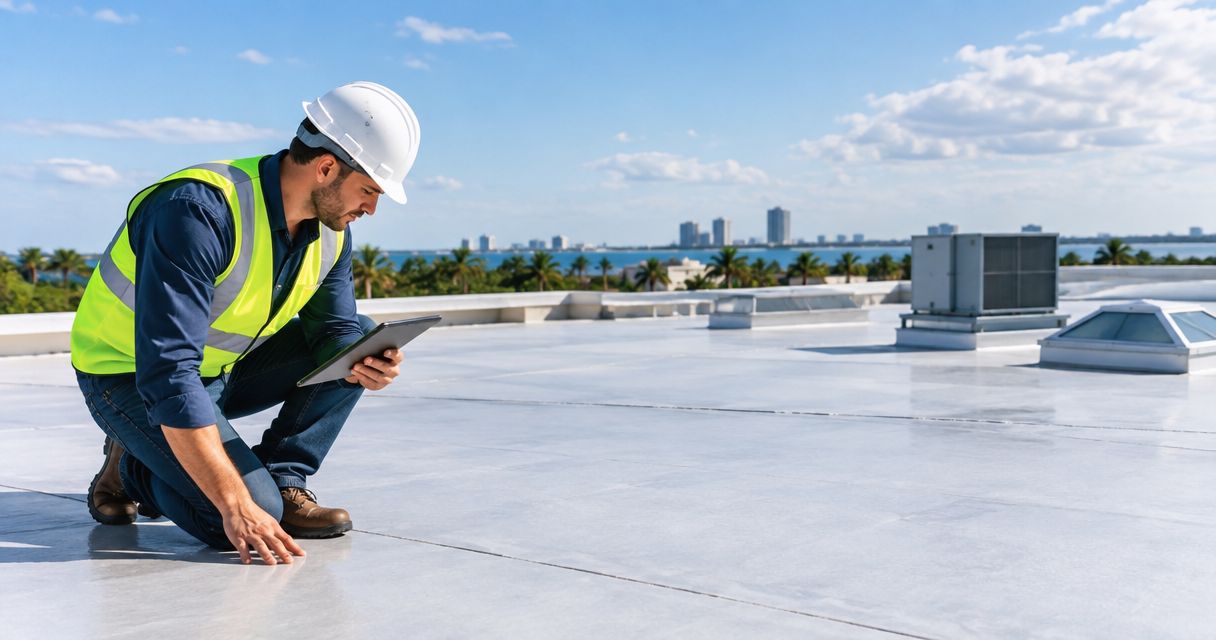
Walk the roof (or view it from a ladder) after a rain event, not on a dry day. Ponding is easiest to spot within a few hours of a storm, before it evaporates.
- Check low points near parapet walls and roof valleys for standing water
- Measure depth if water is still present after 48 hours
- Look for dark staining or algae growth marking chronic wet spots
- Check that drains and scuppers aren't blocked by debris
- Note any soft or spongy spots when you walk the surface
Check flashing and roof penetrations
Most flat roof leaks in Sarasota start at a seam or a penetration, not in the middle of an open membrane field. Flashing is where two materials meet, and it's the weakest point on any low-slope system.
- Inspect flashing around AC units, vent stacks, and skylights
- Check parapet wall caps for cracked or lifted metal
- Look at pipe boots for dried, cracked rubber
- Check the transition where the flat section meets a pitched roof
- Look for gaps where sealant has shrunk away from metal edges
Look for membrane damage
Each membrane type fails differently. TPO blisters and seams separate; modified bitumen splits and loses granules; BUR alligators and blisters under UV stress.
- Look for raised bubbles or blisters across the field
- Check seams for separation or lifted tape edges
- Look for punctures from foot traffic, debris, or falling branches
- Check for granule loss exposing bare membrane on modified bitumen
- Note any cracking that runs in straight lines along seams
Clear drains, scuppers, and gutters
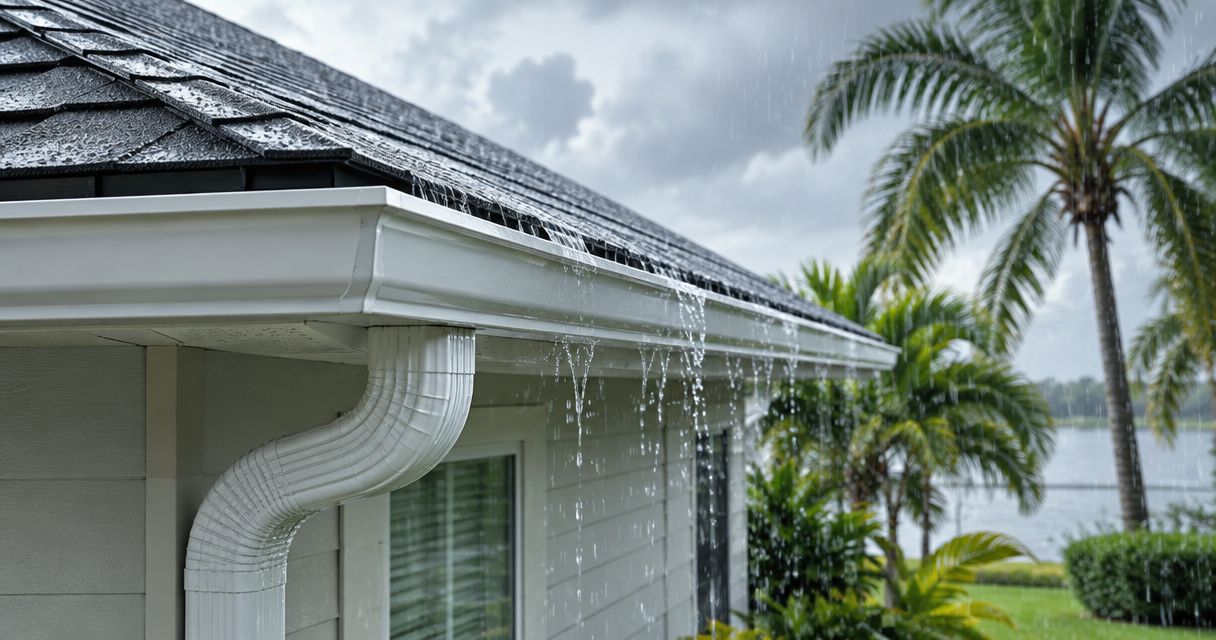
A flat roof drains through a handful of fixed points, so one clogged drain redirects water somewhere the roof was never designed to hold it.
- Clear leaves and debris from all roof drains
- Check scupper openings on parapet-wall roofs for blockage
- Flush drains with a hose to confirm they carry water off the roof
- Clean gutters and downspouts tied into flat roof drainage
- Recheck after storms during hurricane season, June through November
Patch the leak temporarily before calling a pro
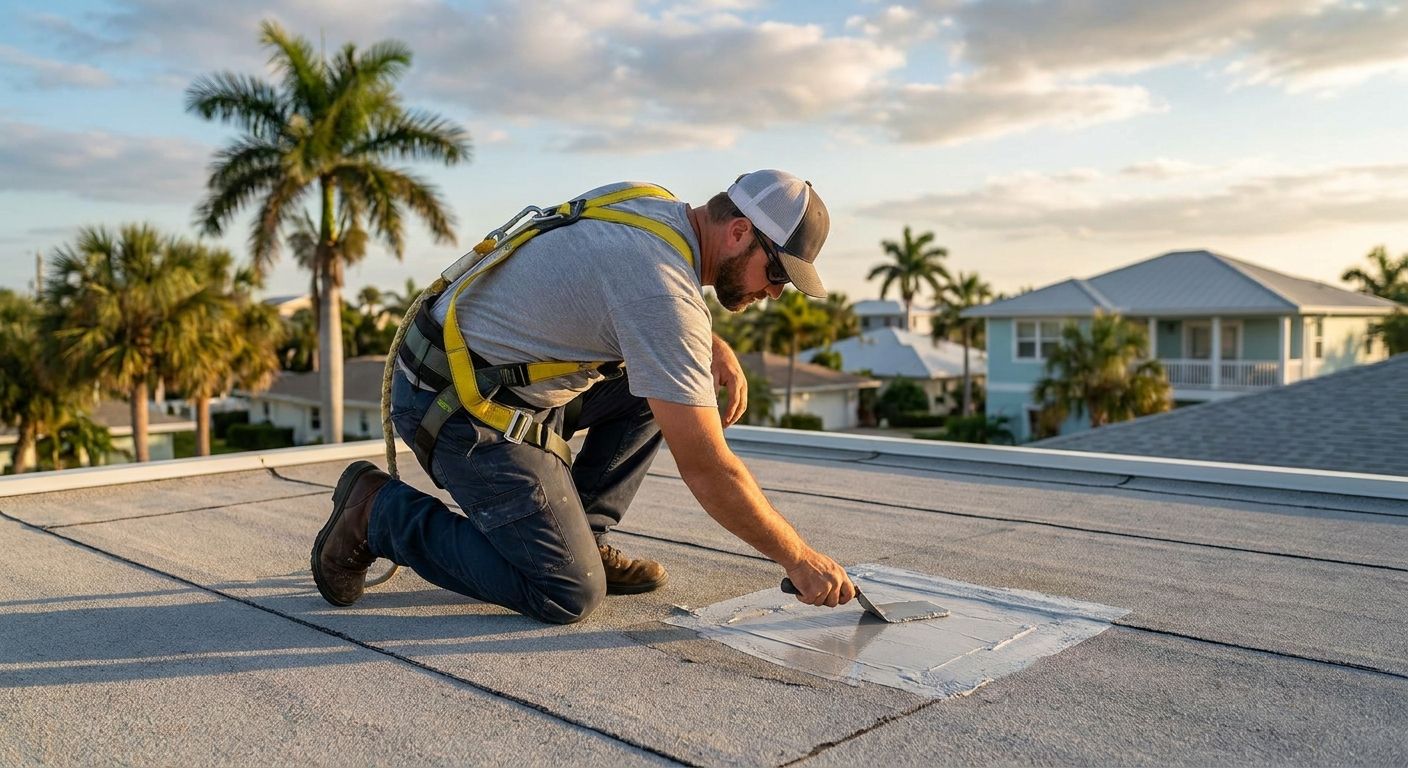
A temporary patch buys time, not a fix. Use it only to stop active water intrusion until a professional can assess the membrane.
- Dry the area completely before applying any patch material
- Use roofing tape or a compatible sealant matched to your membrane type
- Patch generously beyond the visible damage, not just the hole itself
- Photograph the damage before and after for insurance documentation
- Avoid tar or asphalt patches on TPO — the materials aren't compatible
Once the leak is under control, get a professional look at the whole system. A DIY patch on wet insulation just traps moisture and speeds up rot underneath the membrane.
Get a professional inspection before you commit to a repair method
This is where a trained eye matters more than a tube of sealant. Roof Smart of SW Florida walks the full roof, checks slope and drainage, and identifies whether the damage is isolated or systemic before recommending a repair plan. For a broader look at whether patching still makes sense versus starting over, roof repair vs roof replacement breaks down the decision point most Sarasota owners hit around year 15-20 of a membrane's life.
Maintain the roof after repair
Repair without maintenance just resets the clock on the next leak. Flat roofs in Sarasota's heat and rain cycle need a maintenance rhythm, not a one-time fix.
- Schedule a visual inspection twice a year, spring and fall
- Clear drains before hurricane season starts each June
- Recoat UV-exposed membrane sections on the manufacturer's recommended cycle
- Trim overhanging branches that drop debris onto the roof surface
- Document every repair with dates and photos for warranty and insurance records
For the full maintenance calendar, maintaining a flat roof in Florida's climate lays out what to check month by month.
Comparison: flat roof repair options for Sarasota
| Option | Best For | Key Limitation |
|---|---|---|
| Localized patch repair | Small punctures or isolated leaks under 10 sq ft | Doesn't fix underlying drainage or slope problems |
| Roof coating / recoat | Extending life of a UV-damaged TPO or BUR roof | Won't repair structural leaks or seam failures |
| Membrane section replacement | Damage spread across multiple sections | Costs more than patching; must match existing membrane type |
| Full flat roof replacement | Roofs past typical membrane lifespan or with chronic ponding | Highest upfront cost and longer project timeline |
Verdict: patch and coat for isolated damage on a membrane under 15 years old, replace when ponding is chronic or the membrane has failed in more than one section.
“If water is still standing on your flat roof 48 hours after a storm, that's a drainage failure, not a patch job.”
Commercial owners in Sarasota managing multiple flat roof buildings should also look at commercial roofing services in Sarasota for portfolio-level inspection scheduling.
Get a free flat roof evaluation
No-pressure inspection before you commit to a repair or replacement.
Common mistakes Sarasota flat roof owners make
- Ignoring ponding water because "it always drains eventually." Chronic ponding degrades seams long before a visible leak shows up inside.
- Patching over wet insulation. Sealing a membrane over saturated insulation traps moisture and rots the deck underneath.
- Skipping inspection before hurricane season. June through November brings the storms that turn a small flashing gap into an interior leak.
- Hiring a general contractor without flat roof experience. Low-slope membrane systems require different detailing than shingle work, and mismatched materials fail fast.
- Waiting on insurance approval before tarping an active leak. Interior damage from delay is harder to attribute to storm cause than to neglect.
Owners weighing an insurance angle on repair costs should check how to qualify for a wind mitigation insurance discount — a documented inspection can offset part of the repair conversation with your carrier.
FAQ
What's the best way to repair a flat roof in Sarasota?
Start with a professional inspection to confirm whether the damage is isolated or tied to a drainage problem, then patch or recoat isolated damage and replace sections where ponding has caused chronic seam failure. Roof Smart of SW Florida evaluates the membrane before recommending either path.
Is flat roof repair cheaper than replacement?
Repair costs less than replacement when damage is confined to one section and the membrane is under roughly 15 years old. Once ponding is chronic across multiple sections, repair costs stack up and replacement becomes the better long-term move.
How long does a flat roof repair last in Florida's climate?
A properly matched patch or recoat on a sound membrane can extend service life for several years, but Florida's UV exposure and heavy rain shorten that window compared to drier climates. Regular inspection twice a year catches new damage before it spreads.
What causes ponding water on a flat roof?
Ponding happens when slope drops below the quarter-inch-per-foot minimum needed for positive drainage, or when a drain or scupper is blocked by debris. Both allow water to sit for more than 48 hours instead of draining off the roof.
Can I repair a flat roof myself?
You can apply a temporary patch to stop active water intrusion, but a lasting repair depends on matching the correct membrane material and confirming the deck underneath is dry. A professional inspection before patching prevents sealing moisture into the roof structure.
Does flat roof repair need a permit in Sarasota?
Most repairs beyond minor patching require a permit through the local building department. Check with Sarasota County or the City of Sarasota building division before work starts, since permit rules vary by scope of repair.
How much rain can a flat roof handle before it leaks?
A properly sloped and drained flat roof handles heavy rain without leaking as long as water clears within 48 hours. Leaks show up when drainage is blocked, slope has settled, or the membrane already has a puncture or seam gap.
Is TPO or modified bitumen better for Sarasota's climate?
TPO reflects heat well and resists UV degradation, which suits Sarasota's sun exposure, while modified bitumen offers strong puncture resistance for roofs with more foot traffic. The better choice depends on the building's use and existing roof structure, which a roofing contractor can assess on site.
One last thing
Most flat roof failures in Sarasota don't start in the open membrane field — they start at flashing and penetrations, the small metal-to-membrane transitions around vents, AC units, and parapet caps. Check those points first on any inspection in 2026; they fail years before the membrane itself does, and catching them early turns a full section replacement into a flashing repair.