Commercial roofing in Sarasota covers the installation, repair, and replacement of roof systems on retail centers, warehouses, office buildings, and HOA or condo clubhouses, with the goal of protecting the structure and its tenants from wind-driven rain and UV degradation year-round. A Sarasota commercial building faces different pressure than a residential roof: bigger square footage, flat or low-slope systems, rooftop HVAC penetrations, and tenants who can't tolerate downtime during a reroof.
- Commercial roofing Sarasota buyers should compare TPO, metal, modified bitumen, and coatings before picking a system.
- Roof Smart of SW Florida handles flat roof repair, wind mitigation inspections, and full reroofs across Sarasota.
- Atlantic hurricane season runs June 1 through November 30 — schedule major roof work outside that window when possible.
- A wind mitigation inspection can lower a commercial property's windstorm insurance premium.
- Skip the lowest bid without a license and insurance check — it's the most expensive mistake commercial owners make.
Why commercial roofing matters for Sarasota businesses
Sarasota's commercial buildings sit close to the Gulf, which means salt air, high humidity, and direct exposure to tropical storm systems for six months of the year. A flat roof that's five years past its rated lifespan is not an inspection problem — it's a replacement problem, and waiting until a leak shows up inside a leased space costs more than a scheduled reroof ever would.
Business owners search for commercial roofing Sarasota contractors differently than homeowners search for residential ones. They want a licensed crew that understands multi-tenant scheduling, insurance documentation, and code requirements tied to Florida's wind speed maps — not just a fast estimate.
“A flat commercial roof that's five years past its rated lifespan is not an inspection problem — it's a replacement problem.”
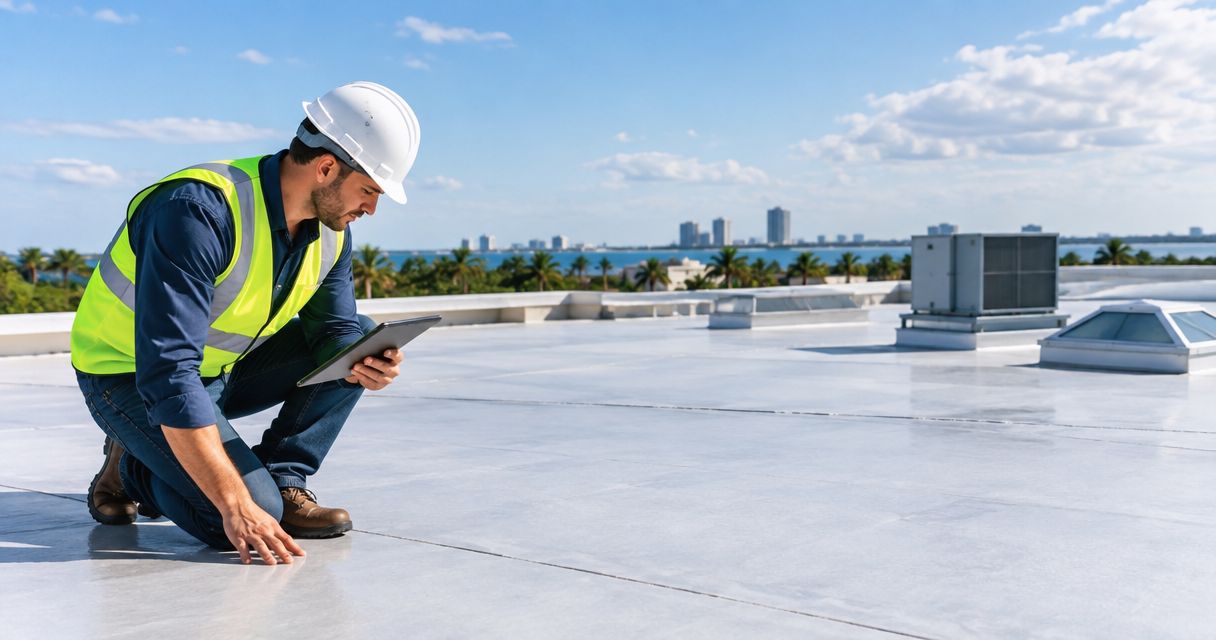
Assess your current roof type and condition
Start with an honest inventory of what's actually on the building before comparing systems or contractors.
- Pull the original roof plans or permit records if the property changed hands
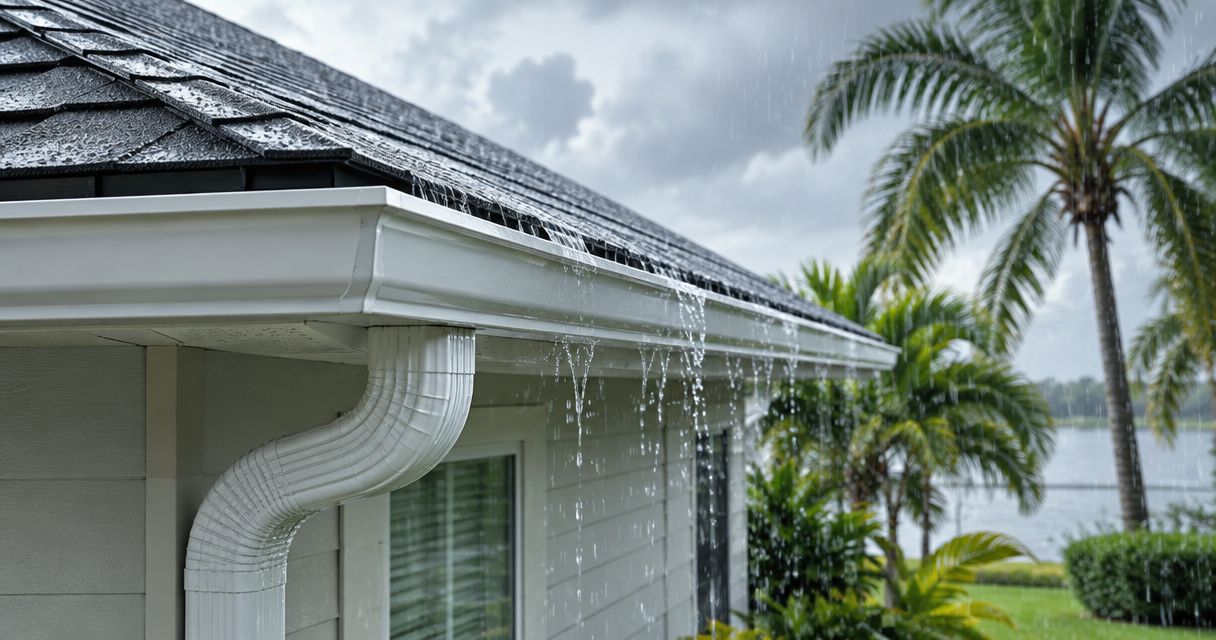
- Check for ponding water on flat sections after rain — a sign of poor drainage slope
- Look at flashing around HVAC curbs, drains, and parapet walls for separation
- Note the age of the current system against its expected service life
- Photograph visible wear from roof access points, not just ground level
Understand Sarasota's wind and code requirements
Florida Building Code sets minimum wind design speeds for every county, and Sarasota's coastal exposure means commercial roofs are built to withstand serious uplift. A wind mitigation inspection in Sarasota documents how the roof deck, straps, and covering are attached, which matters for both code compliance and insurance underwriting.
- Confirm your roof-to-wall connections meet current code, not the code from the building's original construction year
- Ask whether the roof covering is rated for the wind zone your parcel sits in
- Request documentation after any inspection — insurers require the actual form, not a verbal summary
- Factor in secondary water barrier requirements for reroofs permitted after code updates
Choose the right commercial roofing system
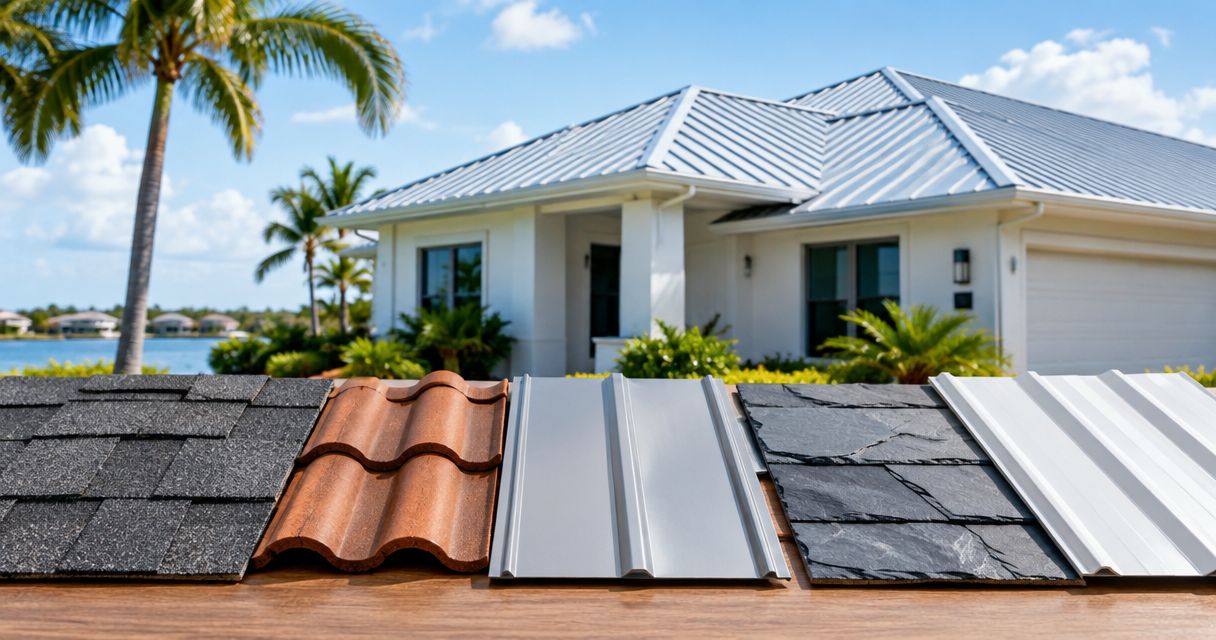
Most Sarasota commercial buildings run flat or low-slope roofs, which narrows the real choice to a handful of systems.
- TPO or PVC single-ply membranes for warehouses and retail boxes needing a reflective, heat-resistant surface
- Metal panel systems for buildings with steeper pitch or higher wind exposure
- Modified bitumen where the roof gets regular foot traffic for HVAC service
- Fluid-applied or elastomeric coatings to extend the life of an aging flat roof instead of a full tear-off
- Tile systems for Mediterranean-style commercial buildings, clubhouses, or HOA structures matching a community's architecture
Roof Smart of SW Florida installs and repairs each of these systems, and picking the wrong one for the building's slope or traffic pattern is the fastest way to shorten a roof's service life.
Budget and schedule around business operations
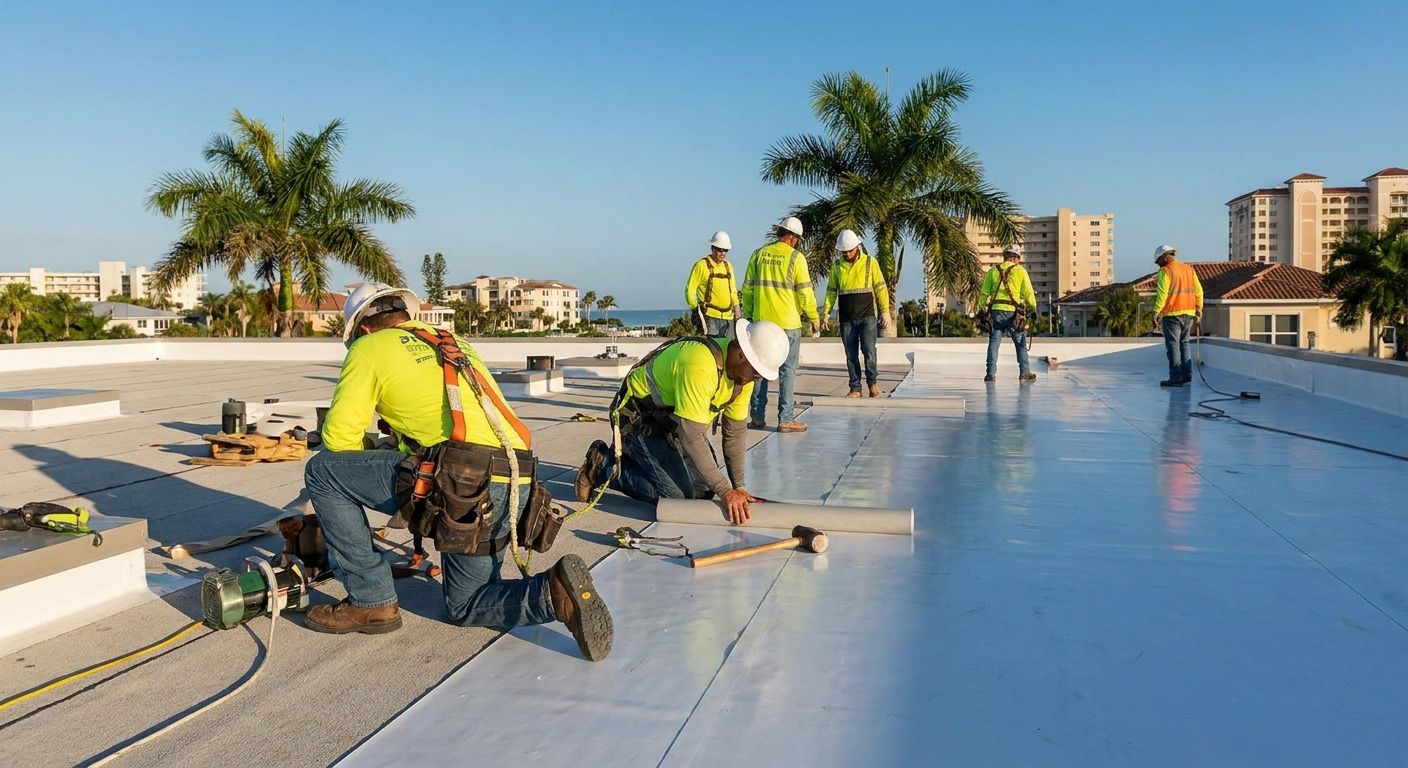
A commercial reroof disrupts operations more than a residential one — tenants, deliveries, and customer parking all factor into timing.
- Phase the work section by section if the building has multiple tenants
- Schedule outside peak retail or tourist season when foot traffic is highest
- Build in a weather contingency window — June through November carries storm risk
- Get a written scope that separates repair line items from full replacement costs
- Confirm who handles interior protection during tear-off, especially over occupied units
Get a wind mitigation inspection for insurance savings
Commercial windstorm premiums in Southwest Florida are tied directly to how the roof is built and attached. A documented wind mitigation inspection in Sarasota gives your insurer verifiable proof of roof-to-wall connections, roof covering type, and opening protection — details that can move the premium in your favor.
- Schedule the inspection after any reroof or major repair, not before
- Keep a copy of the completed form with your property's insurance file
- Re-inspect after code-triggered upgrades, since older forms expire in relevance
- Ask your roofer to flag any deficiencies before the insurer's adjuster does
Work with a licensed commercial roofer
Commercial roofing carries different licensing, bonding, and insurance requirements than residential work, and skipping this check is where most bad outcomes start.
- Verify the contractor's Florida commercial roofing license number directly, not just a business card
- Confirm general liability and workers' comp coverage before signing
- Ask for references from other commercial or HOA properties in the area
- Get the scope, materials, and warranty terms in writing before deposit
Comparison of commercial roofing options for Sarasota buildings
| System | Best For | Key Limitation |
|---|---|---|
| TPO/PVC single-ply | Warehouses, retail centers, low-slope roofs | Seams need periodic inspection for separation |
| Metal panels | Wind-exposed or coastal commercial buildings | Higher upfront material cost than membrane systems |
| Modified bitumen | Flat roofs with regular HVAC foot traffic | Torch-down installs require careful fire-safety handling |
| Fluid-applied coatings | Extending life of an aging flat roof | Not a fix for structural deck damage |
| Tile roofing | HOA clubhouses, Mediterranean-style commercial buildings | Heavier structural load requirements on the building |
Verdict: for most Sarasota flat commercial buildings, TPO or a fluid-applied coating on a sound deck is the practical starting point — metal and tile fit specific architectural or exposure needs rather than general use.
Get a free commercial roof evaluation
No-pressure estimate for Sarasota business owners and property managers.
Common mistakes Sarasota commercial property owners make
- Delaying the wind mitigation inspection even though it can reduce windstorm premiums, treating it as optional paperwork instead of a cost-saving step
- Choosing the lowest bid without checking commercial licensing, then discovering the crew wasn't insured for the job scope
- Ignoring ponding water on a flat roof until it works through the membrane and shows up as an interior leak
- Scheduling a full reroof mid-hurricane season without a tarping contingency if weather delays the job
- Skipping HOA or condo board coordination on scope and timeline, which turns a straightforward reroof into a dispute over assessments
FAQ
What is the best commercial roofing system for a Sarasota flat roof?
TPO single-ply membrane is the most common choice for Sarasota flat commercial roofs because it handles heat and UV exposure well. Modified bitumen and fluid-applied coatings are the alternatives depending on foot traffic and roof age.
Does a commercial building need a wind mitigation inspection in Sarasota?
Yes, a wind mitigation inspection documents roof attachment and covering details that insurers use to set windstorm premiums. It's worth scheduling after any reroof or major repair, not just at renewal time.
How long does commercial roof replacement take in Sarasota?
Timelines depend on roof size, system type, and whether the building stays occupied during the work, and can range from days for a small flat roof to multiple weeks for a phased multi-tenant reroof. Weather during hurricane season, June through November, can extend the schedule.
Is roof coating cheaper than full commercial roof replacement?
A fluid-applied coating extends the life of an existing flat roof without a full tear-off, which is typically less disruptive than replacement. It only works on a deck that's structurally sound — it doesn't fix underlying damage.
What roofing systems work for HOA and condo commercial buildings in Sarasota?
Tile roofing is common for Mediterranean-style HOA clubhouses, while metal and TPO fit flat-roofed community buildings. The right choice depends on the structure's slope and existing architecture.
Can commercial roof repair happen while a building stays open?
Yes, most repair and even phased reroof work can happen with the building occupied if the contractor sections the job and protects interior spaces. Full tear-offs on a single-tenant flat roof usually require the space to be temporarily cleared.
When is the best time to schedule commercial roofing in Sarasota?
Outside Atlantic hurricane season, which runs June 1 through November 30, is the lowest-risk window for scheduling major roof work. Spring and early winter give contractors the most predictable weather to complete a full reroof.
One last thing
Most Sarasota commercial owners think about roofing only after a leak — but the wind mitigation inspection is the one step that pays for itself through insurance savings whether or not anything is wrong with the roof yet. Get that documentation before storm season, not after.