Emergency roof repair in Sarasota means stopping a leak, tarping a hole, or securing storm damage within hours, not scheduling a fix for whenever a crew has an opening next week. This guide walks through what actually qualifies as an emergency, the order of operations before help arrives, and how Sarasota's Gulf Coast exposure changes the math compared to a routine repair.
- Emergency roof repair in Sarasota means stopping the leak within hours, not scheduling a repair for next week.
- Tarp the leak first, document every damaged area, then call a licensed roofer -- not a general handyman.
- Florida hurricane damage claims carry a one-year filing deadline under state law; late claims get denied.
- A tarp is a stopgap rated in weeks, not months -- book the permanent repair before the next storm system.
Why emergency roof repair matters for Sarasota homeowners
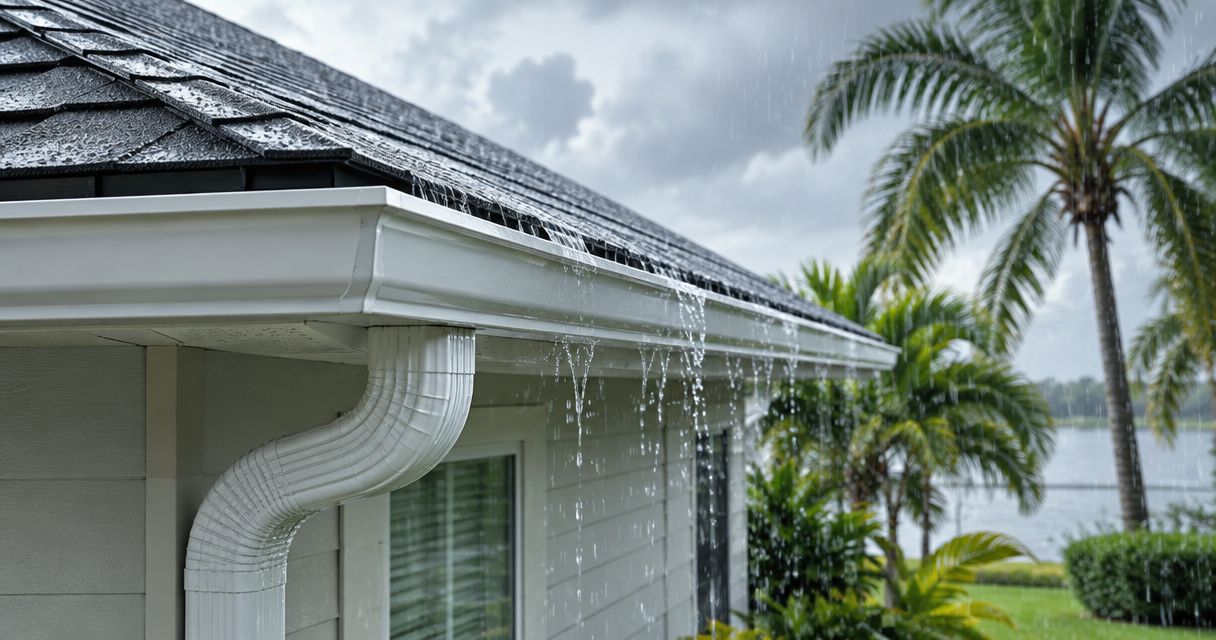
Sarasota sits on the same Gulf Coast weather track as Cape Coral, Fort Myers, and Naples, which means the same afternoon thunderstorm pattern and the same June 1 through November 30 hurricane season drive most emergency calls across Southwest Florida. A missing shingle or a lifted tile that would sit fine for a week in a dry climate becomes an active leak the next time a squall line rolls through. If you're not sure whether what you're looking at qualifies, the signs your roof needs emergency repair run through the specific red flags -- daylight through the decking, spreading ceiling stains, sagging sections -- that separate an emergency from a maintenance item.
Older Sarasota housing stock adds a second layer to this. Homes built before modern wind-uplift codes often have underlayment and decking that's already thinner than what's installed today, so a single storm event can do damage that looks minor from the ground and turns out to be structural once a roofer gets on the deck.
A roof leak that isn't stopped within 24 to 48 hours of a storm event usually turns into a drywall and insulation replacement job, not just a roofing repair.
Confirm you actually have a roofing emergency
Not every roof issue after a storm needs a same-day call. Sort out what's urgent before you start making calls at 11pm.
- Active dripping indoors during or right after rain
- Visible daylight through the attic decking
- Missing shingles, tiles, or torn flashing after a wind event
- A sagging or soft-feeling section of roof deck
- Ceiling stains that visibly spread within a few hours
If none of those apply, the damage can likely wait for a scheduled inspection instead of an emergency dispatch.
Stop water intrusion before you do anything else
Once you've confirmed it's real, the next 30 minutes matter more than anything a roofer does later. This is the manual, no-cost step everyone should do regardless of who they call.
- Move furniture, electronics, and rugs out of the drip zone immediately
- Set buckets under active leaks and empty them every 30 minutes during the storm
- If ceiling drywall is bulging with trapped water, puncture a small relief hole so it drains in a controlled spot instead of collapsing
- Do not climb onto a wet tile or metal roof yourself -- both get dangerously slick and tile cracks under foot traffic even when dry
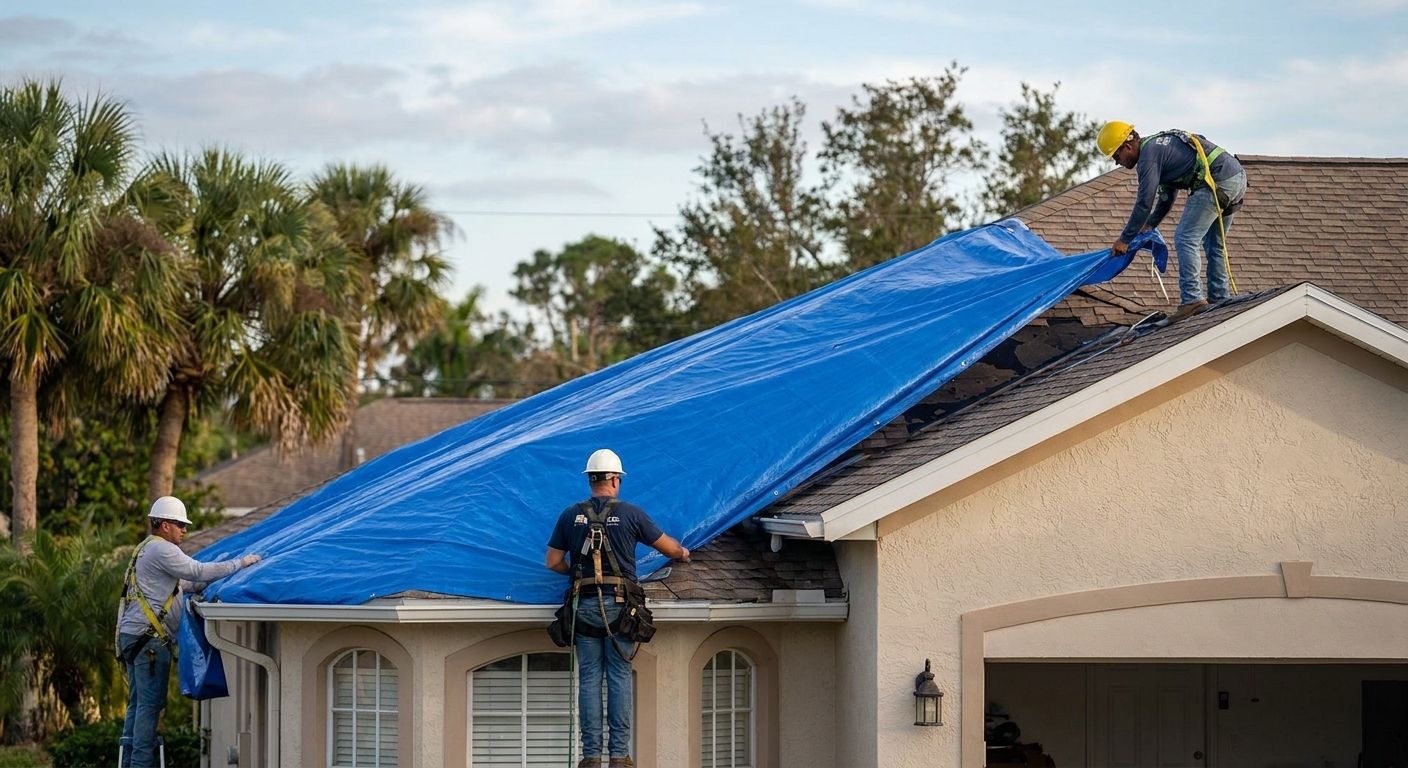
When the exposed area is bigger than a bucket can manage -- a torn-off section of shingle, a hole from a fallen limb -- a stopgap patch is faster and safer than waiting for a full crew. Emergency roof tarping covers what a proper storm tarp job involves and why a DIY tarp job often fails within the first hard rain.
Photograph and log every damaged area before cleanup starts
Insurance adjusters move fast during high-volume storm seasons, and undocumented damage gets discounted or denied outright.
- Wide shots of the full roofline from the ground, all four sides
- Close-ups of missing shingles, tiles, torn flashing, or exposed decking
- Interior ceiling and wall stains, photographed with a visible date stamp
- Any hail, debris, or fallen limb that caused the damage, kept until the adjuster visits
- A written note of the exact time and the storm event that caused it
Call a licensed roofer for emergency response, not a general contractor
This is where the client enters the picture, and where cutting corners costs the most. A general handyman can nail a tarp down, but they can't warranty structural repair or speak to code compliance if the insurer asks questions later.
- Verify the roofer's state roofing license number before they get on the ladder
- Ask directly whether same-day or 24-hour tarping is available, not "sometime this week"
- Confirm they carry liability and workers' comp coverage -- an uninsured crew on your roof is your liability
- Get a written scope of the temporary fix before it goes up, not after
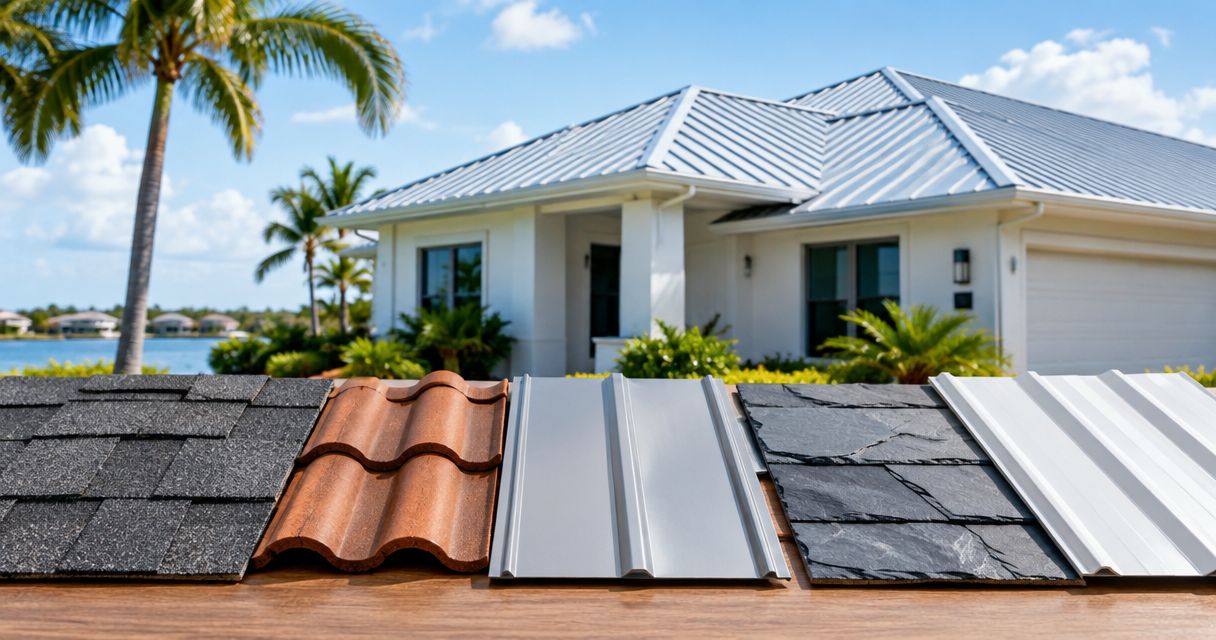
Roof Smart of SW Florida runs emergency response for shingle, tile, metal, and flat roofs across the region, and the same crews that cover Cape Coral, Fort Myers, and Naples respond to Sarasota storm calls. The verdict: if water is actively entering the house, call a licensed roofer the same day -- don't wait for a callback from three quotes.
File your insurance claim inside the reporting window
Florida law sets a hard deadline on hurricane and windstorm claims: property owners have one year from the date of loss to file an initial claim, and three years to file a supplemental or reopened claim, under Florida Statute 627.70132. Miss that window and the claim gets denied regardless of how much damage there is.
- File the initial claim as soon as the damage is documented, not after repairs are done
- Keep the dated photos and the roofer's written scope with the claim file
- Ask the adjuster for a copy of their inspection report before repairs start
- Don't sign an assignment of benefits with a contractor you haven't vetted
Schedule the permanent repair before the next storm system
A tarp is a stopgap, not a fix. Sarasota's humidity and salt air degrade a tarp faster than a similar setup would last inland, so the window to book the permanent repair is shorter than most homeowners assume.
- Get on the schedule within days of the tarp going up, not weeks
- Ask whether the same crew handles both the temporary tarp and the permanent repair
- Request material options suited to Gulf Coast salt exposure and UV load
- Ask about a wind mitigation inspection while the roof deck is already exposed -- it can qualify the home for an insurance discount going forward
Emergency roof repair options for Sarasota homeowners
| Option | Best for | Key limitation |
|---|---|---|
| DIY tarp and bucket catch | Minor, reachable leaks during an active storm | Doesn't stop wind-driven rain and is unsafe on wet tile or metal |
| Licensed emergency roofer | Active leaks, storm damage, or structural risk | Response windows tighten fast during named storms when call volume spikes |
| General handyman patch | Small cosmetic shingle fixes | No roofing license means no warranty backing, and insurers may reject the repair |
| Waiting for a scheduled repair | Minor moisture with no active drip | Gaps let water intrude further overnight, especially in Sarasota's rainy-season humidity |
The verdict: a licensed emergency roofer wins for anything with active water intrusion or visible structural damage. DIY tarping is fine as a bridge, never as the fix.
Talk to a roofer before the next storm
Free, no-pressure evaluation of storm or leak damage.
Common mistakes Sarasota homeowners make
- Waiting for the rain to stop before calling anyone. A soaked roof deck keeps absorbing water and rot spreads under tile long after the ceiling stain shows up.
- Hiring the first storm-chasing crew that knocks on the door after a named storm. Unlicensed out-of-state crews are common right after landfall and routinely skip permits.
- Filing an insurance claim without dated photos. Adjusters working high-volume storm seasons discount or deny undocumented damage.
- Walking a barrel tile roof without tile-walking pads. Foot traffic on dry Sarasota-style tile cracks more of it than the storm did.
- Treating a tarp as the permanent fix. A tarp is rated for weeks in Gulf Coast humidity, not a full season -- leaving it up invites a second leak in a different spot.
FAQ
What counts as an emergency roof repair in Sarasota?
Active water dripping indoors, visible daylight through the attic decking, missing shingles or tiles after a wind event, or a sagging roof deck all count as emergencies. Anything short of active intrusion can usually wait for a scheduled inspection instead of a same-day dispatch.
How fast can a roofer respond to storm damage in Sarasota?
Licensed emergency crews across Southwest Florida typically prioritize same-day tarping for active leaks, though response windows stretch during named storm events when call volume spikes across the whole region. Confirm same-day availability directly when you call rather than assuming it.
Will homeowners insurance cover emergency roof repair?
Most homeowners policies cover sudden storm and wind damage, but coverage depends on your specific policy and the cause of loss. Florida law gives you one year from the date of loss to file an initial hurricane damage claim under Florida Statute 627.70132.
Is a tarp enough to protect my roof until the permanent repair?
A properly installed tarp stops active water intrusion for a limited window, generally weeks rather than months in Gulf Coast humidity and UV exposure. Treat it as a bridge to the permanent repair, not a substitute for one.
How much does emergency roof repair cost in 2026?
Cost depends on roof material, the extent of the damage, and whether structural decking needs replacement, so there's no single number that applies across cases. A free on-site evaluation gives an accurate figure faster than any online estimate.
Should I repair or replace a roof damaged in a hurricane?
If the damage is isolated to one section and the roof is under 15 years old, repair usually makes sense. Widespread damage on an older roof often tips the math toward replacement once repair costs are compared against a full reroof.
What's the deadline to file a storm damage claim in Florida?
Florida Statute 627.70132 sets a one-year deadline from the date of loss for an initial hurricane or windstorm claim, and three years for a supplemental or reopened claim. Missing the window typically means the claim gets denied outright.
Can I do emergency roof repair myself?
You can safely handle interior water control -- buckets, moving belongings, a relief hole in bulging drywall -- but climbing onto a wet or damaged roof yourself is a fall risk and can crack tile or worsen the hole. Leave the roof-level work to a licensed crew.
One last thing
The detail most Sarasota homeowners miss: the one-year insurance filing clock under Florida Statute 627.70132 starts on the date of loss, not the date you notice the leak. If a storm hits in June 2026 and the ceiling stain doesn't show up until October, the claim window is still measured from June -- another reason to inspect the roof within days of any named storm, not months later.