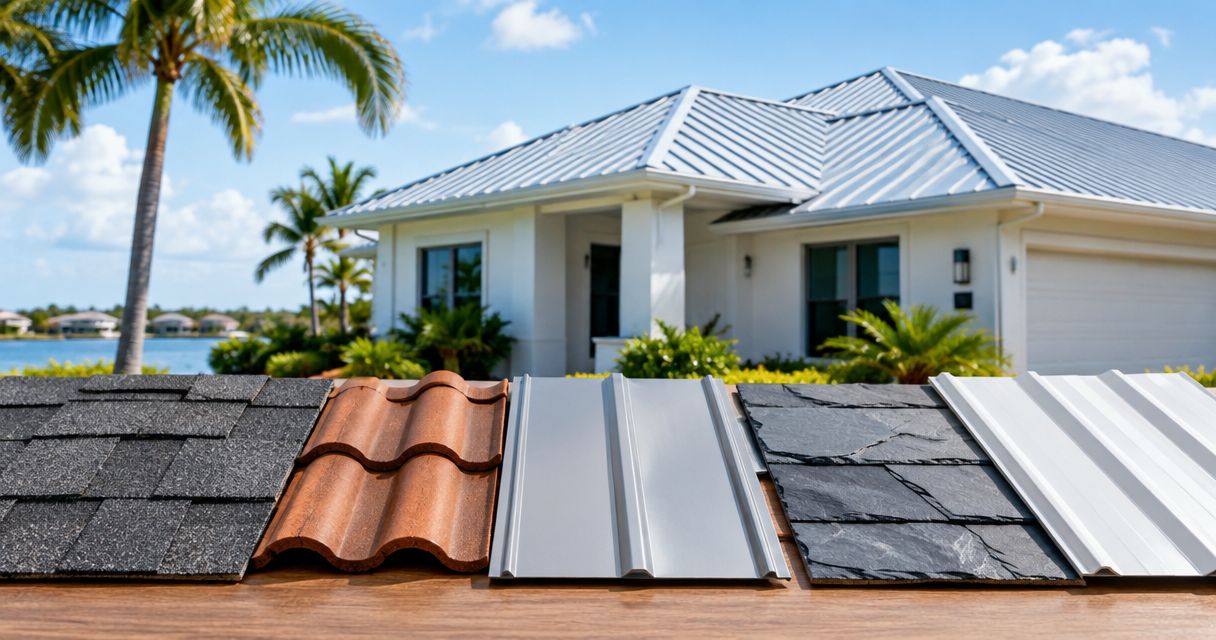
Emergency roof repair in Punta Gorda means getting a licensed roofer on-site fast enough to tarp active leaks, stop water from reaching drywall and insulation, and document the damage before an insurance adjuster ever shows up — not a same-day patch from whoever answers the phone first. Punta Gorda sits on Charlotte Harbor, and its mix of older tile roofs, metal roofs on newer builds, and shingle roofs on ranch homes each fail differently after wind and hail events.
- Emergency roof repair in Punta Gorda means tarping active leaks within hours and calling a licensed local roofer, not whoever knocks first.
- Roof Smart of SW Florida handles emergency tarping, inspection, and insurance documentation for Punta Gorda homes hit by wind, hail, or falling debris.
- Skip out-of-state storm-chasing crews: Charlotte County requires local licensing, and insurers scrutinize repairs from unregistered contractors.
- Photograph storm damage before any tarp goes up. Insurers need dated proof of the damage, not just proof of the repair.
Why emergency roof repair matters for Punta Gorda homeowners
Punta Gorda took a direct hit from Hurricane Ian in September 2022, and Charlotte Harbor's exposure means the city sits closer to storm tracks than inland Fort Myers or Naples. That geography changes what "emergency" means here: a roof that loses a few shingles in Cape Coral might lose entire tile fields or metal panel sections in Punta Gorda when wind funnels across open water.
Homeowners in this market also deal with an older housing stock than newer SW Florida suburbs, which means more roofs nearing the end of their service life right when a storm tests them. Knowing the signs your roof needs emergency repair before a named storm hits — not after — is what separates a $500 tarp job from a five-figure interior rebuild.
“You are just one call away from an honest evaluation of your roof.”
The step-by-step response for Punta Gorda roofs
Assess the damage safely from the ground first
Don't climb a wet or wind-damaged roof after a storm. Most emergency calls start with a visual check from the ground and inside the attic, not a rooftop walk.
- Check attic and ceiling for water stains, sagging, or fresh drips
- Look for missing shingles, lifted tile, or bent metal panels visible from the yard
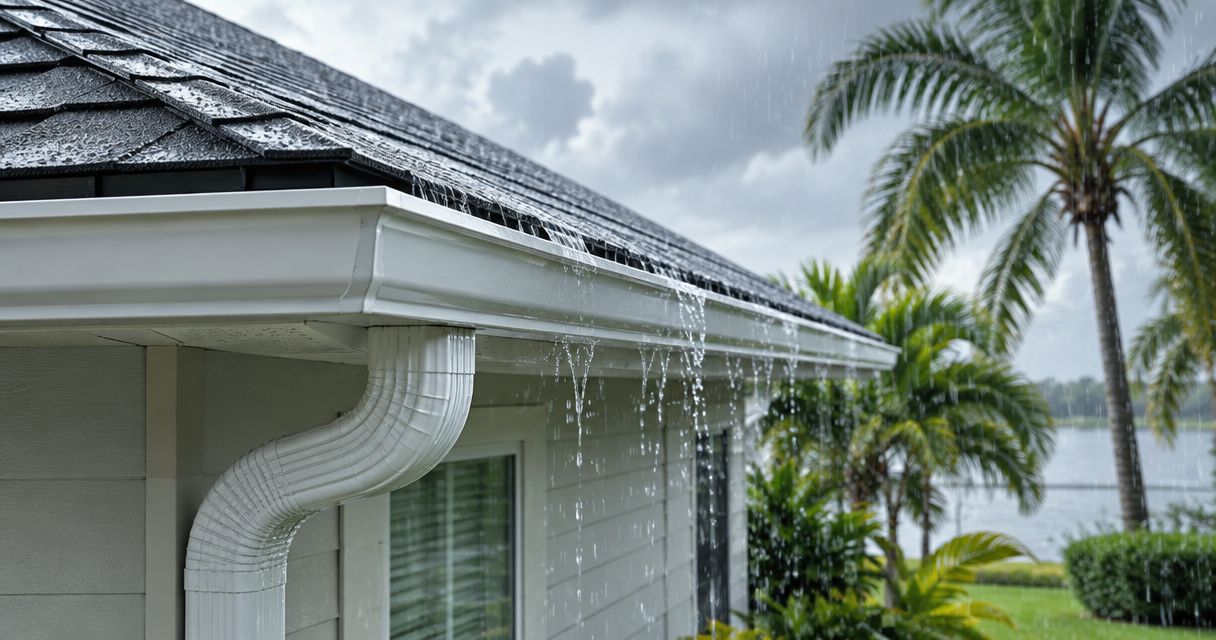
- Check gutters and downspouts for granule buildup or displaced tile fragments
- Note any debris impact points — tree limbs, fence panels, patio screens
- Skip the roof walk entirely if wind gusts are still above 20 mph
Stop water intrusion with emergency tarping
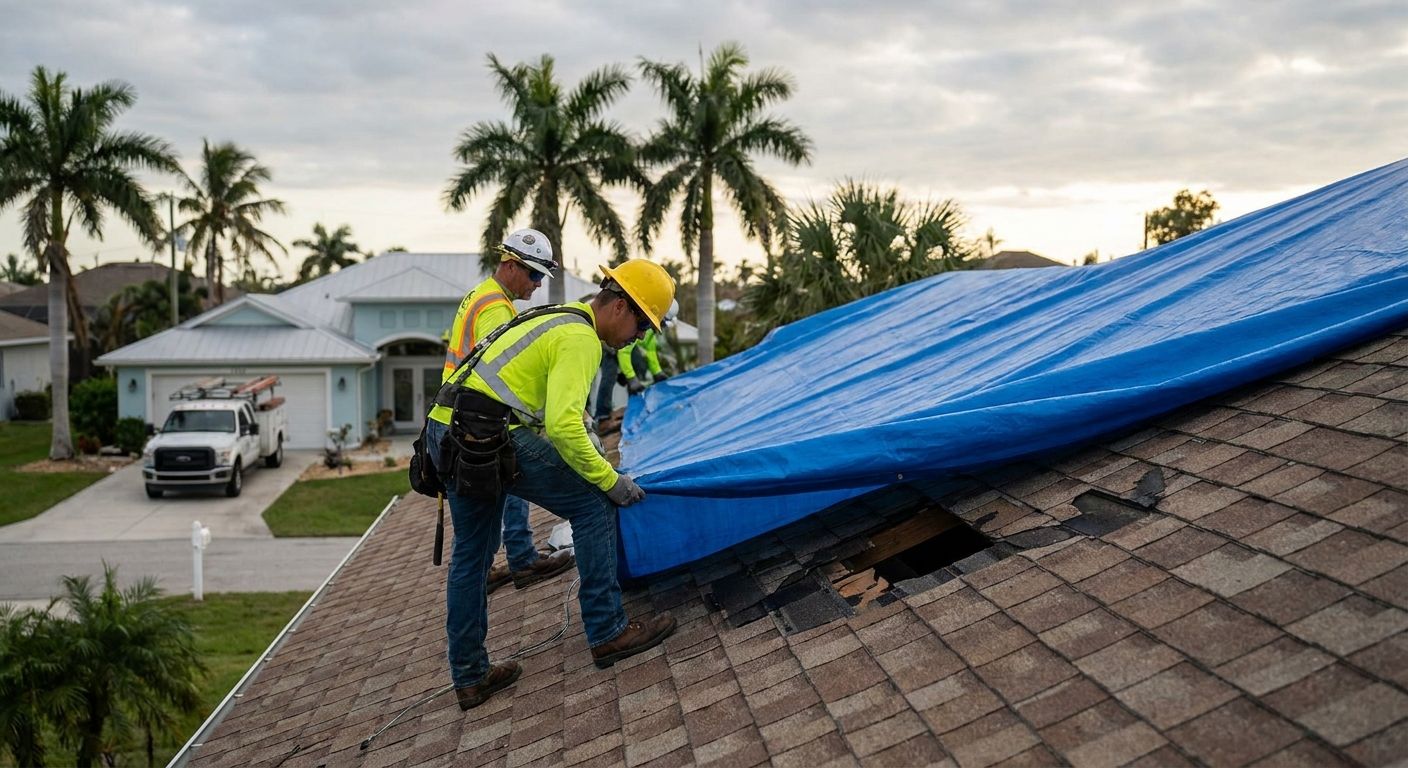
A tarp bought at a hardware store and a few 2x4s will slow a leak for a day or two if you're handy and the damage is small. For anything beyond one or two missing shingles, professional emergency roof tarping holds up through follow-on rain bands and doesn't tear loose in the next wind gust.
- Use a tarp rated for wind, not a painter's drop cloth
- Anchor with wood battens screwed through the tarp into the deck, never just rocks or bricks
- Cover 3-4 feet beyond the visible damage on every side
- Check the tarp again after each subsequent rain event until permanent repair
- Bring in a licensed crew if the damaged area exceeds roughly 100 square feet
Document everything before repairs start
Insurance adjusters want dated, time-stamped proof of storm damage, not a description after the fact. This step gets skipped constantly and costs homeowners real claim value.
- Photograph damage from multiple angles before any tarp or repair work begins
- Video walk the exterior and attic, narrating what you see
- Save the storm date and any local weather advisory issued for Charlotte County
- Keep every receipt for temporary repairs — insurers reimburse emergency mitigation costs
- Start the process for filing a roof insurance claim after storm damage within days, not weeks
Call a licensed local roofer, not a storm chaser
After a hurricane or major wind event, out-of-state crews go door to door in Punta Gorda offering cash deals and quick tarps. Some do fine work. Many disappear before a warranty issue surfaces, and their repairs often don't hold up to insurer scrutiny.
- Verify the contractor's Florida license number before signing anything
- Ask for a local business address and phone number, not just a cell number
- Get a written estimate before work starts, even for emergency tarping
- Confirm the crew carries liability and workers' comp insurance
- Roof Smart of SW Florida works Punta Gorda directly and provides an on-site evaluation before any repair begins
Schedule a full inspection after the emergency fix
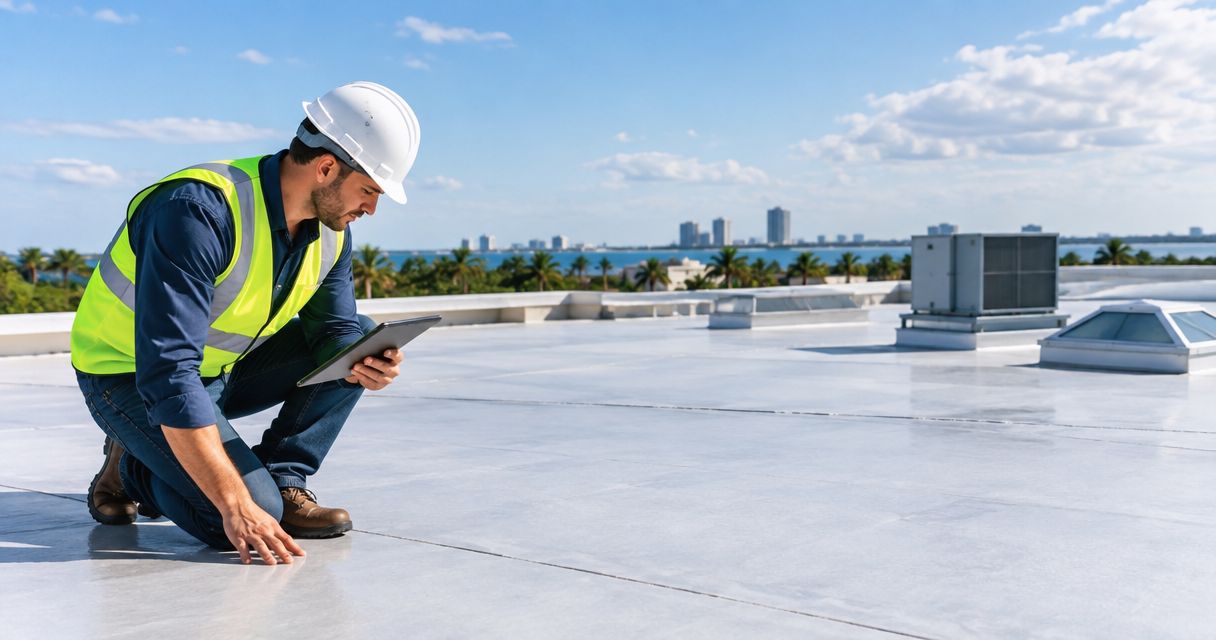
A tarp stops water. It doesn't tell you whether the roof needs a patch, a section replacement, or a full tear-off. Once the immediate leak is controlled, get eyes on the whole roof, not just the damaged section.
- Check flashing around chimneys, skylights, and vent pipes for storm-loosened seals
- Inspect the full tile or shingle field for wind-lifted units that haven't slipped yet
- Pull attic insulation back in wet spots to check for hidden mold starting
- Check gutters and fascia for separation from wind uplift
- Ask whether the inspection also qualifies the home for a wind mitigation credit
Decide between repair and replacement
Not every storm-damaged roof needs full replacement, and not every leak is fixable with a patch. This decision depends on the roof's age, material, and how much of the field sustained damage.
- A roof under 10 years old with isolated damage usually repairs cleanly
- A roof already near the end of its expected service life often makes more financial sense to replace outright after storm damage
- Insurance payouts sometimes cover full replacement even when only part of the roof failed, depending on matching material availability
- Get a second opinion before committing to a full tear-off on an insurance-funded job
Prepare the roof before the next storm
Every emergency repair should end with a plan for the next storm season, not just a fixed leak. Charlotte County homeowners who skip this step end up back in emergency mode every year.
- Trim overhanging branches at least 6 feet from the roofline
- Clear gutters before June 1 each year
- Re-check flashing and sealant annually, not just after damage
- Review how to prepare your roof for hurricane season in SW Florida every spring, before the season window opens
Get a free roof evaluation
No-pressure inspection for storm damage, leaks, or aging roofs in Punta Gorda.
Comparing your emergency repair options in Punta Gorda
| Option | Best for | Key limitation |
|---|---|---|
| DIY tarp | Small, isolated leaks you can safely reach | Temporary only; fails in sustained wind or repeated rain bands |
| Handyman or general contractor | Minor cosmetic repairs, non-storm damage | Usually not licensed for roofing work; insurers may reject the documentation |
| Out-of-state storm-chasing crew | Nothing — skip this option entirely | No local licensing on file, no follow-up service, often gone before warranty issues appear |
| Licensed local roofer (Roof Smart of SW Florida) | Full storm assessment, tarping, insurance documentation, and permanent repair | Response scheduling depends on storm volume across the region |
Verdict: for anything beyond a single missing shingle, a licensed local roofer is the only option that protects both the roof and the insurance claim behind it.
Common mistakes Punta Gorda homeowners make
- Waiting for the rain to stop completely before calling anyone — every extra hour of standing water adds to drywall and insulation damage
- Hiring the first door-to-door crew with a cash-only quote right after a storm, before checking a Florida license number
- Skipping photos before tarping — no dated proof means a weaker insurance claim
- Assuming no visible leak means no damage — tile and metal roofs in Punta Gorda can hide slipped tiles or lifted seams that only show up on inspection
- Not scheduling a wind mitigation check after repairs, missing a chance to update insurance discount eligibility for 2026 renewal
FAQ
What's the fastest way to get emergency roof repair in Punta Gorda?
Call a licensed local roofer directly and ask for same-day tarping before scheduling a full repair estimate. Roof Smart of SW Florida evaluates storm damage on-site and prioritizes active leaks over cosmetic issues.
How much does emergency roof repair cost in Punta Gorda?
Cost depends on the roofing material, the extent of the damage, and whether insurance covers the repair. Get a free on-site evaluation for an exact number rather than relying on a phone quote.
Is a blue tarp enough after a hurricane?
A properly anchored tarp stops water short-term but is not a permanent fix. It needs to be checked after every subsequent rain event until a licensed roofer completes the actual repair.
Should I file an insurance claim before or after emergency repairs?
Document the damage with photos and video before any repair work starts, then file the claim as soon as possible. Emergency mitigation costs like tarping are typically reimbursable if you keep the receipts.
Does Roof Smart of SW Florida serve Punta Gorda?
Yes, Roof Smart of SW Florida provides residential and commercial roofing services across Charlotte County, including Punta Gorda, alongside Cape Coral, Fort Myers, and Naples.
How do I know if my roof needs emergency repair versus a scheduled fix?
An active leak, missing roofing material over a structural area, or visible daylight through the roof deck all qualify as emergencies. Cosmetic granule loss or minor flashing wear can wait for a scheduled inspection.
When does hurricane season start in Florida?
The Atlantic hurricane season runs June 1 through November 30 each year. Charlotte County homeowners should have roofs inspected before the window opens, not after the first named storm.
Can I do emergency roof tarping myself?
You can for small, low, easily reachable damage using a wind-rated tarp anchored with wood battens. Anything above roughly 100 square feet of damage or a steep or tile roof calls for a professional crew.
One last thing
A roof that looks untouched from the driveway can still have slipped tile fields or lifted metal seams after a wind event — the damage that costs the most later is usually the kind nobody sees from the ground in 2026's storm seasons. Get the inspection even when nothing looks obviously wrong.