Commercial roofing for gyms and fitness centers means engineering a roof system around rooftop HVAC tonnage, open-span structures, and heavy foot traffic below — not just picking shingles or a membrane off a price list. A gym roof carries more rooftop equipment weight per square foot than a typical retail building, and it has to handle locker-room humidity and pool-area moisture that most commercial spaces never see.
- Commercial roofing for gyms needs load-rated decking for rooftop HVAC units running 12+ hours a day.
- A reinforced TPO membrane or standing-seam metal roof outperforms built-up asphalt on Southwest Florida gym buildings.
- Roof Smart of SW Florida schedules gym roof work around class hours instead of shutting a facility down.
- Humidity from showers and pools drives interior condensation that a poorly vented gym roof can't handle.
- 2026 wind codes in Lee, Collier, and Charlotte counties push most gym reroofs toward mechanically fastened or fully adhered systems.
Why commercial roofing matters for gyms and fitness centers
A gym roof isn't just a lid — it's a structural platform. Rooftop HVAC units for a 20,000-square-foot fitness center often run in the 15-40 ton range combined, and that load sits directly on the deck for the roof's entire service life, not just during installation. Add in skylights for cardio floors, exhaust fans for group fitness rooms, and sometimes a rooftop solar array, and you've got a roof doing more mechanical work than almost any other commercial building type.
Southwest Florida adds two more variables: hurricane wind pressure and humidity. A gym with a pool, sauna, or steam room pushes moisture into the roof assembly from below, which means vapor barriers and ventilation matter more here than in a dry warehouse roof. Get either the load planning or the moisture control wrong and you're looking at deck rot, HVAC curb failure, or a membrane that bubbles within a few years — not a hurricane away.
Roof Smart of SW Florida works with gym owners and property managers across Cape Coral, Fort Myers, and Naples, and the roofing decisions that matter for a fitness center are different enough from a retail storefront or office building that they deserve their own plan.
Assess your rooftop equipment load before choosing a system
Most gym roof failures start with an HVAC unit or exhaust fan added after the original roof was designed, without anyone checking whether the deck and structure could carry it.
- Get current rooftop equipment weights, not the specs from when the building was built
- Check curb heights and flashing details around every rooftop penetration
- Confirm the structural deck rating against total dead load, including future equipment
- Map out planned additions — new HVAC, solar, or signage — before the reroof, not after
- Flag any ponding water near equipment pads, since standing water accelerates membrane wear
Pick a roofing system built for large open spans
Gyms typically have wide-open floor plans with long structural spans and fewer interior load-bearing walls than office buildings, which changes how a roof deck flexes under wind and equipment loads.
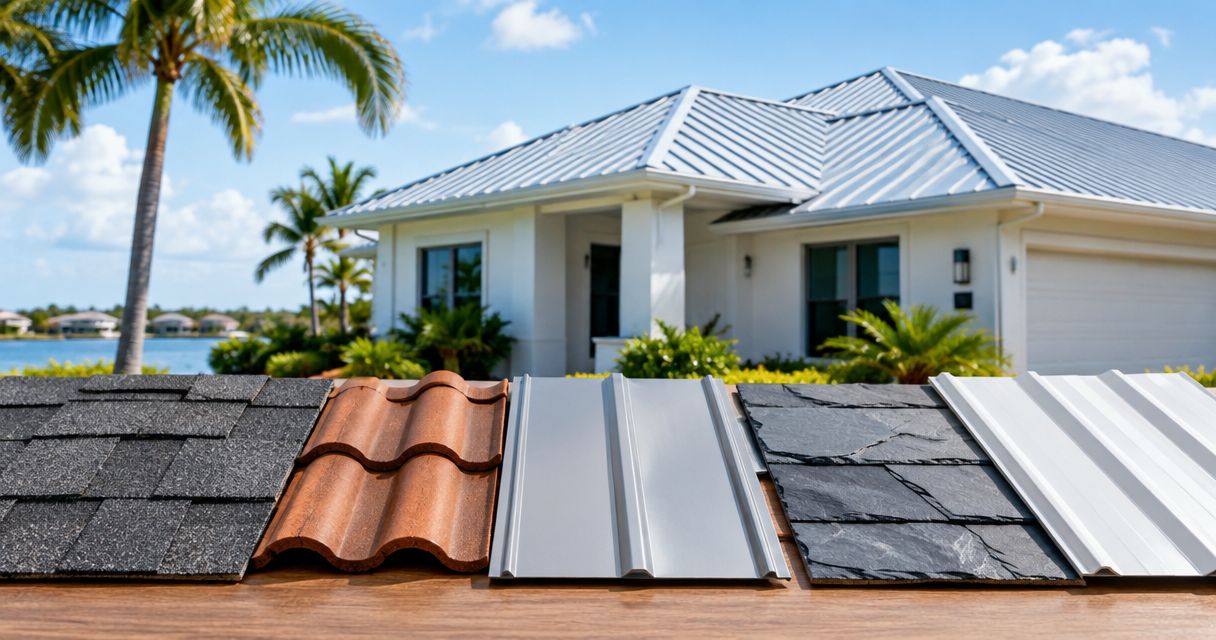
- Standing-seam metal handles long spans and Florida's wind uplift codes well
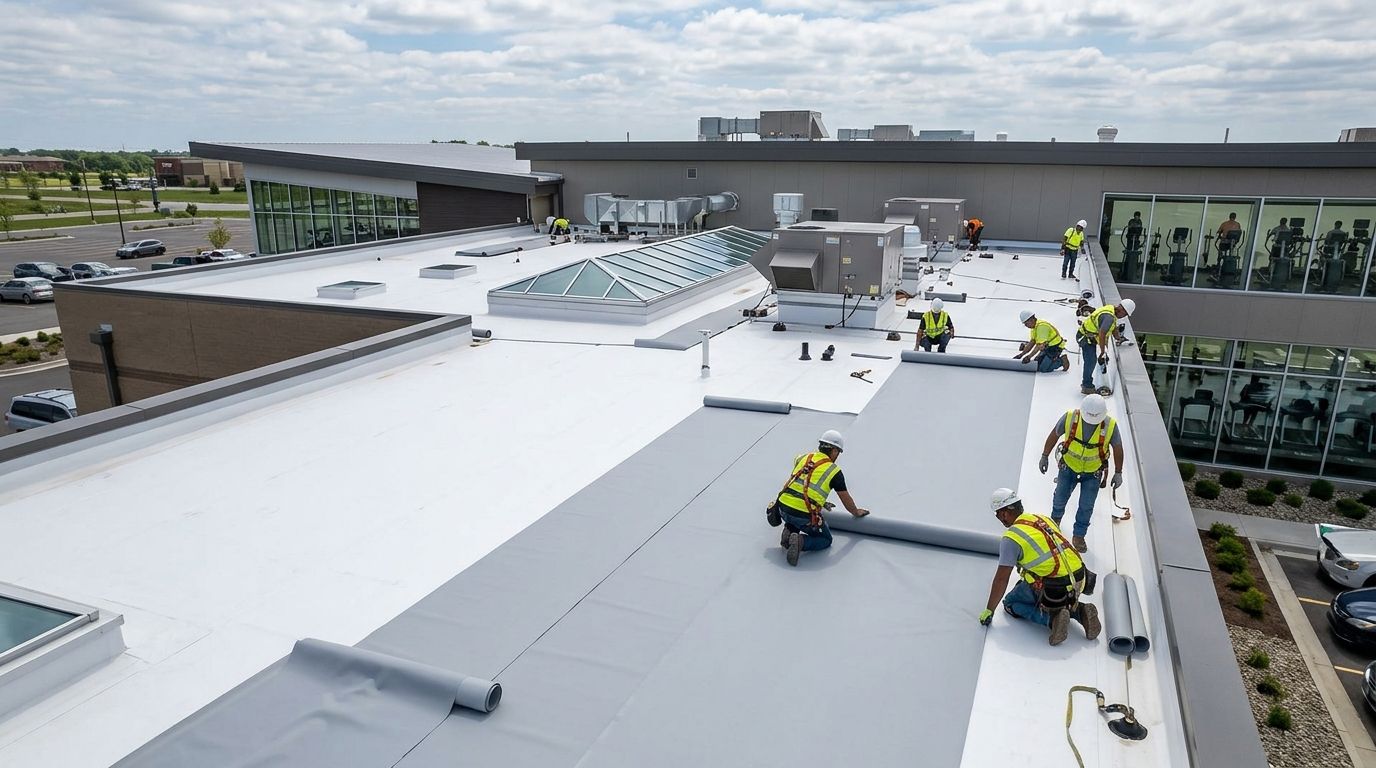
- Fully adhered TPO or PVC membranes resist ponding better than mechanically fastened systems on low-slope sections
- Built-up asphalt is the cheapest upfront option but shows the shortest service life on large flat gym roofs in this climate
- Modified bitumen works on smaller flat sections but needs more frequent recoating
- Tapered insulation systems correct drainage problems instead of just covering them up
Plan the reroof or repair around your class schedule
A fitness center loses revenue every hour it's closed, and most gyms can't shut down for a multi-week reroof the way an empty warehouse can.
- Sequence work by section so group fitness rooms and free weight areas stay open on rotation
- Schedule the loudest work — tear-off and fastening — outside peak class hours
- Set up temporary weather protection so a partial tear-off never leaves the building exposed overnight
- Coordinate with front desk staff on which entrances or parking areas will be affected each day
- Ask your contractor for a written day-by-day schedule, not a vague "2-3 weeks" estimate
Address moisture from locker rooms, pools, and saunas
Interior humidity from showers, pools, and steam rooms pushes vapor up into the roof assembly, and a roof designed for a dry office building won't manage that load.
- Install a proper vapor barrier on the warm side of the insulation in humid zones
- Increase roof ventilation over pool decks and locker room wings specifically
- Use corrosion-resistant fasteners and flashing near pool and sauna areas, where chlorine and steam accelerate metal fatigue
- Inspect insulation for trapped moisture during any reroof — wet insulation under a new membrane fails fast
- Route condensate lines from rooftop HVAC away from the membrane, not across it
Build in wind resistance for hurricane season
Southwest Florida commercial buildings answer to wind uplift requirements tied to Florida Building Code wind speed zones, and a gym's large flat roof area gives wind more surface to grab.
- Confirm fastening patterns match the wind speed zone for your specific address, not a generic commercial spec
- Use edge metal and perimeter flashing rated for the same wind pressures as the field membrane
- Secure rooftop equipment with wind-rated curbs and tie-downs, not just standard mounting brackets
- Review flat roof repair options for commercial buildings before hurricane season if your membrane is past year 10
- Document pre-storm roof condition with photos for insurance purposes
Schedule inspections and maintenance on a fixed calendar
A gym roof under constant equipment vibration and foot traffic from maintenance staff needs more frequent checks than a roof nobody walks on.
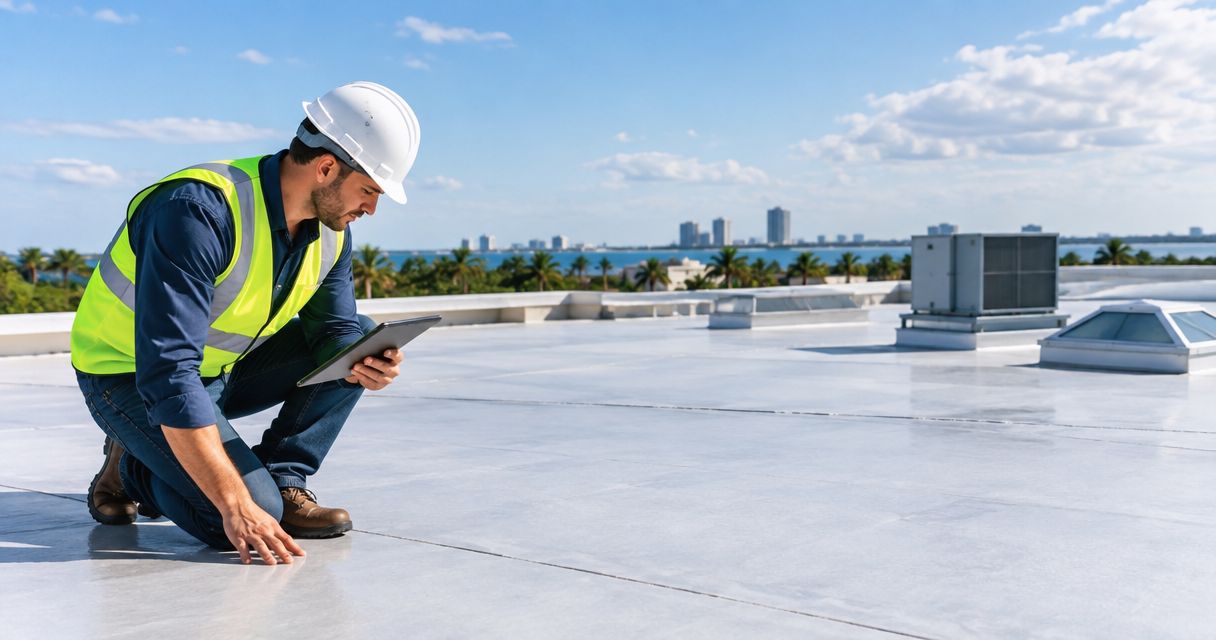
- Inspect twice a year minimum — before and after hurricane season
- Check every rooftop penetration point where HVAC, plumbing vents, or exhaust fans pass through the membrane
- Clear debris and standing water from low points after every major storm
- Log every roof walk so warranty claims have a paper trail
- Set a formal maintenance plan instead of waiting for a leak to trigger a call
Get a free gym roof estimate
No-pressure evaluation of your fitness center's roof condition and load capacity.
Comparing roofing options for gyms and fitness centers
| Option | Best for | Key limitation |
|---|---|---|
| Standing-seam metal | Large open-span gyms needing long-term wind resistance | Higher upfront labor cost to install correctly |
| Fully adhered TPO/PVC membrane | Flat-roof fitness centers with rooftop HVAC clusters | Needs professional seam welding to avoid leaks |
| Roof coating over existing membrane | Gyms with a sound roof needing extended service life | Not a fix for structural or deck-level damage |
| Built-up asphalt (BUR) | Budget-limited reroofs on smaller flat sections | Shortest lifespan of the group in Florida heat and humidity |
Fully adhered TPO or PVC is the pick for most Southwest Florida gyms with heavy rooftop HVAC loads, and standing-seam metal is the stronger long-term play for facilities planning to hold the building 20+ years. A roof coating for commercial flat roofs extends a membrane that's still structurally sound but showing UV wear — it buys time, it doesn't replace a reroof.
“A gym roof that's never been checked for rooftop equipment load is a leak waiting for the next HVAC upgrade.”
Common mistakes gym and fitness center owners make
- Adding HVAC or solar without a structural check — new rooftop equipment gets bolted on without confirming the deck can carry the added weight over time.
- Ignoring humidity from pools and locker rooms — treating a gym roof like a standard office roof skips the vapor barrier and ventilation work that prevents interior condensation.
- Closing the whole facility for a reroof — most tear-offs can be sequenced by section, and skipping that planning costs weeks of lost membership revenue.
- Deferring maintenance until a leak shows up over the cardio floor — by the time water reaches equipment, the membrane and possibly the insulation underneath are already compromised.
- Choosing the cheapest bid without checking wind ratings — a fastening pattern rated for the wrong wind zone fails in the first serious storm, not gradually.
FAQ
What's the best roof for a gym or fitness center in Florida?
A fully adhered TPO or PVC membrane handles rooftop HVAC loads and Florida humidity better than built-up asphalt on most flat-roof gyms. Standing-seam metal is the stronger choice for gyms with large open spans planning to hold the building long-term.
How much rooftop weight can a typical gym roof handle?
It depends entirely on the structural deck rating set when the building was engineered, not a general rule of thumb. A structural check before adding HVAC, solar, or new exhaust equipment is the only reliable way to confirm capacity.
Does a gym roof need special wind mitigation in Southwest Florida?
Yes — fastening patterns and edge metal need to match the wind speed zone for the specific address, and large flat gym roofs give wind more surface area to act on. A wind mitigation review before hurricane season catches gaps in perimeter flashing and equipment tie-downs.
How often should a fitness center roof be inspected?
Twice a year at minimum: once before hurricane season and once after. Gyms with pools, saunas, or heavy rooftop HVAC benefit from a third check focused specifically on moisture and equipment penetrations.
Can a gym stay open during a roof repair or reroof?
Most reroofs can be sequenced by section so group fitness rooms and free weight areas rotate through closures instead of shutting the whole facility down. Ask for a written day-by-day schedule before work starts.
What causes roof leaks in gyms with pools or saunas?
Interior humidity from showers, pools, and steam rooms pushes moisture up into the roof assembly, and without a proper vapor barrier and ventilation, that moisture condenses and degrades the insulation and deck from underneath.
Is metal roofing a good choice for a fitness center?
Standing-seam metal handles long structural spans and Florida wind uplift codes well, making it a strong option for gyms with large open floor plans. It costs more to install correctly than membrane systems, which is the main tradeoff.
How is commercial roofing for gyms different from retail or office roofing?
Gym roofs carry heavier rooftop HVAC loads, manage more interior humidity from locker rooms and pools, and need repair scheduling that works around class hours instead of a simple closure window.
One last thing
The detail most gym owners skip is checking rooftop equipment weight against the original structural deck rating — buildings built in the 1990s and early 2000s in Southwest Florida were rarely engineered for the HVAC tonnage today's fitness centers actually run. Before adding another rooftop unit in 2026, get that load number confirmed, not assumed.