Yes, you can transfer a roof warranty to a new homeowner if the written warranty allows it and you complete the issuer’s transfer requirements. Selling the house does not, by itself, establish that coverage transferred; notification, documentation, deadlines, and separate workmanship terms need checking.
- Can you transfer a roof warranty to a new homeowner? Yes, when the written terms permit the transfer.
- Check manufacturer coverage and contractor workmanship coverage separately; permission to transfer one does not establish permission for the other.
- Get written confirmation naming the new owner and identifying the remaining coverage.
- Roofsmartflorida provides roof repair and replacement services for homeowners across Southwest Florida.
Why this matters
A seller’s statement that the roof is under warranty is not enough to establish a buyer’s rights. You need the actual warranty, the transfer clause, and confirmation from the company responsible for the coverage.
For a home purchase in 2026, treat roof warranty paperwork as a closing task, not something to sort out after a leak. Start with the distinctions in this guide to roof warranty options for Florida homeowners, then verify the terms attached to the property you are buying.
A transferable warranty is useful documentation, not proof that the roof is in good condition. Keep the coverage review separate from the physical roof inspection.
Can you transfer a roof warranty to a new homeowner?
You can transfer a roof warranty when its terms permit a change of owner and the required process is completed. The warranty issuer—not the seller, listing description, or closing checklist—determines whether the transfer meets those terms.
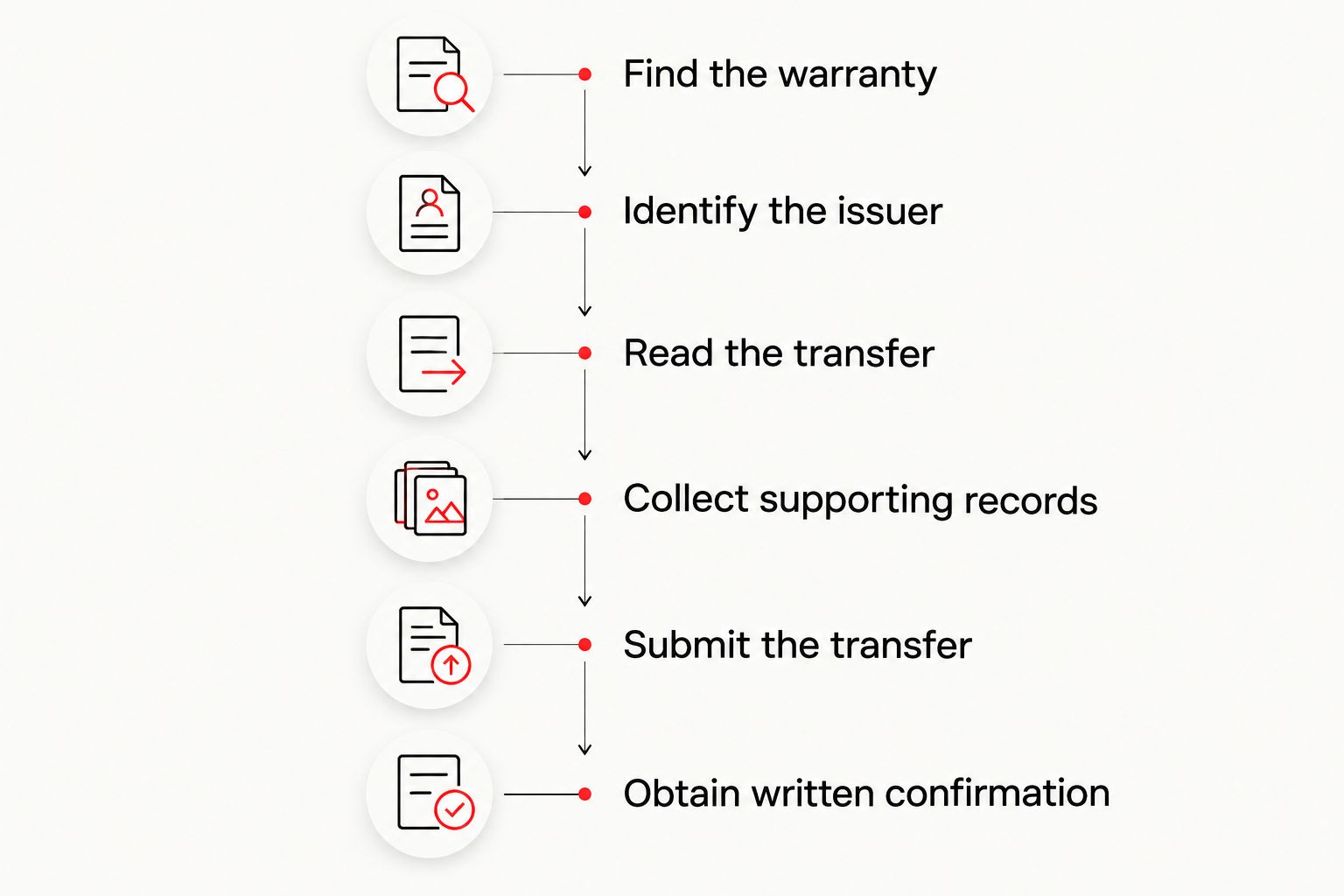
Use these 6 steps to establish what the buyer will receive. Complete each applicable step for every warranty associated with the roof.
- Find the warranty. Obtain the full document, not just a brochure, installation invoice, or statement that the roof has coverage.
- Identify the issuer. Determine whether the manufacturer, installing contractor, or another named administrator handles the warranty.
- Read the transfer clause. Check eligible owners, ownership changes, submission requirements, and any deadline tied to the sale.
- Collect supporting records. Gather the documents the issuer requests, such as installation records, registration details, or proof of ownership.
- Submit the transfer. Follow the issuer’s instructions and retain evidence of what you sent and when.
- Obtain written confirmation. Ask the issuer to identify the new owner, covered property, remaining term, and applicable limitations.
Do not mark the task complete merely because someone submitted a form. Keep proof of submission and the issuer’s response together. If the issuer requires additional information, resolve that request rather than assuming silence means acceptance.
Manufacturer warranty: check the product coverage
A manufacturer warranty addresses the products and obligations specified in its written terms. Do not read it as a promise to fix every leak or replace the entire roof whenever a problem develops.
Look for the transfer provision in the warranty issued for the installed product. A current brochure found during a 2026 home sale does not establish the terms of an existing warranty; match the document to the roof’s installation and registration records.
Ask the issuer to confirm:
- Whether this warranty permits transfer to the buyer.
- Whether a previous ownership change affects eligibility.
- What coverage remains after the transfer.
- Whether the remedy includes labor, materials, or other specified work.
- What exclusions and claim procedures apply to the new owner.
The benefit is access to the manufacturer’s stated remedy for a covered problem. The limitation is equally important: product coverage is not a blanket promise covering installation errors, storm damage, or every cause of water entry. Read the exclusions before describing the protection to a buyer.
Workmanship warranty: check the contractor’s promise separately
A workmanship warranty concerns installation work within the scope stated by its issuer. Its transfer terms are separate from the manufacturer’s product warranty unless the documents expressly connect them.
Contact the contractor named in the installation records. Ask for the actual workmanship warranty and written confirmation of whether the buyer can receive the remaining coverage.
These 2 warranty categories answer different questions:
| Coverage category | What to verify | Main benefit | Main limitation | Best for checking |
|---|---|---|---|---|
| Manufacturer warranty | Covered products, remedy, registration, and transfer terms | Identifies the manufacturer’s obligations for covered product problems | Does not establish coverage for every installation issue or leak | Product-related protection |
| Contractor workmanship warranty | Covered installation work, responsible contractor, and transfer terms | Identifies the contractor’s obligations for covered installation problems | Does not establish coverage for every product defect or later roof alteration | Installation-related protection |
Neither category replaces the other. If a seller supplies only a manufacturer certificate, request the contractor’s document rather than assuming installation coverage follows the same rules.
Why roof warranty transfer requirements vary
The transfer process depends on the warranty attached to the roof. Use the written document to resolve these factors rather than applying a deadline or rule from another homeowner’s experience.
- Issuer: The company responsible for the warranty sets its submission and confirmation process.
- Warranty version: The document governing the installation controls; newer advertising does not establish older coverage.
- Ownership history: Check whether the terms restrict eligible owners or repeat transfers.
- Timing: Identify the event that starts any notification deadline and the required submission date.
- Documentation: Confirm which registration, installation, and ownership records the issuer requires.
- Coverage conditions: Review provisions concerning maintenance, alterations, repairs, and exclusions before describing the remaining protection.
For a 2026 closing, assign responsibility for each required action. The seller can hold the installation records while the buyer holds the new ownership documents; that division makes a clear handoff essential.
Put the task owner and due date in writing. Do not rely on a general promise that someone will handle the warranty after closing.
What documents should you request before closing?
Build a roof file that lets the buyer identify the coverage without reconstructing the installation history. Request the documents below, then compare them against the issuer’s actual requirements.
| Document | What it helps establish | What it does not establish by itself |
|---|---|---|
| Complete warranty | Coverage terms, exclusions, and transfer instructions | That the transfer has been accepted |
| Installation contract and invoice | Contractor identity and recorded scope of work | That every item is covered by a warranty |
| Registration confirmation | Recorded warranty or product registration details | That ownership has been updated |
| Repair and maintenance records | Documented work performed after installation | That the issuer approved every alteration |
| Ownership documentation requested by the issuer | Information needed to process the change | That the buyer has met every other condition |
| Transfer confirmation | The issuer’s written response to the ownership change | That every future roof problem will qualify |
Check the property address and owner details across the records. Ask the issuer to resolve discrepancies before relying on the documents, especially when the seller’s name differs from the name shown on the warranty.
Keep copies outside a seller’s email account or contractor portal. The buyer should receive a usable file, including the issuer’s contact information and claim instructions.
Does transferring a roof warranty restart the coverage?
A transfer does not establish a new coverage term. Read the transfer provision and ask the issuer to confirm the remaining protection and its end date.
The buyer should distinguish the roof’s installation date from the ownership-transfer date. A transfer processed in 2026 does not, by itself, make 2026 the start of a new warranty.
Also ask whether the remedy changes as the roof ages. Do not describe coverage as unchanged unless the issuer confirms that the buyer receives the same applicable protection under the written terms.
Can you transfer a roof warranty after closing?
Check the transfer deadline immediately after closing. Whether a post-closing submission qualifies depends on the warranty’s requirements and the event that starts its notification period.
Send the issuer the actual ownership-change date and ask for written instructions. If a deadline has passed, request a written eligibility decision; do not assume an exception or advertise the warranty as successfully transferred.
Keep the seller involved until you have the records needed to complete the request. An unanswered question about registration or installation is easier to address while the transaction documents and contacts are still at hand.
Is a transferable warranty enough to approve the roof?
No. A warranty review checks contractual protection; an inspection checks physical condition. You need to understand both before treating a roof as a resolved part of a home purchase.
An inspection cannot expand warranty coverage. Likewise, an accepted transfer does not establish that flashing, roof surfaces, drainage, or previous repairs are in satisfactory condition.
Roofsmartflorida roofing services fit Southwest Florida homeowners who need roof repair or replacement. The company serves Cape Coral, Fort Myers, Naples, and surrounding Southwest Florida counties; its roofing services are separate from the warranty issuer’s decision about transfer eligibility.
If an inspection identifies a problem, document it and check the claim requirements before authorizing non-emergency alterations. Do not delay necessary protective action during an active leak while waiting for routine transfer paperwork; record the condition and contact the relevant parties promptly.
Discuss your roof repair needs
Contact Roofsmartflorida about residential roofing repair or replacement in Southwest Florida.
FAQ
Does a roof warranty automatically transfer when I buy a house?
Do not assume a roof warranty transfers automatically with the house. Read the ownership-transfer clause and obtain confirmation from the issuer that the buyer has met its requirements.
Can the manufacturer warranty transfer if the contractor warranty does not?
Manufacturer and contractor warranty transfers must be checked separately. Approval under one document does not establish eligibility under the other.
What if the seller cannot find the roof warranty?
Ask the installing contractor and identified manufacturer for records tied to the property. An invoice or brochure alone does not establish the exact coverage or prove a completed transfer.
Can I transfer a roof warranty if the roof has been repaired?
Review the warranty’s repair and alteration provisions before assuming the roof remains eligible. Give the issuer the repair records and ask for a written decision about the effect on coverage and transfer.
Does a transferable roof warranty cover hurricane damage?
Transferability does not establish hurricane-damage coverage. The warranty’s covered causes, exclusions, and remedies determine whether a particular problem qualifies; insurance is a separate contract.
Can Roofsmartflorida approve another company’s warranty transfer?
Ask the named warranty issuer to approve the transfer. Roofsmartflorida provides roofing services, but that does not establish authority to change another company’s warranty terms.
What should I keep after the warranty transfer is accepted?
Keep the complete warranty, transfer confirmation, installation records, and claim instructions together. Retain submission receipts and relevant repair records so the new owner can document the roof’s history.
One last thing
Ask for confirmation of the coverage, not just confirmation of the name change. An updated owner record answers an administrative question; the buyer still needs to know the remaining term, covered work, exclusions, and claim procedure.
For your 2026 roof file, request 3 written confirmations: who holds the coverage, what protection remains, and when that protection ends. That gives the new homeowner something more useful than a seller’s promise that the roof is warrantied.