A roof warranty in Florida lasts for the term written in your manufacturer's warranty and your contractor's workmanship agreement; those terms can end on different dates. In 2026, the practical answer is to check both documents, because a material-defect warranty does not automatically cover installation errors, storm damage, or every part of a leak repair.
- How long does a roof warranty last in Florida? The written material and workmanship terms determine the answer.
- Compare roof warranty coverage, exclusions, and remedies—not just the expiration date.
- Roofsmartflorida provides roofing services for Southwest Florida homeowners and businesses; request project-specific warranty terms before signing.
- A roof warranty is not a promise that every leak or hurricane-related repair is covered.
How long does a roof warranty last in Florida?
Your roof warranty lasts as long as the applicable written coverage remains in effect and its conditions are met. Separate the manufacturer's material warranty from the contractor's workmanship warranty before comparing proposals for roofing services.
The comparison below identifies what to read. It does not assign a standard duration to a contract you have not reviewed.
| Coverage type | Best for evaluating | Main benefit | Main limitation | Where to find the duration |
|---|---|---|---|---|
| Manufacturer material warranty | Protection against covered manufacturing defects | Identifies the manufacturer's responsibility for specified materials | Does not automatically cover installation errors or every repair expense | Product warranty and any applicable coverage certificate |
| Contractor workmanship warranty | Protection against covered installation errors | Identifies the installer's responsibility for specified work | Scope depends on the contractor's written agreement | Signed contract or separate workmanship warranty |
| Enhanced manufacturer coverage, when offered | Evaluating additional written protection | Can broaden the stated remedy when its requirements are satisfied | Eligibility and exclusions still control coverage | Issued warranty document and registration confirmation |
Do not add these terms together. Separate warranties address separate responsibilities, not consecutive periods of complete roof protection.
Why this matters
A long warranty headline can distract you from a narrow repair remedy. You need to know what caused the problem, who is responsible, and what the applicable document promises to provide.
For a 2026 roof project, request warranty documents before accepting the proposal. That gives you a chance to question exclusions while you can still compare contractors—not after water appears inside your home.
Compare the protection you can actually claim, not the largest number on the sales sheet. A clearly defined workmanship agreement deserves attention alongside the manufacturer's material coverage.
Manufacturer material warranty: read the coverage period
A manufacturer's material warranty addresses the defects described in that manufacturer's document. It is not a general maintenance agreement or a guarantee against every source of roof damage.
Start by matching the document to the material specified in your contract. A brochure for a product family is not enough if you cannot identify which warranty applies to your installed roof.
Then read the remedy. Look for whether the document addresses replacement materials, installation labor, removal, disposal, and related work; do not assume these are included simply because the material itself is covered.
The benefit is a written route for addressing covered material defects. The limitation is that the remedy can be narrower than a complete roof repair. Ask the contractor to identify any portion of the work that falls outside the manufacturer's responsibility.
If the document uses the word lifetime, read its definition. Do not translate that word into a fixed number of years or assume it means the roof will never need replacement.
Workmanship warranty: check the installer's written promise
A workmanship warranty addresses installation issues within the scope of the contractor's agreement. Its duration and exclusions need their own review, even when the roofing material carries separate manufacturer coverage.
Ask which installed details the agreement covers. Flashing, roof penetrations, transitions, and other connections deserve clear answers rather than a general statement that the roof is warranted.
The advantage is accountability for covered installation work. The limitation is contractual scope: a workmanship warranty does not automatically make the installer responsible for manufacturing defects, later alterations, or unrelated damage.
For a project signed in 2026, keep the final workmanship document with your signed contract. Confirm the coverage start date, the responsible business, and the process for reporting a concern.
Do not accept a verbal duration in place of a written workmanship term. If the proposal and warranty describe different protection, resolve the difference before signing.
Enhanced coverage: verify what was actually issued
When a proposal includes enhanced manufacturer coverage, ask for the exact document and its eligibility requirements. A discussion about additional coverage is not the same as confirmation that your project received it.
Read any requirements concerning installation, roofing components, inspections, or registration. These are questions to verify against the offered warranty, not assumptions about what your contractor must provide.
The potential benefit is broader written protection. The drawback is additional conditions that you must understand and document.
Before choosing an option, use this guide to roof warranty options for Florida homeowners to organize the questions you ask. Keep the comparison tied to the documents offered for your property.
Why roof warranty protection varies
The printed duration is only part of the agreement. These contract details explain why warranties with similar headlines do not necessarily provide equivalent protection:
- Covered cause: Check whether the agreement addresses material defects, installation errors, or both. A leak alone does not establish its cause.
- Repair remedy: Identify what the provider promises to supply and which parts of the repair remain outside that promise.
- Coverage changes: Check whether the remedy changes as the roof ages, including any stated proration provisions.
- Eligibility requirements: Read registration, installation, and maintenance conditions in the applicable document.
- Ownership changes: Check whether transfer is permitted and whether it requires action from the seller or buyer.
- Exclusions: Read the treatment of storms, other contractors' work, alterations, and damage unrelated to covered defects.
A longer term does not erase an exclusion. If a proposal leaves any of these points unclear, request a written explanation tied to the actual warranty language.
How do you confirm your roof warranty's expiration date?
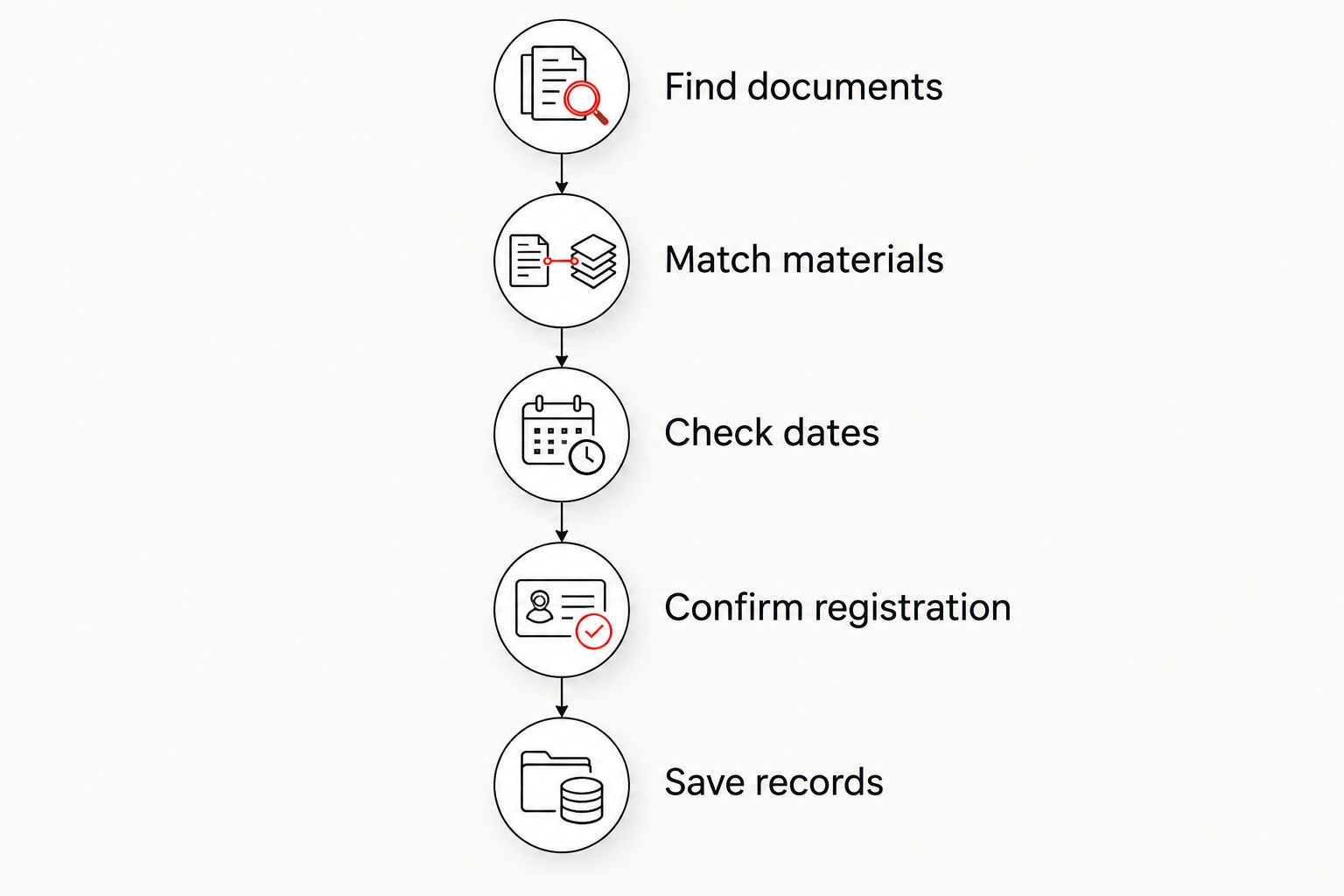
Use the warranty documents and installation records together. Your goal is a usable record of coverage, not a folder of brochures with conflicting descriptions.
- Find documents. Gather the signed roofing contract, workmanship warranty, manufacturer's warranty, and any issued coverage certificate. Include registration confirmation when applicable.
- Match materials. Confirm that the product information in the paperwork matches the material identified in your project records. Ask the installer to explain discrepancies.
- Check dates. Identify the event that starts each term. Use the definition in the warranty rather than substituting a payment, inspection, or move-in date.
- Confirm registration. Determine whether registration is required, who handles it, and what proves completion. Save the confirmation with the warranty.
- Save records. Keep the documents alongside maintenance records, repair invoices, photographs, and correspondence about roof concerns.
If you are organizing records in 2026, add the applicable reporting instructions to the same file. You should not have to search for a claim address or required form while dealing with an active leak.
What should you ask a roofer before signing?
Ask for direct answers in writing. You are buying roofing work, and the warranty should explain the responsibility attached to that work.
- Which material warranty applies to this proposal?
- What is the workmanship coverage term, and when does it start?
- Which roof components and installation details are included?
- What is excluded from a covered repair?
- Does the protection change over time?
- Who completes any required registration?
- What happens to coverage if the property changes owners?
- How do I report a problem and authorize work?
Roofsmartflorida is a fit for Southwest Florida homeowners seeking roof repair or replacement services. Roofsmartflorida also provides commercial roofing services; for either property type, request the terms applicable to your specific project rather than assuming a standard warranty.
A service description establishes what a contractor offers. The signed agreement establishes the warranty promise you need to evaluate.
Request your project warranty details
Ask which material and workmanship terms apply to your roof repair or replacement.
Does a roof warranty cover hurricane damage in Florida?
A roof warranty does not automatically cover hurricane damage. Material defects, installation errors, and storm damage are different causes, and the applicable warranty must address the cause being claimed.
If damage appears after a storm, document what you can see safely from the ground and indoors. Do not climb onto a damaged roof to gather evidence; ask a qualified roofing professional to assess it.
Keep the warranty review separate from the insurance review. A policy's terms determine insurance coverage, while a warranty's terms determine the warrantor's responsibility.
Does a roof warranty transfer when you sell your home?
A roof warranty transfers only if its written terms permit transfer and the applicable requirements are satisfied. Confirm the process before closing rather than assuming the remaining term belongs to the buyer automatically.
For a 2026 sale, give the buyer the actual warranty documents and available registration records. Check the manufacturer and contractor agreements separately because their transfer provisions need not match.
Does a roof warranty mean the roof will last that long?
A roof warranty term is not a prediction of your roof's service life. It describes contractual protection for specified problems, not a promise that every roof component will perform without maintenance or repair throughout that period.
Keep roof condition and warranty status as separate questions. An inspection evaluates the roof's condition; the warranty document explains the contractual remedy for a covered issue.
FAQ
How long does a roof warranty last in Florida in 2026?
A roof warranty in Florida lasts for the term stated in the applicable written agreement, subject to its conditions. Check the manufacturer's material warranty and contractor's workmanship warranty separately because their dates and coverage can differ.
What's the difference between a material warranty and a workmanship warranty?
A material warranty addresses specified manufacturing defects, while a workmanship warranty addresses specified installation issues. Read both documents to identify who handles a covered problem and what remedy is included.
Does a lifetime roof warranty cover every leak?
A lifetime roof warranty does not automatically cover every leak. The warranty's definition of lifetime, covered causes, exclusions, and remedy determine the protection.
Will a roof warranty cover the labor to replace defective materials?
Labor is included only to the extent stated in the applicable warranty. Read the remedy provisions rather than assuming material coverage includes removal and installation work.
Can I transfer my roof warranty to a buyer?
You can transfer a roof warranty only when its terms allow transfer and you satisfy the stated requirements. Review the material and workmanship agreements separately before closing.
Is hurricane damage covered by my roof warranty?
Hurricane damage is not automatically covered by a roof warranty. The warranty must cover the cause of the damage; homeowners insurance is a separate agreement with separate terms.
What should I do if I cannot find my roof warranty?
Request the applicable documents from the installer and, when relevant, the manufacturer. Gather your contract, installation records, product information, and registration confirmation to help identify the coverage.
One last thing
Ask what happens after a claim is accepted—not just whether a claim is covered. The remedy explains what the warrantor will actually provide, which is more useful than an expiration date alone.
Before approving work with Roofsmartflorida, request the applicable warranty documents and keep them with your project records. Clear paperwork gives you a specific promise to refer to if a problem develops.