Yes, you can replace just part of a roof in Florida when the remaining roof is sound, the new work connects correctly to it, and the project meets applicable building requirements. In 2026, the decision depends on the roof’s condition, its code history, and the scope of work—not just the size of the visible damage. A partial replacement does not renew the untouched roof or automatically settle an insurance claim.
- Can you replace just part of a roof in Florida? Yes, when roof condition and building requirements support partial replacement.
- Florida’s 25% rule has an exception for qualifying roofs; damage percentage alone does not settle the decision.
- Partial roof replacement leaves the remaining roof’s age, condition, and maintenance needs unchanged.
- Roofsmartflorida provides roof repair and replacement for Southwest Florida homeowners and businesses.
Can you replace just part of a roof in Florida?
Florida allows partial roof replacement, but permission and practicality are separate questions. You need a defined repair area, a workable connection between new and existing roofing, and confirmation of the requirements that apply to your property.
Start with an inspection rather than choosing a replacement percentage yourself. When discussing roofing services, ask the contractor to distinguish surface damage from problems in the waterproofing layers and wood beneath them.
| Option | Best for | Main advantage | Main limitation |
|---|---|---|---|
| Localized repair | Isolated damage with sound surrounding roofing | Keeps serviceable roofing in place | Does not address deterioration elsewhere |
| Partial replacement | A defined damaged area with a sound remaining roof | Replaces a larger problem area without removing everything | Requires a reliable connection to existing roofing |
| Full replacement | Widespread deterioration or a roof that cannot support a dependable partial solution | Addresses the roof as a complete system | Removes more roofing and involves a larger project |
These are scope choices, not automatic recommendations. A small ceiling stain does not establish that the roof needs only a small repair, and a damaged slope does not by itself prove the entire roof needs replacement.
Why this matters
Your roof’s visible covering is only part of the protection. Underlayment, flashing, decking, and connections around roof openings also affect whether a partial replacement will work.
The wrong scope leaves you with an unresolved problem. Replacing too little can leave damaged material outside the work area; replacing everything without supporting evidence removes roofing that might still be serviceable. Ask for a recommendation tied to documented conditions, not a blanket rule.
What does Florida’s 25% roof rule mean in 2026?
The Florida Building Code, Existing Building, generally limits repair, replacement, or recovery of more than 25% of the total roof area or a roof section within a 12-month period unless the entire roofing system or roof section conforms to the code’s requirements. The distinction between the whole roof and a roof section matters.
Florida Statutes section 553.844(5) provides an important exception. When the existing roofing system or roof section was built, repaired, or replaced in compliance with the 2007 Florida Building Code or a later edition, only the repaired, replaced, or recovered portion must meet the current code under that provision.
For a 2026 project, those rules mean:
- More than 25% does not automatically mean whole-roof replacement. The statutory exception and the relevant roof section must be considered.
- Less than 25% does not automatically make a repair suitable. Material condition, installation requirements, and other applicable provisions still matter.
- A roof’s apparent age is not proof of code compliance. Permit records and inspection documentation help establish its history.
- The 12-month period matters. Do not assume separately scheduled projects are unrelated for code purposes.
Ask the local building department to confirm how the rule applies to the proposed work. A contractor should explain the applicable provision and project scope rather than simply saying that Florida requires a new roof.
Legal reference for 2026 project planning: Florida Statutes section 553.844(5), addressing qualifying existing roofing systems and roof sections, and the Florida Building Code, Existing Building, roof-replacement provisions. This is general information, not a property-specific code determination.
Localized repair: best for an isolated defect
Localized repair fits damage that can be corrected without disturbing a broad area of otherwise sound roofing. Examples include a damaged covering or a flashing problem around a roof opening, provided inspection confirms the surrounding assembly remains serviceable.
The benefit is straightforward: you retain roofing that does not need replacement. The limitation is equally important: repairing one defect does not improve the condition of the rest of the roof.
Ask the contractor to explain where water entered and what the repair will change. Replacing the material directly above an indoor stain is not enough when water has traveled from another entry point.
Choose localized repair only when the contractor can identify and correct the actual defect. Sealant alone is not evidence that the underlying problem has been resolved.
Partial replacement: best for a defined damaged area
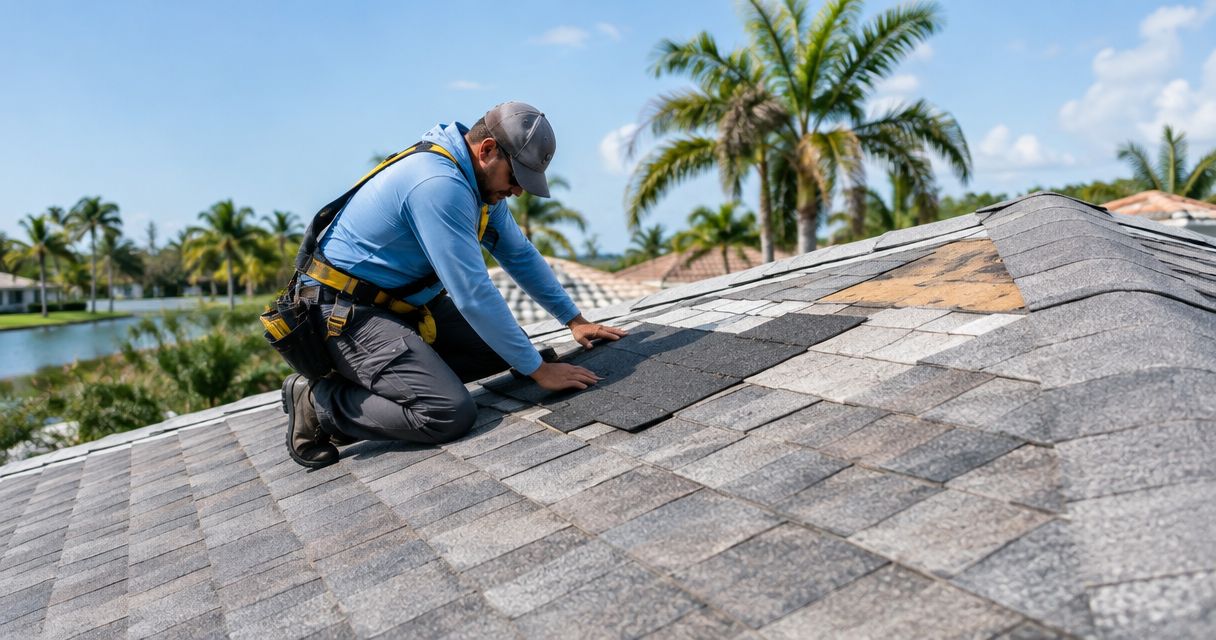
Partial replacement involves removing and replacing a defined portion of the roofing assembly while retaining the rest. A roof slope or another clearly bounded area can be a candidate when the existing material outside that area remains sound.
The critical detail is the connection. New underlayment, flashing, and roof covering must work with the retained roofing so water drains correctly rather than entering at the boundary.
Partial replacement also creates a mixed-age roof. The replaced area is new; the retained areas keep their existing age and condition. A visible color difference is another consideration, especially where weathered roofing meets new material.
Choose partial replacement when the retained roof and the connection details both support it. Ask for those details in writing, not just a shaded area on an estimate.
Full replacement: best for widespread roof problems
Full replacement becomes the stronger option when deterioration extends beyond a practical repair boundary or when the retained roofing cannot support a dependable connection. Repeated leaks in different areas also warrant an assessment of the whole system rather than another isolated patch.
The advantage is a coordinated scope across the roof. The drawback is the broader disruption and removal involved, particularly if portions of the existing roof remain serviceable.
A contractor recommending full replacement should show you why the smaller options are unsuitable. Photos of damaged decking, deteriorated waterproofing, or widespread covering damage provide a better explanation than age alone.
For a closer look at the decision, see roof repair vs. roof replacement in Florida. Choose full replacement based on documented roof conditions and applicable requirements, not an unsupported percentage claim.
Why the right replacement scope varies
The same visible damage can require different work on different roofs. These factors determine whether keeping part of your roof is a sound decision:
- Damage extent: Missing roof covering is not the same problem as damaged decking or deteriorated waterproofing beneath it.
- Remaining condition: The untouched roofing must remain serviceable after the project, including areas disturbed during the connection work.
- Material compatibility: Replacement materials and installation methods must suit the existing assembly and applicable requirements.
- Connection details: Valleys, ridges, walls, and roof openings affect where work can stop and how new roofing joins old roofing.
- Code history: Records showing qualifying code compliance affect how Florida’s partial-replacement provisions apply.
- Project requirements: Permit review, manufacturer instructions, and property-specific conditions affect the final scope.
An inspection should connect these factors to your roof. A recommendation that addresses only appearance or only damage percentage leaves important questions unanswered.
How do you confirm that partial replacement will work?
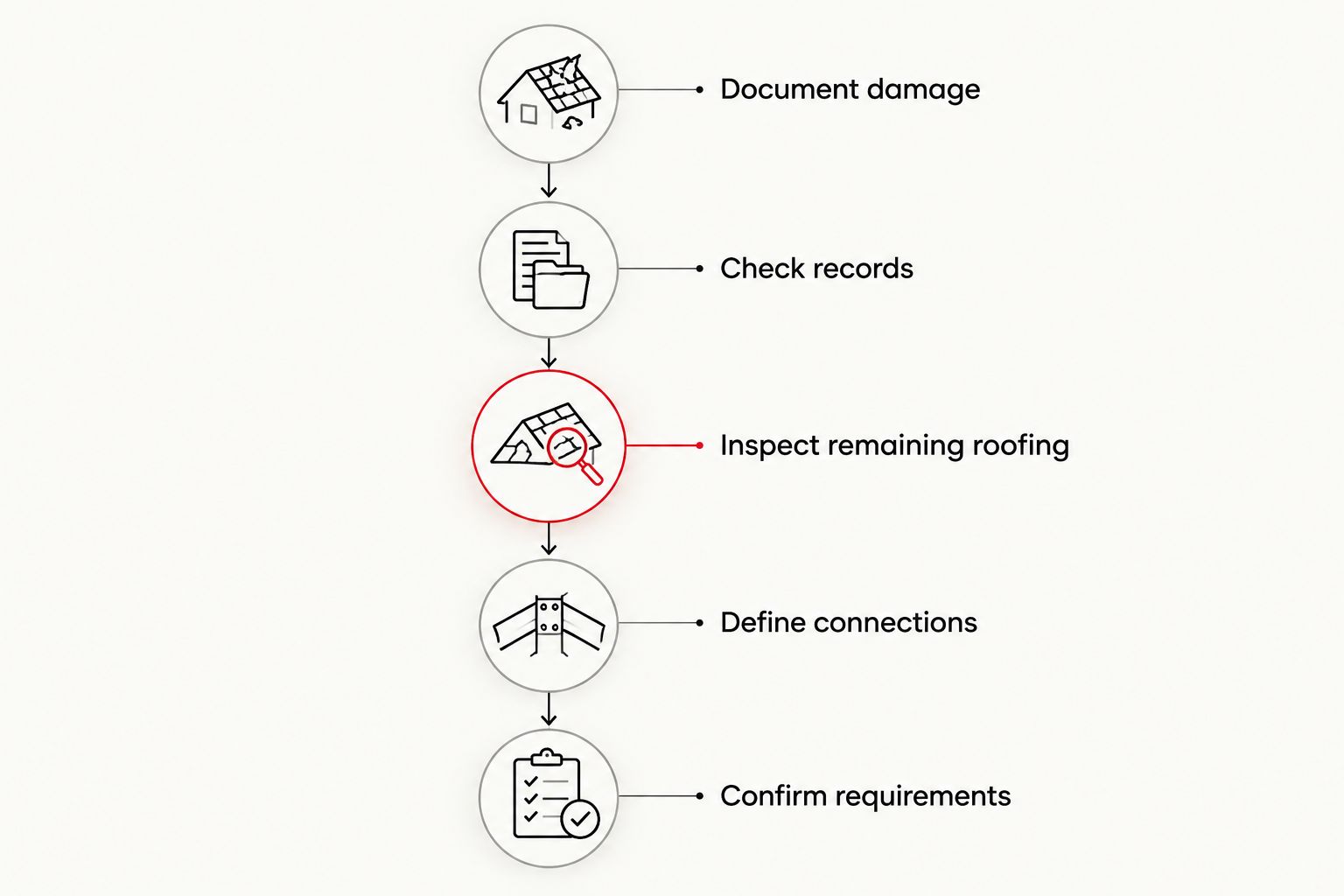
Use the following sequence before authorizing work in 2026. You do not need to diagnose the roof yourself; you need a clear explanation and records that support the proposed scope.
- Document damage. Photograph visible damage from a safe location and record where indoor leaks appear. Do not climb onto a damaged roof.
- Check records. Gather available permits, final inspections, previous roofing contracts, and repair records. Ask the contractor which documents establish the roof’s code history.
- Inspect remaining roofing. Request an assessment beyond the visibly damaged area. The retained roof is part of the decision, not an afterthought.
- Define connections. Have the contractor identify the work boundary and explain the underlayment, flashing, and covering connections there.
- Confirm requirements. Establish permit responsibilities and any building-department, insurer, or association documentation needed before work starts.
Keep the inspection findings and the proposed work scope together. If hidden damage is discovered after removal starts, ask how the contractor will document it and obtain your approval for changed work.
Roofsmartflorida is a roofing service option for Southwest Florida homeowners and businesses needing repair or replacement. Its stated service area includes Cape Coral, Fort Myers, and Naples; a property inspection still determines whether partial replacement is appropriate.
Request an honest roof evaluation
Ask about a no-pressure free estimate for your roof repair or replacement.
Can you replace only one side of a roof?
Yes, replacing one side of a roof is possible when the remaining roof is sound and the proposed work meets applicable requirements. The contractor must explain how the replacement connects at the ridge, edges, valleys, and any adjoining roof areas.
Do not assume one side automatically qualifies as a separate roof section for code purposes. Ask the building department how the proposed work area is classified before relying on that distinction.
Does partial replacement make the whole roof new?
No, partial replacement renews only the area included in the work. The rest of the roof retains its existing installation history, wear, and maintenance needs.
Keep documents showing precisely what was replaced. Describing a mixed-age roof as entirely new can create confusion during an insurance review, inspection, or property sale.
Does insurance have to pay for the entire roof?
No, a partial replacement recommendation does not automatically establish insurance coverage for the entire roof. Coverage depends on the policy, cause of damage, claim findings, and applicable law.
Separate the contractor’s technical recommendation from the insurer’s coverage decision. If they disagree about scope, request the written reasoning from each rather than treating either explanation as the other’s responsibility.
What should your written proposal include?
A useful 2026 proposal explains both what will change and what will remain. Ask Roofsmartflorida or any roofing contractor you consider to identify the following before you approve work:
- The exact area being repaired or replaced, with a drawing or marked photos.
- The roof covering, underlayment, flashing, and decking work included.
- How new roofing will connect to the retained areas.
- Who handles permits and required inspections.
- How concealed damage and scope changes will be documented.
- What workmanship coverage applies and which existing areas remain outside it.
Read exclusions as closely as the included work. A partial replacement agreement should not leave you guessing whether an adjoining valley, wall connection, or existing leak source is included.
FAQ
Can you replace just part of a roof in Florida in 2026?
Yes, partial roof replacement is possible in Florida in 2026 when the remaining roof, connection details, and applicable building requirements support it. An inspection and review of the roof’s records determine the appropriate scope.
Does Florida’s 25% rule always require a whole new roof?
No, exceeding 25% does not always require whole-roof replacement. Florida Statutes section 553.844(5) provides an exception for qualifying roofing systems or roof sections compliant with the 2007 Florida Building Code or a later edition.
Can I replace only the hurricane-damaged side of my roof?
Yes, replacing only the damaged side is possible when inspection supports retaining the rest and the work meets applicable requirements. The assessment should include surrounding roofing and the layers beneath the visible covering.
Will new roofing match the part I keep?
An exact appearance match is not guaranteed. Weathering and differences between existing and replacement materials can leave a visible boundary even when the installation is technically suitable.
Do I need a permit for partial roof replacement?
Confirm permit requirements with the building department responsible for your property before starting partial roof replacement. Do not assume a smaller work area is exempt from permits or inspections.
Will partial replacement reset the age of my entire roof?
No, partial replacement does not reset the age of the untouched roof. Keep records identifying the replaced area and its completion date.
Is partial replacement always better than replacing the whole roof?
No, partial replacement is unsuitable when the retained roof is deteriorated or a reliable connection cannot be made. Full replacement deserves consideration when problems extend beyond a practical repair area.
One last thing
Ask where the replacement stops—and why. That question tests whether the proposal addresses the roof as a connected system rather than just a visible patch of damage.
A clear answer identifies the retained roofing, the connection method, and the evidence supporting that boundary. If those details remain vague, get them clarified before authorizing removal.