Best overall: aluminum soffit and fascia. Best for a lower-upkeep soffit on a sheltered home: vinyl. Best for a painted, nonmetal finish: fiber cement. The best soffit and fascia materials for Florida homes depend on exposure, ventilation, and the condition of the roof edge—not appearance alone.
- Aluminum is the best overall soffit and fascia material for Florida homes when you want low upkeep.
- Vinyl suits a sheltered soffit, but its movement and fastening details matter in wind.
- Fiber cement gives you a paintable finish; wood requires the most attention to moisture.
- Roof Smart of SW Florida is best for homeowners who need a roof-edge assessment before choosing a material.
Why this matters
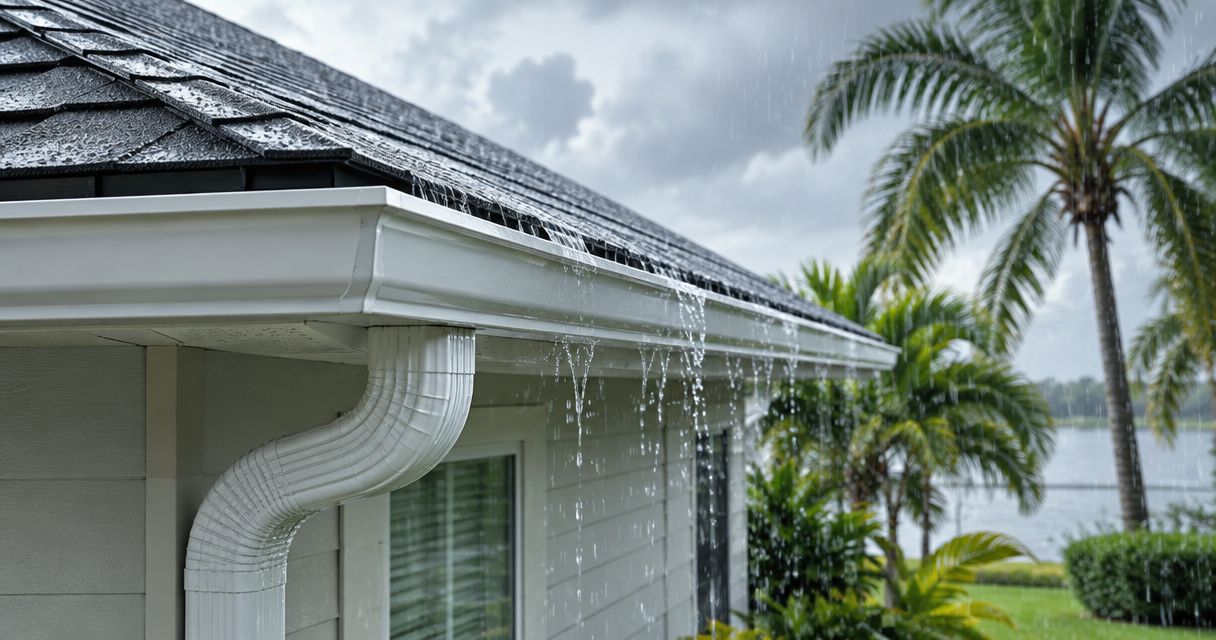
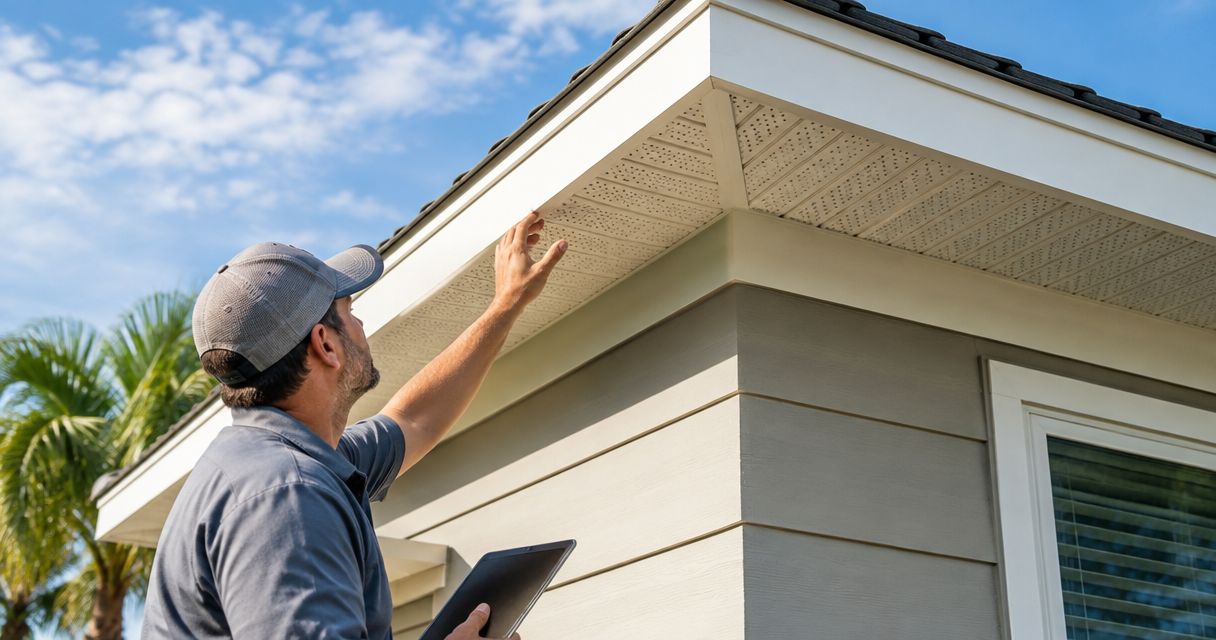
The soffit covers the underside of a roof overhang. The fascia faces outward at the roof edge and often sits behind the gutter. They are 2 different surfaces with different exposures: a sheltered soffit panel does not face the same runoff and gutter attachments as a fascia board.
That distinction matters after a storm. A loose panel can be a fastening problem, while a stained or soft edge can point to water entering from above. Before you choose a finish, identify what failed and whether the supporting material is sound. If damage is already visible, start with soffit and fascia repair for storm-damaged Florida homes rather than covering it with new panels.
For 2026 projects in Cape Coral, Fort Myers, and Naples, ask for the soffit, fascia, ventilation openings, and gutter connections to be assessed together. A material recommendation without those details leaves the most important roof-edge questions unanswered.
What makes the best soffit and fascia material for Florida homes?
Use these criteria before comparing samples or finishes:
- Moisture response: Water reaches the roof edge through rain, runoff, and leaks. Ask what the material does when it stays wet and how damaged backing will be found.
- Wind fastening: A panel is only as secure as its attachment to sound framing. Ask how edges, corners, and transitions will be fastened for your home.
- Ventilation: If your roof uses soffit intake vents, replacement panels must preserve a working air path. Do not assume a perforated panel fixes blocked openings above it.
- Gutter compatibility: Fascia needs support where gutters attach. A new metal cover cannot turn deteriorated backing into a sound fastening surface.
- Upkeep: Compare cleaning, painting, and repair needs over time, not just the appearance on installation day.
- Exposure: A sheltered inland eave and an exposed coastal roof edge do not present the same maintenance questions. Evaluate the actual building, not a generic Florida house.
These criteria put aluminum first as the most adaptable low-upkeep choice, not as a promise that every aluminum installation performs the same. Panel profile, finish, compatible fasteners, and sound backing still decide whether the assembly works.
At a glance: soffit and fascia options
| Material | Best for | Standout feature | Key limitation |
|---|---|---|---|
| Aluminum | Homeowners seeking low-upkeep soffit and fascia | Does not rot and can be formed for roof-edge coverage | Dents; metal, finish, and fastener choices need attention near salt air |
| Vinyl | Sheltered soffits where painting is a priority | Does not need painting | Expands and contracts; loose or poorly retained panels need correction |
| Fiber cement | Homeowners who want a paintable, nonmetal finish | Holds a painted, board-like appearance | Heavy; cut edges, finish, and support require care |
| Wood | Repairs that must match existing wood details | Can be shaped to match trim | Needs ongoing moisture and paint maintenance |
Read the table by surface, not just by row. Vinyl can be a reasonable soffit choice without being the right answer for a fascia that carries gutters. Likewise, aluminum cladding can protect the appearance of a roof edge without fixing soft wood underneath.
1. Aluminum: best soffit and fascia for low upkeep
Aluminum is the best default for a 2026 Florida soffit and fascia project when you want a material that does not rot and does not require the painting routine of wood. It can serve as a soffit panel or fascia covering, but the two uses need their own installation details. An aluminum fascia wrap is a covering, not a replacement for unsound structure beneath it.
Aluminum pros:
- Does not rot when exposed to moisture.
- Works for vented soffit designs when the correct panel and open air path are specified.
- Can cover a sound roof edge with a consistent finish.
Aluminum cons:
- Can dent from impact.
- Coastal exposure makes finish condition and fastener compatibility important.
- A cover can conceal deterioration if the backing is not checked first.
Best for: Homeowners who want low upkeep across both the underside of the eave and the visible roof edge.
Ask the installer to show how panels are retained at corners and where gutters meet the fascia. Those junctions matter more than a color sample. Verdict: Buy aluminum when the backing is sound and the fastening plan fits the exposure.
2. Vinyl: best soffit for sheltered eaves
Vinyl is a practical soffit option when your main goal is to avoid painting the underside of the overhang. It belongs in this ranking chiefly as a soffit choice, not as a blanket replacement for every fascia application. Vinyl expands and contracts, so its edges need room to move while remaining properly retained.
Vinyl pros:
- Does not need painting.
- Available in vented panel designs for roofs that require soffit intake.
- Works well as a finish where the eave is sheltered and the supporting structure is sound.
Vinyl cons:
- Heat movement must be accounted for during installation.
- Poorly retained panels can loosen in strong wind.
- It does not repair damaged wood or blocked ventilation behind the panel.
Best for: Homeowners replacing a sheltered soffit who do not need the same material to solve a gutter-bearing fascia problem.
In 2026, compare the proposed panel and its fastening method rather than treating all vinyl soffits as interchangeable. If a contractor proposes vinyl beneath a damaged roof edge, request a repair plan for the backing first. Verdict: Buy vinyl for a suitable sheltered soffit; skip it as a shortcut around fascia repairs.
3. Fiber cement: best for a paintable, nonmetal finish
Fiber cement gives homeowners a board-like surface without choosing conventional wood trim. It is a useful option when the finished look matters and the installation can support the material. It still needs appropriate finishing and attention at cuts and joints; it is not a maintenance-free panel.
Fiber cement pros:
- Does not rot like wood.
- Can be painted to suit existing exterior trim.
- Offers a distinct finish from thin metal or vinyl panels.
Fiber cement cons:
- Its weight calls for sound support and suitable fastening.
- Cut edges, joints, and finish need care around water.
- Repairs can be less straightforward when an existing profile must be matched.
Best for: Homeowners who want a painted, board-like soffit or fascia and accept finish maintenance.
Ask where water will drain, how edges will be finished, and what supports any gutter attachment. The visible board is only part of that answer. Verdict: Buy fiber cement for a specified finish and a sound installation plan; hold if the support has not been inspected.
4. Wood: best for matching existing trim
Wood remains a sensible repair material when a home has details that need to match existing trim. It can be cut and shaped for those details. The trade-off is direct: paint and joints need attention, and prolonged moisture can damage the wood.
Wood pros:
- Can be shaped to match existing architectural details.
- Makes localized repairs possible where sound adjoining trim remains.
- Can be painted alongside other exterior woodwork.
Wood cons:
- Vulnerable to moisture damage if water reaches or remains against it.
- Requires continued inspection and finish maintenance.
- New paint can hide, rather than solve, a leak at the roof edge.
Best for: Homeowners preserving existing wood trim who are prepared to maintain its finish and address water entry.
For a 2026 repair, ask why the old wood failed before replacing it with the same material. If runoff, a leak, or a gutter connection caused the damage, that cause belongs in the scope of work. Verdict: Buy wood to match sound existing details; skip a cosmetic replacement over unresolved moisture.
Match the material to the failure
Look at the eave as a connected assembly. The roof sheds water toward the edge, the fascia closes the outward face, the soffit covers the underside, and gutters add another connection where present. A problem at one point can show up somewhere else: a soffit stain is not proof that the soffit material caused the leak.
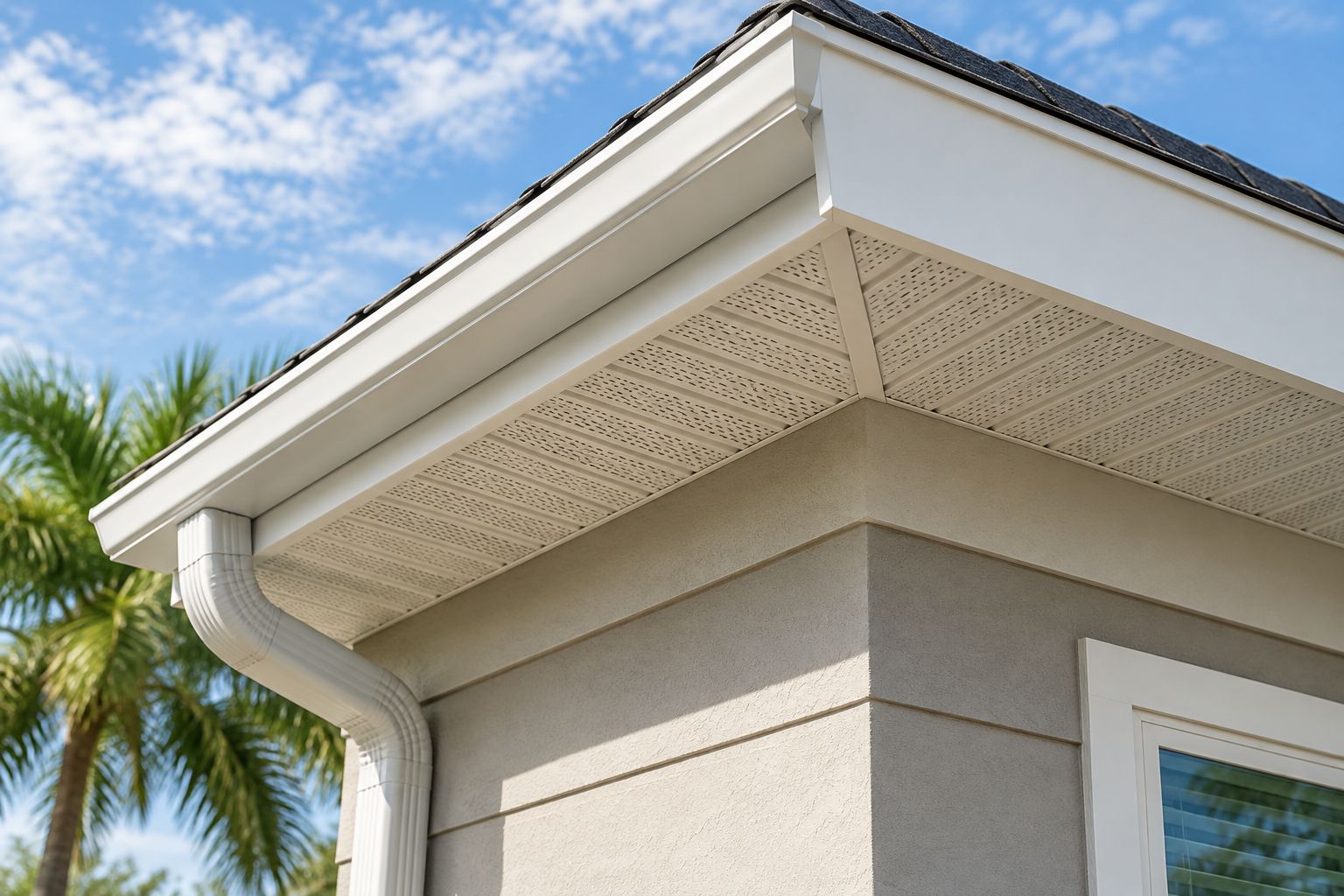
Use 3 inspection points to make a quote more useful: the visible panel, the material behind it, and the adjoining roof or gutter connection. This is not a request to replace everything. It is a way to separate a finish repair from a water-entry or support problem.
- Visible panel: Is it missing, loose, stained, dented, or warped? Record where the damage starts.
- Material behind it: Is the wood or other supporting surface sound where panels and gutters attach? Covering damage does not restore support.
- Adjoining connection: Does runoff reach the edge as intended, and do the roof covering, fascia, and gutter meet without an obvious gap or loose attachment?
Do not close a vented soffit opening simply to keep rain out. The better question is why water reached that location and how the roof's intended intake ventilation will remain open after the repair. Have a roofing professional evaluate that condition rather than guessing from the exterior panel alone.
For a homeowner comparing proposals in 2026, a clear scope names the soffit material, fascia treatment, damaged backing to be replaced if found, ventilation approach, and fastening details. If a proposal names only the visible finish, ask for those missing details before choosing it.
How we ranked these materials
The ranking favors a material's fit for both Florida roof-edge exposure and the homeowner's likely maintenance burden. Aluminum leads because it can address soffit and fascia finishes without wood's rot risk. Vinyl ranks as a strong, narrower soffit choice; fiber cement serves homeowners seeking a paintable finish; wood earns its place when matching existing details is the priority.
The ranking does not certify a particular product or installation. None of these materials compensates for rotten backing, blocked ventilation, or weak attachment. Roof Smart of SW Florida is best for Southwest Florida homeowners who need an honest assessment of the roof edge before deciding whether the job is a repair or part of a wider roofing project.
Which soffit and fascia material should you choose?
Choose aluminum if you want one default material to discuss for both soffit and fascia. Choose vinyl when the job is a sheltered soffit replacement and you are not asking the panel to solve a fascia or gutter problem. Choose fiber cement for a paintable board-like finish, or wood when matching existing trim outweighs the added upkeep.
Before you approve a 2026 project, request an evaluation of the roof edge—not just a material sample. Roof Smart of SW Florida provides residential roofing repair and replacement across Southwest Florida and describes its estimates as free and no-pressure. Use the assessment to establish what is damaged before settling on a finish.
Get your roof edge evaluated
Ask about the soffit, fascia, and adjoining roof condition before choosing a finish.
FAQ
What are the best soffit and fascia materials for Florida homes?
Aluminum is the best overall starting point for Florida soffit and fascia because it does not rot and suits low-upkeep roof-edge finishes. Vinyl is a narrower choice for sheltered soffits; the right selection still depends on backing, fastening, ventilation, and exposure.
Is aluminum soffit better than vinyl soffit in Florida?
Aluminum is the stronger default when you also need to consider the fascia, while vinyl is a reasonable option for a sheltered soffit. Compare how each proposed panel will be retained and how the roof's ventilation openings will stay clear.
Can new fascia cover rotten wood?
No. New fascia covering does not restore the strength of rotten backing. Have damaged material assessed and repaired before covering the roof edge or attaching gutters to it.
Does vented soffit fix a hot attic?
No. A vented soffit panel cannot fix an attic if the intake path above it is blocked or the wider ventilation system is inadequate. Check the complete air path before replacing panels solely for ventilation.
Is fiber cement fascia maintenance-free?
No. Fiber cement avoids wood rot but still needs suitable finishing and attention to edges, joints, and support. Include those details in the installation scope.
Should I replace soffit and fascia after storm damage?
Replace the damaged parts only after the roof edge and supporting material have been evaluated. A loose panel, a leak from above, and damaged backing call for different repairs.
What should a 2026 soffit and fascia quote include?
A 2026 quote should identify the proposed material, fastening approach, ventilation treatment, and how damaged backing will be handled. Ask how the fascia and gutters connect if the work reaches that edge.
One last thing
The best-looking panel can be the wrong first purchase. If the fascia backing is soft or the soffit stain comes from water entering above, replacing the visible material first leaves the cause in place. For 2026, settle the roof-edge diagnosis before choosing between aluminum, vinyl, fiber cement, and wood.