Best overall for a suitable pitched roof: a fixed, impact-rated glass skylight. Best for a dark hallway: a tubular skylight. Best for intentional ventilation: an operable skylight. Best for a compatible low-slope roof: a curb-mounted fixed skylight. This 2026 guide compares skylight types by roof fit, storm documentation, heat control, and maintenance—not by unsupported manufacturer rankings.
- The best skylights for Florida roofs match the roof assembly and documented wind requirements before appearance.
- Fixed glass skylights are the default for daylight without an opening mechanism.
- Tubular skylights suit compact interior spaces; operable skylights add ventilation and maintenance.
- Roofsmartflorida provides Southwest Florida roofing services; discuss roof condition before committing to a skylight opening.
Why this matters
A skylight is both a window and a roof opening. Choosing attractive glass without checking how the surrounding roof drains leaves the most important part of the decision unfinished.
Florida selection also requires more than a hurricane-resistant label. The exact unit, glazing configuration, attachment, flashing, and approved installation conditions must fit the project.
Roofsmartflorida is a fit for Southwest Florida homeowners who need a roof evaluation before choosing a skylight. Its roofing services include installation, repair, and replacement; confirm the scope of any skylight-related work directly.
What makes the best skylights for Florida roofs?
Use these criteria before choosing a size or frame finish:
- Roof fit: Match the mounting method and flashing to the roof covering, slope, and supporting structure.
- Storm documentation: Verify the exact model's applicable approval, design pressures, impact classification, and installation limitations.
- Heat control: Compare solar heat gain coefficient, visible transmittance, and shading options rather than glass tint alone.
- Water management: Require an installation detail that directs water around the opening and connects correctly with the roofing system.
- Maintenance access: Decide how you will inspect seals, clean glass, and service an opening mechanism.
- Room purpose: Choose useful daylight, a view, or ventilation deliberately. A single product does not solve every room's problem.
For a 2026 project, request 3 documents before authorizing the unit: the applicable product approval, the manufacturer's installation instructions, and the written installation scope. These are a purchasing checklist, not a substitute for permit review or project-specific design.
Florida skylights at a glance
These are categories, not interchangeable products. Every recommendation remains conditional on a documented match to your roof.
| Skylight type | Best for | Standout feature | Key limitation |
|---|---|---|---|
| Fixed deck-mounted glass skylight | Daylight and a sky view on a compatible pitched roof | Glazed opening without an operating mechanism | No ventilation; roof slope and flashing compatibility matter |
| Tubular skylight | Hallways, closets, and compact interior rooms | Reflective tube carries daylight to a ceiling diffuser | No clear sky view; tube routing affects suitability |
| Operable skylight | Rooms with a specific, usable ventilation plan | Opens to let air move through the roof opening | Moving seals and operating components need attention |
| Curb-mounted fixed skylight | Compatible low-slope roof assemblies | Raised mounting interface above the roof surface | Curb construction and drainage details require careful coordination |
1. Fixed glass: best skylight for pitched-roof daylight
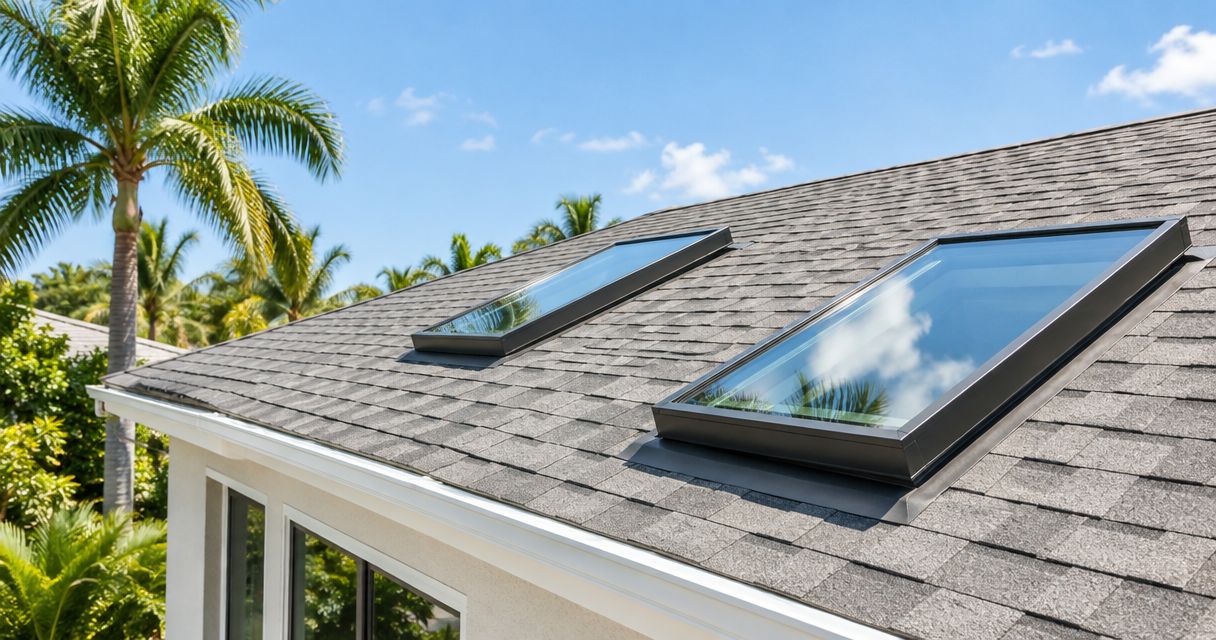
A fixed glass skylight brings daylight through a non-opening glazed unit. For a compatible pitched roof, a deck-mounted version is a sensible starting point when you want a sky view but do not need ventilation.
Best for: Living areas and other rooms where daylight and a view matter more than an opening sash.
Choose the glazing configuration by its documentation, not by the word impact on a brochure. Impact resistance and wind-pressure capacity address different demands; verify both where the project requires them.
Fixed glass skylight pros:
- Provides a direct view of the sky.
- Avoids an opening mechanism and its operating components.
- Supports comparison through standardized glazing performance labels.
Fixed glass skylight cons:
- Cannot provide ventilation.
- Can introduce glare and solar heat without suitable glazing or shading.
- Still depends on correctly integrated flashing and roof details.
For your 2026 shortlist, ask for the exact glazing code and unit dimensions alongside the model name. A family name alone does not identify the configuration being installed.
Verdict: Buy a fixed glass skylight when the roof fit and approval match; skip an undocumented configuration.
2. Tubular: best skylight for compact interior spaces
A tubular skylight collects daylight at the roof, carries it through a reflective tube, and distributes it through a ceiling diffuser. It is a different experience from a conventional skylight: you get daylight rather than a framed outdoor view.
Best for: Dark hallways, closets, and compact rooms where a diffuser fits the room's purpose.
Check the route between roof and ceiling before choosing the unit. Framing, attic equipment, tube length, and bends all affect whether the proposed arrangement makes sense.
Tubular skylight pros:
- Brings daylight to rooms without a conventional window view.
- Uses a compact ceiling diffuser.
- Avoids the large finished light shaft associated with some conventional skylight installations.
Tubular skylight cons:
- Does not provide a clear sky view.
- Does not replace a room's required ventilation.
- Requires a suitable tube route and documented roof interface.
Do not select a tubular skylight on the assumption that a small opening is automatically storm-ready. Its roof-mounted components and installation still need the appropriate documentation.
Verdict: Buy a tubular skylight for targeted daylight; skip it when your main goal is a sky view.
3. Operable: best skylight for planned ventilation
An operable skylight opens as well as admitting daylight. It belongs on the shortlist only when opening the unit serves a clear purpose and you can operate, inspect, and maintain it.
Best for: Rooms where controllable ventilation is useful and the homeowner has a practical operating plan.
In air-conditioned Florida homes, opening a skylight also admits outdoor air and moisture. Treat ventilation as a deliberate action, not an automatic comfort improvement.
Operable skylight pros:
- Combines daylight with an opening sash.
- Allows ventilation when outdoor conditions suit it.
- Offers a roof-level outlet as part of a planned airflow path.
Operable skylight cons:
- Adds moving components and seals that need inspection.
- Needs a reliable closure routine before rain.
- Requires attention to controls and access, especially above tall ceilings.
For a 2026 purchase, confirm which operating features belong to the exact configuration. Do not assume remote controls, rain sensors, or backup power are included—or that an automatic feature replaces maintenance.
Verdict: Buy an operable skylight for a defined ventilation need; skip it if you only want more light.
4. Curb-mounted fixed: best skylight for low-slope roof fit
A curb-mounted skylight sits on a raised support rather than relying on a direct deck-mounted interface. This makes it a relevant category for low-slope roof projects, subject to the unit's instructions and the roof assembly's requirements.
Best for: Low-slope roofs where the designed curb and flashing arrangement fit the roofing system.
The curb is part of the roof detail, not an incidental box under the glass. Its construction, attachment, height, insulation, and waterproofing must work together.
Curb-mounted fixed skylight pros:
- Provides a raised interface for the skylight assembly.
- Allows the curb detail to be coordinated with the roof membrane.
- Supplies daylight without an opening mechanism.
Curb-mounted fixed skylight cons:
- Requires careful curb and flashing construction.
- Does not correct poor drainage around the proposed location.
- An existing curb does not guarantee compatibility with a replacement unit.
Measure and inspect the existing assembly before ordering a replacement. Similar-looking skylights are not proof of matching dimensions, attachment conditions, or approved use.
Verdict: Buy a curb-mounted fixed skylight when the designed assembly fits; hold if drainage or curb condition is unresolved.
Check the roof before ordering the skylight
A good skylight cannot repair a deteriorated roof around it. Start with the surrounding assembly, especially when you are replacing an older unit or adding an opening near existing damage.
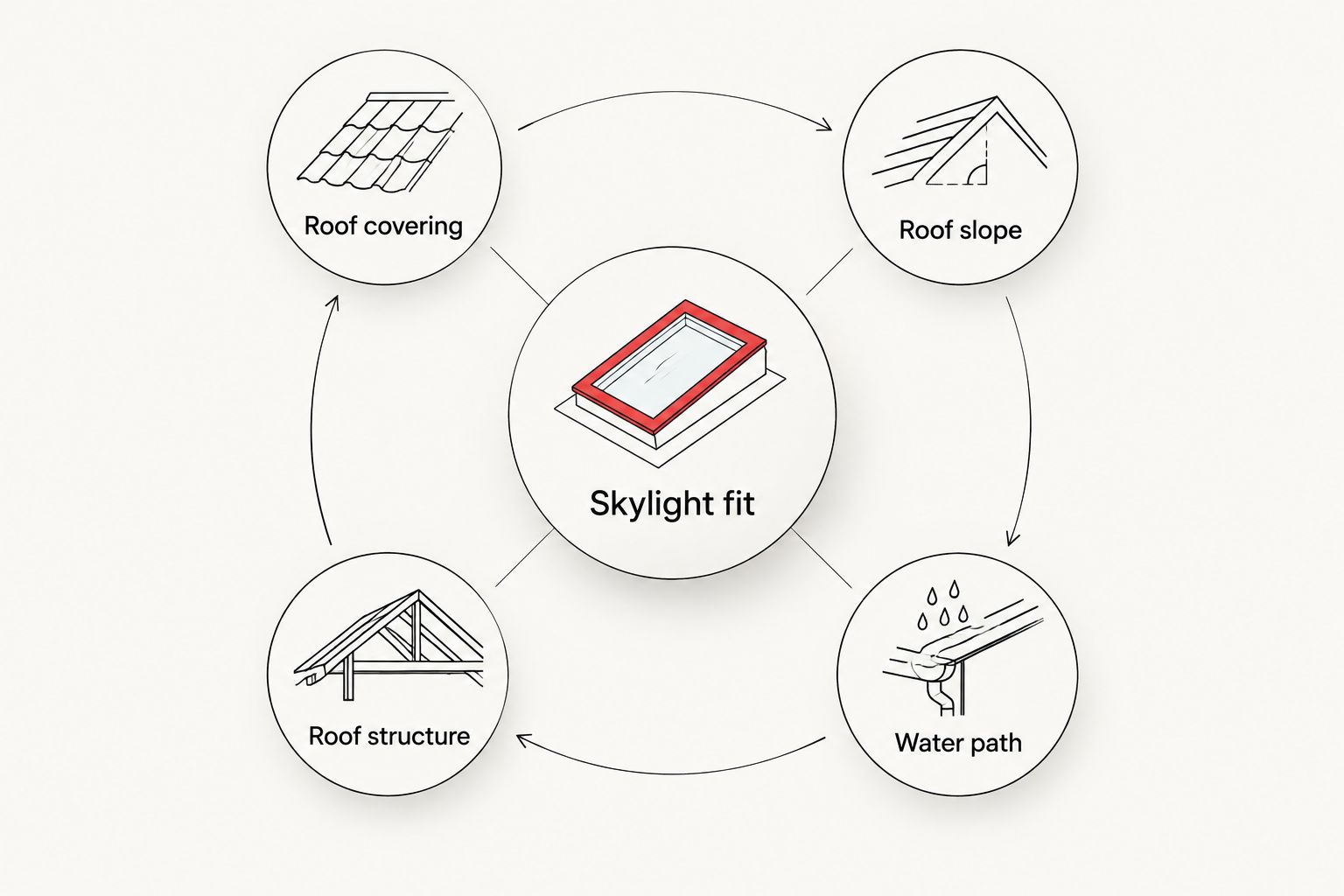
Ask the roofing contractor to document 4 roof details:
- Roof covering: Identify the material and its condition around the opening.
- Roof slope: Check the actual slope against the proposed installation instructions.
- Water path: Identify where runoff travels above, beside, and below the unit.
- Roof structure: Check framing and support before approving an opening or alteration.
For an existing opening, record 2 measurements—width and length—using the manufacturer's specified measurement points. Curb dimensions, rough-opening dimensions, and overall frame dimensions are not interchangeable.
If water is already entering, diagnose the source before choosing a replacement. This guide to roof leak repair around chimneys and skylights explains the surrounding repair issue.
Roofsmartflorida provides roof repair and replacement across Southwest Florida. Ask for a roof-condition assessment and confirmation of the proposed work before assuming a new skylight alone solves the problem.
Discuss your roof condition
Ask about the roof around your existing skylight or proposed opening.
Read the glazing label without the jargon
The National Fenestration Rating Council's labeling system distinguishes solar heat gain coefficient, visible transmittance, and U-factor. These describe different performance characteristics; none replaces storm or installation documentation.
Solar heat gain coefficient describes how much solar heat passes through a window or skylight. Lower values mean less transmitted solar heat, which matters when comparing Florida glazing options.
Visible transmittance describes visible light passing through the glazing. More transmitted light is not automatically better above a television, desk, or bed; consider glare and the direction of sunlight.
U-factor describes heat transfer through the rated product. Compare equivalent product configurations rather than treating a glass-only description as the performance of the complete installed assembly.
For your 2026 decision, separate the questions: does the unit meet the project's structural requirements, and does its glazing deliver comfortable daylight? A favorable energy label answers neither the flashing question nor the attachment question.
How these skylight types rank
The order follows roof fit, storm documentation, heat control, water management, maintenance, and room purpose. It is a selection framework, not a claim that named products underwent comparative testing.
Fixed glass is the default because it serves a common request—daylight and a sky view—without adding an operating mechanism. Tubular, operable, and curb-mounted options win when their distinct room or roof requirements apply.
No category receives a universal hurricane guarantee. The exact approved assembly and installed conditions decide suitability.
Which skylight should you choose?
Start with fixed, impact-rated glass for a compatible pitched roof when you want daylight and a view. Choose tubular daylighting for compact interior rooms, operable glazing for intentional ventilation, or a curb-mounted fixed unit for a compatible low-slope assembly.
For a 2026 project, settle roof condition, documentation, and flashing before frame finish or accessories. If those fundamentals remain unresolved, hold the order.
FAQ
What's the best skylight for a Florida roof?
A fixed, impact-rated glass skylight is the default starting point for a compatible pitched roof when you want daylight without ventilation. Confirm the exact unit's applicable approval, pressure capacity, flashing, and installation conditions before ordering.
Are impact-rated skylights hurricane-proof?
No skylight should be treated as hurricane-proof. Impact classification, wind-pressure capacity, attachment, and the surrounding roof assembly must match the project's requirements.
Is a tubular skylight better than a regular skylight?
A tubular skylight is better for targeted daylight in compact rooms; a conventional glazed skylight is better for a sky view. Check the tube route and roof interface before choosing tubular daylighting.
Should a Florida skylight open?
Choose an opening skylight only when you have a specific ventilation need and a practical operating plan. Outdoor humidity, rain, maintenance access, and closure controls all belong in that decision.
Can you install a skylight on a tile or metal roof?
A skylight installation on tile or metal requires a unit and flashing arrangement compatible with that roof system. Confirm slope, attachment, and installation details rather than assuming a standard shingle-roof detail transfers.
Do all skylight leaks mean the skylight needs replacing?
No; water can enter through glazing seals, flashing, or surrounding roof defects. Diagnose the entry point before choosing repair or replacement.
Does Roofsmartflorida install every type of skylight?
Confirm skylight installation scope directly with Roofsmartflorida. The company provides residential and commercial roofing installation, repair, and replacement, but those services do not establish support for every skylight configuration.
One last thing
The brightest skylight is not automatically the best skylight. A room needs usable daylight, not persistent glare or unwanted solar heat. Check where sunlight will land during the hours you use the space before approving the opening location.