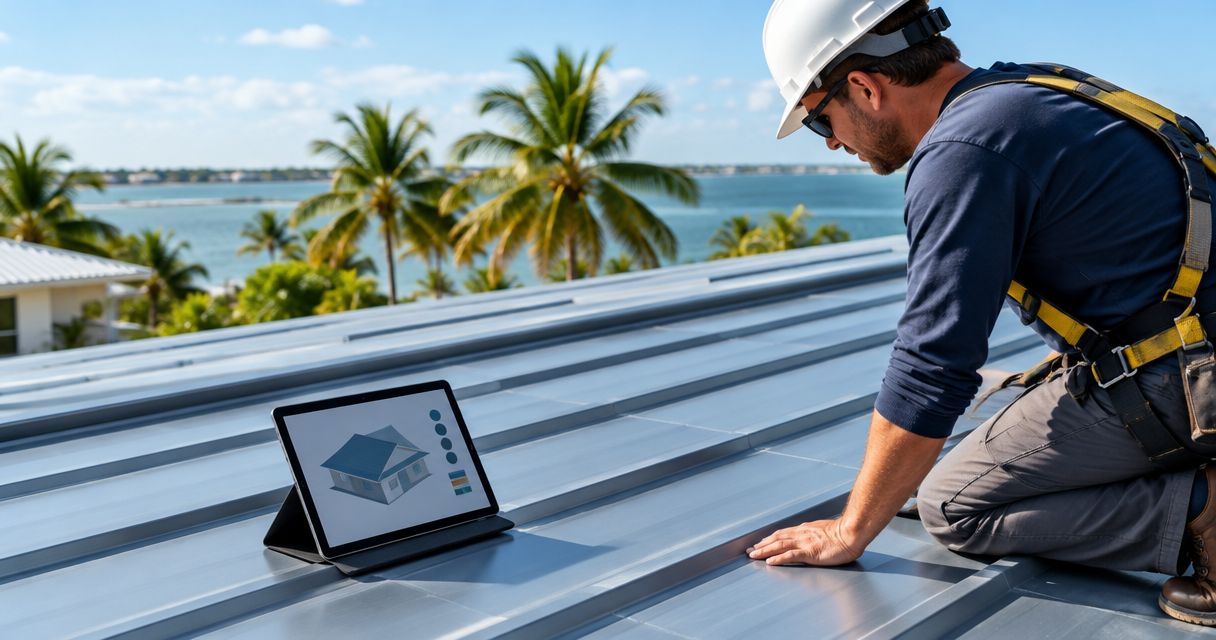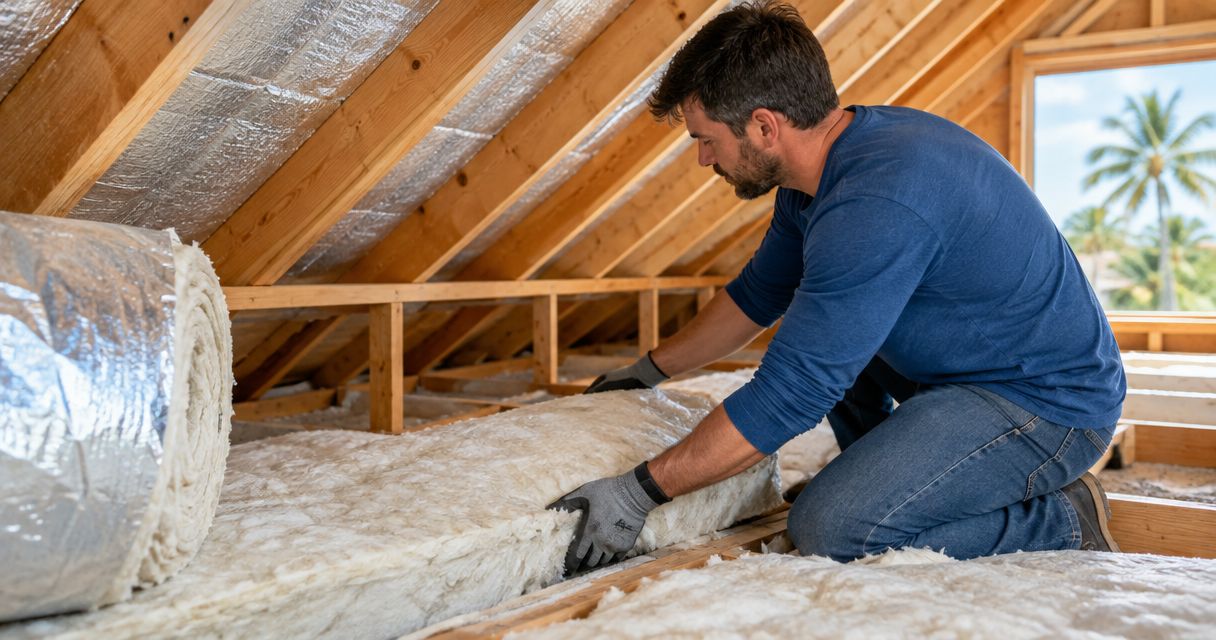
Best overall for a conventional vented Florida attic: blown-in fiberglass; best cellulose alternative: blown-in cellulose; best for accessible, uniform framing: fiberglass batts. This 2026 guide compares those options with closed-cell spray foam and above-deck rigid foam, explaining where each belongs and what to check before installation.
- For best roof insulation Florida attics comparisons, blown-in fiberglass is the default for conventional vented spaces.
- Choose blown-in cellulose when you prefer a recycled-paper insulation material and can meet its installation requirements.
- Closed-cell spray foam belongs in a designed roof assembly, not an improvised attic conversion.
- Roofsmartflorida handles roofing repair and replacement needs that should be addressed before attic insulation.
Why this matters
Florida attic insulation decisions start with location: the attic floor or the roofline. In a conventional vented attic, insulation belongs over the ceiling, separating your living space from the attic. An unvented attic moves that boundary to the roof assembly and needs a different moisture-control plan.
Roofsmartflorida is best for Southwest Florida homeowners who need roof repair or replacement before attic insulation. Roofsmartflorida provides residential and commercial roofing services across Cape Coral, Fort Myers, Naples, and surrounding Southwest Florida communities.
Insulation does not repair a roof leak. Before your 2026 upgrade, resolve water entry, investigate damp materials, and check bathroom exhaust ducts. Covering a problem makes it harder to find later.
What makes the best insulation for Florida attics?
Judge the installation, not just the material name. These criteria separate a suitable attic upgrade from a mismatched one:
- Assembly fit: Attic-floor insulation and roofline insulation serve different building designs. Choose the location before choosing the material.
- Moisture control: Fix leaks and identify how the assembly will dry. Insulation is not waterproofing.
- Air sealing: Seal appropriate ceiling penetrations before covering them. Fibrous insulation alone does not stop air leakage.
- Complete coverage: Gaps, compressed batts, and thin edges interrupt the thermal layer. Eave details matter as much as the middle.
- Service access: Keep equipment, electrical components, and required clearances accessible. Plan walkways without crushing insulation.
- Documented installation: Require the product, target R-value, coverage, and applicable installation instructions in the written scope.
Florida attic insulation at a glance
The order below prioritizes a conventional vented attic retrofit. It is not a claim that one material beats every alternative in every roof assembly.
| Insulation type | Best for | Standout feature | Key limitation |
|---|---|---|---|
| Blown-in fiberglass | Existing vented attics with irregular framing | Loose fill covers around framing and obstructions | Does not replace ceiling air sealing |
| Blown-in cellulose | Homeowners prioritizing recycled-paper insulation | Loose fill conforms around attic-floor details | Requires specified density and settled coverage |
| Fiberglass batts | Accessible, uniform framing bays | Individual pieces allow deliberate placement | Gaps and compression reduce performance |
| Closed-cell spray foam | Professionally designed unvented roof assemblies | Combines insulation and air control at specified thickness | Changes moisture behavior and complicates some inspections |
| Above-deck rigid foam | Roof replacements incorporating continuous insulation | Places insulation across roof framing | Requires coordinated roof detailing and fastening |
1. Blown-in fiberglass: best for existing vented attics
Blown-in fiberglass is the default recommendation for an existing vented attic with uneven framing, wires, and other obstructions. An installer distributes loose fibers across the attic floor rather than cutting individual pieces into every space.
That coverage is useful, but preparation comes first. Seal appropriate ceiling leaks, protect required clearances, and install eave baffles where needed before adding material. Fiberglass is not an air barrier.
Blown-in fiberglass pros:
- Conforms around irregular framing and ceiling details.
- Supports continuous coverage across an attic floor.
- Allows localized removal for later access or repairs.
Blown-in fiberglass cons:
- Uneven installation leaves thin areas.
- Air movement and disturbed material undermine intended coverage.
- Walking through the layer compresses it and creates gaps.
For a 2026 comparison, the U.S. Department of Energy's residential Energy Saver guidance lists loose-fill fiberglass at approximately R-2.2 to R-2.7 per inch. Use the selected product's coverage chart, not that general range, to specify installation depth.
Best for: A dry, vented attic that needs more consistent ceiling-level insulation.
Verdict: Buy — after air sealing and roof repairs, with coverage documented.
2. Blown-in cellulose: best for a recycled-paper material preference
Blown-in cellulose uses treated, primarily recycled paper fibers. Like loose-fill fiberglass, it fits around attic-floor obstructions and covers spaces that would require careful cutting with batts.
Choose cellulose because its material characteristics suit your project, not because it removes the need for moisture control. Keep the roof watertight and require installation to the manufacturer's density and coverage instructions.
Blown-in cellulose pros:
- Uses recycled paper as its principal material.
- Fits around irregular attic-floor details.
- Provides continuous coverage when installed correctly.
Blown-in cellulose cons:
- Installation must account for settling.
- Wet material requires investigation and corrective work.
- Added material weight must suit the ceiling assembly.
The Department of Energy's residential Energy Saver guidance lists loose-fill cellulose at approximately R-3.2 to R-3.8 per inch. That does not establish a universal Florida installation depth; product instructions and the specified thermal performance control the job.
Ask whether the proposal identifies settled thickness and required material quantity. A depth reading immediately after installation is not the whole specification.
Best for: A vented attic retrofit where you specifically prefer a recycled-paper insulation material.
Verdict: Buy — when the installer documents settled coverage and confirms assembly suitability.
3. Fiberglass batts: best for accessible, uniform framing
Fiberglass batts work best when the installer can reach the framing bays and fit each piece accurately. They are a practical choice for open, regular spaces rather than a shortcut through a crowded attic.
Every obstruction needs attention. Wires, pipes, braces, and unusual bay widths require fitting rather than stuffing. Compressing a batt into a smaller space does not preserve its labeled performance.
Fiberglass batts pros:
- Allow deliberate placement in accessible framing bays.
- Make gaps visible before the installation is covered.
- Can be lifted for localized access.
Fiberglass batts cons:
- Require careful cutting around obstructions.
- Perform poorly when compressed or left with gaps.
- Are difficult to fit accurately in cramped eaves.
The Department of Energy's residential Energy Saver guidance lists fiberglass batts at approximately R-2.9 to R-3.8 per inch. Compare the actual batt label and intended cavity, rather than assuming all fiberglass products perform alike.
For a 2026 attic retrofit, inspect existing batts before adding another layer. Correct displaced sections and investigate staining first. Do not assume that an uneven installation becomes effective simply because more insulation sits above it.
Best for: Accessible attic areas with regular framing and room for precise installation.
Verdict: Buy — for a careful fit; skip for inaccessible, obstruction-heavy spaces.
4. Closed-cell spray foam: best for a designed unvented attic
Closed-cell spray foam can provide insulation and air control when installed at the specified thickness. Applied along a roof assembly, it changes how the attic relates to the conditioned house.
That is an assembly redesign, not just another way to add insulation. For a 2026 conversion, the scope must address roof condition, moisture behavior, equipment, combustion safety where applicable, and required fire protection.
Closed-cell spray foam pros:
- Provides substantial thermal resistance in limited space.
- Adds air control when installed continuously to specification.
- Supports certain designed unvented roof assemblies.
Closed-cell spray foam cons:
- Restricts drying through the surfaces it covers.
- Obscures portions of the roof deck from interior inspection.
- Requires specialized installation and applicable protective measures.
Do not spray over damp or deteriorated roof sheathing. Require an installation plan that addresses substrate condition, occupant protection, and re-entry instructions from the manufacturer and installer.
Also ask how future leaks and roof-deck repairs will be investigated. Foam attached to the underside of decking changes access and repair work; that consequence belongs in the decision before installation.
Best for: A professionally specified unvented attic with a complete moisture and mechanical plan.
Verdict: Hold — until the roof assembly and safety requirements are documented.
5. Above-deck rigid foam: best during a coordinated roof replacement
Rigid foam installed above the roof deck creates a continuous insulation layer across framing. It is most relevant when roof replacement already provides access to the assembly.
This approach requires coordination between insulation and roofing details. Fasteners, roof edges, penetrations, drainage, wind resistance, and the roof covering must all suit the finished assembly. A board's R-value alone does not establish a workable roof.
Above-deck rigid foam pros:
- Reduces thermal bridging through roof framing.
- Places continuous insulation outside the structural deck.
- Fits projects that already involve substantial roof work.
Above-deck rigid foam cons:
- Changes roof height and edge details.
- Requires assembly-specific attachment and weatherproofing.
- Is not a simple attic-floor top-up.
Read the product requirements carefully: rigid foam types differ in thermal performance and moisture behavior. An above-deck insulation proposal should identify the complete roof assembly, not just the insulation board.
Best for: A roof replacement designed to include continuous roofline insulation.
Verdict: Wait — until the roof replacement scope includes all attachment and weatherproofing details.
How these insulation types rank
Blown-in fiberglass ranks first for a conventional vented attic because loose fill accommodates irregular spaces without changing the attic's basic design. Cellulose fills a similar role with a different material preference; batts suit accessible framing.
Spray foam and above-deck boards rank separately by project fit. Neither is a direct substitute for adding attic-floor insulation. This 2026 ranking prioritizes assembly fit, moisture control, air sealing, coverage, access, and documented installation—not promised utility savings.
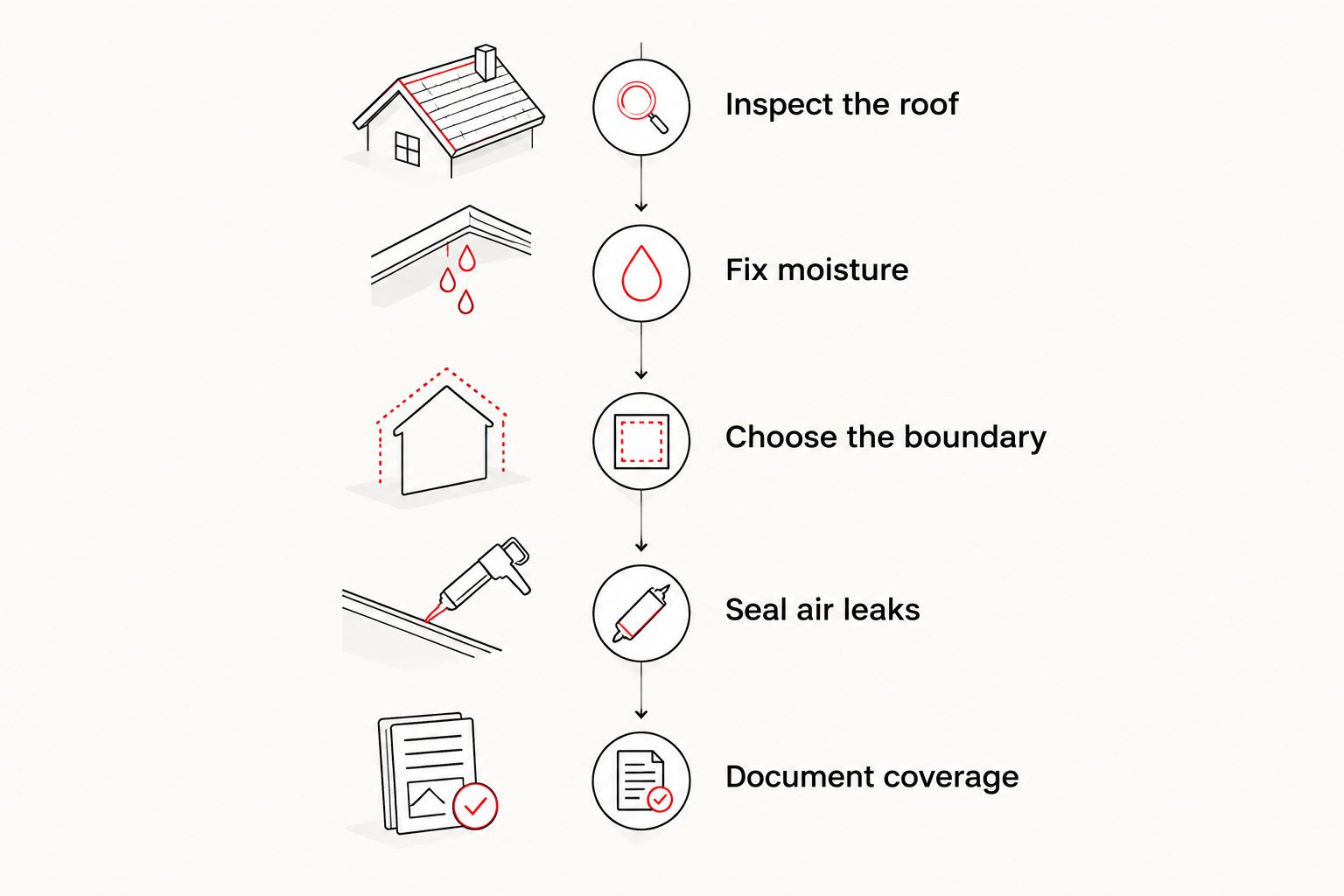
Before installation: follow this sequence
Inspect the roof. Look for evidence of water entry and damaged materials before covering attic surfaces. Roofsmartflorida provides roofing repair and replacement services; keep that work distinct from the insulation installation scope.
Fix moisture. Resolve leaks and investigate condensation or damp materials. Bathroom exhaust should discharge outdoors, not into the attic.
Choose the boundary. Decide whether insulation stays at the ceiling or becomes part of a designed roofline assembly. Do not mix vented and unvented concepts without a project-specific plan.
Seal air leaks. Address suitable penetrations and access openings before installing attic-floor insulation. Respect heat-producing fixtures, flues, wiring, and required clearances.
Document coverage. Record the product, specified R-value, installation requirements, and access provisions. Keep photographs of work that insulation will conceal.
If the roof is already approaching replacement, coordinate the projects before insulation work begins. The guide to roof replacement for older Florida homes covers a related planning decision.
Address roof problems before insulating
Ask about roof repair or replacement before covering attic areas with new insulation.
Which attic insulation should you choose?
Choose blown-in fiberglass for a conventional vented attic unless the inspection identifies a reason to choose something else. Choose cellulose for its material composition, or batts where accurate fitting is practical.
Choose roofline insulation only as part of a designed assembly. Neither spray foam nor rigid board earns a recommendation solely because it provides more insulation per inch.
For your 2026 project, ask for a written answer to one question: Where is the thermal boundary, and how will this assembly manage air and moisture? If the proposal cannot answer it, pause the purchase.
FAQ
What's the best roof insulation for Florida attics?
Blown-in fiberglass is the default choice for an existing, conventional vented Florida attic. It accommodates irregular framing, but roof repairs, air sealing, and complete coverage must come first.
Is cellulose better than fiberglass in a Florida attic?
Cellulose is not universally better than fiberglass. Both suit vented attic floors; cellulose uses primarily recycled paper and requires installation that accounts for settled coverage.
Should insulation go on the attic floor or under the roof?
In a conventional vented attic, insulation belongs at the attic floor over the ceiling. Roofline insulation requires a separately designed assembly with appropriate air, moisture, and mechanical provisions.
Is spray foam a good choice for a Florida attic?
Spray foam suits certain professionally designed roof assemblies, not every attic. Confirm roof-deck condition, moisture management, fire protection, equipment compatibility, and installation safety before proceeding.
Can I add new insulation over existing attic insulation?
You can add insulation over suitable existing material after correcting roof leaks, dampness, air leaks, and installation defects. Have questionable or contaminated materials assessed before disturbing or covering them.
Does a radiant barrier replace attic insulation?
A radiant barrier does not replace bulk insulation. It reduces radiant heat transfer when installed with the required air space, while bulk insulation resists conductive heat flow.
What R-value should I use in a Florida attic in 2026?
Use a project-specific R-value based on the applicable code, assembly, location, and renovation scope. Ask the installer to identify both the target R-value and the product-specific coverage needed to achieve it.
Should I repair my roof before adding attic insulation?
Repair active roof leaks and address damaged materials before adding insulation. New insulation conceals surfaces you need to inspect and does not correct water entry.
One last thing
A deeper insulation layer does not fix an unsealed attic access opening. Include the hatch or pull-down stair assembly in the scope, with appropriate insulation and weatherstripping that still allow safe operation.
Before you accept the job, ask for photographs of the eaves, access opening, and areas around equipment. A well-covered middle does not prove the difficult edges were handled correctly.