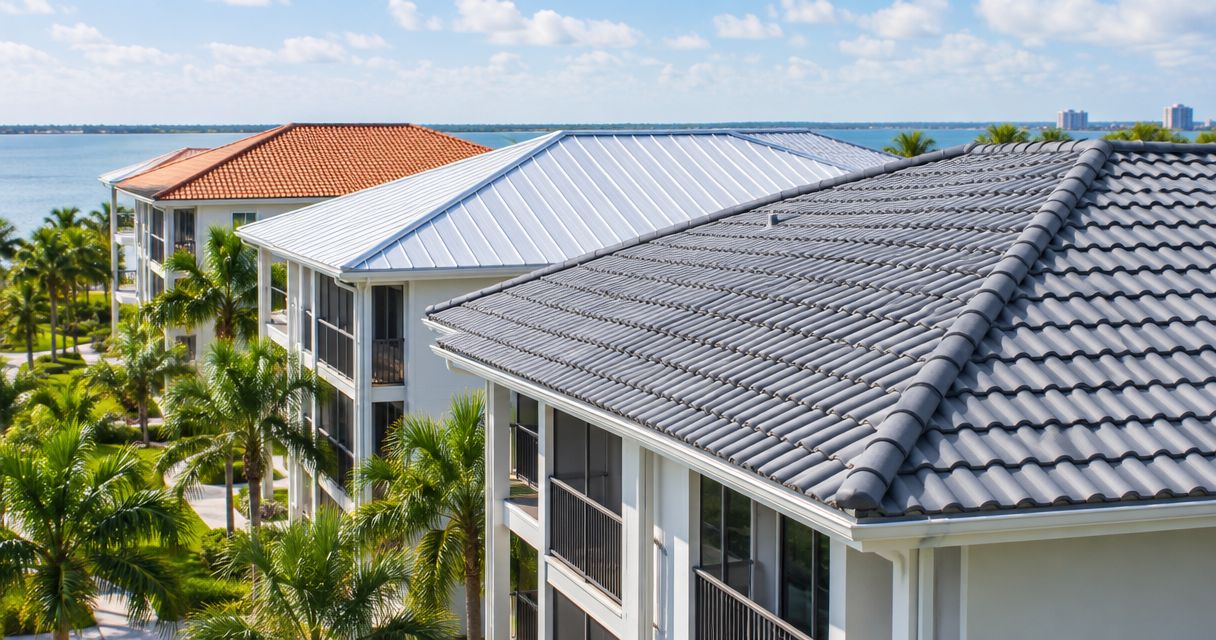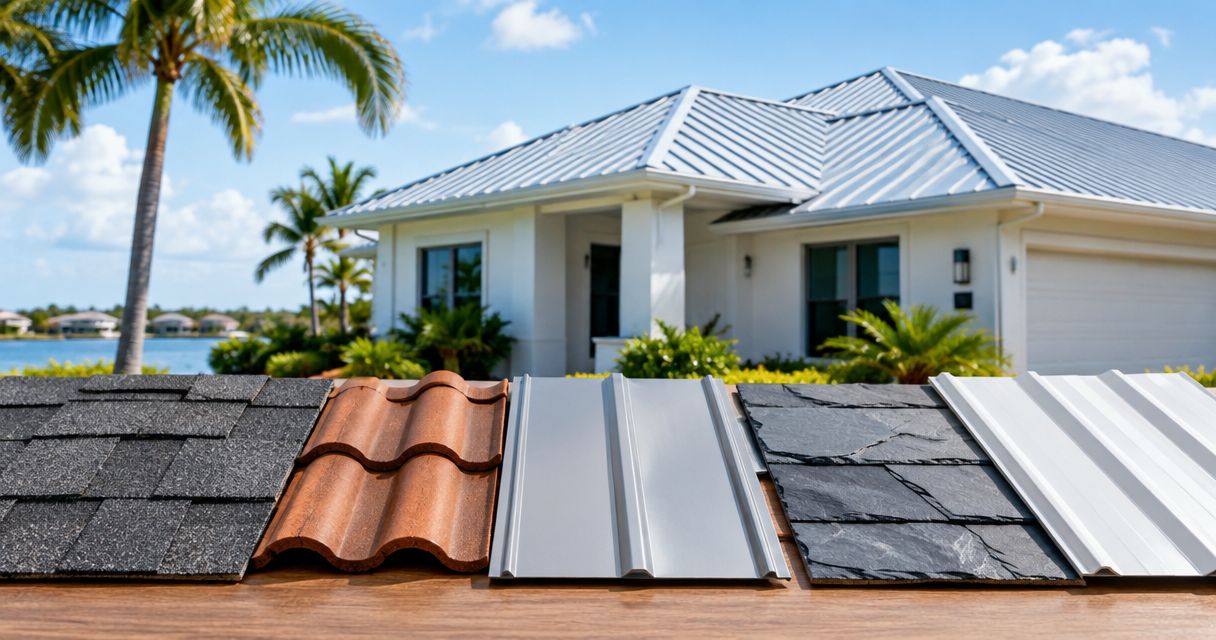
Best overall for a suitable pitched roof: standing-seam metal. Best for straightforward localized repairs: architectural shingles. Best for low-slope rentals: single-ply membrane. This guide compares five roofing systems by maintenance work, repair access, and building fit; Roofsmartflorida provides roofing installation, repair, and replacement across Southwest Florida.
- Standing-seam metal is the default best low maintenance roofing for Florida rental properties with suitable pitched roofs.
- Architectural shingles suit landlords prioritizing localized repairs; single-ply membranes suit low-slope buildings.
- Tile requires attention to underlayment and broken tiles; exposed-fastener metal requires attention to screws and washers.
- Roofsmartflorida provides rental-property roofing services in Southwest Florida; choose the system after evaluating the existing building.
Why this matters
A rental roof needs more than a durable outer surface. You also need accessible repairs, clear inspection records, and a way to identify trouble before tenants report wet ceilings. A material that needs little surface upkeep still needs attention at drains, edges, vents, and flashing.
For your 2026 replacement decision, separate material selection from installation quality. Standing-seam metal is not automatically wind-resistant, tile is not automatically waterproof, and a membrane is not automatically drainable. Each result depends on the complete roof assembly and its suitability for the building.
Roofsmartflorida is a local roofing-service option for Southwest Florida rental owners who need installation, repair, or replacement. The material recommendation below is separate from contractor selection: ask for a property-specific explanation, not just a preferred product.
What makes the best low-maintenance rental roof?
Use these six criteria before comparing proposals:
- Fastener exposure: Identify which screws, washers, clips, and attachments remain exposed to weather and need inspection.
- Water control: Look at slope, drainage, seams, flashing, and underlayment—not just the visible covering.
- Repair access: Ask how a contractor reaches and repairs damage without disturbing otherwise sound roofing.
- Building fit: Confirm structural capacity, roof geometry, and compatibility with existing equipment.
- Coastal suitability: Specify materials, finishes, and compatible attachments appropriate to the property's salt exposure.
- Maintenance clarity: Require written inspection and care instructions for the exact system being installed.
Your 2026 shortlist should start with building fit. A membrane designed for a low-slope roof is not a competing substitute for shingles on every pitched roof. Likewise, changing to tile requires more than choosing a profile you like.
Florida rental roofing at a glance
| Roofing system | Best for | Standout maintenance feature | Key limitation |
|---|---|---|---|
| Standing-seam metal | Long-term ownership of suitable pitched-roof rentals | Concealed panel attachments reduce exposed-fastener upkeep | Seams, flashing, finishes, and coastal compatibility still need attention |
| Architectural asphalt shingles | Owners prioritizing localized repairs | Individual damaged shingles can be replaced where surrounding roofing remains serviceable | Granule loss, lifted edges, and damaged tabs require inspection |
| Single-ply membrane | Low-slope rental buildings | A continuous membrane covers roof areas where shingles are unsuitable | Seams, punctures, penetrations, and drainage remain maintenance points |
| Concrete or clay tile | Rentals with tile requirements or existing tile-compatible construction | Individual broken tiles can be replaced | Underlayment and flashing remain essential; tiles can break under foot traffic |
| Exposed-fastener metal | Simple rental outbuildings with planned fastener inspections | Accessible panel attachments are visible for inspection | Exposed screws and sealing washers add maintenance points |
1. Standing-seam metal: best for long-term pitched-roof rentals
Standing-seam metal uses raised panel seams and concealed attachments rather than exposed screws across the main panel surfaces. That removes a recurring inspection concern found on exposed-fastener systems. It does not remove the need to inspect flashing, penetrations, panel condition, and roof edges.
For a landlord planning to hold a suitable property, this is the strongest default low-maintenance choice. Specify the actual assembly, not simply “metal roofing.” Panel material, finish, attachment method, and coastal exposure all matter.
Standing-seam metal pros:
- Concealed attachments reduce exposed screw-and-washer maintenance.
- Panels provide a roof covering without shingle tabs or individual tiles.
- Some systems accommodate solar attachments at seams without penetrating panels; confirm compatibility before planning an installation.
Standing-seam metal cons:
- Panel and seam repairs require system-specific knowledge and equipment.
- Salt exposure makes material, finish, and attachment compatibility important.
- Flashing details and roof penetrations remain potential leak locations.
Best for: Landlords holding pitched-roof properties who want fewer exposed-fastener maintenance points.
Before approving a 2026 installation, ask how damaged panels would be repaired and how future equipment would attach. Keep the panel specification and care instructions in the property file.
Verdict: Buy for a compatible pitched roof when long-term maintenance simplicity is your priority.
2. Architectural shingles: best for localized repair flexibility
Architectural asphalt shingles use overlapping units to shed water on appropriately sloped roofs. A contractor can replace individual damaged shingles when the surrounding covering remains serviceable. This makes them a practical option when your operating plan prioritizes targeted repairs rather than changing roof systems.
Do not confuse easy access to a damaged shingle with a guaranteed simple repair. Brittle surrounding shingles, widespread deterioration, and damaged decking can turn a small visible defect into a larger scope.
Architectural shingles pros:
- Individual damaged shingles can be replaced without replacing every roof surface.
- Shingle tabs and edges provide visible inspection points for storm damage.
- The system suits conventional pitched-roof layouts when installed within its requirements.
Architectural shingles cons:
- Lifted, torn, or missing shingles need prompt attention.
- Granule loss and deterioration require condition checks.
- Local repairs become harder when surrounding shingles are brittle or deteriorated.
Best for: Owners who value localized repair options on conventional pitched-roof rentals.
Ask the contractor to distinguish a repairable defect from broader deterioration. Your maintenance plan should also address flashing and ventilation; replacing a few shingles does not resolve every cause of a leak.
Verdict: Buy when localized repair flexibility matters more than minimizing individual surface components.
3. Single-ply membrane: best for low-slope rental buildings
Single-ply roofing uses sheets of membrane joined into a continuous covering. Systems include TPO, PVC, and EPDM, but those names do not describe interchangeable installation methods. Seam construction, attachment, substrate preparation, and flashing must match the chosen system.
For a low-slope rental building, focus on drainage and roof access before debating membrane names. Standing water, blocked outlets, and careless equipment servicing create maintenance problems that a material label cannot solve.
Single-ply membrane pros:
- Provides a roof covering designed for low-slope applications.
- Compatible repair materials allow contractors to patch localized damage.
- Membrane and flashing details can be specified around rooftop equipment.
Single-ply membrane cons:
- Punctures require attention, especially where workers access equipment.
- Seams and penetration details need inspection.
- Drainage defects require correction rather than repeated patching.
Best for: Low-slope rental buildings, including suitable multifamily roofs.
For your 2026 scope, require an explanation of drainage, walkway protection, and access routes. Ask who will check the roof after air-conditioning or other rooftop work. A sound membrane should not become the unprotected work surface for every trade.
Verdict: Buy for a suitable low-slope roof with drainage and equipment access included in the plan.
4. Concrete or clay tile: best for tile-required rental properties
Concrete and clay tiles form the visible roof covering, but underlayment and flashing are essential parts of water protection. A tile that looks intact does not establish that the assembly beneath it is sound. Maintenance decisions must consider both layers.
Tile belongs on your shortlist when the building supports it and an association or architectural requirement calls for it. It is not the default choice solely to reduce maintenance visits.
Concrete or clay tile pros:
- Individual broken tiles can be replaced where compatible replacements are obtainable.
- Preserves tile appearance on properties with architectural requirements.
- Allows localized covering repairs when the underlying assembly remains serviceable.
Concrete or clay tile cons:
- Tiles can break under foot traffic; access requires care.
- Underlayment problems can require removing tiles to reach the affected area.
- Structural suitability must be confirmed before changing from a lighter covering.
Best for: Rentals that need tile appearance and have compatible construction.
Ask whether a proposed repair addresses only broken tiles or also the underlying source of water entry. Keep photographs of the tile profile and records of underlayment work. Those details make later repair decisions clearer.
Verdict: Hold until structural fit and tile requirements are confirmed; do not choose tile on appearance alone.
5. Exposed-fastener metal: best for simple rental outbuildings
Exposed-fastener metal panels use screws with sealing washers through the panel surface. Those attachments are accessible for inspection, but they also create maintenance points across the roof. This distinction matters when someone proposes “metal” as a single low-maintenance category.
For suitable detached garages or utility buildings, the system offers a straightforward panel layout. It is a weaker match when your primary goal is reducing attention to exposed attachments.
Exposed-fastener metal pros:
- Visible screws and washers make attachment condition accessible for inspection.
- Simple panel layouts suit compatible outbuilding roof shapes.
- Localized attachment defects can be identified without opening concealed seams.
Exposed-fastener metal cons:
- Exposed washers and screws require condition checks.
- Loose or incorrectly installed fasteners create potential water-entry points.
- Panel condition and corrosion still require attention, particularly near saltwater.
Best for: Simple rental outbuildings whose owners will maintain exposed fasteners.
Ask for written fastener inspection instructions. Randomly tightening every screw is not a substitute for assessing washer condition, attachment integrity, and the manufacturer's requirements.
Verdict: Skip for the lowest-maintenance main-house roof; consider it for suitable outbuildings with a maintenance plan.
How we ranked these roofing systems
This ranking prioritizes maintenance points, water control, repair access, building fit, coastal suitability, and clear care instructions. It is a decision guide, not a claim that every installation of one material outperforms every installation of another.
Standing-seam metal leads for suitable pitched-roof rentals because its main panel attachments are concealed. Membrane roofing takes the low-slope slot because roof geometry changes the decision. Tile and exposed-fastener metal have narrower roles with maintenance obligations you should accept deliberately.
Make low maintenance a property-management process
A roof covering cannot manage tenant reporting or contractor access. Assign responsibility before the next leak. Use a rental-property roof inspection checklist to make observations repeatable across properties.
For your 2026 management plan, use these four steps:
- Record condition: Keep 1 roof file per property with installation records, repairs, specifications, and photographs.
- Schedule inspections: Plan 2 roof inspections per year as a management baseline, then adjust to system instructions and property conditions.
- Report changes: Ask tenants to report new ceiling stains, drips, or visible storm damage promptly; do not ask tenants to climb onto roofs.
- Close repairs: Record the defect, completed work, and follow-up condition. Request 3 photos per problem area: context, close-up, and completed repair.
These counts are recommended recordkeeping habits, not manufacturer requirements. Add inspections after damaging weather or rooftop work when conditions call for them.
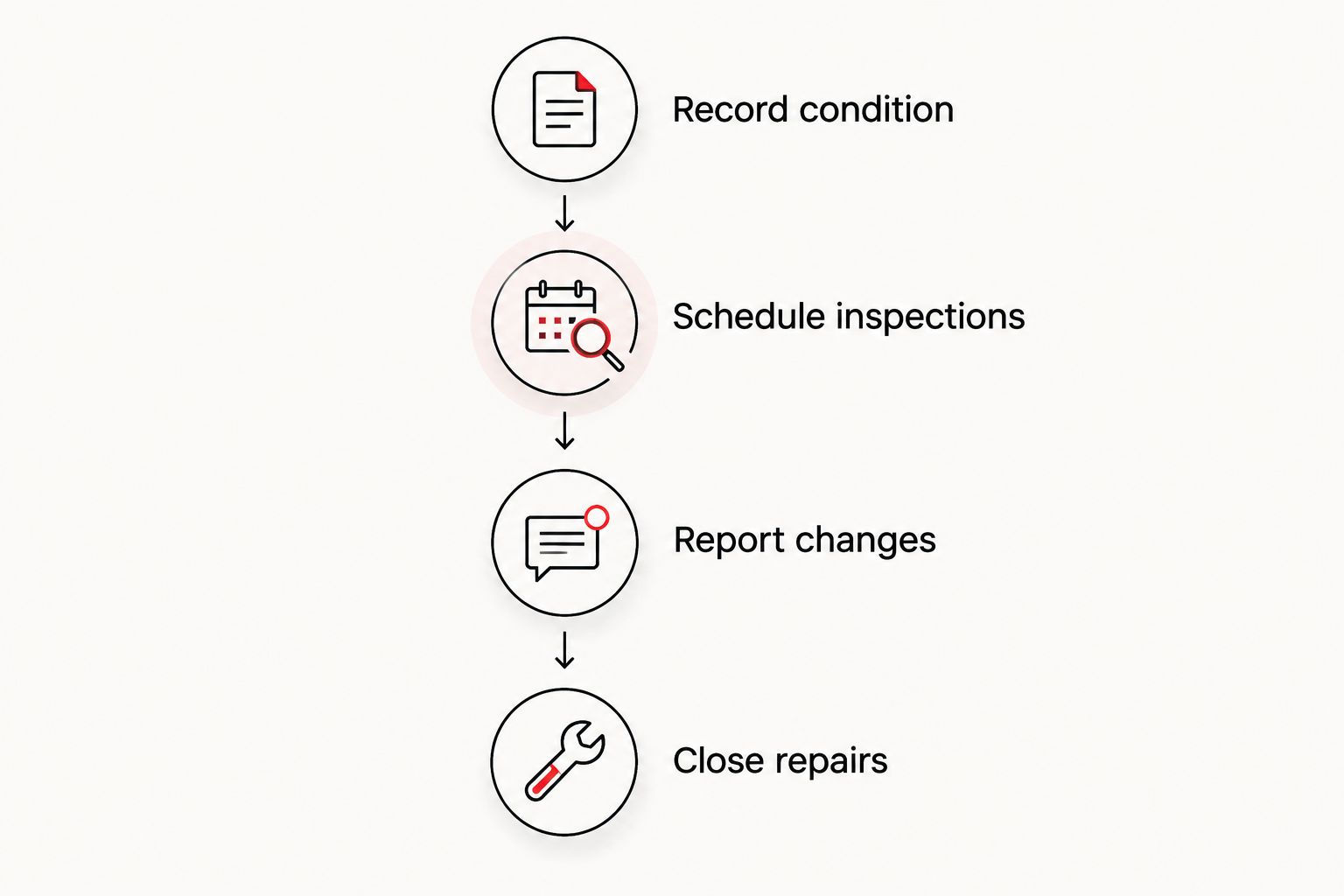
Keep this process consistent across materials. Clear records help you distinguish a recurring leak from a new defect and give the next contractor useful context.
Which roofing system should you choose?
Choose standing-seam metal as the default for a suitable pitched-roof rental. Choose architectural shingles when localized repair flexibility leads your decision, and single-ply membrane when the building has a suitable low-slope roof. Keep tile for properties that need it; treat exposed-fastener metal as a choice with explicit fastener upkeep.
Roofsmartflorida provides rental-property roofing installation, repair, and replacement in Southwest Florida. Ask for an evaluation that explains the existing roof's condition, whether repair remains appropriate, and what each proposed replacement changes about your maintenance responsibilities.
Get an honest roof evaluation
Request a no-pressure free estimate for your rental property's roofing work.
FAQ
What's the best low maintenance roofing for Florida rental properties?
Standing-seam metal is the default choice for a suitable pitched-roof rental because its main panel attachments are concealed. Confirm building fit, coastal compatibility, and installation details before selecting it.
Is standing-seam metal maintenance-free?
No, standing-seam metal still needs inspections of seams, flashing, penetrations, edges, and panel condition. Concealed attachments reduce one maintenance concern; they do not eliminate all roof upkeep.
Are shingles easier to repair than metal roofing?
Shingles allow localized replacement when the surrounding roof remains serviceable. Standing-seam panel repairs require system-specific methods, while deteriorated shingles can also make small repairs difficult.
What's the best roof for a flat-roof rental building?
A suitable single-ply membrane is a strong option for a low-slope rental building. Drainage, seam construction, penetration details, and rooftop access must be included in the design.
Should I replace a tile roof just to reduce maintenance?
Do not replace a serviceable tile roof solely on the assumption that another covering eliminates upkeep. Evaluate broken tiles, underlayment, flashing, structural suitability, and any association requirements first.
How often should I inspect my rental property's roof?
Use two roof inspections per year as a management baseline, then adjust to manufacturer instructions and property conditions. Arrange additional checks after damaging weather or rooftop work when needed.
Does a metal roof automatically lower my insurance premium?
No, a metal covering alone does not establish an insurance discount. Ask your insurer what documentation and verified roof features it accepts before including any savings in your decision.
One last thing
The visible covering is not the whole roof. An intact tile can sit above damaged underlayment, and an intact metal panel can border defective flashing. For your 2026 roof evaluation, ask the contractor to explain water-entry points—not just identify the material.