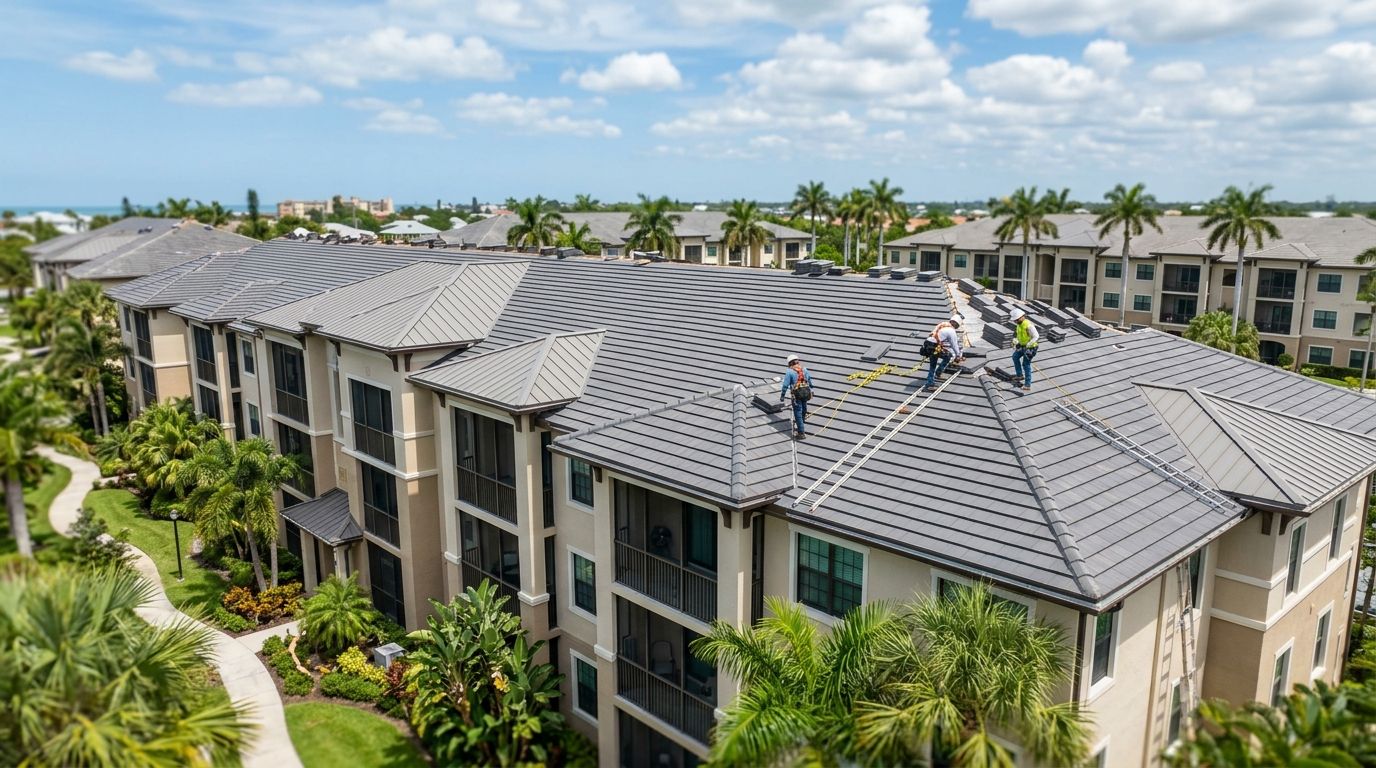
Roofing for apartment complexes in Southwest Florida means managing multiple roof systems, multiple ages, and multiple insurance deadlines on one property — not one roof decision, but a portfolio of them. A 40-unit garden-style complex in Cape Coral might carry three different roof ages across its buildings, and each one hits its insurance renewal and hurricane-prep clock on a different schedule.
- Roofing for apartment complexes in SW Florida means tracking multiple roof ages, materials, and insurance clocks per property.
- Flat and low-slope roofs on amenity buildings need recoating every few years, not full tear-offs.
- Wind mitigation inspections apply building-by-building, not as one blanket report for the whole complex.
- Roof Smart of SW Florida coordinates multi-building roofing across Cape Coral, Fort Myers, and Naples — best for property managers phasing replacement.
Why roofing matters differently for apartment complexes
A single-family homeowner deals with one roof, one insurance policy, one renewal date. A property manager overseeing an apartment complex deals with a dozen or more roof planes, mixed materials from different construction phases, and tenants who file maintenance requests the moment a ceiling stain shows up.
Southwest Florida adds pressure most other markets don't have: hurricane season runs June 1 through November 30 every year, and insurers reviewing multifamily policies increasingly want documented wind mitigation and roof condition reports per building, not a single summary for the whole property. Complexes built in phases over the 1990s and 2000s often mix shingle roofs on residential buildings with flat or low-slope membranes on clubhouses and leasing offices — each with its own maintenance schedule and insurance requirements. That mismatch is exactly what commercial roofing for HOA and condo communities has to account for, and it's why a single-roof mindset fails on multi-building properties.
Audit your roof inventory across the property
Before any repair or replacement decision, know what you're actually managing. Most property managers underestimate how many distinct roof systems sit on one parcel until they walk it building by building.
- Photograph every roofline and log the material — shingle, tile, metal, or flat membrane
- Pull permit dates from the county property appraiser to confirm actual install years
- Flag any roof approaching 15-20 years old for closer inspection
- Cross-reference roof age against your current insurance certificate requirements
- Note which buildings have flat or low-slope sections separate from the main roof
Inspect for wind and storm damage before hurricane season
Do this walk-through in spring, before the June 1 start of hurricane season, not after a named storm has already tested every seam.
- Check flashing around chimneys, vents, and parapet walls for lifting or gaps
- Look for cracked, curled, or missing shingles on sloped sections
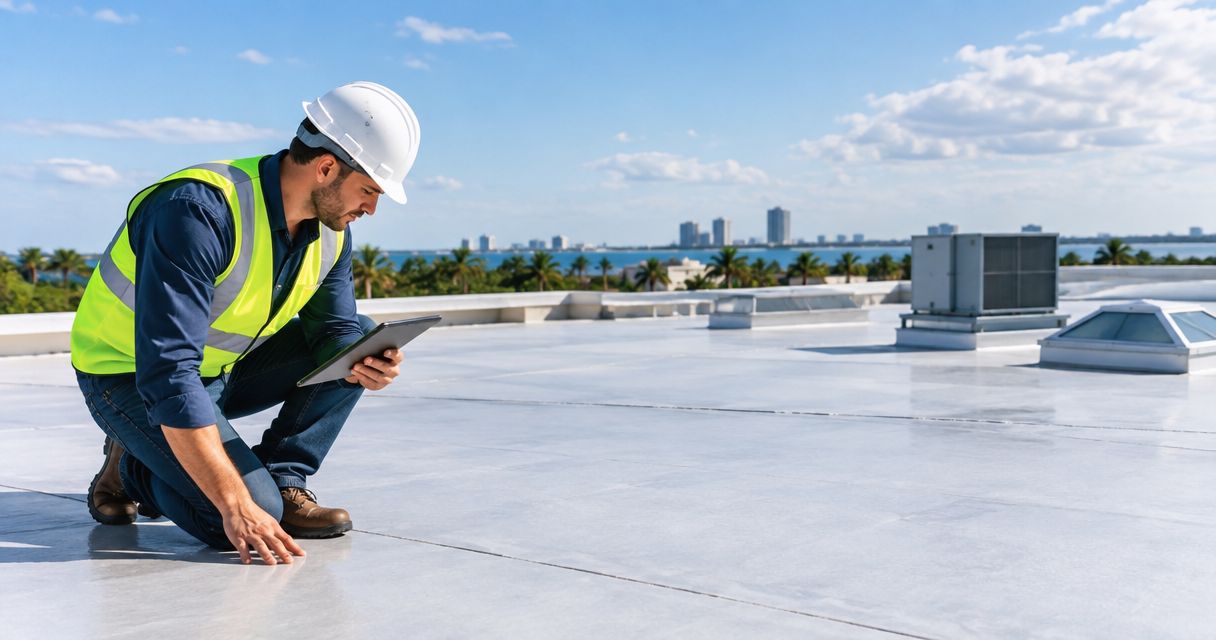
- Examine flat membranes for blistering, ponding water, or seam separation
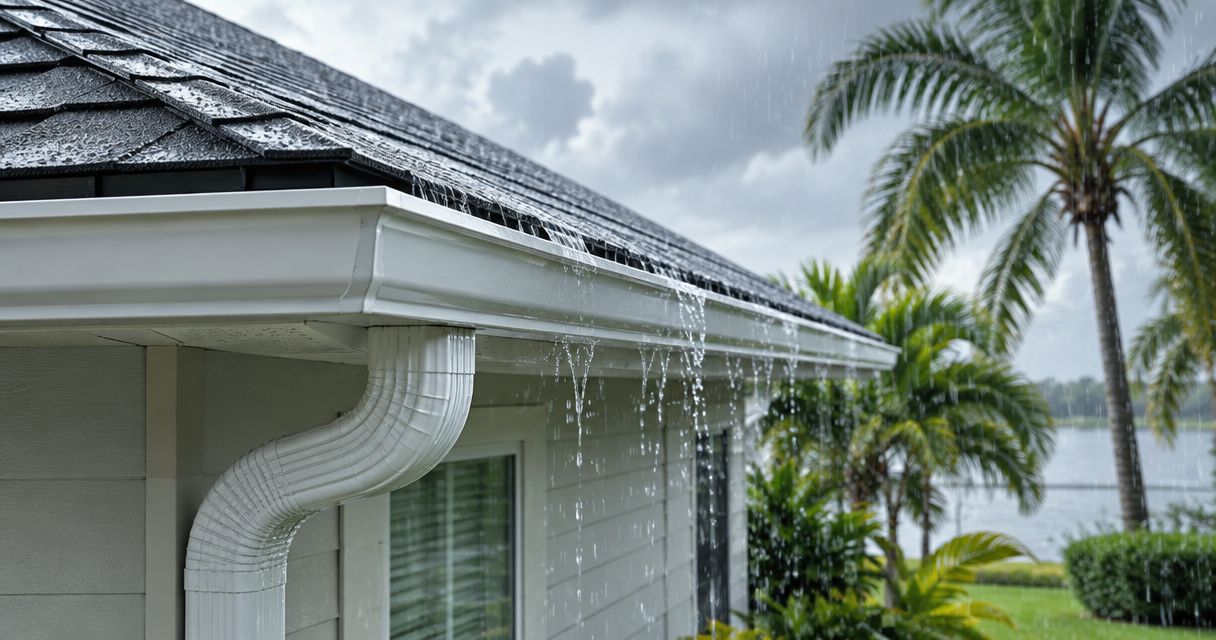
- Clear gutters and downspouts of debris that traps moisture against fascia
- Confirm secondary water barriers are intact on any roof opened for repair work
A documented pre-season inspection also gives you a baseline if you need to file a claim later. A structured checklist works better than a walk-and-eyeball approach — the how-to build a roof inspection checklist for rental properties guide covers what to log and how often.
Choose the right roofing system for each building type
Not every building on the property needs the same material, and forcing one system across a mixed-age complex usually costs more than matching material to building type.
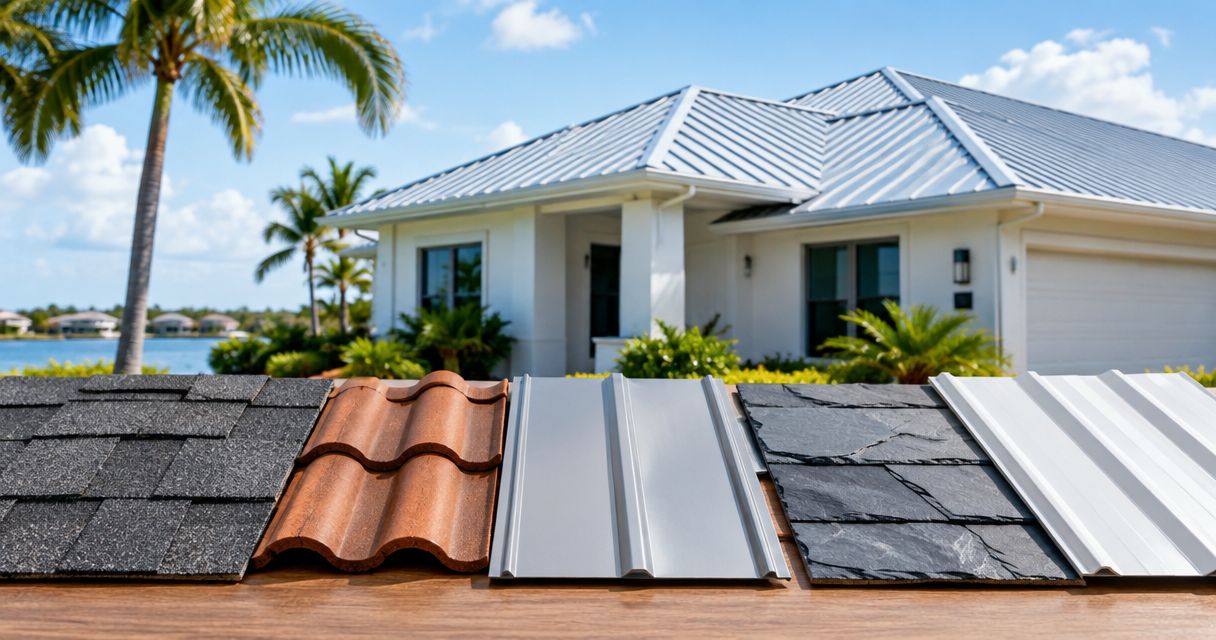
- Match flat or low-slope roofs on amenity buildings to TPO or modified bitumen, not shingle
- Keep garden-style residential buildings on architectural shingle unless wind exposure demands otherwise
- Consider metal on buildings closer to open water or higher wind exposure zones
- Reserve tile for Mediterranean-style complexes where it's already part of the design
- Budget separately for each system rather than one blanket per-square-foot number
Schedule preventive maintenance and coatings for flat roofs
Flat and low-slope roofs on clubhouses, laundry buildings, and covered parking fail from neglect, not age alone. A recoat every few years extends membrane life without a full tear-off.
- Recoat TPO or modified bitumen roofs on a manufacturer-recommended cycle, not when leaks appear
- Clear roof drains and scuppers quarterly to prevent standing water
- Inspect seams and penetrations at HVAC units and vent stacks twice a year
- Add reflective coating where energy costs on common-area buildings run high
- Track each coating date per building, since amenity roofs often lag residential roofs by years
Roof Smart of SW Florida applies commercial coatings on flat roofs as the maintenance step between install and replacement — the roof coatings for commercial flat roofs in Florida page breaks down when a recoat still makes sense versus when the membrane is past saving.
Document everything for insurance and 4-point inspections
Insurers underwriting multifamily properties in 2026 are asking for more paperwork than they did five years ago, particularly on buildings over 20 years old.
- Keep dated photos from every inspection, not just after storm events
- Retain contractor invoices and material warranties for each building separately
- Request a wind mitigation report per building rather than one for the complex
- File any storm damage claim within your carrier's stated reporting window
- Store permit records where your insurance agent or underwriter can access them on renewal
A weak paper trail is one of the most common reasons multifamily claims get delayed or denied. The how to file a roof insurance claim after storm damage guide walks through what documentation carriers expect before they pay out.
Budget for phased roof replacement across multiple buildings
Replacing every roof on a complex in one year rarely makes financial sense, and most owners don't have the cash flow for it anyway.
- Rank buildings by roof age and inspection findings, oldest and worst first
- Stagger replacement over two to four years instead of one lump project
- Request per-building quotes so you're not paying a blended average rate
- Plan work around lease turnover to limit tenant disruption
- Factor longer lead times for tile or metal into your 2026-2027 capital plan
Vet contractors for licensing and multi-building capacity
A contractor who handles single-family reroofs well doesn't automatically handle a 12-building complex without delays.
- Verify an active Florida roofing contractor license before signing anything
- Confirm workers' compensation and general liability coverage limits match your property's scale
- Ask directly whether their crew size can run multiple buildings concurrently
- Get warranty terms in writing for both materials and labor
- Request references specifically from other property managers, not single-home clients
Roofing options compared for apartment complexes
| Roofing System | Best For | Key Limitation |
|---|---|---|
| TPO / flat membrane | Amenity buildings, clubhouses, low-slope sections | Needs periodic recoating to hold its warranty |
| Asphalt shingle | Garden-style low-rise residential buildings | Lower wind rating than metal or tile |
| Metal panel | Coastal buildings, higher wind exposure zones | Higher material cost than shingle |
| Tile | Mediterranean-style complexes matching existing design | Heavier load, costlier per-tile repairs |
| Roof coating / recoat | Extending an existing flat roof's service life | Won't fix structural or membrane failure underneath |
Roof Smart of SW Florida works across all five of these systems on multifamily properties in Cape Coral, Fort Myers, and Naples — best for property managers who need one contractor coordinating mixed roof types on one property.
Common mistakes on apartment complex roofing
- Treating the whole complex as one roof. Buildings from different construction phases age differently — a blanket inspection schedule misses the oldest building's real risk.
- Skipping wind mitigation inspections on older buildings. Insurers increasingly require them per building, and missing one can flag the whole policy at renewal.
- Waiting for a tenant complaint to trigger inspection. By the time a ceiling stains, the membrane or decking damage underneath is usually already advanced.
- Bidding replacement without walking every building. A quote based on square footage alone misses access issues, mixed materials, and staging costs specific to multifamily sites.
- Assuming a master insurance policy covers interior tenant damage. Roof-related interior damage often falls to a separate liability question that owners don't check until a claim is denied.
Get a free multi-building roof estimate
No-pressure evaluation across your whole property, building by building.
FAQ
What's the best roofing material for apartment complexes in Southwest Florida?
There's no single best material — TPO or modified bitumen fits flat amenity buildings, while shingle or metal fits sloped residential buildings. Match the system to each building's roof type rather than picking one material for the whole complex.
How often should a multi-family roof be inspected?
Inspect every building at least once before hurricane season each year, plus after any named storm. Flat roofs on amenity buildings often need more frequent checks than sloped residential roofs.
Does wind mitigation inspection cover the whole complex or each building?
Each building typically needs its own wind mitigation report, since roof age, material, and features like secondary water barriers vary by structure. A single report for the whole property usually doesn't satisfy underwriters.
How much does it cost to replace roofs on an apartment complex?
Cost depends on building count, roof material, and square footage per building, so a per-building estimate is more useful than one blanket figure. Get quotes broken out by building before setting a capital budget.
Is a 4-point inspection required for older apartment buildings?
Florida insurers commonly require a 4-point inspection once a building crosses roughly 20 to 25 years old, especially at policy renewal. Requirements vary by carrier, so check with your insurance agent for the specific threshold on each building.
Can one contractor handle roofing across multiple buildings on the same property?
Yes, provided the contractor has crew capacity to run concurrent projects without extending timelines across the site. Confirm this directly during vetting rather than assuming scale from a single-home portfolio.
What's the difference between roof repair and roof replacement for multifamily buildings?
Repair addresses isolated damage like a leak or damaged flashing on an otherwise sound roof, while replacement is warranted when the membrane or structure is past its service life. An inspection should confirm which applies before you commit to either.
How long does hurricane season roof prep take for a large complex?
Prep time scales with building count and roof condition, so a 12-building complex takes longer than a duplex. Start inspections well before June 1 so repairs finish before hurricane season begins.
One last thing
Most 4-point inspection flags on multifamily properties aren't about the roof surface at all — they're about exposed fasteners, missing drip edge, or unsealed penetrations at HVAC curbs. Check those details specifically before an insurance renewal inspection, not just the shingles or membrane, and you'll catch the issue that actually gets a policy flagged.