Southwest Florida gutters clog fastest during storm season, not because of laziness but because oak leaves, palm fronds, and shingle grit hit the roof edge all at once during a downpour. Picking the wrong gutter guard means you're up a ladder every August instead of watching the rain roll off clean — this guide breaks down which types hold up through hurricane season 2026 in Cape Coral, Fort Myers, and Naples, and which ones fail in the first heavy squall.
- Micro-mesh stainless steel guards are the top pick for gutter guards florida storm season shopping in 2026 — buy before June 1.
- Foam insert guards are a skip for Southwest Florida; they trap shingle grit and break down fast in year-round humidity.
- Reverse-curve aluminum guards handle heavy overflow well but need a roofer to mount them correctly — consider for high-flow gutters.
- Standard perforated screens are the budget wildcard: cheap now, often replaced within two or three storm seasons.
Why This Matters
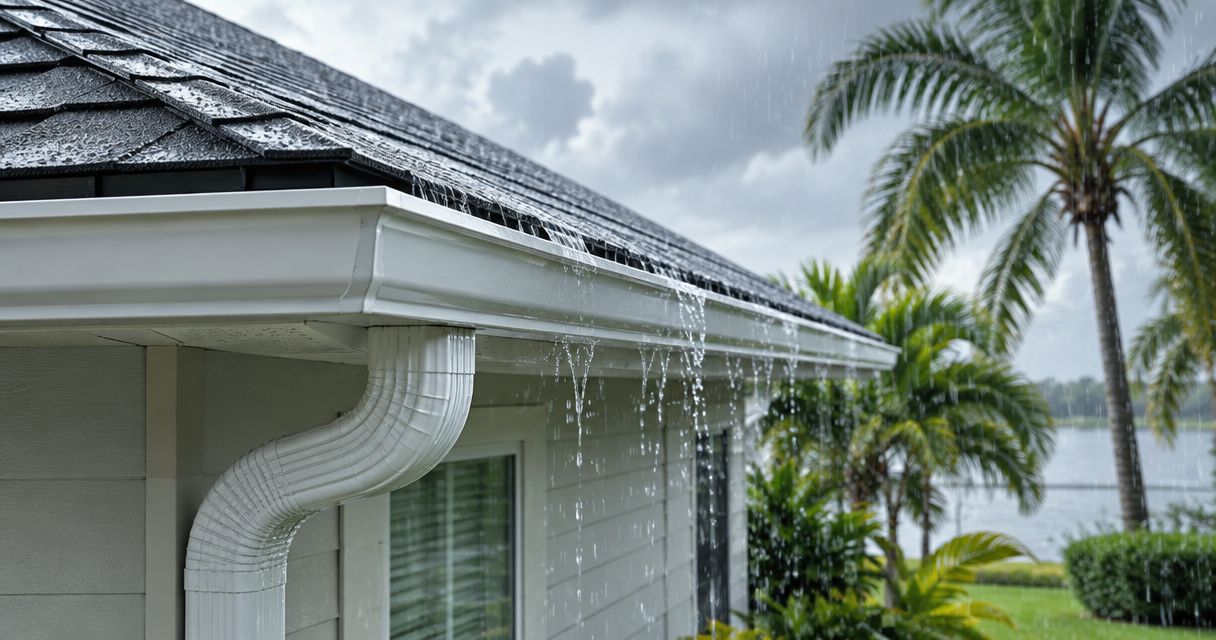
A clogged gutter during a Southwest Florida downpour doesn't just overflow — it pushes water behind fascia boards and into soffits, which is exactly where roof rot starts. Roof Smart of SW Florida sees the same pattern every hurricane season: homes with the wrong gutter guard end up with water intrusion that has nothing to do with the roof covering itself.
The stakes go up during an actual named storm. Category 1 wind gusts run 74-95 mph, and a gutter guard that isn't mechanically fastened can peel off the fascia and become its own piece of storm debris. Guards also interact with wind mitigation credits — a loose or poorly attached guard can complicate an inspection that's supposed to lower your insurance premium.
Who This Is For
This guide is built for homeowners in Cape Coral, Fort Myers, and Naples who are tired of climbing a ladder after every tropical storm, and for anyone replacing a roof or gutter system ahead of the 2026 season who wants to install gutter guards once and be done with it. If you've got mature oak or ficus trees on the property, or you're within a mile of the coast where salt air eats cheap hardware, the guard you pick matters more than it would somewhere with dry winters and no hurricanes.
What to Look For in Gutter Guards for Florida Storm Season
Mesh size and debris type
Florida debris isn't uniform — oak leaves and acorns are one problem, palm frond fiber and shingle grit are another. A guard with mesh openings sized for leaves can still let grit and fine fiber through, which builds up as sludge at the bottom of the gutter over a season.
Wind and attachment method
Snap-on guards that rely on friction fit are the first thing to go in a tropical storm. Look for guards that screw or clip into the fascia or under the shingle edge, because that's the difference between a guard staying put and one becoming a projectile during a Category 1 event.
Rain flow capacity
Southwest Florida gets more than 50 inches of rain a year, much of it in short, intense bursts between June and September. A guard that's great at blocking debris but slows water flow will cause overflow during exactly the storms it's supposed to help with.
Corrosion resistance near the coast
Aluminum and standard steel hardware corrode faster within a mile or two of saltwater. Stainless steel or marine-grade aluminum costs more upfront but survives the coastal air in Naples and Cape Coral without pitting or rusting through in a few years.
Maintenance reality
No gutter guard is maintenance-free in Florida — even the best micro-mesh needs an annual rinse to clear fine sediment. The real question is whether you're doing a five-minute hose-down once a year or pulling debris out by hand every month during storm season.
Top Picks for Southwest Florida Storm Season
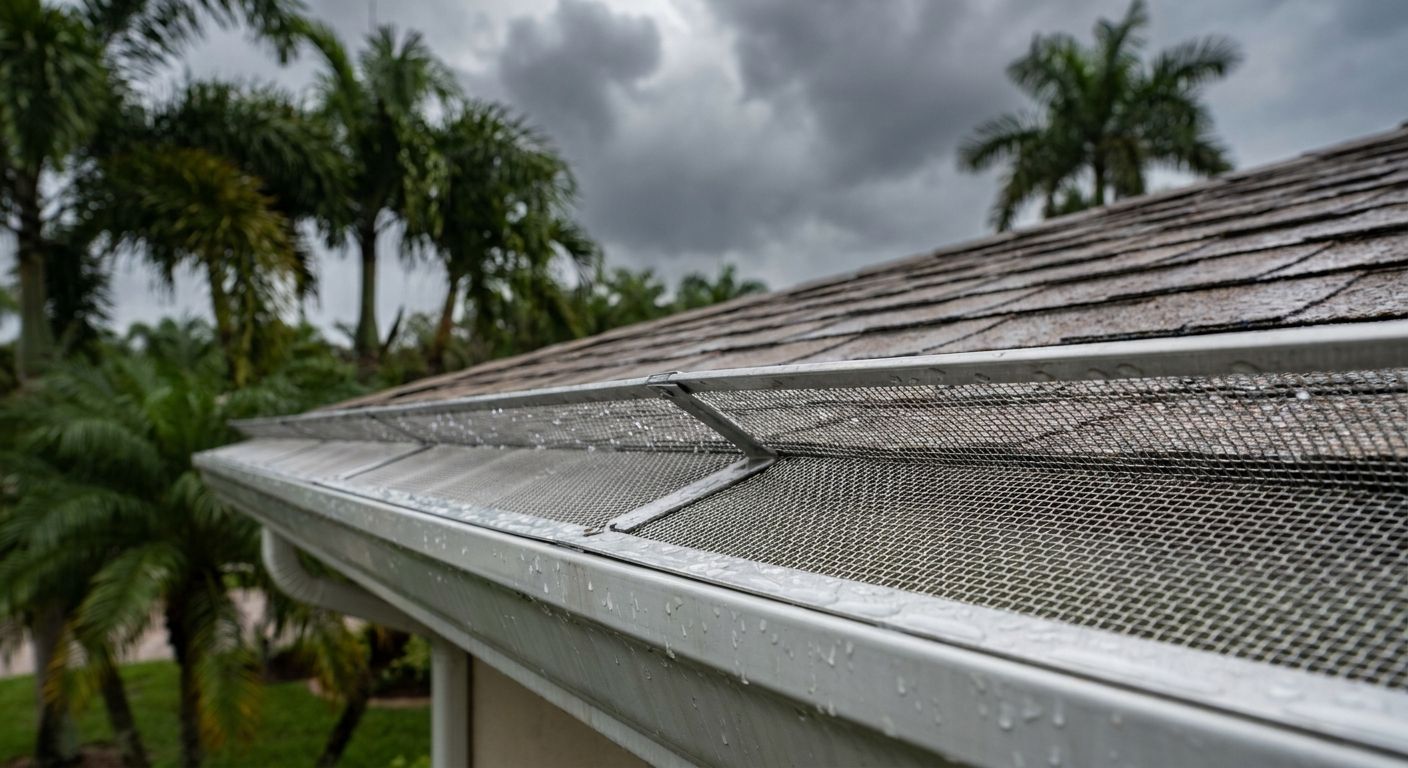
Micro-mesh stainless steel guards — the safe pick. Stainless mesh with openings fine enough to block shingle grit and palm fiber, not just leaves, is the closest thing to a set-and-forget option in this climate. It handles the coastal salt air without corroding and holds up through repeated 2026 storm cycles better than painted aluminum. Homeowners in Cape Coral lean toward this option specifically because it survives both the humidity and the salt exposure closer to the water. Verdict: Buy.
Reverse-curve (surface-tension) aluminum guards — the high-flow pick. These use the shape of the gutter lip itself to pull water down while debris slides off the front edge, which makes them strong performers during the short, heavy downpours common from June through September. They need to be installed by someone who can match the curve to your existing fascia pitch, which is why Fort Myers homeowners usually pair this pick with professional installation rather than a DIY kit. Verdict: Consider.
Foam insert guards — the shortcut that backfires. Foam inserts sit inside the gutter channel and look like an easy weekend fix, but Florida's asphalt shingle grit clogs the foam pores within a season or two, and constant humidity breaks the foam down faster than in drier climates. Once the foam saturates, it holds water instead of shedding it — the opposite of what you want going into hurricane season. Verdict: Skip.
Standard perforated aluminum screens — the budget wildcard. These are the cheapest option at the hardware store and they do block large leaves, but the perforations are usually too coarse for palm fiber and too fine to shed heavy rain fast during a real storm. They also tend to be snap-on rather than fastened, which raises the wind-lift risk discussed above. Fine as a stopgap on a rental property, risky as a long-term choice on a primary residence. Verdict: Consider for short-term use, Skip for a permanent installation.
Get gutter guards installed before storm season
Free, no-pressure estimate from Roof Smart of SW Florida.
What to Avoid
- Plastic or vinyl guards in full coastal sun. UV exposure in Naples and Cape Coral makes vinyl brittle within a couple of storm seasons, and brittle plastic cracks under wind load exactly when you need it intact.
- Snap-on guards with no wind-uplift rating. If the packaging doesn't mention fastening beyond friction fit, assume it comes off in a tropical storm and treat it as a fair-weather product only.
- Any guard installed without checking the existing gutter pitch. A guard mounted on a gutter that already has a flat spot will just move the ponding water problem instead of fixing it — this is a common issue on older Florida homes with sagging fascia.
"If you can see daylight through the mesh holes at eye level, storm debris smaller than that hole will find its way through too."
“If you can see daylight through the mesh holes at eye level, storm debris smaller than that hole will find its way through too.”
Verdict Comparison
| Guard Type | Debris Handling | Wind Attachment | Coastal Corrosion Resistance | Verdict |
|---|---|---|---|---|
| Micro-mesh stainless steel | Blocks grit and fine fiber | Screwed/clipped | High | Buy |
| Reverse-curve aluminum | Strong on heavy rain flow | Requires pro install | Moderate-High | Consider |
| Foam insert | Poor once saturated | N/A (sits in channel) | Low (degrades in humidity) | Skip |
| Standard perforated screen | Coarse, misses fine debris | Often snap-on | Moderate | Consider short-term |
FAQ
What are the best gutter guards for Florida storm season?
Micro-mesh stainless steel gutter guards are the best choice for Florida storm season in 2026 because they block fine debris like shingle grit and palm fiber while resisting coastal corrosion. Reverse-curve aluminum guards are a strong second option for homes with heavy rain flow.
Do gutter guards actually work in hurricanes?
Gutter guards work in hurricanes only if they're mechanically fastened rather than snap-fit, since Category 1 wind gusts run 74-95 mph and can peel off loose attachments. A properly screwed or clipped guard stays in place through most tropical storm conditions.
Are foam gutter guards good for Florida homes?
Foam gutter guards are not a good fit for Florida homes because the foam saturates with shingle grit and breaks down faster in year-round humidity than in drier climates. They tend to hold water instead of shedding it within a season or two.
How much rain can clogged gutters cause damage from in Southwest Florida?
Southwest Florida averages more than 50 inches of rain a year, much of it in short, intense bursts between June and September, so clogged gutters can overflow and push water behind fascia within a single storm event.
Do gutter guards affect wind mitigation inspections?
A loosely attached gutter guard can complicate a wind mitigation inspection because inspectors look at how securely roof edge components are fastened. Mechanically fastened guards typically don't raise concerns the way friction-fit snap-on guards can.
Can I install gutter guards myself in Florida?
You can install lighter screen-style gutter guards yourself, but reverse-curve and micro-mesh systems generally need a professional to match the fascia pitch and confirm proper fastening ahead of hurricane season.
When should I install gutter guards before hurricane season?
Install gutter guards before June 1, the start of Atlantic hurricane season, so the system is tested and fastened before the first heavy storm rolls through Southwest Florida.
One Last Thing
The guard that looks the most protective on the shelf — dense foam or a tight plastic screen — is usually the one that fails first in Florida, because it's solving for leaves when the real problem is grit, humidity, and wind. Stainless micro-mesh costs more up front and still gets an annual rinse, but it's the only option on this list built for both the rain volume and the salt air Southwest Florida throws at it every year.