
Best overall: removable micro-mesh guards for mixed debris. Best for broad leaves: perforated-metal guards. Best for easy removal: brush inserts. This 2026 guide compares gutter guards ranked by maintenance for Florida homes, focusing on what you must clean, remove, and inspect—not promises of maintenance-free gutters.
- For gutter guards ranked by maintenance, removable micro-mesh is the default for mixed leaves and fine debris.
- Perforated-metal guards suit broad leaves, but smaller debris can pass through the openings.
- Brush and foam inserts require removal to clean the gutter beneath them.
- Roofsmartflorida provides roofing and gutter services for Southwest Florida homeowners who need an on-site evaluation.
Why this matters
Gutter guards change where debris collects; they do not eliminate it. A screen that keeps leaves outside the gutter still needs attention when those leaves cover its water-entry surface.
For your 2026 decision, separate debris exclusion from cleaning access. Fine filtration helps keep material out, while removable sections make the remaining maintenance easier. You need both.
Roofsmartflorida is a roofing and gutter service option for Southwest Florida homeowners who need roof-edge and drainage work evaluated together. Its services include roofing and gutters; this guide ranks guard designs, not a proprietary product line.
What makes the best low-maintenance gutter guards?
Use these criteria before choosing a guard. The best fit depends on the debris reaching your roof and the work required to clear it.
- Debris exclusion: Match the opening size to leaves, needles, seeds, and roof grit—not just the largest leaves.
- Surface cleaning: Check whether debris rests on a flat screen, catches in bristles, or collects inside an insert.
- Cleaning access: Ask how someone reaches the gutter channel and downspout outlet without damaging the guard.
- Water entry: Inspect how runoff enters at roof valleys, corners, and other concentrated-flow locations.
- Roof compatibility: Confirm that attachment details suit your roof edge and follow the relevant installation instructions.
- Secure attachment: Ask how sections, corners, and ends are fastened. A loose guard becomes another repair task.
For an estimate in 2026, request the cleaning method alongside the installation details. A guard that is difficult to open can turn a simple blockage into a more involved service visit.
Gutter guards ranked by maintenance: at a glance
This ranking prioritizes keeping debris out while retaining practical cleaning access. It is a design-based buying guide, not a prediction of cleaning visits per year.
| Rank and guard type | Best for | Standout feature | Main maintenance limitation |
|---|---|---|---|
| 1. Removable micro-mesh | Mixed leaves and fine debris | Fine screening over the gutter | Surface buildup still needs removal |
| 2. Perforated metal | Broad leaves with limited fine debris | Rigid cover with drainage openings | Small debris passes through larger openings |
| 3. Reverse-curve cover | Large leaves and clear roof-edge access | Curved edge directs water toward an inlet | Inlet and hidden channel need inspection |
| 4. Brush insert | Owners prioritizing easy removal | Lift-out bristles occupy the gutter | Debris catches between bristles |
| 5. Foam insert | Short-term, easily accessible applications | Porous insert fits inside the gutter | Embedded debris complicates cleaning |
The lowest-maintenance choice is not automatically the guard with the smallest openings. It is the guard that handles your debris without making cleaning unnecessarily difficult.
1. Removable micro-mesh: best for mixed debris
Micro-mesh guards place a fine screen over the gutter channel. They suit homes where broad leaves are only part of the problem and smaller material also reaches the roof edge.
Removability matters as much as filtration. Before choosing a system, ask how a cleaner opens a section above the downspout and reinstalls it correctly.
Micro-mesh pros:
- Fine openings help exclude smaller debris.
- Debris collects on an exposed surface rather than throughout an insert.
- Removable sections provide access to the channel beneath.
Micro-mesh cons:
- Leaves and fine material still accumulate on top.
- A covered screen restricts water entry.
- Cleaning access varies with the attachment design.
Best for: Homeowners dealing with mixed debris who want filtration without giving up access.
During a demonstration, look at the supporting frame as well as the mesh. Ask where debris settles and how the installer expects you to clear it safely.
Verdict: Buy removable micro-mesh when mixed debris is your main problem and the cleaning method is clear.
2. Perforated metal: best for broad-leaf debris
Perforated-metal guards cover the gutter with a rigid sheet containing drainage openings. They offer a straightforward barrier against leaves larger than those openings.
Their trade-off is equally straightforward: material smaller than the openings can enter. That makes the debris around your property more important than the appearance of the cover.
Perforated-metal pros:
- A rigid surface keeps broad leaves above the channel.
- Drainage openings are visible during inspection.
- Removable designs allow access beneath the cover.
Perforated-metal cons:
- Small seeds, grit, and fragments can pass through.
- Leaves can cover the openings and obstruct drainage.
- Fixed sections complicate channel cleaning.
Best for: Homes where broad leaves dominate and fine debris is limited.
Ask to examine a sample rather than relying on a distant photo. Compare its openings with the material you actually remove from your gutters.
Verdict: Buy perforated metal for broad leaves; skip it as a fine-debris filter.
3. Reverse-curve covers: best for large leaves and accessible inlets
Reverse-curve covers guide water around a curved edge toward an opening while larger debris passes over the front. Unlike a screen, the design depends on the shape and position of that water-entry edge.
You must inspect the inlet as well as the top. A cover that looks clear from above does not prove the opening or channel underneath is clear.
Reverse-curve pros:
- A solid upper surface separates large leaves from the channel.
- There is no broad mesh surface to brush.
- The inlet provides a defined inspection point.
Reverse-curve cons:
- Debris can collect at the entry opening.
- The cover hides the gutter channel.
- Fit and alignment affect how water enters.
Best for: Homes with large-leaf debris where the inlet remains accessible for inspection and cleaning.
Ask how the design handles concentrated runoff from roof valleys. Do not accept a demonstration on a small sample as proof of performance across every roof detail.
Verdict: Hold until the installer explains inlet cleaning, channel access, and roof-edge fit.
4. Brush inserts: best for owners prioritizing removal
Brush guards sit inside the gutter, with bristles intended to interrupt incoming leaves. You lift the inserts out to reach the gutter beneath them.
That access is useful, but the bristles create another place for debris to lodge. Easy removal is not the same as little cleaning.
Brush-insert pros:
- Lift-out sections expose the gutter channel.
- The design is easy to inspect once removed.
- No separate cover needs opening to reach underneath.
Brush-insert cons:
- Needles and leaf fragments catch between bristles.
- Cleaning includes both the insert and the gutter.
- Debris hidden within the brush is difficult to assess from the ground.
Best for: Owners who value removable inserts and accept hands-on cleaning.
Safe access still controls the decision. A lift-out insert offers little convenience when reaching it requires work at a difficult roof edge.
Verdict: Hold if reducing cleaning work is your priority; choose brush inserts only for their removal convenience.
5. Foam inserts: best for short-term, accessible applications
Foam guards occupy the gutter channel and allow water through a porous structure. They leave a surface on which leaves and smaller debris collect.
The maintenance concern is material trapped within that structure. Cleaning the gutter also means removing and assessing the insert.
Foam-insert pros:
- The insert lifts out to expose the channel.
- Its shape does not require a separate overhanging cover.
- Removed sections allow direct inspection underneath.
Foam-insert cons:
- Fine debris can lodge within the pores.
- Clearing the surface does not clear the entire insert.
- The insert adds another component to inspect and clean.
Best for: Short-term use where access is straightforward and regular removal is acceptable.
Do not select foam to avoid all future gutter work. Ask what condition requires replacement rather than cleaning, and keep that instruction with your maintenance records.
Verdict: Skip foam when your main goal is reducing long-term cleaning effort.
Check the drainage system before buying guards
A guard cannot correct a blocked downspout, a poorly draining gutter, or a damaged attachment point. Before choosing among these 5 guard types, inspect the system they will cover.
Use these 3 checks for your 2026 assessment:
Roof edge
Look for loose gutter attachments, visible gaps, and damaged fascia from a safe location. Ask a roofing professional to evaluate roof-edge defects rather than covering them with a new guard.
Water entry
Observe where runoff reaches the gutter during rain from a sheltered, ground-level position. Note overflow at valleys and corners, and distinguish water passing over the front from water escaping behind the gutter.
Water exit
Have the downspout outlet and discharge route checked. A clean guard surface does not establish that water can leave the gutter freely.
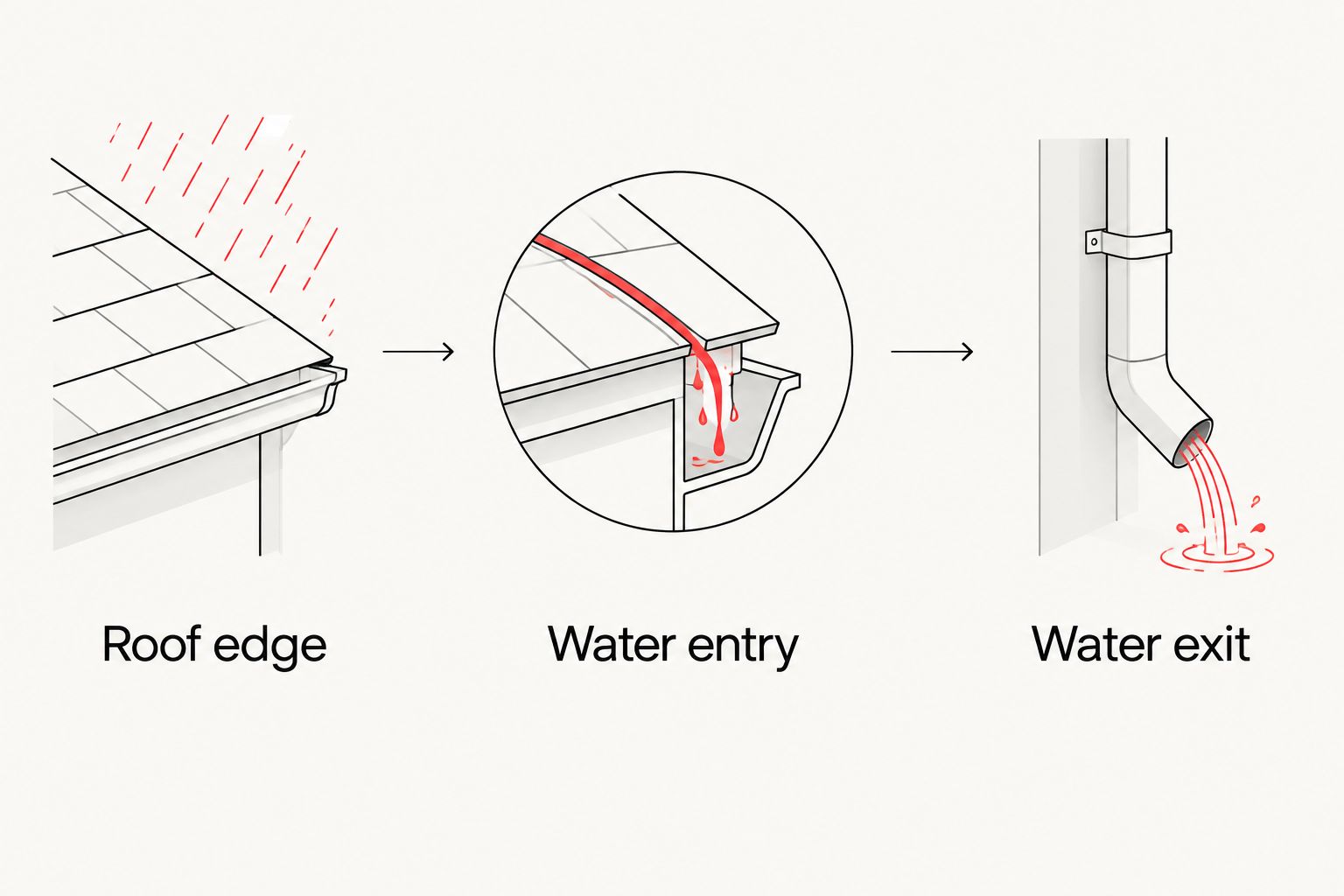
Keep your observations specific: where water escapes, what debris collects, and which sections are hard to reach. Roofsmartflorida provides roofing and gutter services across Cape Coral, Fort Myers, Naples, and surrounding Southwest Florida counties.
Request a gutter evaluation
Discuss your roof edge, drainage concerns, and access needs before choosing guards.
How this maintenance ranking works
The 2026 ranking favors debris exclusion, an exposed cleaning surface, and access to the channel. It places removable micro-mesh first for mixed debris, while recognizing that a simpler perforated cover fits a broad-leaf problem.
Brush and foam rank lower because cleaning includes material inside the gutter as well as the insert itself. Reverse-curve covers sit between those groups: their usefulness depends on keeping the inlet clear and accessible.
There is no universal cleaning interval in this ranking. Tree cover, debris type, roof geometry, and installation details determine what your system needs. Inspect after significant debris accumulation and follow the selected guard's maintenance instructions.
Which gutter guards should you choose?
Choose removable micro-mesh as the default for mixed debris. Choose perforated metal when large leaves dominate and you accept some smaller material entering the channel.
For your 2026 shortlist, reject any proposal that cannot explain these 4 points: surface cleaning, channel access, downspout access, and roof attachment. A clear maintenance plan matters more than a maintenance-free claim.
If you cannot safely reach the gutters, include professional cleaning access in the decision. Do not buy a design that depends on work you cannot safely perform.
FAQ
What's the best gutter guard for low maintenance in Florida?
Removable micro-mesh is the default recommendation for Florida homes with mixed leaves and fine debris. Its surface still needs cleaning, and removable sections should provide access to the gutter channel.
Are micro-mesh gutter guards better than perforated metal?
Micro-mesh is better suited to excluding fine debris, while perforated metal suits larger leaves. Choose according to the material reaching your gutter and how easily each design opens for cleaning.
Do gutter guards mean I never have to clean my gutters?
No gutter guard eliminates cleaning. Debris collects on screens, around inlets, or inside inserts, and the gutter channel and downspout still need inspection.
How often should I clean gutter guards in Florida?
Set the cleaning schedule from observed buildup and the guard manufacturer's instructions, not a universal calendar. Inspect after significant debris accumulation and arrange cleaning when material obstructs water entry.
Are brush gutter guards easier to maintain than mesh?
Brush inserts are easy to remove, but their bristles trap debris that also needs cleaning. Removable mesh separates surface cleaning from access to the gutter beneath it.
Can gutter guards stop overflow during heavy rain?
Gutter guards do not guarantee that overflow will stop. Blocked downspouts, drainage defects, covered screens, and concentrated roof runoff require separate evaluation.
Who should evaluate gutters when the roof edge also needs work?
Roofsmartflorida provides roofing and gutter services for Southwest Florida homeowners and businesses. Ask for the roof edge, gutter attachments, and drainage concerns to be evaluated together.
One last thing
Before approving a guard, ask the installer to show how a cleaner reaches the downspout opening. If the cleaning procedure is unclear before installation, choose a different design.
Keep the maintenance instructions with your home records. The next person servicing the gutters needs to know how sections release and reattach without damaging the roof edge.