Commercial roofing in Lehigh Acres covers installation, repair, and maintenance for the warehouses, retail plazas, and HOA clubhouses that make up the city's fast-growing business corridor along SR 82 and Sunshine Boulevard, with the goal of keeping inventory, tenants, and equipment dry through Southwest Florida's heat and hurricane season. Unlike the pitched shingle roofs on nearby homes, most Lehigh Acres commercial buildings run flat or low-slope systems on metal-frame construction, and building owners answer to insurance carriers, tenants, and sometimes an HOA board on a schedule homeowners never deal with.
- Commercial roofing lehigh acres means flat, metal, or tile systems on warehouses, plazas, and HOA buildings, not pitched residential shingle.
- TPO and EPDM membranes run 20-30 years; elastomeric coatings carry 10-20 year manufacturer warranties.
- Wind mitigation reports and dated inspection photos matter more for commercial insurance renewals than for homeowner policies.
- Roof Smart of SW Florida handles flat, metal, and tile commercial roofing across Lehigh Acres with a free, no-pressure estimate before any work starts.
- HOA and condo buildings need board sign-off before scheduling, so start quotes before the next board meeting cycle.
Why commercial roofing matters for Lehigh Acres property owners
Lehigh Acres has added retail plazas, self-storage facilities, and small industrial buildings along its main corridors over the past several years, and most of those roofs are flat or low-slope, not pitched. Flat roofs fail differently than shingle: standing water, blocked scuppers, and UV-degraded seams cause leaks long before the membrane looks obviously damaged from the ground.
Insurance carriers treat commercial policies differently than homeowner policies too. A lender or insurer renewing a policy on a warehouse or plaza often wants a current wind mitigation report and dated inspection photos on file, not just a verbal assurance the roof is fine. Roof Smart of SW Florida works with owners, property managers, and HOA boards across Lehigh Acres to get that documentation together before renewal season, not after a claim gets denied.
HOA and condo-governed commercial buildings add a layer most single-owner properties skip: board approval before work starts. That timeline shift changes when you should start getting quotes, which is covered in the steps below.
Get a roof inspection before hurricane season
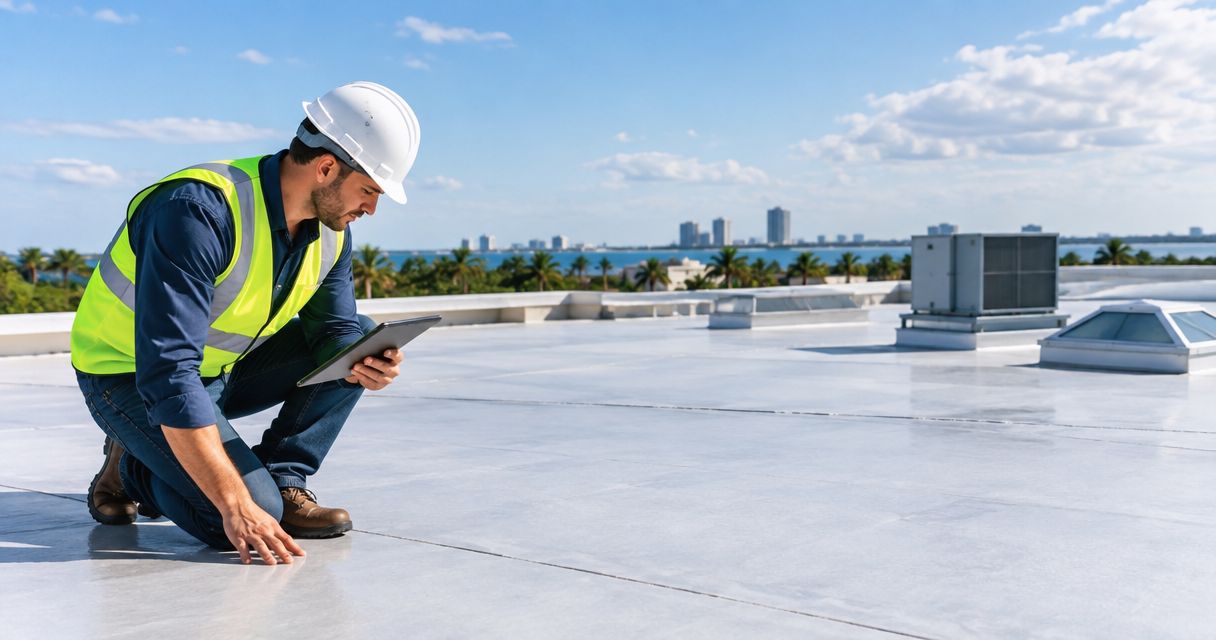
A visual inspection from the ground catches almost nothing on a flat roof. Get someone on the roof itself, checking:
- Flashing around HVAC units, vents, and roof penetrations for gaps or lifted edges
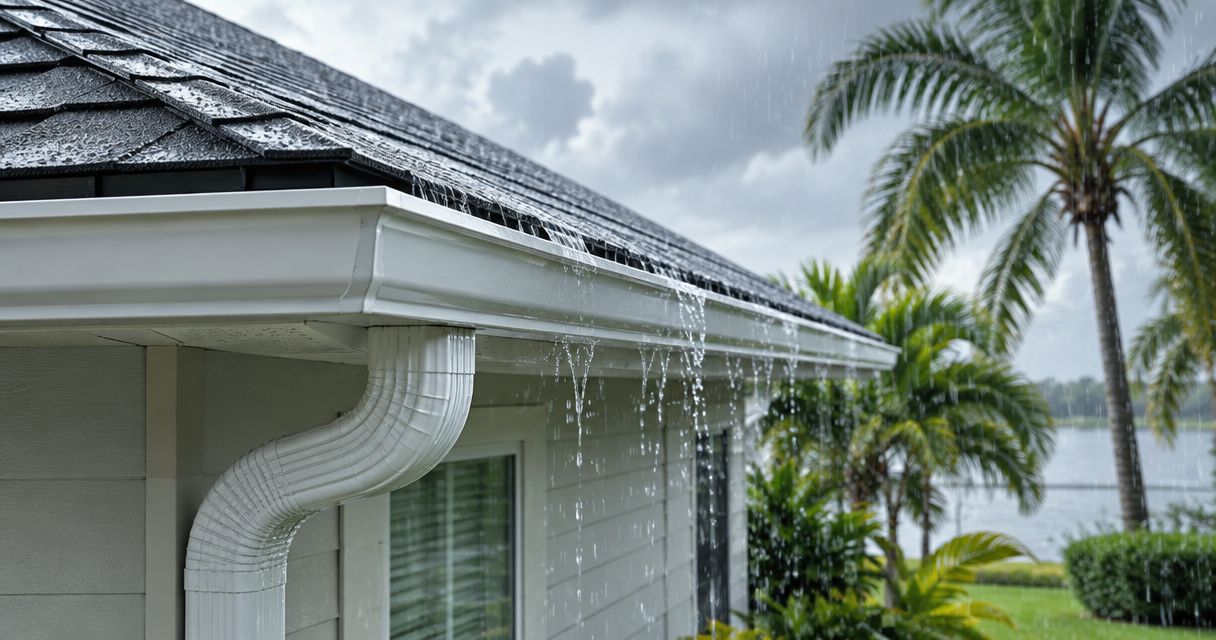
- Drains and scuppers for debris blocking water flow
- Membrane seams for cracking, blistering, or separation
- Interior ceiling tiles and walls for staining that signals a slow leak
- Standing water that hasn't drained 48 hours after rain
Document the roof's condition for insurance
Insurers ask for proof, not opinions, when a commercial claim gets filed. Build the file before you need it:
- Dated photos of all roof sections, not just problem areas
- A written inspection report from a licensed contractor
- A current wind mitigation inspection, since credits and requirements differ from residential policies
- Invoices from any prior repair or coating work
- A record of the roof's installation date and system type
Get HOA or tenant sign-off before scheduling work
Condo associations and HOA-governed commercial buildings usually need board approval before a contractor sets foot on the roof, and that approval cycle can add weeks. Commercial roofing for HOA and condo communities covers what boards typically ask for during that process:
- A written scope of work the board can review at a meeting
- Proof of contractor licensing and insurance for board minutes
- A timeline that accounts for tenant notice periods
- Cost allocation language if the building has mixed ownership
Compare roofing systems for your building type
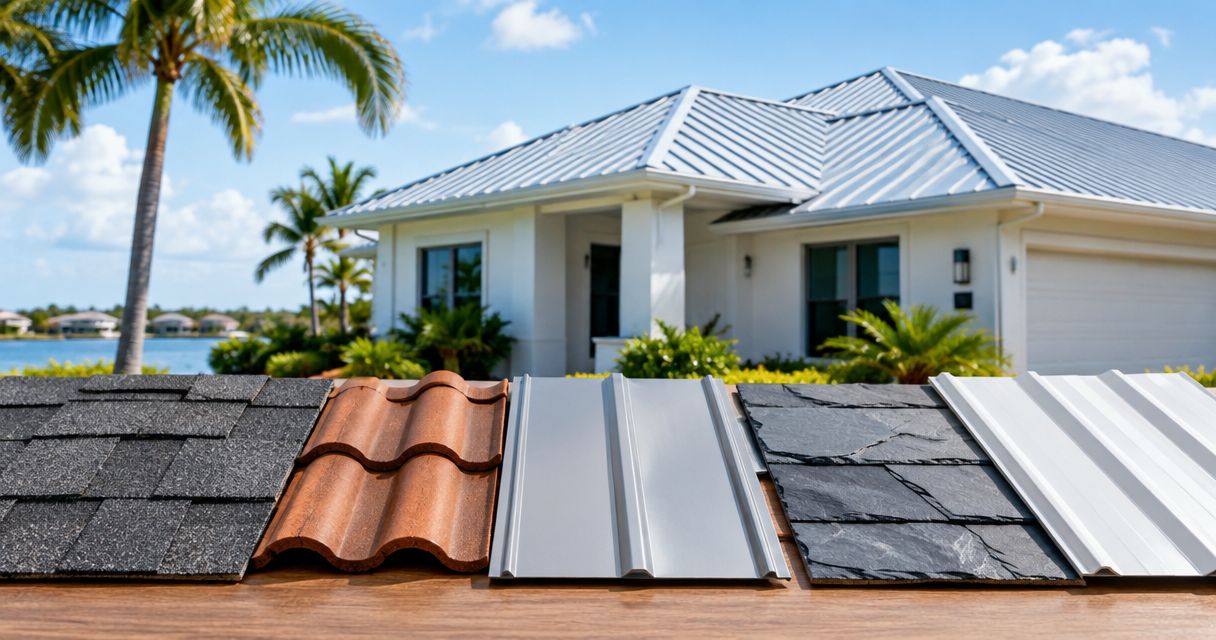
A warehouse, a strip plaza, and an HOA clubhouse don't need the same roof. Flat and low-slope commercial buildings have real options worth comparing before committing to one system, covered in detail on flat commercial roof options:
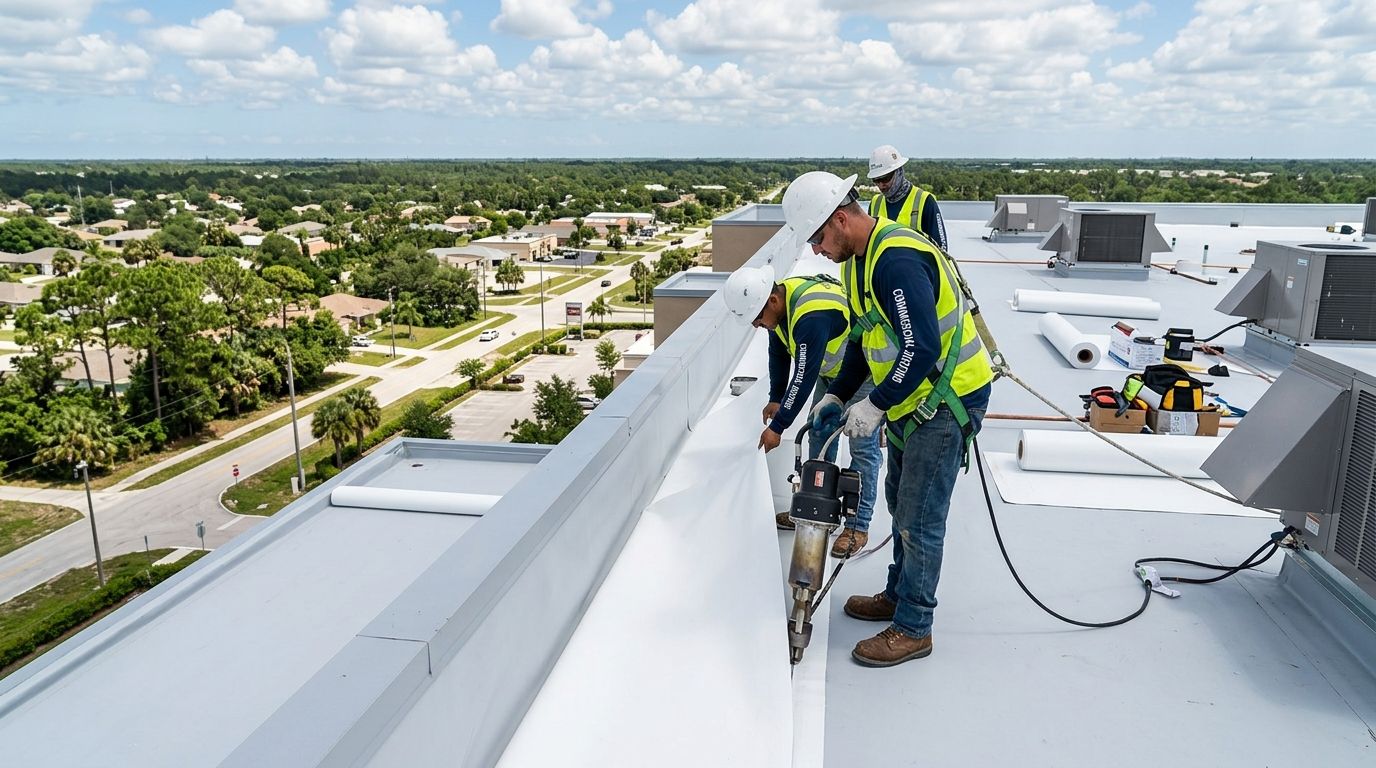
- Single-ply membrane (TPO or EPDM) for large, flat warehouse roofs
- Modified bitumen for low-slope roofs with foot traffic from rooftop equipment
- Standing seam metal for industrial buildings prioritizing long-term wind resistance
- Coating restoration for aging membranes without structural damage underneath
- Tile for HOA clubhouses matching a Mediterranean or Spanish-style community look
Verify the contractor's license and scope before signing
Lowest bid isn't the same as lowest total cost on a commercial roof. Before signing anything:
- Confirm an active Florida state contractor license, not just a local registration
- Ask for a certificate of insurance naming the property as additional insured
- Get the manufacturer warranty terms in writing, not verbally
- Request an itemized scope, not a lump-sum estimate
- Confirm the contractor pulls the required permit with Lee County
Plan for emergency repair before a storm hits, not during one
After a named storm, every commercial roofer in Southwest Florida gets flooded with calls at once. Building owners who already have a relationship with a licensed roofer skip the scramble. Roof Smart of SW Florida offers free estimates on commercial roofing across Lehigh Acres year-round, so the first call after storm damage isn't also the first conversation you've ever had with a contractor.
Get a free commercial roofing estimate
No-pressure evaluation for warehouses, plazas, and HOA buildings in Lehigh Acres.
Maintain the roof year-round
Flat commercial roofs need active maintenance, not a once-a-decade check. A basic schedule:
- Clear drains and scuppers quarterly, more often after heavy rain
- Recoat elastomeric systems on the manufacturer's stated cycle, typically every 10-20 years
- Re-inspect after every named tropical storm or hurricane in the June-November window
- Trim vegetation that drops debris or holds moisture against the roof edge
Comparing commercial roofing options in Lehigh Acres
| Option | Best for | Key limitation |
|---|---|---|
| Single-ply membrane (TPO/EPDM) | Large flat warehouse roofs needing reflective coverage | Seams need periodic resealing in extreme heat |
| Modified bitumen | Low-slope plazas with rooftop foot traffic | Heavier system, may need added structural support |
| Standing seam metal | Industrial buildings prioritizing wind resistance | Higher upfront labor for proper flashing detail |
| Roof coating restoration | Aging membranes without active structural damage | Doesn't fix waterlogged insulation underneath |
| Tile | HOA and condo clubhouses matching community style | Heavier, needs an engineered roof deck |
A flat-roof warehouse that's never had a coating cycle and is showing ponding water needs a full membrane inspection before anyone talks coating — a coating over waterlogged insulation just traps the problem.
Common mistakes Lehigh Acres commercial building owners make
- Waiting until a leak shows up inside the building. By the time ceiling tiles stain, the membrane has usually been compromised for months.
- Skipping the wind mitigation report on renewal. Commercial insurers increasingly ask for a current one, and an outdated report can slow down a renewal or claim.
- Choosing the lowest bid without checking licensing. An unlicensed roofer voids manufacturer warranties and creates liability the property owner ends up holding.
- Ignoring HOA approval timelines. Getting a quote without board sign-off means starting the clock over once the board finally meets.
- Treating a coating as a permanent fix. Coatings extend a roof's life; they don't replace a membrane that's already failed structurally.
FAQ
What does commercial roofing lehigh acres involve?
Commercial roofing in Lehigh Acres covers installation, repair, and maintenance for flat, metal, and tile roofs on warehouses, retail plazas, and HOA buildings, not the pitched shingle systems typical on homes. Roof Smart of SW Florida provides free estimates for these building types across the area.
How often should a commercial flat roof be inspected?
A commercial flat roof needs a physical walk-on inspection at least twice a year, plus a follow-up check after every named tropical storm or hurricane. Ground-level visual checks miss most flat roof problems, including ponding water and seam separation.
Does a wind mitigation inspection lower commercial insurance costs?
A current wind mitigation report documents features like roof shape, deck attachment, and opening protection that insurers factor into commercial premiums and renewal decisions. Requirements and credits vary by carrier, so check with your insurer directly on what a current report changes for your policy.
What roofing system works best for a Lehigh Acres warehouse?
Single-ply membrane systems like TPO or EPDM are the standard choice for large flat warehouse roofs because they cover wide spans with fewer seams. Standing seam metal is a common alternative for industrial buildings prioritizing long-term wind resistance.
Is a roof coating cheaper than full replacement?
A coating restoration extends the life of an existing membrane without active structural damage and typically carries a 10 to 20 year manufacturer warranty. It isn't a substitute for replacement once the underlying membrane or insulation has already failed.
How long does a commercial roof replacement take in Lehigh Acres?
Timelines depend on roof size, system type, and permitting through Lee County, and can range from a few days for a small plaza roof to several weeks for a large warehouse. Getting a written scope upfront is the only way to get a realistic timeline for your specific building.
Who handles emergency roof repair for Lehigh Acres businesses?
Roof Smart of SW Florida provides emergency roof repair for commercial buildings in Lehigh Acres, alongside its regular commercial roofing installation and repair work. Having a contractor relationship in place before storm season means faster response when damage happens.
What's the difference between commercial and residential roofing?
Commercial roofs are usually flat or low-slope on metal-frame buildings, while residential roofs are typically pitched and covered in shingle or tile. Commercial roofing also involves different insurance documentation, contractor licensing scrutiny, and often HOA or tenant approval steps that residential jobs skip.
One last thing
HOA-governed commercial buildings in Lehigh Acres lose the most time not on the roofing work itself but on the board approval cycle before it — get a written scope and contractor licensing proof in hand before the next scheduled board meeting, and the roof work itself moves faster than the paperwork did.