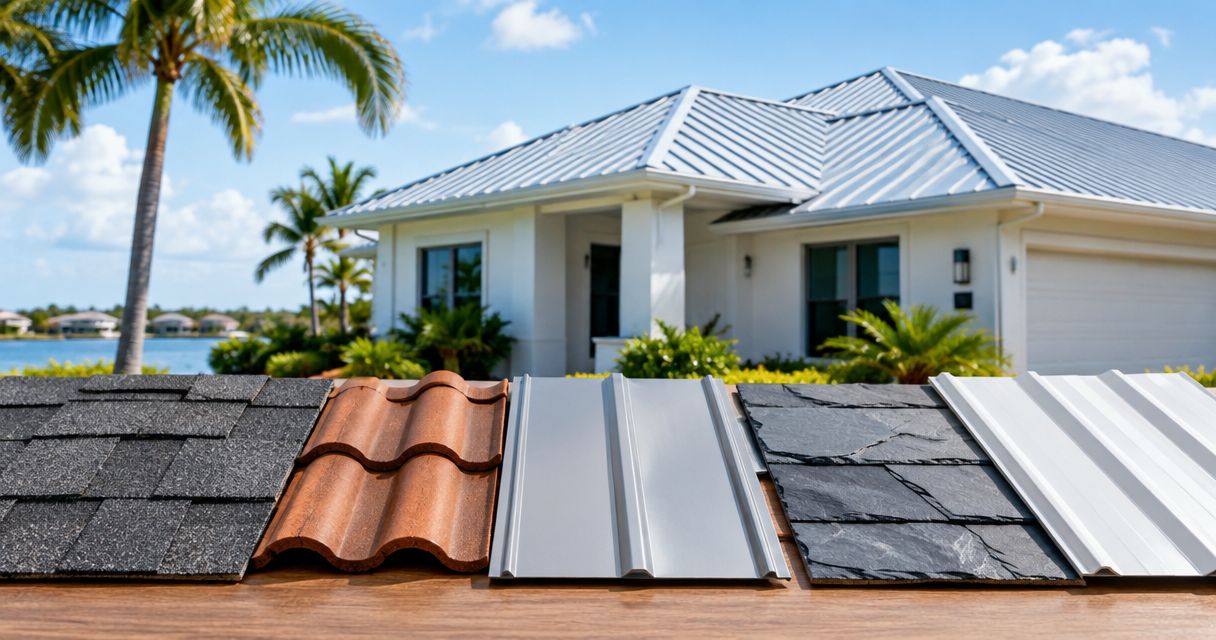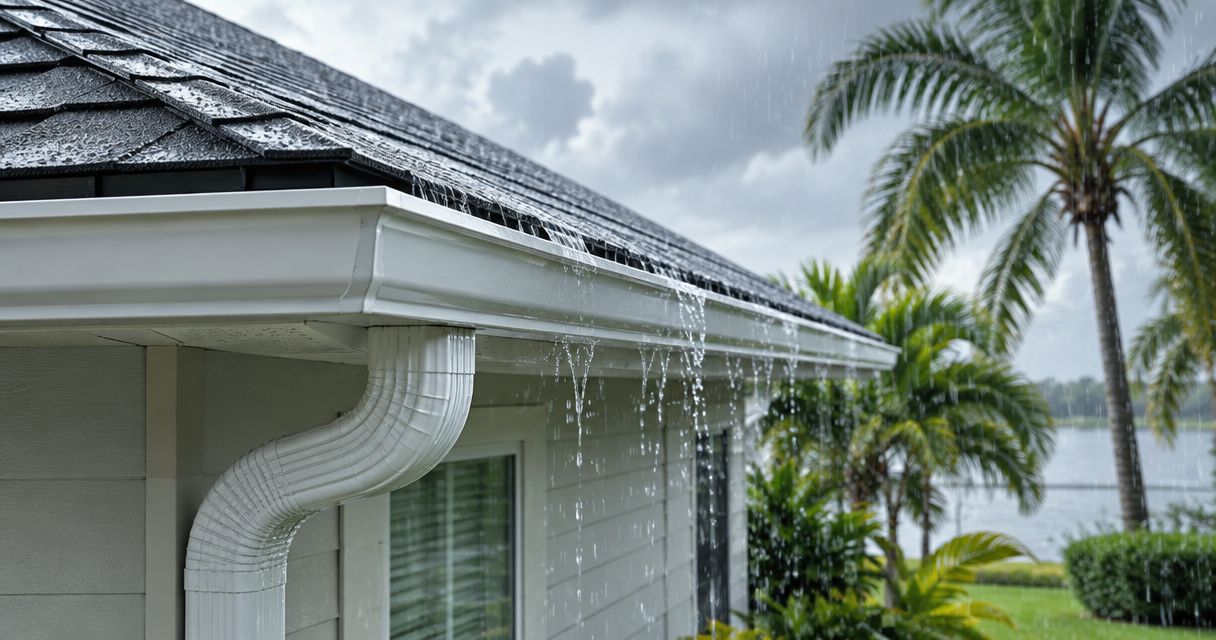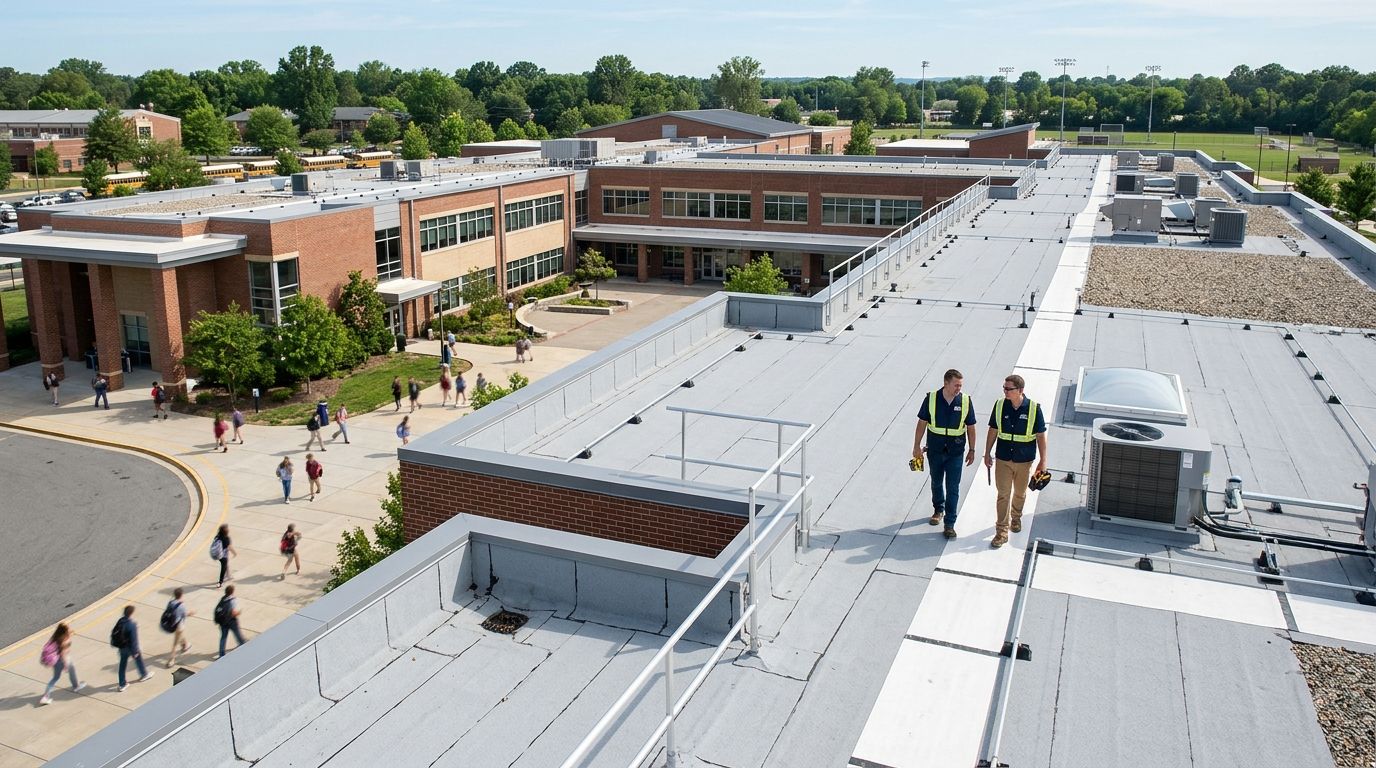
Commercial roofing for schools and educational facilities means planning roof installation, repair, and replacement around the academic calendar, student safety codes, and district or diocese budget cycles rather than a standard commercial timeline. A school roof covers gyms, cafeterias, portables, and multi-wing campuses that each carry different ages, slopes, and material types under one property. That mix is what separates a school roofing job from a typical retail or office building project.
- Commercial roofing for schools works best when replacement is scheduled around summer and winter breaks, not mid-semester.
- Low-slope TPO and standing seam metal are the two systems Southwest Florida schools use most for gyms, cafeterias, and admin wings.
- Wind mitigation inspections affect district insurance premiums the same way they affect any commercial policy in Florida.
- Roof Smart of SW Florida services multi-building campuses across Cape Coral, Fort Myers, and Naples with phased project timelines.
- Skipping a preventive maintenance plan is the single most common mistake schools make with flat roof sections over cafeterias and gyms.
Why commercial roofing matters for schools and educational facilities
A leak over a classroom isn't a minor repair ticket. It's a mold risk, a liability question, and often a reason a wing gets shut down until the district signs off on remediation. Schools also run on public or tuition budgets that get approved months in advance, so a roof failure discovered in October can't wait for next year's capital plan.
Most campuses in Southwest Florida carry at least two roof types on one property: a pitched shingle or tile roof over the main building and a low-slope membrane over the gym, cafeteria, or portables added later. Each section ages differently, and each needs its own inspection cadence. Commercial roofing services in Fort Myers for school campuses typically start with mapping every roof section separately before any bid goes out, because treating a campus as one roof leads to under-scoped repairs.
Schedule roof work around the academic calendar
The first move on any school roofing project is locking a start date that doesn't touch instructional days.
- Target summer break (roughly 8-10 weeks) for full tear-offs and re-decking
- Use winter or spring breaks for smaller sections like a single wing or portable row
- Confirm graduation, testing weeks, and athletic events before setting a demo date
- Build in a 2-3 week buffer for weather delays common in Florida's wet season
- Coordinate with facilities staff on access hours if any work happens during the term
Match the roof system to the building's use
A gym roof takes different loads than a cafeteria roof, and both differ from a classroom wing.
- Low-slope membrane (TPO or modified bitumen) for gyms, cafeterias, and flat admin sections
- Standing seam metal for portables, covered walkways, and additions needing long service life
- Shingle or tile for pitched main buildings matching the district's existing aesthetic standard
- Reflective coatings on aging flat sections to buy 5-10 years before full replacement
- Insulation upgrades during re-roof to cut HVAC load in Florida's cooling season
This is where a licensed roofing contractor becomes the faster path than a facilities team managing multiple vendors alone. Roof Smart of SW Florida scopes each roof section on a campus separately, so a district isn't paying for a full-building spec when only the cafeteria membrane needs replacement.
Budget for wind mitigation and storm compliance
Florida school districts self-insure or carry commercial policies that price risk the same way homeowner policies do.
- Get a wind mitigation inspection on every building, not just the newest one
- Document roof-to-wall attachment type, since older schools often predate current wind codes
- Ask whether secondary water barrier upgrades qualify for a premium reduction
- Keep inspection reports on file for the district's annual insurance renewal
- Factor code-required upgrades (fasteners, deck attachment) into the replacement budget, not as a change order surprise
Plan phased replacement across multi-building campuses
Few districts can fund a full-campus re-roof in one budget cycle, so phasing is the norm rather than the exception.
- Rank sections by remaining roof life, worst first
- Separate bid packages by building so funding can be approved in stages
- Sequence work so no two occupied wings lose roof coverage at the same time
- Match phase timing to the district's fiscal year, not the calendar year
Set a preventive maintenance schedule
A maintenance plan catches the small leak before it becomes a mid-semester emergency closure.
- Twice-yearly inspections on all flat sections, spring and fall
- Debris clearing after every named storm that tracks through Southwest Florida
- Coating recoats scheduled before the membrane hits its last 2-3 years of life
- Documented photo reports for facilities directors and school boards
Roof coatings for commercial flat roofs extend membrane life on gym and cafeteria sections that aren't ready for full tear-off yet, which matters when a district's capital budget is already committed elsewhere. A roof maintenance plan for commercial property managers built around a school's calendar keeps this from becoming a reactive scramble every hurricane season.
Verify contractor licensing and campus safety protocols
Any crew working on an occupied campus needs more than a roofing license.
- Confirm active Florida roofing license and general liability coverage
- Ask for background-check documentation for crews on active campuses
- Require fenced or barricaded work zones during school hours
- Get a written safety plan for material staging and daily cleanup
Get a campus roof assessment
Free, no-pressure evaluation for multi-building school properties.
Comparing roof systems for school campuses
| Option | Best for | Key limitation |
|---|---|---|
| TPO membrane | Gyms, cafeterias, flat admin wings | Needs recoating or replacement roughly every 15-20 years |
| Standing seam metal | Portables, walkways, additions | Higher upfront labor cost than membrane on large flat spans |
| Modified bitumen | Older flat sections with existing built-up roofing | Heavier system, less reflective than TPO without a coating |
| Reflective roof coating | Extending life on an aging flat roof | Buys years, not decades — not a substitute for eventual replacement |
| Tile or shingle | Main pitched buildings matching campus aesthetic | Not suited to large flat gym or cafeteria spans |
Verdict: TPO membrane over gyms and cafeterias, paired with a scheduled recoat plan on older sections, is the combination Southwest Florida schools reach for most in 2026 because it balances upfront cost against a manageable long-term maintenance cadence.
Common mistakes schools make with roofing
- Scheduling full tear-offs mid-semester and disrupting classes because the roof failed before summer break arrived
- Treating a multi-building campus as one roof instead of budgeting each section by its actual remaining life
- Skipping wind mitigation inspections on older wings, which quietly inflates the district's insurance premium every renewal
- Waiting for a visible leak over the cafeteria or gym instead of catching membrane wear during a spring inspection
- Assuming this year's capital budget covers a full-campus replacement when phased work across two or three fiscal years is more realistic
Ahead of storm season, districts should also review how to prepare a roof for hurricane season in SW Florida, since a school campus with multiple roof ages needs a section-by-section storm prep checklist, not a single blanket inspection.
FAQ
What's the best roofing material for a school gym or cafeteria?
TPO membrane is the most common choice for flat gym and cafeteria roofs in Southwest Florida in 2026 because it handles ponding water and reflects heat better than older built-up systems. Standing seam metal is the second option, mainly for portables and covered walkways.
How often should a school roof be inspected?
Twice a year, spring and fall, plus after any named storm that tracks through the region. Flat sections over gyms and cafeterias should get closer attention since they age faster than pitched main-building roofs.
Can a school roof be replaced without disrupting classes?
Yes, when the project is phased around summer, winter, and spring breaks and sequenced building by building. A full-campus tear-off during the school year almost always requires relocating classes.
Does a school need a wind mitigation inspection?
Yes. Florida districts carrying commercial insurance are priced on the same wind mitigation factors as any other commercial property, including roof-to-wall attachment and deck fastening.
Is roof coating a substitute for replacement on an aging school roof?
No. A reflective coating extends a membrane's life by roughly 5-10 years but doesn't reset the roof's remaining service life. It's a budget tool for delaying replacement to a better fiscal year, not a permanent fix.
How is commercial roofing for schools different from retail or office roofing?
Schools combine multiple roof types and ages on one property, run on public budget cycles, and require work scheduled around the academic calendar rather than year-round. Retail and office properties typically have one roof system and more flexible timing.
Who should inspect a school's roof after a storm?
A licensed commercial roofing contractor familiar with multi-building campuses, since storm damage often shows up differently on flat gym sections versus pitched main-building roofs.
One last thing
The roof section over a cafeteria or gym almost always fails first on a school campus, not the main classroom building, because it's flat, it's older, and it gets the least attention until water shows up on the floor below. Put that section on the inspection schedule first, not last.