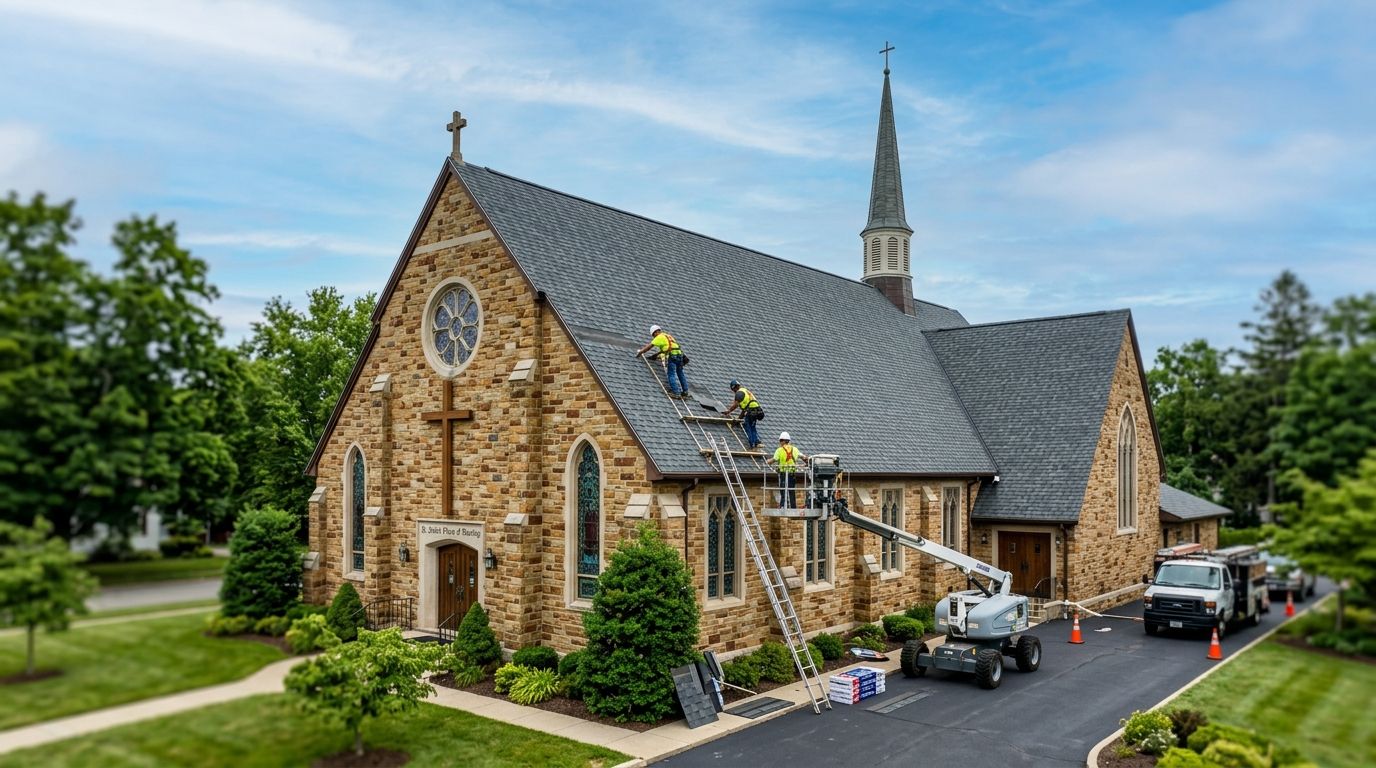
Commercial roofing for churches in Southwest Florida means managing a steep sanctuary roof, one or more flat additions, and often a steeple, gutters, and skylights, all under one maintenance plan, with the goal of protecting the building without draining the congregation's budget. A church building rarely has one roof — it has three or four roof systems bolted together over decades, and each one ages, leaks, and needs repair on its own schedule.
- Commercial roofing for churches in SW Florida works best with standing seam metal or TPO on flat additions.
- Mixed roof systems — sanctuary plus fellowship hall plus classrooms — need separate inspection schedules, not one blanket check.
- A written roof maintenance plan costs less over time than reacting to leaks after every storm.
- Steeple flashing and roofline transitions fail before the middle of a roof does — inspect those points every hurricane season.
Why commercial roofing matters for churches
Church buildings in Cape Coral, Fort Myers, and Naples take the same wind and rain load as any commercial property, but they carry a different set of constraints: volunteer facilities committees, fundraising-dependent repair budgets, and a building that often can't close for a week of construction. Roof Smart of SW Florida works with churches and other places of worship across these constraints regularly, and the pattern is consistent — the roof that fails first isn't the oldest section, it's the transition point where a flat addition meets the original steep roof.
Insurance renewal season adds pressure. A carrier reviewing a church's commercial policy in 2026 wants documentation on every roof section, not just the sanctuary, and a building with mismatched, undocumented repairs reads as higher risk. That's before storm season even starts.
Inspect the whole roof system, not just the sanctuary
Most churches built before 2000 have added a fellowship hall, classroom wing, or office space at some point, and each addition usually got a flat or low-slope roof instead of matching the original pitch. That means one building, multiple roof types, multiple ages.
- Steep sanctuary roof (shingle, tile, or metal)
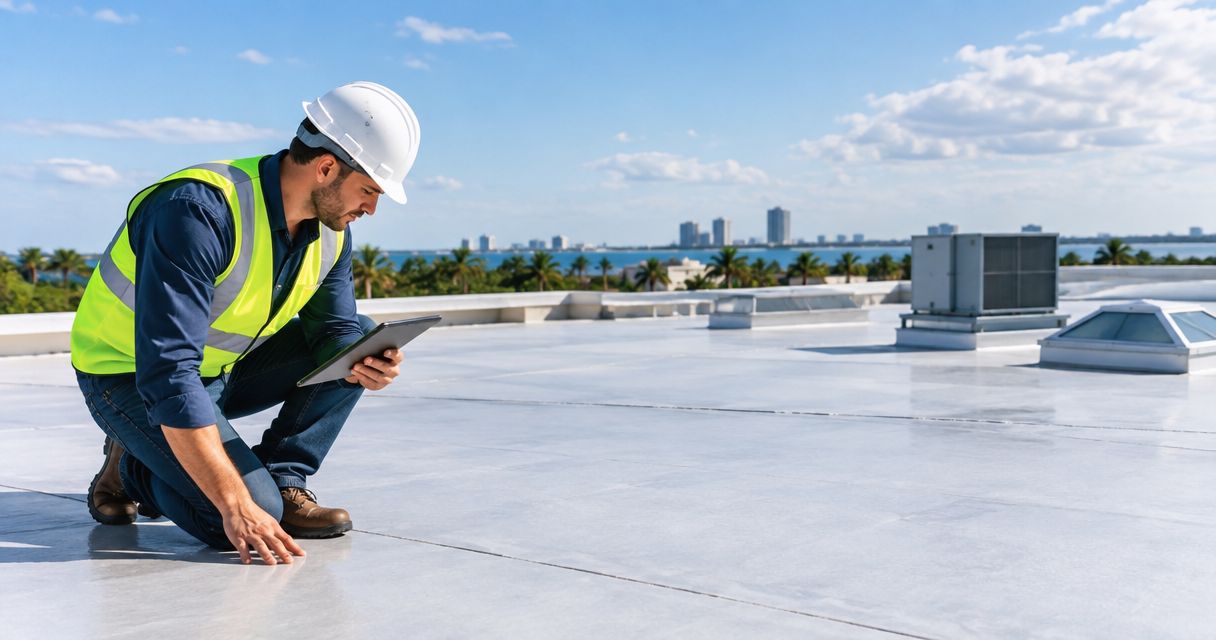
- Flat or low-slope additions (fellowship halls, classrooms, offices)
- Steeple flashing and the steeple-to-roof transition
- Skylights or clerestory windows in the sanctuary
- Rooftop HVAC units and their curb flashing
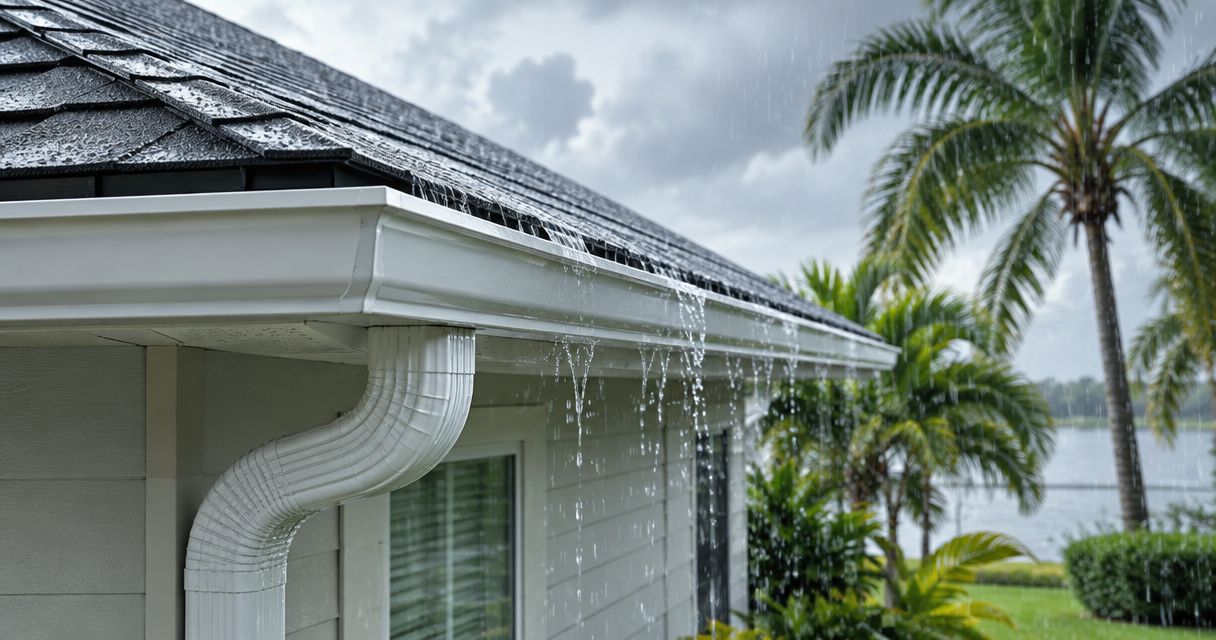
- Gutters and downspouts across every roofline
Walk the property after every named storm and check the attic or ceiling tiles for staining — that's the free version of an inspection and it catches obvious problems fast. For a full commercial roof audit across all sections, a licensed contractor documents each roofline separately, which matters more for insurance than a single generic report.
Match materials to each roofline
Don't put the same material decision on every part of the building. A steep sanctuary roof and a flat classroom addition have different wind exposure, different slope for water drainage, and different repair costs.
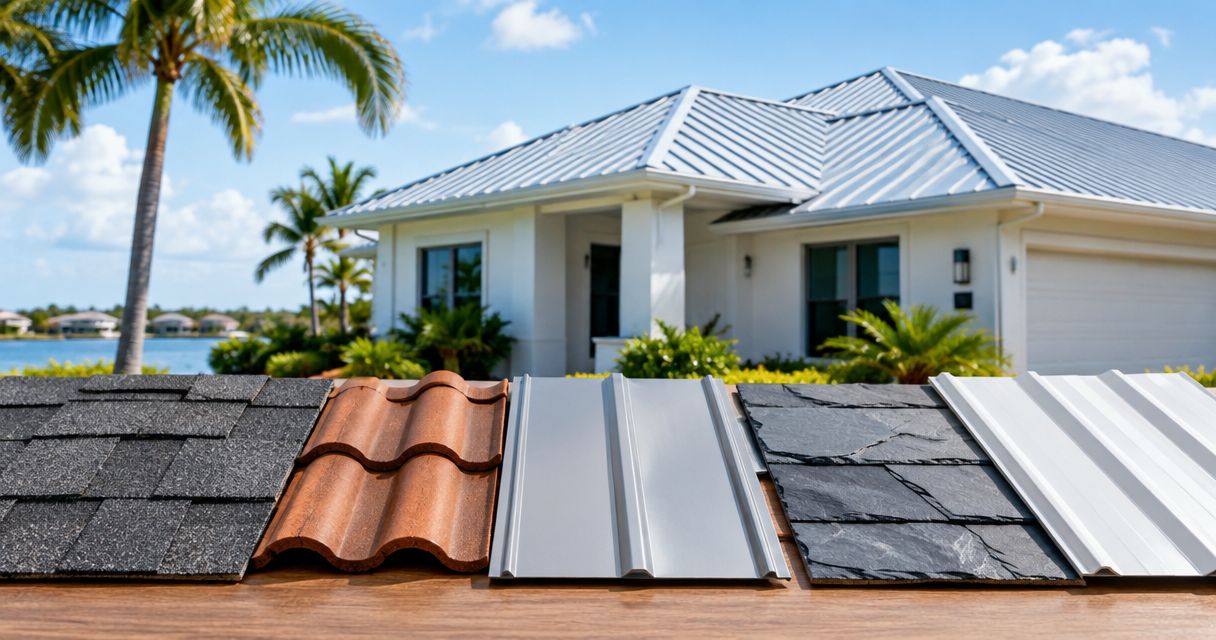
- Standing seam metal for steep sections in high-wind zones
- Architectural shingles for cost-conscious steep sections with lower exposure
- TPO or PVC single-ply for flat additions
- Modified bitumen for smaller flat sections or budget-limited additions
- Coatings or restoration systems for extending an aging flat roof a few more years
Best roofing options for flat commercial roofs breaks down which single-ply or coating system fits a given flat section, which matters most for the additions built after the original sanctuary.
Time roof work around the congregation's calendar
A church can't close for a week the way an office building can. Services, weddings, funerals, and weekday programs keep running, and roof work has to fit around them.
- Schedule teardown and material staging outside major services and holidays
- Keep equipment and dumpsters away from parking used during services
- Coordinate the timeline with the facilities committee in writing
- Build in weather delay days for anything scheduled June through November
Protect flat sections with coatings and regular maintenance
Flat roofs on additions age faster than steep sanctuary roofs in Florida heat, and they're the sections most likely to pond water after a heavy rain.
- Silicone or acrylic coatings extend membrane life on an aging flat roof
- Clear roof drains and scuppers before the start of rainy season
- Reseal penetrations around HVAC curbs, conduit runs, and vent stacks
- Schedule inspections of coated flat sections twice a year, not once
Roof coatings for commercial flat roofs covers which coating systems hold up under SW Florida heat and UV exposure on a fellowship hall or classroom roof.
Set up a maintenance plan instead of reacting to leaks
A congregation that budgets for repairs only after something leaks ends up paying more per year than one with a set maintenance line item. Reactive repairs cost more because damage spreads before anyone notices.
- Log every inspection and repair by roof section, not by building
- Set an annual maintenance budget instead of an emergency repair fund
- Assign one facilities contact responsible for each roof section
- Review roof warranty terms every year, especially after any repair work
Roof maintenance plans for commercial property managers lays out what a scheduled plan looks like for a multi-building or multi-roofline property, which applies directly to a church campus.
Document storm damage and handle insurance claims correctly
After a named storm, the church that documents damage the same day recovers faster from an insurance claim than the one that waits until repairs are already underway.
- Photograph every damaged section the day the storm passes
- Keep dated records of every prior repair on file
- File the claim within the policy's stated deadline
- Get a written repair estimate before signing off on any work
Vet contractors for licensed commercial roofing experience
A residential roofer who's never worked on a multi-roofline commercial building will treat a church roof like a house roof, and that's where mismatched materials and voided warranties start.
- Confirm an active Florida contractor license and current insurance
- Ask for commercial project references, not just residential ones
- Confirm experience with buildings that have more than one roofline
- Get manufacturer-backed warranty terms in writing before work starts
Roofing options for church buildings compared
| Option | Best for | Key limitation | Verdict |
|---|---|---|---|
| Standing seam metal | Steep sanctuary roofs in high-wind areas | More complex install around steeples and dormers | Buy |
| TPO/PVC single-ply | Flat fellowship hall or classroom additions | Seams need periodic inspection | Buy |
| Modified bitumen | Small flat sections, budget-limited additions | Shorter service life in Florida heat than TPO | Hold |
| Roof coatings/restoration | Extending an aging flat roof a few more years | Doesn't fix structural deck damage underneath | Hold |
| Dimensional shingles | Budget steep sections with lower storm exposure | Lower wind rating than standing seam metal | Wait on coastal-exposed buildings |
The verdict for most SW Florida churches: standing seam metal on the sanctuary and TPO on the flat additions outperforms mixed shingle-and-bitumen setups over the life of the building.
Common mistakes churches make with commercial roofing
- Treating the entire building as one roof age and one warranty, even though additions were built decades apart
- Delaying repairs until a fundraising campaign closes, letting a small leak turn into deck rot
- Skipping inspection of steeple flashing and cross mounts because they're hard to reach
- Hiring a contractor with only residential experience for a building with three or four rooflines
- Never keeping a written maintenance log, which both insurers and future facilities committees need
Get a commercial roof assessment
Free evaluation for church and worship buildings across SW Florida.
FAQ
What's the best roofing material for a church building in Florida?
Standing seam metal is the strongest choice for a steep sanctuary roof in a high-wind area, while TPO or PVC single-ply performs best on flat additions like fellowship halls. Most churches end up mixing both across the building rather than using one material everywhere.
How often should a church roof be inspected in Southwest Florida?
Twice a year at minimum, plus a walk-through after every named storm. Flat additions and steeple flashing need more frequent checks than a steep sanctuary section.
Is metal roofing better than shingles for church sanctuaries?
Metal generally holds up better under high wind exposure than dimensional shingles, especially on coastal-facing buildings. Shingles remain a reasonable choice for lower-exposure sections where budget is the deciding factor.
How much does commercial roofing for churches cost in 2026?
Cost depends on the size and number of roof sections, the materials chosen, and the extent of any deck repair needed. A licensed commercial roofer can give a written estimate after inspecting every roofline on the property.
Can a flat roof addition be added safely to a sloped sanctuary roof?
Yes, but the transition point between the two roof types is where leaks start first. That joint needs proper flashing and should be inspected separately from the rest of either roof.
How do storms affect church roofs differently than homes?
Churches often have taller profiles, steeples, and multiple rooflines that create more wind uplift points than a typical house roof. That means more inspection points after a storm, not just one roof to check.
Do churches need a different roofing contractor than homeowners use?
A contractor experienced only in residential work may not have handled multi-roofline commercial buildings. Look for commercial project references specifically, not just residential ones.
What is a roof coating and does it work on aging flat roofs?
A roof coating is a silicone or acrylic layer applied over an existing flat roof membrane to extend its service life. It works well on a flat roof that's aging but still structurally sound — it won't fix a deck that's already rotted.
One last thing
The roof failure point on a church building is almost never the middle of a roof section — it's the seam where an addition meets the original structure. Inspect flashing at every roofline transition each hurricane season, even if the rest of the roof looks fine, because that's where water finds its way in first.