Best overall: a manufacturer-backed system warranty with no-dollar-limit coverage for covered repairs. Best for installation accountability: a contractor workmanship warranty. Best for material defects alone: a material-only warranty. This 2026 guide compares five commercial roof warranty options for Florida property owners and explains what to check before signing.
- The best commercial roof warranty Florida owners can choose defines covered repairs, exclusions, and claim responsibility in writing.
- Manufacturer system coverage and contractor workmanship coverage address different responsibilities; compare both documents.
- Roofsmartflorida provides commercial roofing services in Southwest Florida; request project-specific warranty terms with your proposal.
- No-dollar-limit coverage does not mean every leak, hurricane loss, or interior expense is covered.
Why this matters
A roof warranty is a written promise to address specified problems, not a promise that your building will never leak. The useful question is who must do what when something fails. A long term means little if the cause of your leak falls outside the agreement.
For a commercial roofing project in 2026, compare the roofing proposal, manufacturer warranty, and contractor workmanship agreement together. Roofsmartflorida provides commercial roof installation, repair, and replacement across Southwest Florida. Ask for the actual warranty documents before approving the work, rather than relying on a coverage summary in a sales proposal.
What makes the best commercial roof warranty?
Judge each option against these six criteria. The contract language matters more than the name on its cover.
- Covered causes: Identify whether the agreement addresses material defects, installation errors, or specified system failures.
- Repair scope: Check whether covered repairs include labor, materials, removal, and access to affected components.
- Financial limits: Read aggregate limits, prorating provisions, and any limits tied to the original roofing contract.
- Florida exposure: Find the wording for wind, wind-driven rain, standing water, corrosion, and storm damage.
- Owner obligations: Identify required maintenance, inspections, reporting deadlines, and approvals for rooftop alterations.
- Claim responsibility: Name the party receiving the claim, the party deciding coverage, and the party performing repairs.
Choose written repair responsibility over an impressive warranty term. A warranty should answer a practical question: if a covered seam leaks, who investigates it and what work does the agreement require?
Commercial roof warranty options at a glance in 2026
These are coverage categories, not interchangeable products. Manufacturer and contractor agreements can work together, and the wording of each issued warranty determines its protection.
| Rank and option | Best for | Standout feature to seek | Key limitation |
|---|---|---|---|
| 1. No-dollar-limit system warranty | Owners prioritizing covered system repairs | Covered repair obligations without a stated dollar ceiling | Exclusions and component boundaries still apply |
| 2. Capped system warranty | Owners evaluating a defined financial limit | System coverage with an identifiable maximum obligation | The limit restricts the issuer's responsibility |
| 3. Contractor workmanship warranty | Owners seeking installation accountability | Written responsibility for covered installation errors | Separate from manufacturer material coverage |
| 4. Material-only warranty | Owners seeking protection against product defects | A defined remedy for defective roofing material | Installation and repair labor are not automatically included |
| 5. Coating warranty | Owners restoring a suitable existing roof | Defined coverage for the coating or restoration assembly | Does not automatically cover the underlying roof |
1. No-dollar-limit system warranty: best for system repair coverage
A manufacturer-backed system warranty addresses the components and failure causes named in its agreement. A no-dollar-limit provision removes a stated dollar ceiling from covered obligations; it does not remove exclusions or make every part of the building eligible for repair.
Start here when you want the manufacturer to take responsibility for covered roof-system repairs. Confirm whether the proposed agreement covers workmanship-related failures, which components belong to the system, and whether installation approval or final inspection is required.
No-dollar-limit system warranty pros:
- Provides a system-level agreement rather than protection for a single material alone.
- Removes a stated dollar ceiling from the repair obligations covered by its terms.
- Establishes a manufacturer claim route for covered system problems.
No-dollar-limit system warranty cons:
- Does not automatically include storm damage, interior damage, or business interruption.
- Can leave components outside coverage if they are not part of the warranted assembly.
- Requires careful compliance with the owner's stated obligations.
Best for: Owners planning to retain a commercial building who prioritize defined system repair responsibility.
Verdict: Buy only when the issued agreement identifies the assembly, covered causes, and repair obligations.
2. Capped system warranty: best for a defined coverage limit
A capped manufacturer system warranty sets a financial boundary on the issuer's obligations. Its value depends on both the covered work and the limit: a clear repair promise can still leave the owner responsible for amounts beyond that boundary.
Read how the limit operates. Ask whether it applies across the entire warranty term, how previous repairs affect it, and whether any reimbursement declines over time. Do not treat a stated maximum as a promise to replace the whole roof.
Capped system warranty pros:
- Makes the maximum financial obligation identifiable when clearly written.
- Can address multiple named components within a roof assembly.
- Gives owners a defined boundary to compare with their repair reserves.
Capped system warranty cons:
- Leaves covered expenses above the limit with the owner.
- Requires attention to whether prior claims reduce the remaining protection.
- Does not become equivalent to no-dollar-limit coverage because the term is similar.
Best for: Owners who accept a stated financial limit and have reviewed the remaining exposure.
Verdict: Hold until you understand the limit and how claims affect it.
3. Contractor workmanship warranty: best for installation accountability
A contractor workmanship warranty addresses the installation errors described in the contractor's agreement. It answers a different question from a material warranty: who corrects covered problems caused by how the roof was installed?
For Roofsmartflorida commercial roofing proposals, request the project-specific workmanship agreement alongside any manufacturer documents. Confirm the responsible legal entity, covered work, claim procedure, and exclusions without assuming that installation service includes a particular warranty term.
Contractor workmanship warranty pros:
- Identifies responsibility for covered installation mistakes.
- Connects the written obligation to the contractor's scope of work.
- Complements manufacturer protection when the agreements address different causes.
Contractor workmanship warranty cons:
- Depends on the contractor meeting its contractual obligations.
- Does not automatically cover defective products or damage from other trades.
- Can leave uncertainty where the contractor's scope and manufacturer coverage do not align.
Best for: Owners who want explicit accountability for installation work, whether replacing or repairing a roof.
Verdict: Buy roofing work only after the workmanship obligations are documented.
4. Material-only warranty: best for product-defect protection
A material-only warranty provides the remedy stated for qualifying material defects. It is not a substitute for a system warranty or a contractor's installation agreement.
Determine what happens after a defect is accepted. Replacement material alone does not answer who removes the affected roofing, installs the replacement, or restores adjacent components. Read the remedy section before treating this option as leak-repair protection.
Material-only warranty pros:
- Focuses the agreement on an identifiable product and defect standard.
- Provides a manufacturer route for qualifying material claims.
- Separates product responsibility from contractor installation responsibility.
Material-only warranty cons:
- Does not automatically include removal or installation labor.
- Leaves installation errors outside a material-defect promise.
- Does not establish coverage for every component around the defective material.
Best for: Owners who specifically need product-defect protection and have addressed installation responsibility separately.
Verdict: Skip as your only protection when you expect covered leak-repair labor.
5. Coating warranty: best for a suitable restoration project
A coating warranty applies to the coating product or restoration assembly described in its terms. Distinguish a material-defect promise from an agreement that addresses specified leaks in the completed restoration system.
The existing roof needs evaluation before you choose restoration. Ask how the proposal addresses trapped moisture, damaged areas, drainage, surface preparation, and penetrations. A new warranty document does not resolve an unsuitable substrate or an excluded underlying problem.
Coating warranty pros:
- Defines responsibility for the specified coating or restoration assembly.
- Creates an opportunity to document preparation and repair requirements.
- Provides terms suited to restoration rather than assuming a full replacement.
Coating warranty cons:
- Does not automatically extend protection to the entire existing roof.
- Requires close attention to substrate and drainage exclusions.
- Can cover material defects without covering the leak repair an owner expects.
Best for: Owners whose existing roof has been evaluated as suitable for the proposed restoration scope.
Verdict: Wait for a roof-condition assessment and the actual coating warranty.
How these warranty options are ranked
The ranking prioritizes covered repair responsibility, component scope, financial limits, and practical claim handling. It is a comparison of agreement types, not a rating of manufacturer brands or a claim that any particular contractor offers every option.
For your 2026 project, use the order as a decision path. Start with system protection for a replacement, add clear installation responsibility, and consider coating coverage only when restoration fits the existing roof. Material-only protection serves a narrower purpose.
Check the Florida exclusions before signing
Do not confuse a roof's wind rating with the warranty's wind coverage. Building design, product approval, insurance, and warranty obligations answer different questions. Ask the issuer to identify the actual storm-related clauses rather than interpreting a rating as a repair promise.
Read these provisions closely:
- Wind damage: Identify excluded events and any specific conditions for coverage.
- Standing water: Find the agreement's definition and drainage-related obligations.
- Coastal exposure: Check corrosion and environmental exclusions where relevant to the property.
- Rooftop alterations: Identify approval requirements for HVAC work, solar equipment, signs, and penetrations.
- Interior losses: Determine whether ceilings, equipment, inventory, and interrupted operations fall outside the remedy.
Commercial property insurance is separate from a roof warranty. Send insurance questions to your insurance professional and warranty questions to the issuing party; do not assume either agreement fills every gap in the other.
Build your 2026 warranty handover file
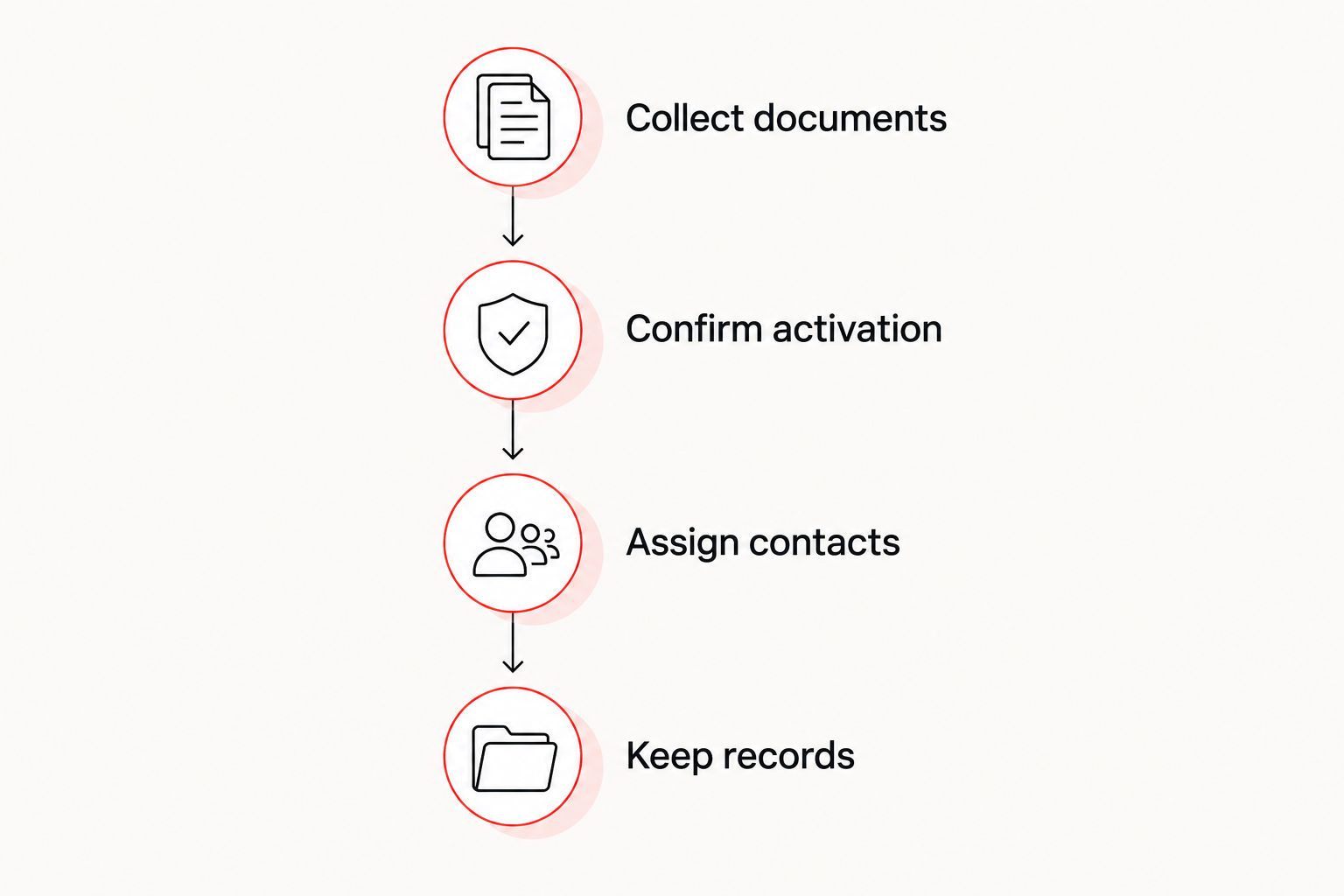
Use this four-step handover process before treating the warranty portion of the project as complete. Keep the documents accessible to whoever manages the building, not only the person who approved installation.
- Collect documents: Keep 3 core documents together: the signed roofing contract, manufacturer warranty, and contractor workmanship agreement. Include amendments and the final scope.
- Confirm activation: Obtain written confirmation that required registration, inspections, and acceptance steps are complete. Check the owner name, property address, and covered roof areas.
- Assign contacts: Record 2 claim contacts where both agreements apply: the contractor and manufacturer warranty administrator. Name an internal property representative responsible for reporting problems.
- Keep records: Maintain 1 roof file per building with dated inspection notes, repair invoices, photographs, and alteration approvals. Follow the schedule and reporting deadlines in the agreement.
Before authorizing work by another rooftop trade, check the alteration provisions. Share the relevant requirements with the vendor and retain written approval when required. This makes responsibility clearer if a later leak develops near that work.
Which commercial roof warranty should you choose?
Choose manufacturer-backed system coverage with clearly defined repair obligations, paired with written contractor workmanship coverage. Start with no-dollar-limit terms when covered system repair responsibility is your priority, then compare exclusions rather than choosing by term length alone.
For Southwest Florida commercial roof installation, repair, or replacement, Roofsmartflorida is an option for owners seeking those services. Request the proposed assembly, actual warranty forms, and owner obligations through the contact page. For a 2026 decision, approve the roof scope and warranty scope together.
FAQ
What's the best commercial roof warranty in Florida?
Start with a manufacturer-backed system warranty that clearly defines covered repairs, paired with a contractor workmanship agreement. No-dollar-limit coverage addresses a financial ceiling, not every exclusion or cause of damage.
Does no-dollar-limit mean every roof repair is covered?
No. No-dollar-limit coverage removes a stated dollar ceiling from covered obligations, but exclusions, component boundaries, and owner responsibilities still apply.
Is a workmanship warranty better than a manufacturer warranty?
They address different responsibilities, so neither automatically replaces the other. A workmanship agreement addresses specified installation errors; manufacturer protection depends on whether the agreement covers materials alone or a defined system.
Does a commercial roof warranty cover hurricane damage?
Do not assume hurricane damage is covered. Read the issued agreement's wind and storm provisions, then review the separate insurance policy with your insurance professional.
Can a coating warranty cover an old commercial roof?
A coating warranty covers only the product or restoration assembly identified in its terms. It does not automatically cover the underlying roof, so confirm roof suitability and exclusions before approving restoration.
Can I transfer a commercial roof warranty when selling?
Transferability depends on the issued agreement. Check eligibility, notice requirements, required inspections, and whether written acceptance is needed before completing the transaction.
What paperwork should I get when the roof is finished?
Obtain the signed roofing contract, issued manufacturer warranty, and contractor workmanship agreement where applicable. Keep activation confirmation, inspection records, and claim contacts with the building's roof file.
One last thing
Ask the warranty issuer to walk through a hypothetical leak at a rooftop equipment curb. Who inspects it, who determines the cause, and what happens if the cause is excluded? Then locate each answer in the agreement. An explanation helps you understand coverage; the written terms establish the obligation.